
Latest world news
Houthi warns: US and Saudi Arabia will regret in Yemen


Coalition kills senior Houthi official in Hudaydah
Houthi run government in Yemen has vowed a “crushing response” to the assassination of Saleh-al-Samad, one of their senior officials, saying Saudi Arabia and US will regret their “criminal adventure.”
International community recognises Yemen’s virtually ousted government currently based in Riyadh, because UN considers US-Saudi Arabia-Israel supported Abd-Rabbu Mansour Hadi as legitimate leader. However administration in most parts of the country is being conducted by Houthi Ansarullah movement.
According to official Saba news agency, the Defense Ministry run by Houthi government has vowed a “crushing response” to the assassination of Saleh al –Samad, the Chairman of country’s Supreme Political Council, saying Saudi Arabia and the US will regret their “criminal adventurism.”
Read More: Saudi warship attacked by Yemen’s Houthis near Hudaydah
The ministry stressed that the Yemeni armed forces reserve the right to deal severe blows to “the aggressors and their evil coalition,” who will not be safe from ballistic missiles.
Houthis have targeted several important places in Saudi Arabia, including Riyadh airport, with ballistic missiles, allegedly supplied by Iran. However, Ansarullah claim of manufacturing the missiles indigenously. Tehran also denies supplying the missiles to the Houthi fighters.
Read More: Iranian Foreign Minister meets Yemen’s Houthi official
Saleh al-Samad, the chairman of Yemen’s Supreme Political Council was killed in Saudi airstrikes on Thursday that targeted his residence in Hudaydah.
Saudi official Al-Arabiya network has uploaded the video showing the moments of the attack, which was recorded by the attacking aircraft. Hudaydah is considered to be the most secured place than capital Saana for the Houthi officials.
VIDEO: Al Arabiya has obtained footage showing the moment an Arab coalition air strike killed #Houthi militias’ leading political leader Saleh Ali al-Sammad.
Read more: https://t.co/tqW17N8R93 pic.twitter.com/FAHF6ZK9km
— Al Arabiya English (@AlArabiya_Eng) April 23, 2018
Yemen’s Supreme Political Council was established by the Houthi movement to run the state affairs in the absence of an effective government in 2016. The Saudi lead coalition began its air campaign in March 2015 with US support and continued weapons supply by several Western countries including Britain.
Read More: Saudi Arabia claims intercepting Yemen’s Houthi missiles
The Houthi statement further said that Saudi and UAE aggressors and their allies, along with US, have passed all red lines with their “criminal adventurism” without thinking about the consequences.
Meanwhile Houthi Ansarullah Movement has elected Mahdi al-Mashat as Samad’s successor. He is considered to be a very influential figure within the movement.
 On Monday night Houthi’s leader Abdul Malik al-Houthi, while addressing via television said that, overall, seven people were killed in Thursday’s air raids. He said, “This crime will not break the will of our people and state … [and] will not pass without accountability.”
He further said, “The forces of this aggression led by Washington and the Saudi regime are legally responsible for such a crime and all its implications.”
Traditionally based in Yemen’s northwest, the Houthis overran much of the country, including Sanaa, in 2014, citing anger with the government of President Abd-Rabbu Mansour Hadi for not honouring their rights.
On Monday, twenty people were killed and dozens were injured when Saudi led coalition attacked a wedding party in Hajjah’s Bani Qays district.
Hakim Almasmari, editor-in-chief of the Yemen Post, told Al-Jazeera that al-Samad’s death was a “very significant” development. “He was the acting president in the Houthi-controlled areas in Yemen, so this is considered the biggest blow for the Houthis, politically, since the war started,” he said.
Almasmari noted that the location of the incident was also important saying, “Hudaydah is considered the most secure place for the Houthis, where they have all their intelligence. This is a big backlash for the Houthis, security-wise as well.”
 Apprehending the infiltration of Saudi elements in Houthi Ansarullah’s intelligence apparatus, he said, “It’s not a secret that Hudayda is much more secured than even Sanaa itself, so for him to be killed in Hudaydah, under all the extreme security measures that they go through there, [raises questions] whether they are infiltrated in Hudaydah province itself or within the intelligence apparatus in general.”
Since March 2015, Saudi led coalition has carried out more than 16,000 air raids, resulting in mass civilian casualties with weddings, hospitals and funerals targeted.
Saudi Arabian warships were positioned in the Yemeni waters in 2015 for effective sea, land and air blockade of the country. US joined the blockade in October 2016. It was further constricted following the November 2017 launch of a missile from Houthis towards Riyadh.
Last month, on the completion of three years of aggression, UN aid operations Chief John Ging said that living conditions in Yemen are “catastrophic”. He warned of a growing risk of spreading of famine and cholera saying that more than one million have been infected with cholera since April 2017.
Read More: UN criticise Saudi Arabia for human rights violations in Yemen






Latest world news
S Jaishankar says India is a natural option for Russia amid Europe tensions
External Affairs Minister S Jaishankar said India remained a natural option for Russia as Moscow increasingly turned towards Asia amid strained relations with Europe. He highlighted the continuity of India-Russia ties and their significance for the balance of power in Asia.


Latest world news
Putin praises PM Modi, says he has very good ideas on Ukraine war
Russian President Vladimir Putin has praised Prime Minister Narendra Modi for repeatedly raising the need to end the Ukraine war, describing his ideas for a settlement as “very good”.

Latest world news
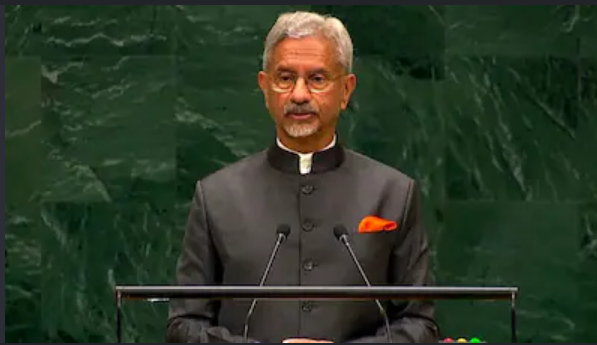
S Jaishankar calls Pakistan a “serial practitioner of terrorism” at UN
S Jaishankar criticised Pakistan at the UN General Assembly, referring to a “serial practitioner of terrorism” and warning against attempts to normalise terrorism.

Dhruv Rathee gets fresh summons in 2018 BJP IT cell video case

Nobody can browbeat judiciary, Chief Justice warns over Rahul Gandhi’s march

India-US trade deal first phase finalised, drafting underway

Election Commission orders voter roll revision in 17 states, UTs

Actor Imran Khan asked to leave India after CJP protest

Delhi Police offers 11-person limit for CJP’s Connaught Place protest
Actor Imran Khan asked to leave India after CJP protest
Election Commission orders voter roll revision in 17 states, UTs
India-US trade deal first phase finalised, drafting underway
Nobody can browbeat judiciary, Chief Justice warns over Rahul Gandhi’s march

Afghan Men Try To Hang With The Jet Engine Of The Aircraft in Kabul- Afghanistan News – Kabul News
Trending Top 10 News: 10000 Crore Fine on Flipkart, Apple to Launch Unique Feature, Hdfc Bank Job Ad

Trending Top 10 News: Nokia 6310, Apple sales, Bachpan ka Pyar Video Kid, Dainik Bhaskar IT Raid

Trending Top 10 News: Canada bans Indian flights, Rain in Delhi NCR, AIMIM Twitter hacked, Raj Kundra case

Trending Top 10 News: Shein India, Apple New Service, Pocket Oxygen, Oppo Launched New Phone
-
 India News13 hours ago
Dhruv Rathee gets fresh summons in 2018 BJP IT cell video case
-
 India News10 hours ago
Nobody can browbeat judiciary, Chief Justice warns over Rahul Gandhi’s march
-
 India News6 hours ago
India-US trade deal first phase finalised, drafting underway
-
 India News3 hours ago
Election Commission orders voter roll revision in 17 states, UTs
-
 India News3 hours ago
Actor Imran Khan asked to leave India after CJP protest
-
 India News2 hours ago
Delhi Police offers 11-person limit for CJP’s Connaught Place protest
