
Latest world news
Pakistan facing worse than martial law dictatorship: Nawaz


In a major development, Pakistan’s ousted Prime Minister Nawaz Sharif has claimed on Monday that recent actions by the top judiciary indicate that a regime worse than a martial law has been imposed across Pakistan.
Dawn reports that while speaking to journalists in the accountability court in Islamabad Sharif said, “What is prevalent in the country is not democracy, but the worst kind of dictatorship under [Chief Justice Mian] Saqib Nisar. What is happening in the country is not less than a ‘judicial martial law’,” he said.
Former Prime Minister has returned from London late on Sunday after seeing his ailing wife Kulsoom Nawaz, who has been treated there for her cancer.
Read More: Pakistan SC disqualifies Nawaz Sharif as PM over Panama Papers case
Nawaz Sharif criticised recent judgements by the courts as “illogical” saying that the alleged silencing of 220 million people of Pakistan would not be acceptable to him. “These many restrictions were not even imposed during the martial laws that we are seeing today,” he remarked.
He claimed that serious efforts were being made to convict him in the corruption references being heard by the accountability court, which he said were an attempt “to make the five judges successful”. This is a clear reference to the five-member SC bench which had disqualified him last year in the Panama Papers case.
Read More:Pak accountability court issues bailable warrants against ousted PM Nawaz Sharif
Directing his criticism at the CJP once again, Sharif said Justice Nisar visits hospitals regularly and talks about vegetable prices, but “he should also visit the home of an oppressed person whose case hasn’t been decided for 20 years”. Addressing to Chief Justice of Pakistan Saqib Nisar, he said, “It is not your job to summon the chief minister and make the government stand in the line.”
 The Supreme Court, under its 2018 agenda, is focusing on human rights issues, particularly those relating to the people’s right to quality education and healthcare. However, this course of action is also being seen as an overstepping of limits by the apex court, similar to the Iftikhar Chaudhry era.
Read More: Nawaz Sharif: Strip me from my own name through Black Law Dictionary
General elections for 342-seat National Assembly are scheduled to be held in Pakistan on 15 July 2018. Currently Pakistan Muslim League (N) holds 166 seats, Pakistan People’s Party (PPP) – 42 seats and Pakistan Tehreek-e-Insaf occupies 35 seats.
Meanwhile, Pakistan People’s Party (PPP) Chairman Bilawal Bhutto Zardari has expressed his “high hopes” with the chief justice regarding provision of justice according to the law. He said, “Judiciary is doing the best job. Panama case that was difficult is being pursued. Don’t provide an excuse to anyone to criticise you. You had said that the case would be decided within six months. Do focus on it,” he suggested.
He supported judiciary saying that nobody can stop judges from taking notices over issues as they have suo-moto powers. They can take notice of any issue from the prices of electricity to sugar; however, they should also do their job as over 1.8m cases are pending before the courts and the people have to wait for decades with the hope of getting justice.
Read More: Pakistan: Supreme Court disqualify Nawaz Sharif for life
He asked the judiciary squarely, “If you want to do our job, do it but please do your own job as well. If you don’t do it who will do it?” He was talking to journalists in Multan on Monday.








Latest world news
S Jaishankar says India is a natural option for Russia amid Europe tensions
External Affairs Minister S Jaishankar said India remained a natural option for Russia as Moscow increasingly turned towards Asia amid strained relations with Europe. He highlighted the continuity of India-Russia ties and their significance for the balance of power in Asia.


Latest world news
Putin praises PM Modi, says he has very good ideas on Ukraine war
Russian President Vladimir Putin has praised Prime Minister Narendra Modi for repeatedly raising the need to end the Ukraine war, describing his ideas for a settlement as “very good”.

Latest world news
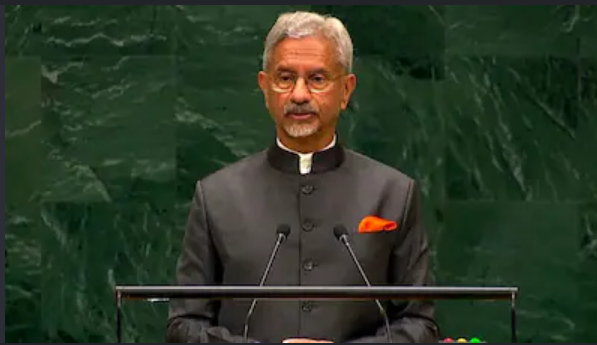
S Jaishankar calls Pakistan a “serial practitioner of terrorism” at UN
S Jaishankar criticised Pakistan at the UN General Assembly, referring to a “serial practitioner of terrorism” and warning against attempts to normalise terrorism.

Dhruv Rathee gets fresh summons in 2018 BJP IT cell video case

Nobody can browbeat judiciary, Chief Justice warns over Rahul Gandhi’s march

India-US trade deal first phase finalised, drafting underway

Election Commission orders voter roll revision in 17 states, UTs

Actor Imran Khan asked to leave India after CJP protest

Delhi Police offers 11-person limit for CJP’s Connaught Place protest
Actor Imran Khan asked to leave India after CJP protest
Election Commission orders voter roll revision in 17 states, UTs
India-US trade deal first phase finalised, drafting underway
Nobody can browbeat judiciary, Chief Justice warns over Rahul Gandhi’s march

Afghan Men Try To Hang With The Jet Engine Of The Aircraft in Kabul- Afghanistan News – Kabul News
Trending Top 10 News: 10000 Crore Fine on Flipkart, Apple to Launch Unique Feature, Hdfc Bank Job Ad

Trending Top 10 News: Nokia 6310, Apple sales, Bachpan ka Pyar Video Kid, Dainik Bhaskar IT Raid

Trending Top 10 News: Canada bans Indian flights, Rain in Delhi NCR, AIMIM Twitter hacked, Raj Kundra case

Trending Top 10 News: Shein India, Apple New Service, Pocket Oxygen, Oppo Launched New Phone
-
 India News14 hours ago
Dhruv Rathee gets fresh summons in 2018 BJP IT cell video case
-
 India News11 hours ago
Nobody can browbeat judiciary, Chief Justice warns over Rahul Gandhi’s march
-
 India News7 hours ago
India-US trade deal first phase finalised, drafting underway
-
 India News4 hours ago
Election Commission orders voter roll revision in 17 states, UTs
-
 India News4 hours ago
Actor Imran Khan asked to leave India after CJP protest
-
 India News3 hours ago
Delhi Police offers 11-person limit for CJP’s Connaught Place protest
