English हिन्दी
Connect with us

Latest world news

ICAN wins 2017 Noble Peace prize for efforts in nuclear disarmament

Published

on

Nobel Peace

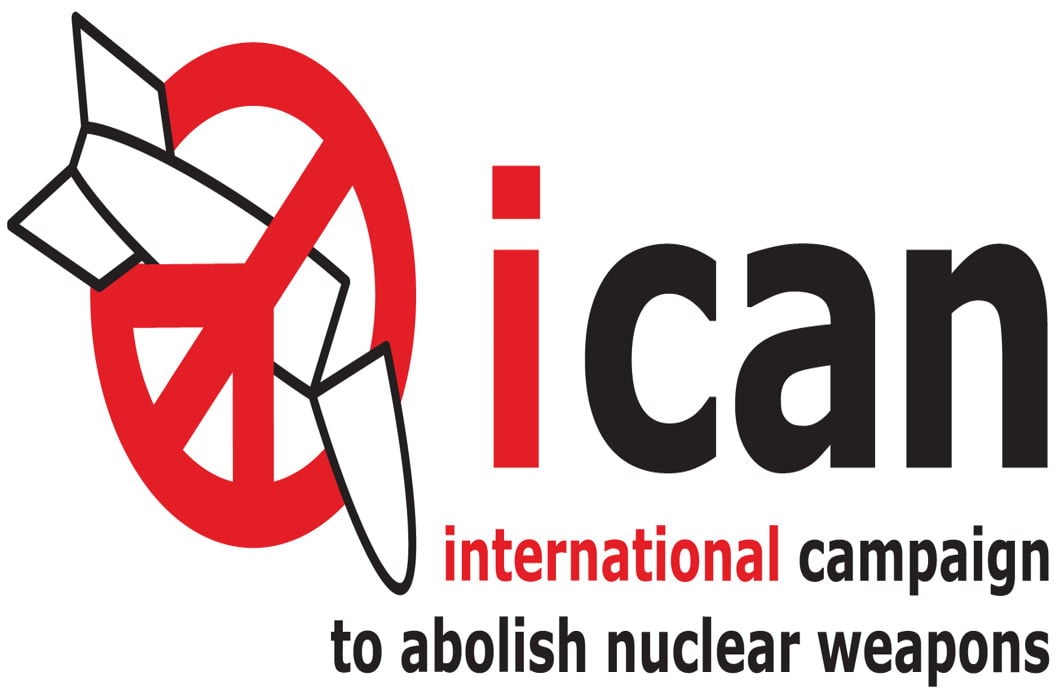
[vc_row][vc_column][vc_column_text]Recognising recent tensions arising out of nuclear arms and testing – North Korea and the US are a case in point – the Norwegian Nobel Committee has conferred the 2017 Nobel Peace Prize on the International Campaign to Abolish Nuclear Weapons (ICAN). This was announced on Friday (October 6).

ICAN is a coalition of hundreds of NGOs spread across 100 countries, and is based in Geneva. ICAN played a key role in facilitating the negotiations that led to the signing of the legally binding Treaty on the Prohibition of Nuclear Weapons. While 122 nations signed the Treaty (on July 7) nine nations didn’t. They included US, France and seven other nuclear-armed nations, including India. Netherlands had voted against, while Singapore had abstained.

“The organization is receiving the award for its work to draw attention to the catastrophic humanitarian consequences of any use of nuclear weapons and for its ground-breaking efforts to achieve a treaty-based prohibition of such weapons,” the Committee said in a statement.

The committee said in its formal announcement of this year’s prize that its decision came at time when “the risk of nuclear weapons being used is greater than it has been for a long time”.

It said some states were modernising their nuclear arsenals, and there was “a real danger that more countries will try to procure nuclear weapons, as exemplified by North Korea. Nuclear weapons pose a constant threat to humanity and all life on earth.”

The international community has previously adopted binding prohibitions against land mines, cluster munitions and biological and chemical weapons, it said, but “nuclear weapons are even more destructive” and have not been outlawed.

ICAN has “helped to fill this legal gap”, describing it as “a driving force in prevailing upon the world’s nations to pledge to cooperate with all relevant stakeholders in efforts to stigmatise, prohibit and eliminate nuclear weapons”.

It said it it wanted to “emphasise that the next steps must involve the nuclear-armed states. This year’s Peace Prize is therefore also a call upon these states to initiate serious negotiations with a view to the gradual, balanced and carefully monitored elimination of the almost 15,000 nuclear weapons in the world.”

It concluded: “It is the firm conviction of the Norwegian Nobel Committee that ICAN, more than anyone else, has in the past year given the efforts to achieve a world without nuclear weapons a new direction and new vigour.”

This is not the first time that an organization has won the Noble Peace Prize for nuclear disarmament. In the year 2005, International Atomic Energy Agency won the prize “for their efforts to prevent nuclear energy from being used for military purposes and to ensure that nuclear energy for peaceful purposes is used in the safest possible way”.

In 2007, the Intergovernmental Panel on Climate Change (IPCC) which was headed by Rajendra Pachauri, former head of TERI, won the Noble Peace Prize. Another Indian recipient, Kailash Satyarthi won the prize in 2014 for the abolition of child labour.[/vc_column_text][/vc_column][/vc_row]

Latest world news

Trump calls it a wonderful gesture as Machado presents him Nobel Peace Prize medal

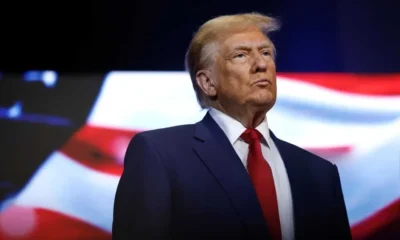
Donald Trump described it as a “wonderful gesture” after Venezuela’s opposition leader Maria Corina Machado presented him with her Nobel Peace Prize medal during a White House meeting.

Published

on

donald-trump

US President Donald Trump has described it as a “wonderful gesture” after Venezuela’s opposition leader Maria Corina Machado presented him with her Nobel Peace Prize medal during a meeting at the White House.

Trump praised Machado publicly after the interaction, saying she had been through “so much” and that the act reflected “mutual respect.” He said the medal was given to him for the work he has done, according to his post on his social media platform.

The gesture, however, has drawn attention as the Nobel Institute has clarified that a Nobel Peace Prize cannot be transferred to another individual.

Nobel Institute rules out transfer of prize

The Nobel Institute has stated that Machado is not permitted to give her Nobel Peace Prize to Trump. Despite this, a White House official confirmed that Trump intends to keep the medal, even if the act remains symbolic.

Trump has long expressed interest in the Nobel Peace Prize, making the episode particularly notable despite the formal limitations placed on such honours.

Political context behind the meeting

Machado had been widely regarded as Venezuela’s democratic leader-in-waiting before Trump’s recent policy decisions regarding the country. Earlier this month, Trump declined to fully back her challenge to Venezuela’s ruling regime and instead signalled openness to engaging with leaders linked to the existing power structure.

Trump has publicly questioned Machado’s ability to lead, saying she lacks sufficient support and respect within Venezuela. Her political party is believed to have won the 2024 elections, results that were rejected by President Nicolas Maduro.

Trump has also indicated a willingness to work with acting President Delcy Rodriguez, who previously served as Maduro’s deputy.

What Machado said after the meeting

Speaking to reporters after leaving the White House and heading to Capitol Hill, Machado said she presented the medal to the US president as recognition of his “unique commitment” to Venezuela’s freedom.

She added that Trump did not provide detailed assurances during their closed-door discussion, including on the issue of elections in Venezuela. No further specifics of the meeting were disclosed.

Afterwards, Machado greeted supporters gathered near the White House gates, hugging several of them. Addressing the crowd, she said they could count on President Trump, prompting brief chants of appreciation from those present.

Machado’s recent public appearance

Before her visit to Washington, Machado had largely stayed out of public view since travelling to Norway last month, where her daughter accepted the Nobel Peace Prize on her behalf. She had spent nearly a year in hiding in Venezuela before appearing at the ceremony.

Continue Reading

Latest world news

US freezes immigrant visa processing for 75 countries, India not in list

The United States suspends immigrant visa processing for 75 countries, excluding temporary visas, as part of stricter immigration measures.

Published

on

The United States has indefinitely suspended immigrant visa processing for 75 countries, targeting individuals seeking permanent residency based on nationality. The move, set to take effect on January 21, excludes tourist and temporary work visas, but is expected to have a significant impact on family-based immigration.

Reasons behind the visa freeze

The US State Department said the suspension aims to prevent the entry of foreign nationals likely to require government welfare and public benefits. “The Trump administration is bringing an end to the abuse of America’s immigration system by those who would extract wealth from the American people,” said State Department spokesman Tommy Pigott.

While the administration cites the risk of immigrants draining government resources, studies by the Cato Institute and other research groups suggest immigrants generally use fewer benefits than US-born citizens.

Who will not be affected

Temporary visas for tourists, business travelers, and sports fans remain unaffected. Exceptions are also allowed for individuals with dual nationality, a valid passport from a country not on the list, or travel serving an “America First” national interest. Approved visas that have not yet been printed must be refused according to the State Department.

Countries affected

The visa freeze covers nations across Africa, Asia, Latin America, the Middle East, and Eastern Europe. Some of the most affected countries include Pakistan, Bangladesh, Somalia, Russia, Iran, Afghanistan, Brazil, Nigeria, and Thailand.

Other countries on the full list include Albania, Algeria, Armenia, Azerbaijan, Bahamas, Barbados, Belarus, Belize, Bhutan, Bosnia and Herzegovina, Myanmar, Cambodia, Cameroon, Cape Verde, Colombia, Côte d’Ivoire, Cuba, Democratic Republic of the Congo, Dominica, Egypt, Eritrea, Ethiopia, Fiji, The Gambia, Georgia, Ghana, Grenada, Guatemala, Guinea, Haiti, Iraq, Jamaica, Jordan, Kazakhstan, Kosovo, Kuwait, Kyrgyzstan, Laos, Lebanon, Liberia, Libya, North Macedonia, Moldova, Mongolia, Montenegro, Morocco, Nepal, Nicaragua, Republic of the Congo, Rwanda, St Kitts and Nevis, St Lucia, St Vincent and the Grenadines, Senegal, Sierra Leone, South Sudan, Sudan, Syria, Tanzania, Togo, Tunisia, Uganda, Uruguay, Uzbekistan, and Yemen.

Trump administration immigration record

The Trump administration has already imposed stricter vetting procedures over the past year, revoking over 100,000 visas and deporting more than 605,000 people, with 2.5 million others leaving voluntarily. Critics highlight that the policy disproportionately affects immigrants from non-European countries.

Continue Reading

Latest world news

Anything less than US control of Greenland unacceptable, says Trump

Donald Trump has said American control of Greenland is vital for national security and missile defence, reigniting debate over the Arctic island’s strategic importance.

Published

on

donald-trump

US president Donald Trump has said that American control over Greenland is essential for the United States’ national security, describing it as “vital” for a planned air and missile defence system known as the Golden Dome.

In a social media post on Wednesday, Trump claimed the United States “needs Greenland for the purpose of National Security” and asserted that the Arctic island plays a key role in the proposed defence architecture. He further said that NATO would become “far more formidable and effective” if Greenland were under US control, adding that “anything less than that is unacceptable.”

Comments ahead of US-Denmark talks

Trump’s remarks came just hours before senior Danish and Greenlandic officials were scheduled to hold talks at the White House with US Vice President JD Vance and Secretary of State Marco Rubio. The discussions are focused on Greenland and broader security issues in the Arctic region.

Responding to US concerns, Denmark’s defence minister Troels Lund Poulsen said the country was increasing its military presence in Greenland. He also noted that Copenhagen was in discussions with allies regarding a stronger NATO footprint in the Arctic.

NATO role and strategic concerns

Trump said NATO “should be leading the way” in building the proposed multi-layer missile defence system. He warned that if the alliance did not act, rival powers could step in, stating that Russia or China might otherwise take the lead.

The US president has repeatedly spoken about taking control of Greenland, a strategically located and sparsely populated island that is an autonomous territory within the Kingdom of Denmark. His renewed comments underline continued US interest in the Arctic’s strategic importance amid rising global security competition.

Continue Reading

Trending

© Copyright 2022 APNLIVE.com