English हिन्दी
Connect with us

Latest world news

Trump signs 10% global tariffs after US Supreme Court setback

Donald Trump has signed a new 10% global tariff order after the US Supreme Court struck down much of his earlier sweeping import duties

Published

on

donald-trump

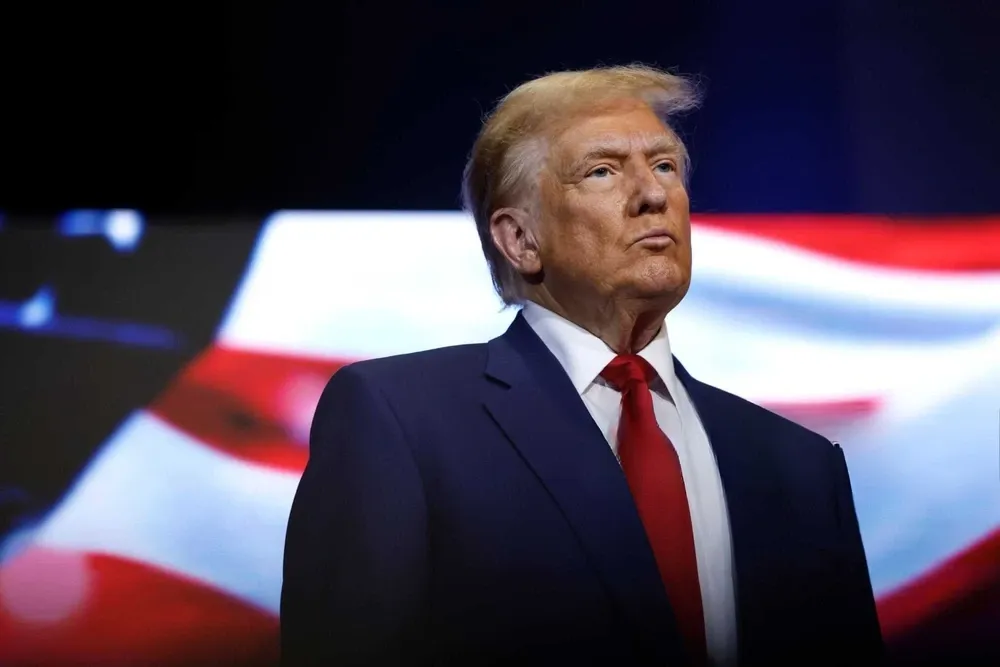
US President Donald Trump has signed a fresh executive order imposing a 10 per cent tariff on imports from countries around the world, just hours after the Supreme Court of the United States struck down much of his earlier sweeping import duties.

The new tariffs, which Trump said will take effect “almost immediately”, are being introduced under a law that limits such measures to 150 days. Describing the move as the beginning of an “adjustment process”, the President signalled that his administration would explore alternative routes to maintain revenue from import duties.

Trump criticises top court ruling

The Supreme Court’s 6-3 decision dealt a significant blow to a key part of Trump’s economic strategy. The ruling invalidated large portions of the administration’s previous tariff framework, prompting a sharp response from the President.

In posts on Truth Social, Trump said certain members of the court “should be ashamed of themselves” and termed the judgment “deeply disappointing”. He argued that the tariff mechanism used by his administration had been “acceptable and proper” and insisted that the new order was legally sound.

Trump also claimed that his use of tariffs over the past year had contributed to economic gains, citing milestones in the stock market. He said the Dow had crossed 50,000 and the S&P had reached 7,000, levels he argued were achieved sooner than expected following his election victory.

Tariffs central to Trump’s policy push

Tariffs have remained a central pillar of Trump’s economic and trade agenda. In April, he had announced “reciprocal” taxes of up to 50 per cent on imports from countries with which the United States runs trade deficits, along with a 10 per cent baseline tariff on most other nations.

He invoked a 1977 law to declare the trade deficit a national emergency, justifying broad import taxes. However, after global backlash, the administration paused the higher reciprocal tariffs for 90 days to allow for negotiations.

According to Trump, several countries agreed to revised trade terms during that period, while others faced steeper duties. He also reiterated claims that tariffs strengthened national security and helped curb fentanyl inflows by 30 per cent when used as penalties against certain countries.

“All of those tariffs remain,” Trump said, adding that other measures would now replace those struck down by the court.

The latest order underscores escalating tensions between the White House and the judiciary, as the administration seeks to preserve a cornerstone of its trade policy while navigating legal constraints.

Latest world news

Trump tells Xi US and China will have fantastic future together at Beijing summit

Donald Trump and Xi Jinping opened a major summit in Beijing with positive remarks as the two leaders prepared to discuss trade tensions, Taiwan, AI and the Iran crisis.

Published

on

Trump and Xi hold high-stakes summit in Beijing

US President Donald Trump met Chinese President Xi Jinping in Beijing on Thursday for a closely watched summit expected to address trade disputes, Taiwan, artificial intelligence and the ongoing Iran crisis.

During the opening remarks at the Great Hall of the People, Trump expressed confidence about ties between Washington and Beijing, saying the two countries were “going to have a fantastic future together.”

The summit marks Trump’s first official visit to China during his second term and the first visit by a sitting US president to the country in nearly a decade.

Both leaders were seen exchanging warm remarks at the start of the meeting despite continuing disagreements over tariffs, Taiwan and strategic competition in technology and artificial intelligence. Reports said discussions are also expected to cover the Iran conflict and global trade stability.

Ahead of the summit, Trump had indicated he would discuss US arms sales to Taiwan with Xi, an issue that remains one of Beijing’s biggest concerns in relations with Washington.

Chinese officials earlier outlined what Beijing described as “red lines” in ties with the United States, including matters related to Taiwan and national sovereignty.

The Beijing visit includes bilateral meetings, ceremonial events and a state banquet, with both sides aiming to stabilise relations after months of geopolitical and economic tensions.

Continue Reading

Latest world news

Trump rejects Iran peace proposal, warns Tehran over uranium dispute

Donald Trump has rejected Iran’s latest response to a US peace proposal, escalating tensions over uranium enrichment, sanctions relief and control of the Strait of Hormuz.

Published

on

Donald Trump statement

US President Donald Trump has rejected Iran’s latest response to a US-backed peace proposal, calling Tehran’s position “totally unacceptable” as negotiations aimed at ending the ongoing conflict remain stalled.

According to reports, Iran responded to the American proposal by demanding war reparations, the removal of sanctions, recognition of its sovereignty over the Strait of Hormuz, and the release of frozen Iranian assets. Tehran also warned it would retaliate against any fresh US military strikes and oppose the deployment of additional foreign warships in the region.

The dispute has intensified over Iran’s nuclear programme, particularly uranium enrichment. The US proposal reportedly sought strict limits on Iran’s nuclear activities, including a long-term halt to uranium enrichment and tighter international oversight. However, Iran’s counter-response did not accept key American demands related to dismantling or restricting its nuclear infrastructure.

Iran has maintained that its nuclear programme is for civilian purposes, while the US and its allies continue to push for stronger safeguards amid concerns over regional security.

The latest exchange comes amid continuing tensions in the Strait of Hormuz, a strategically important shipping route for global oil supplies. Concerns over disruptions in the region have already pushed oil prices higher in international markets.

Reports also suggest that the US proposal aimed to expand the current ceasefire framework and create conditions for broader negotiations involving regional conflicts and maritime security. However, both sides remain far apart on major issues, including sanctions relief and nuclear restrictions.

Continue Reading

Latest world news

Trump approves nearly $9 billion weapons sales to Israel, UAE and other allies amid Iran tensions

The US has fast-tracked nearly $9 billion in weapons sales to Israel, UAE and other allies as tensions linked to the Iran conflict continue despite a fragile ceasefire.

Published

on

Donald Trump statement

The United States has approved nearly $9 billion worth of weapons sales to key Middle Eastern allies, including Israel and the United Arab Emirates, amid ongoing tensions linked to the Iran conflict.

The decision, cleared by the administration of Donald Trump, includes expedited military transfers to Israel, the UAE, Qatar, and Kuwait. The approvals were granted under an emergency provision, allowing authorities to bypass the usual congressional review process.

Emergency clearance amid ongoing conflict

Officials said the move was necessary due to the evolving security situation in the region, particularly as the conflict involving Iran continues despite a fragile ceasefire. The war, which began earlier in 2026, has heightened instability across West Asia.

US Secretary of State Marco Rubio invoked emergency powers to fast-track the deals, citing urgent defence requirements for allied nations.

What the arms package includes

The approved package includes a mix of advanced defence systems and precision weapons:

  • Patriot missile defence replenishments worth over $4 billion for Qatar
  • Precision-guided weapon systems for multiple countries
  • Integrated battle command systems for Kuwait
  • Additional advanced weapons support for Israel and the UAE

The total value of these deals is estimated at over $8.6 billion, often rounded to nearly $9 billion.

Timing linked to iran war

The approval comes nearly nine weeks into the conflict involving the US, Israel, and Iran, with tensions still high despite a ceasefire that has been in place for several weeks.

Analysts note that the move signals continued US military backing for its regional allies, particularly in strengthening air defence and precision strike capabilities during uncertain conditions.

Criticism and concerns

The decision to bypass congressional oversight has drawn criticism from some quarters, particularly over transparency and the broader implications of increasing arms supplies in a conflict-prone region.

Continue Reading

Trending

© Copyright 2022 APNLIVE.com