
Latest world news
India condemn terror attack on Sikhs in Afghanistan


India has strongly condemned a suicide bomb attack on a group of Sikhs in Jalalabad, the capital of Nangarhar province in Afghanistan. The attack was the deadliest on the Sikh community in the country during decades of war and violence.
According to Kabul based Tolo News, the Indian embassy has issued a statement on Sunday night saying, “We strongly condemn the heinous and cowardly terrorist attack in Jalalabad today which resulted in the death of 20 innocent Afghans, including 10 members of the Afghan Sikh Community, and injured more than 20 persons.”
The Indian mission said that the attack in Jalalabad underlines the need for wider international efforts to eliminate terrorism. The statement said, “Today’s terrorist attack again underlines the need for united global fight against international terrorism without discrimination and accountability of those who support terrorists in any manner.”

Read More: India joins UN in condemning terror attacks in Afghanistan
According to public health officials, at least 19 people, ten of them from Afghanistan’s Sikh community, were killed and around 20 others wounded in a suicide bombing that rocked at 4 pm in Jalalabad city on Sunday. Ottar Singh Khalsa, the only Sikh candidate for 2019 presidential elections was among those killed.
The group of Sikhs were on their way to meet Afghan President Ashraf Ghani who was on a tour of the province when the explosion happened. Unconfirmed reports indicate the explosion happened close to the governor’s compound.
Security forces immediately cordoned off the area and ambulances were seen carrying the victims to hospital. At least one burnt car is seen in the video footage of the bombing scene.
Read More: India succeeds hurting Pakistan’s trade interest in Afghanistan
The suicide bombing has coincided with President Ashraf Ghani’s two-day trip to Nangarhar province. He inaugurated a new hospital complex in Jalalabad and met with local officials on Sunday. He will return to Kabul on Monday.
There are approximately 8000 Afghan Sikhs living in Jalalabad, Ghazni, Kabul and Kandhar who normally speak native Pashto and Dari along with Hindi or Punjabi languages.
Read More: India sends first wheat shipment for Afghanistan via Iranian Chabahar port










Latest world news
S Jaishankar says India is a natural option for Russia amid Europe tensions
External Affairs Minister S Jaishankar said India remained a natural option for Russia as Moscow increasingly turned towards Asia amid strained relations with Europe. He highlighted the continuity of India-Russia ties and their significance for the balance of power in Asia.


Latest world news
Putin praises PM Modi, says he has very good ideas on Ukraine war
Russian President Vladimir Putin has praised Prime Minister Narendra Modi for repeatedly raising the need to end the Ukraine war, describing his ideas for a settlement as “very good”.

Latest world news
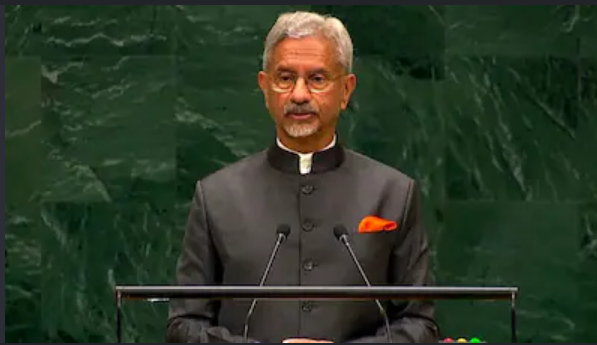
S Jaishankar calls Pakistan a “serial practitioner of terrorism” at UN
S Jaishankar criticised Pakistan at the UN General Assembly, referring to a “serial practitioner of terrorism” and warning against attempts to normalise terrorism.

Dhruv Rathee gets fresh summons in 2018 BJP IT cell video case

Nobody can browbeat judiciary, Chief Justice warns over Rahul Gandhi’s march

India-US trade deal first phase finalised, drafting underway

Election Commission orders voter roll revision in 17 states, UTs

Actor Imran Khan asked to leave India after CJP protest

Delhi Police offers 11-person limit for CJP’s Connaught Place protest
Actor Imran Khan asked to leave India after CJP protest
Election Commission orders voter roll revision in 17 states, UTs
India-US trade deal first phase finalised, drafting underway
Nobody can browbeat judiciary, Chief Justice warns over Rahul Gandhi’s march

Afghan Men Try To Hang With The Jet Engine Of The Aircraft in Kabul- Afghanistan News – Kabul News
Trending Top 10 News: 10000 Crore Fine on Flipkart, Apple to Launch Unique Feature, Hdfc Bank Job Ad

Trending Top 10 News: Nokia 6310, Apple sales, Bachpan ka Pyar Video Kid, Dainik Bhaskar IT Raid

Trending Top 10 News: Canada bans Indian flights, Rain in Delhi NCR, AIMIM Twitter hacked, Raj Kundra case

Trending Top 10 News: Shein India, Apple New Service, Pocket Oxygen, Oppo Launched New Phone
-
 India News15 hours ago
Dhruv Rathee gets fresh summons in 2018 BJP IT cell video case
-
 India News12 hours ago
Nobody can browbeat judiciary, Chief Justice warns over Rahul Gandhi’s march
-
 India News8 hours ago
India-US trade deal first phase finalised, drafting underway
-
 India News5 hours ago
Election Commission orders voter roll revision in 17 states, UTs
-
 India News5 hours ago
Actor Imran Khan asked to leave India after CJP protest
-
 India News4 hours ago
Delhi Police offers 11-person limit for CJP’s Connaught Place protest
