
Latest world news
British warplane hit Syrian forces near Iraq, Jordan border


The British Royal Air Force (RAF) Typhoon fighter jet has bombed Syrian forces near border with Iraq and Jordan last month, killing an army officer and injuring seven others in its first such attack since April this year when it took part in a series of airstrikes in that country, reports the Sunday Times.
The London based daily report says that the RAF bombed Syrian regime forces after a desert battle erupted near a British SAS training base. A Typhoon fighter jet dropped a 500lb laser-guided bomb during a fire-fight.
The Sunday Times said that UK dropped the bomb because they thought Syrian troops were trying to approach the al-Tanf base where anti-government Maghawir al-Thowra militants are trained and commanded.

Tehran based Press TV reports that US has set up the heavily-fortified base in the al-Tanf desert where the Syrian, Iraqi and Jordanian borders meet. It said, “The US and its allies have marked a 34-mile (54-kilometer) zone in the area and warned Syrian forces against approaching it inside their own territory”.
Read More: Bashar say US, French, Turks, Israeli troops occupying Syria
Press TV has also quoted a Russian military expert, at the country’s foreign ministry, saying that the Pentagon is training dozens of Takfiri terrorists at 19 military camps inside Syria.
The terrorist groups following Saudi Arabia nursed Wahabi ideology are known as Takfiris as they consider Shia Muslims as infidels (Kafir) and justify killing the innocent civilians. Daesh (IS), Al-Nusra front and several other groups in Syria and Iraq have killed hundreds of thousands of innocent people since their aggression after 2011.
According to New York Post the Britain’s Ministry of Defence refused to identify the target, but said the strike was a “wholly proportionate response.’’
Syrian leaders have repeatedly alleged that US and its allies were trying the country and prolong the armed conflict.
Read More:US airstrikes on Syrian army near Daesh frontline
Last month, Syria’s state news agency SANA said the US had airlifted two high-ranking commanders of Daesh (IS) terror group in the Twaimin area to an American base in al-Shaddadi in the Hasakah province.

The US and its allies claim of bombing Daesh positions inside Syria since September 2014 without any authorization from the Damascus government or a UN mandate.
Damascus says the US and its Western and regional allies are aiding terrorist groups, while Israel carries out sporadic strikes against Syrian government forces.
Read More: Saudi Arabia discussing US for troops’ deployment in Syria
The Syrian Observatory for Human Rights (SOHR), considered to be supportive of Bashar al-Assad opponents, has also said “explosions’’ had been heard in the desert near a base called al-Tanf.








Latest world news
S Jaishankar says India is a natural option for Russia amid Europe tensions
External Affairs Minister S Jaishankar said India remained a natural option for Russia as Moscow increasingly turned towards Asia amid strained relations with Europe. He highlighted the continuity of India-Russia ties and their significance for the balance of power in Asia.


Latest world news
Putin praises PM Modi, says he has very good ideas on Ukraine war
Russian President Vladimir Putin has praised Prime Minister Narendra Modi for repeatedly raising the need to end the Ukraine war, describing his ideas for a settlement as “very good”.

Latest world news
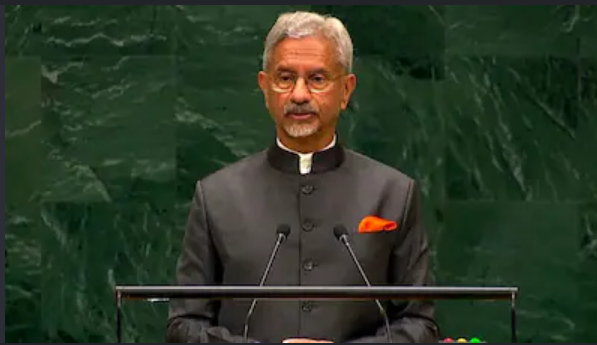
S Jaishankar calls Pakistan a “serial practitioner of terrorism” at UN
S Jaishankar criticised Pakistan at the UN General Assembly, referring to a “serial practitioner of terrorism” and warning against attempts to normalise terrorism.

CJP claims Saurav Das, Ashutosh Ranka detained at Jantar Mantar

Supreme Court stays defamation case against Rahul Gandhi over PM Modi remarks

Rahul Gandhi hosts high tea for INDIA bloc after Gyanesh Kumar protests

L Murugan quits Union ministry to strengthen BJP in Tamil Nadu

Amit Shah attacks Rahul Gandhi over Congress poll losses, questions SIR row

PM Modi speaks to Mark Carney as India and Canada push to strengthen ties

S Jaishankar says India is a natural option for Russia amid Europe tensions

CJP leaders Saurav Das, Ashutosh Ranka, Ajinkya Shinde sent to 5-day judicial custody

BJP focuses on religion as opposition pushes BDM strategy in UP
L Murugan quits Union ministry to strengthen BJP in Tamil Nadu

Afghan Men Try To Hang With The Jet Engine Of The Aircraft in Kabul- Afghanistan News – Kabul News
Trending Top 10 News: 10000 Crore Fine on Flipkart, Apple to Launch Unique Feature, Hdfc Bank Job Ad

Trending Top 10 News: Nokia 6310, Apple sales, Bachpan ka Pyar Video Kid, Dainik Bhaskar IT Raid

Trending Top 10 News: Canada bans Indian flights, Rain in Delhi NCR, AIMIM Twitter hacked, Raj Kundra case

Trending Top 10 News: Shein India, Apple New Service, Pocket Oxygen, Oppo Launched New Phone
-
 India News24 hours ago
CJP claims Saurav Das, Ashutosh Ranka detained at Jantar Mantar
-
 India News22 hours ago
Supreme Court stays defamation case against Rahul Gandhi over PM Modi remarks
-
 India News14 hours ago
Rahul Gandhi hosts high tea for INDIA bloc after Gyanesh Kumar protests
-
 India News13 hours ago
L Murugan quits Union ministry to strengthen BJP in Tamil Nadu
-
 India News13 hours ago
Amit Shah attacks Rahul Gandhi over Congress poll losses, questions SIR row
-
 India News12 hours ago
BJP focuses on religion as opposition pushes BDM strategy in UP
-
 India News1 hour ago
CJP leaders Saurav Das, Ashutosh Ranka, Ajinkya Shinde sent to 5-day judicial custody
-
 Latest world news1 hour ago
S Jaishankar says India is a natural option for Russia amid Europe tensions

