
Latest world news
India succeeds hurting Pakistan’s trade interest in Afghanistan


Development of Iranian port Chabahar and connecting road to Afghanistan by India has started showing results causing huge trade deficit for Pakistan. A senior Pakistani official has acknowledged that India has succeeded to penetrate in Kabul declining their market share by more than 50 per cent falling to $ 1.2 billion from $ 2.7 billion during last two years.
According to Dawn, Zubain Motiwala, Chairman Pakistan-Afghanistan Joint Chamber of Commerce and Industry who recently visited Kabul said on Friday that the penetration of India and China into Afghan market has limited Pakistan’s option to retain its market share. He said that India subsidises heavily on its exports. Pakistan has been losing even the traditional markets of flour, men and women’s clothes and red meat.
According to Motiwala, India has been providing goods at subsidised rates to capture the market and are providing air tickets with a 75pc rebate. Afghans find it easy to travel to India with cheap tickets and free multiple visas without police checks.
According to Pakistan Bureau of Statistics, exports to Afghanistan dropped to $1.271bn in FY17 from $1.437bn in FY16. Exports in the first quarter of 2017-18 stood at $319 million. Traditionally Kabul was natural market for Pakistani exports which is now changing because of cheaper products from China and India.
Rising India’s medical tourism has also affected Pakistan. Earlier thousands of Afghans used to visit Peshawar for medical treatment but now they prefer going to India due to cheaper treatments. “Medical tourism of Peshawar, which was mainly due to Afghans, is now at zero level; hospitals in Hayatabad are empty,” Motiwala added.
Large numbers of Peshawar traders have also lost their business. Out of 200 flour mills, about 100 have been closed down due to a drastic fall in the export of flour to Afghanistan.
Movement of containers’ traffic from Karachi port to Kabul have also decreased from average 70,000 to just 7000 which reflects the change of trading route for imported goods to Afghanistan.
Dawn report further says that Pakistan was the biggest supplier of shalwar qameez suits to Kabul which is now shifted to the supplies from India and China. This was a traditional Pakistani item in Afghan market.
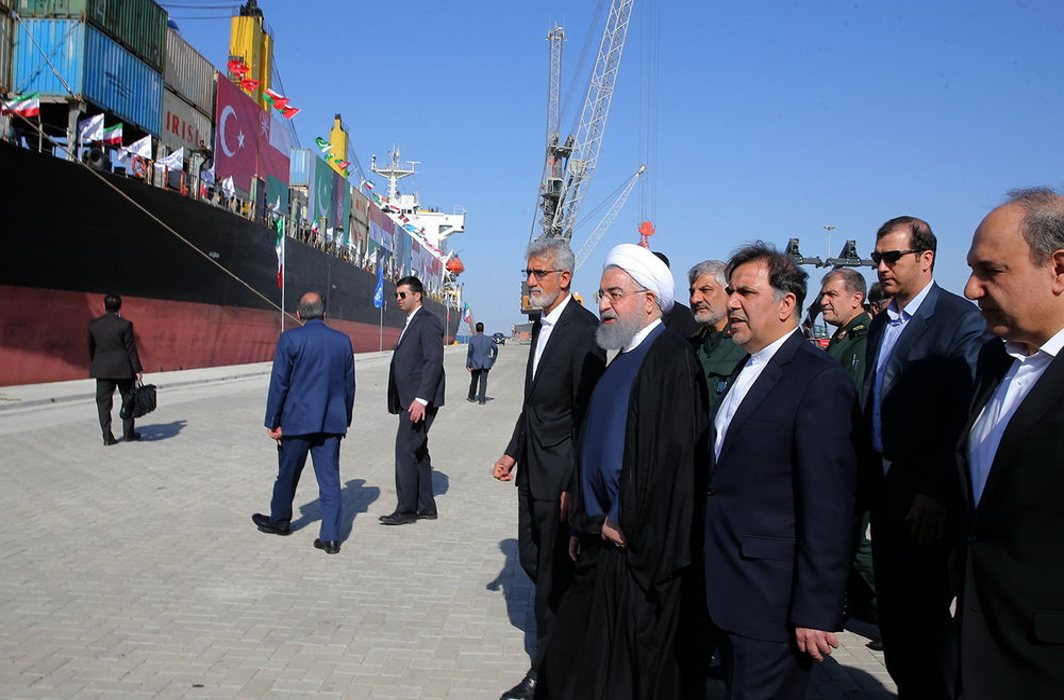
Earlier on February 9, Eurasian Times had reported that over 80% of Afghanistan’s cargo traffic has shifted from Karachi seaport to Bandar Abbas and Chabahar ports in Iran. The move comes as a result to Pakistan’s new trade tariffs and inauguration of Chabahar port, which is expected to greatly impact the Pakistan’s role in trade transit for Afghanistan.
In October last year, India shipped its first consignment of wheat to Afghanistan by sea through Chabahar port, launching a trade route bypassing Pakistan. The shipment was sent from Kandla seaport. The shipment was taken by trucks to Afghanistan from the Iranian port.
In May 2016, India, Iran, and Afghanistan had signed a historic three-nation deal to develop the strategic Chabahar port and build a transport and trade corridor through Afghanistan that could halve the time and cost of doing business with Europe.
Since 2001 US-led military operation to remove Taliban government in Afghanistan, militant groups used to attack coalition cargo travelling from Karachi to Kabul in Baluchistan province for black mailing US administration and exerting pressure on Pakistan government.







Latest world news
Magnitude 7 earthquake strikes Russia’s Kamchatka Peninsula
A magnitude 7 earthquake struck Russia’s Kamchatka Peninsula region on Friday. The initial report placed the earthquake at a depth of 140 kilometres.


Latest world news
S Jaishankar says India is a natural option for Russia amid Europe tensions
External Affairs Minister S Jaishankar said India remained a natural option for Russia as Moscow increasingly turned towards Asia amid strained relations with Europe. He highlighted the continuity of India-Russia ties and their significance for the balance of power in Asia.

Latest world news
Putin praises PM Modi, says he has very good ideas on Ukraine war
Russian President Vladimir Putin has praised Prime Minister Narendra Modi for repeatedly raising the need to end the Ukraine war, describing his ideas for a settlement as “very good”.


Mallikarjun Kharge’s ‘Your Friends’ jab at Rahul Gandhi over congress exits

Magnitude 7 earthquake strikes Russia’s Kamchatka Peninsula

Delhi deploys 25,000 personnel, installs CCTV cameras ahead of CJP march

Abhijeet Dipke detained ahead of CJP’s national flag march in Delhi

Mallikarjun Kharge seeks all-party meeting with PM Modi on delimitation

Centre sends 3 letters to Punjab government after anti-drug activist’s killing
Mallikarjun Kharge seeks all-party meeting with PM Modi on delimitation
Abhijeet Dipke detained ahead of CJP’s national flag march in Delhi
Magnitude 7 earthquake strikes Russia’s Kamchatka Peninsula
Delhi deploys 25,000 personnel, installs CCTV cameras ahead of CJP march

Afghan Men Try To Hang With The Jet Engine Of The Aircraft in Kabul- Afghanistan News – Kabul News
Trending Top 10 News: 10000 Crore Fine on Flipkart, Apple to Launch Unique Feature, Hdfc Bank Job Ad

Trending Top 10 News: Nokia 6310, Apple sales, Bachpan ka Pyar Video Kid, Dainik Bhaskar IT Raid

Trending Top 10 News: Canada bans Indian flights, Rain in Delhi NCR, AIMIM Twitter hacked, Raj Kundra case

Trending Top 10 News: Shein India, Apple New Service, Pocket Oxygen, Oppo Launched New Phone
-
 India News15 hours ago
Mallikarjun Kharge’s ‘Your Friends’ jab at Rahul Gandhi over congress exits
-
 Latest world news15 hours ago
Magnitude 7 earthquake strikes Russia’s Kamchatka Peninsula
-
 India News15 hours ago
Delhi deploys 25,000 personnel, installs CCTV cameras ahead of CJP march
-
 India News6 hours ago
Abhijeet Dipke detained ahead of CJP’s national flag march in Delhi
-
 India News5 hours ago
Mallikarjun Kharge seeks all-party meeting with PM Modi on delimitation
-
 India News4 hours ago
Centre sends 3 letters to Punjab government after anti-drug activist’s killing
