
Latest world news
Iran-Syria Sign New Defence Cooperation Agreement


Syrian President praises Iran’s role in fight against terrorism
Despite pressures from US and its regional allies, Iran and Syria have signed an agreement on defence and technical cooperation in Damascus on Sunday.
According to Press TV, Iranian Defence Minister Amir Hatami has said that the agreement “will define the areas of bilateral presence, participation, and cooperation” in defence ties.
Amir Hatami reiterated Tehran’s commitment for Syria’s security. He said that the relations between the two countries date back to more than 40 years proved their effectiveness in confronting the threats and challenges facing the region. He signed the document along with his Syrian counterpart General Ali Abdullah Ayoub.
While talking to media persons in Damascus the Iranian Defence Minister said that Syria has put the era of war behind it and has entered the era of reconstruction. He also stressed that Tehran hoped to have a productive role in rebuilding the country.
Read More: Iran to maintain role in Syria despite US threats
On his part Syrian Defence Minister General Ayyoub said that through cooperation with Iran, “we will realize our national interests, and not allow any party or country to cause damage to the strong and firm relations of the two countries.”
He further said, “It was thanks to the Islamic Republic’s support and cooperation that great victories were achieved against terrorist groups and their patrons,” he said.
According to Syrian official news agency SANA, Gen Ayub said that ties between the two countries are now stronger and deeper and the anti-terrorism axis is growing stronger and more effective.
Read More: Trump was to hit Russian and Iranian targets in Syria
On Monday, SANA website carried pictures and videos of the weapons and western-made ammunition left behind by Daesh (IS) terrorists found in Deir Ezzor.

The Iranian Defence Minister arrived in Damascus for a two-day visit on Sunday at the head of a delegation comprising senior military officials and parliamentarians.
Moreover, Hatami met Syrian President Bashar al-Assad and praised the steadfastness of the Syrian people and government forces in their battle against terrorism and expressed confidence that they would achieve ultimate victory down the path.
SANA reports that during the meeting the Syrian President affirmed the importance of Hatami’s visit and the depth of Syrian-Iranian relations and stressed the importance of developing the process of joint coordination and outlining long-term cooperation plans that enhance the steadfastness of Iran and Syrian people in the “face of everything they are subjected to”.
Read More: Russia, Turkey and Iran support Syrian sovereignty, integrity
The Syrian president said Tehran and Damascus had to outline plans to improve long-term cooperation in order to enhance the robustness of their nations in the face of the enemies.
At Damascus’ request, Tehran has been providing military advisory support to fight against foreign-backed terrorism and militancy since 2011.
The defence cooperation agreement between Iran and Syria has been signed at a time when US State Department representative William Roebuck visited northern Syria without Damascus permission on Saturday and reiterated that US will keep troops in the Kurdish militant held territories in the country.
He reportedly visited the cities of Manbij and Ayn al-Arab locality known as Kobani, both situated in Aleppo province as well as the Shaddadah town in Hasaka province. He was later deu to visit Dayr Ezzor province held by the US supported Kurdish militants.
There are reports that approximately 2000 US troops and lesser number of troops from France and other allies have been deployed to the northeast Syria raising fears that they might be aiming to partition the country.
Kurdish media reported on Saturday that the US had installed advanced radar systems in its bases at the Ayn al-Arab military airport and Ramelan town in Hasaka province.




Latest world news
S Jaishankar says India is a natural option for Russia amid Europe tensions
External Affairs Minister S Jaishankar said India remained a natural option for Russia as Moscow increasingly turned towards Asia amid strained relations with Europe. He highlighted the continuity of India-Russia ties and their significance for the balance of power in Asia.


Latest world news
Putin praises PM Modi, says he has very good ideas on Ukraine war
Russian President Vladimir Putin has praised Prime Minister Narendra Modi for repeatedly raising the need to end the Ukraine war, describing his ideas for a settlement as “very good”.

Latest world news
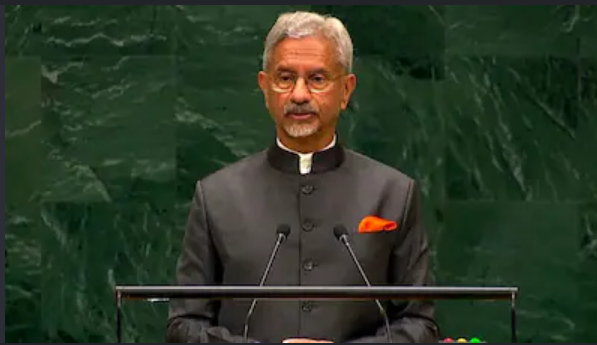
S Jaishankar calls Pakistan a “serial practitioner of terrorism” at UN
S Jaishankar criticised Pakistan at the UN General Assembly, referring to a “serial practitioner of terrorism” and warning against attempts to normalise terrorism.

CJP claims Saurav Das, Ashutosh Ranka detained at Jantar Mantar

Supreme Court stays defamation case against Rahul Gandhi over PM Modi remarks

Rahul Gandhi hosts high tea for INDIA bloc after Gyanesh Kumar protests

L Murugan quits Union ministry to strengthen BJP in Tamil Nadu

Amit Shah attacks Rahul Gandhi over Congress poll losses, questions SIR row

PM Modi speaks to Mark Carney as India and Canada push to strengthen ties

S Jaishankar says India is a natural option for Russia amid Europe tensions

CJP leaders Saurav Das, Ashutosh Ranka, Ajinkya Shinde sent to 5-day judicial custody

BJP focuses on religion as opposition pushes BDM strategy in UP
L Murugan quits Union ministry to strengthen BJP in Tamil Nadu

Afghan Men Try To Hang With The Jet Engine Of The Aircraft in Kabul- Afghanistan News – Kabul News
Trending Top 10 News: 10000 Crore Fine on Flipkart, Apple to Launch Unique Feature, Hdfc Bank Job Ad

Trending Top 10 News: Nokia 6310, Apple sales, Bachpan ka Pyar Video Kid, Dainik Bhaskar IT Raid

Trending Top 10 News: Canada bans Indian flights, Rain in Delhi NCR, AIMIM Twitter hacked, Raj Kundra case

Trending Top 10 News: Shein India, Apple New Service, Pocket Oxygen, Oppo Launched New Phone
-
 India News24 hours ago
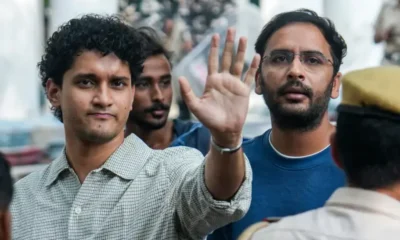
CJP claims Saurav Das, Ashutosh Ranka detained at Jantar Mantar
-
 India News22 hours ago
Supreme Court stays defamation case against Rahul Gandhi over PM Modi remarks
-
 India News14 hours ago
Rahul Gandhi hosts high tea for INDIA bloc after Gyanesh Kumar protests
-
 India News13 hours ago
L Murugan quits Union ministry to strengthen BJP in Tamil Nadu
-
 India News13 hours ago
Amit Shah attacks Rahul Gandhi over Congress poll losses, questions SIR row
-
 India News12 hours ago
BJP focuses on religion as opposition pushes BDM strategy in UP
-
 India News1 hour ago
CJP leaders Saurav Das, Ashutosh Ranka, Ajinkya Shinde sent to 5-day judicial custody
-
 Latest world news58 mins ago
S Jaishankar says India is a natural option for Russia amid Europe tensions

