
Latest world news
Iran: World Is Sick and Tired Of US Diktats


Foreign Minister Javad Zarif meets North Korean counterpart in Tehran
Iranian Foreign Minister Javad Zarif has said that the world is “sick and tired” of US’ unilateralism and world won’t follow impulsive tweeted diktats. In a show of defiance Zarif also met Ri Yong-ho, his counterpart from North Korea, the country which is also facing US sanctions, on Tuesday in Tehran.
The Iranian foreign minister posted message on his twitter handle:
Tantrums & CAPPED TWEETS won’t change the fact that the world is sick & tired of US unilateralism. Stopping US trade and killing 100K US jobs is fine with us, but the world won’t follow impulsive tweeted diktats. Just ask EU, Russia, China & dozens of our other trading partners.
— Javad Zarif (@JZarif) August 7, 2018
Reminder: International relations is not a beauty pageant, with tired clichés about a desire for WORLD PEACE.
And it is not the first time that a warmonger claims he is waging war for “world peace”.— Javad Zarif (@JZarif) August 7, 2018
Earlier in the day US President Donald Trump called the new US sanctions “most biting sanctions ever” and threatened the world nations saying “Anyone doing business with Iran will NOT be doing business with United States”. He also claimed his action was meant for world peace.
The Iran sanctions have officially been cast. These are the most biting sanctions ever imposed, and in November they ratchet up to yet another level. Anyone doing business with Iran will NOT be doing business with the United States. I am asking for WORLD PEACE, nothing less!
— Donald J. Trump (@realDonaldTrump) August 7, 2018
Trump’s warning was apparently addressed to the EU which put into force a law banning companies from complying with US sanctions or court rulings and enabling them to claim compensation for potential damage.
 On Monday, European Union Commission, in a statement, announced that it would activate an EU law that would shield European companies that have business times with Iran from US sanctions.
The law of the blocking statute would comprise a set of protective measures and would be the most powerful tool at EU’s disposal as it would ban any European company from complying with US sanctions and would not recognize any court rulings that would enforce American penalties.
Federica Mogherini, the chief of EU foreign policy, even encouraged companies to do more business with Iran despite US sanctions, saying Tehran fulfilled its commitments towards the deal to limit its nuclear program.
European countries had previously opposed re-imposition of US sanctions against Iran saying Tehran should not be punished and it has been so far doing its share of the multilateral Iran nuclear deal signed in 2015 by five permanent members of the Security Council and Germany, known as P5+1.
Press TV eports that apart from opposition from Europe, countries like Turkey, China and India have already made it clear they would not abide by the unilateral sanctions against Iran.
Regarding Iranian foreign minister Javad Zarif’s meeting with his North Korean counterpart, Aljazeera’s journalist in Tehran Zein Basravi said that the timing of the meeting is “likely no coincidence”. He said, “Iran wants America to know it has friends everywhere.”







Latest world news
Magnitude 7 earthquake strikes Tibet after floods
A magnitude 7 earthquake struck northern Tibet on Thursday, October 22. The tremor came weeks after deadly flash floods and landslides hit the mountainous region near the Nepal-China border. Initial reports did not confirm casualties or damage from the earthquake.


Latest world news
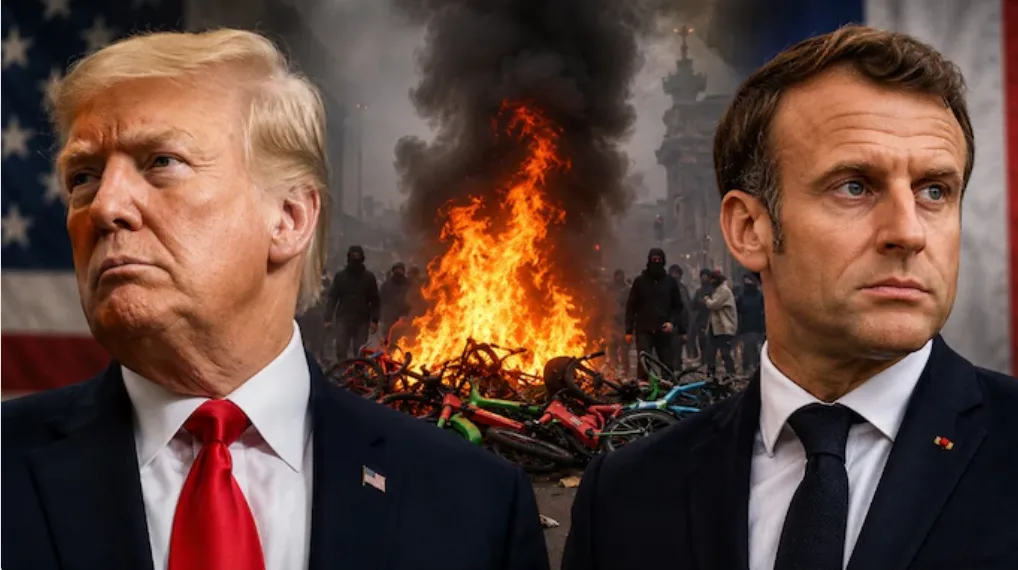
Macron rejects Trump’s immigration claims over France riots
French President Emmanuel Macron criticised Donald Trump and other foreign leaders over their comments on France’s recent unrest. Macron rejected claims that the country was being overrun by migrants and Islamists, calling such assertions false.
Latest world news
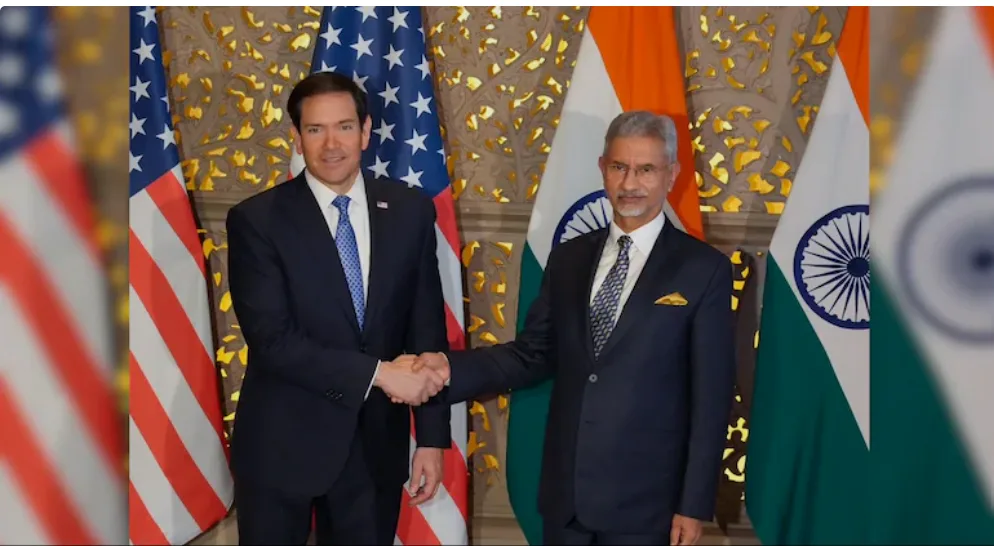
Marco Rubio says India and US share extraordinary alignment on key issues
US Secretary of State Marco Rubio said India and the United States share an extraordinary alignment on core issues, even though disagreements between the two countries may arise.

Punjab strike hits public services as 3 lakh employees and roadways workers protest

Two election commissioners complained against senior poll officer, RTI reveals

Om Prakash Mathur sworn in as Keralam Governor

PM Modi to inaugurate Rs 169-crore RBI data centre in Odisha on October 25

Delhi High Court rejects Neha Bora’s plea against peace bond notice

MEA responds after ITBP chief flags ongoing face-offs with China in Arunachal
Delhi High Court rejects Neha Bora’s plea against peace bond notice
PM Modi to inaugurate Rs 169-crore RBI data centre in Odisha on October 25
Om Prakash Mathur sworn in as Keralam Governor
Two election commissioners complained against senior poll officer, RTI reveals

Afghan Men Try To Hang With The Jet Engine Of The Aircraft in Kabul- Afghanistan News – Kabul News
Trending Top 10 News: 10000 Crore Fine on Flipkart, Apple to Launch Unique Feature, Hdfc Bank Job Ad

Trending Top 10 News: Nokia 6310, Apple sales, Bachpan ka Pyar Video Kid, Dainik Bhaskar IT Raid

Trending Top 10 News: Canada bans Indian flights, Rain in Delhi NCR, AIMIM Twitter hacked, Raj Kundra case

Trending Top 10 News: Shein India, Apple New Service, Pocket Oxygen, Oppo Launched New Phone
-
 India News20 hours ago
Punjab strike hits public services as 3 lakh employees and roadways workers protest
-
 India News20 hours ago
Two election commissioners complained against senior poll officer, RTI reveals
-
 India News9 hours ago
Om Prakash Mathur sworn in as Keralam Governor
-
 India News8 hours ago
PM Modi to inaugurate Rs 169-crore RBI data centre in Odisha on October 25
-
 India News7 hours ago
Delhi High Court rejects Neha Bora’s plea against peace bond notice
-
 India News7 hours ago
MEA responds after ITBP chief flags ongoing face-offs with China in Arunachal
