English हिन्दी
Connect with us

Latest world news

Iraqi PM: KRG Must Hand Over Airports by Friday or Face International Air Embargo

Published

on

Iraqi PM: KRG Must Hand Over Airports by Friday or Face International Air Embargo
[vc_row][vc_column][vc_column_text]Iraqi forces watching border from Turkish territory          

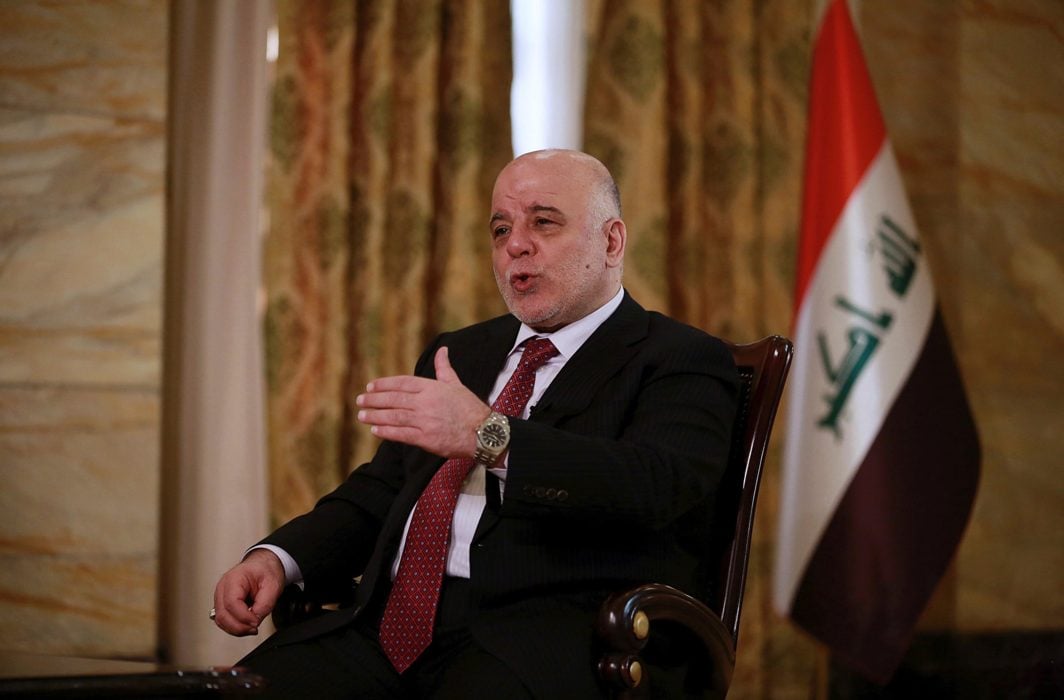
Reacting to Masoud Barzani, the head of Kurdistan Regional Government (KRG)’s defiant attitude sticking for “ending ties with Baghdad,” Iraqi Prime Minister Haider al-Abadi has, on Tuesday, threatened to impose international air embargo if he does not hand over control of its airports in Erbil and Sulaymaniyah within three days.

Iraqi Prime Minister, while addressing his weekly press conference in Baghdad, said international flights to and from the Kurdish region would be suspended in three days. Precisely, KRG has until 3:00 pm local time (12:00 GMT) on Friday to transfer control of the airports to the Iraqi government.

Abadi reiterated that Baghdad would not negotiate with Kurdish authorities about the results of the provocative and “unconstitutional” referendum saying that whole nation would suffer from its repercussions.

Iraqi prime minister alleged corruption among the Kurdish leaders saying that the revenues collected from exporting the region’s oil had been transferred to personal bank accounts abroad. He also criticized the Kurdish authorities for not paying salaries to  the employees and workers in the region despite taking some 25 percent of country’s oil revenues.

Iraq’s central government called on all countries to stop direct flights to the international airports of Erbil, the capital of KRG and Sulaymaniyah last week. However only Iran has complied with Baghdad’s suggestion by halting direct flights to the region and also closing its air space for the flights originating from or destined to the Kurdish region. Iran had also threatened to stop trading through its borders with Iraqi Kurdish region.

Meanwhile, Masoud Barzani, in a televised address on Tuesday, urged Baghdad to engage in “serious dialogue instead of threatening.”  He said, “I call on Mr. Haider al-Abadi and the others not to close the door to dialogue, because it is dialogue that will solve problems.” He further said, “We assure the international community of our willingness to engage in dialogue with Baghdad.”

He was quoted saying, “We may face hardship, but we will overcome.” Barzani urged the world powers “to respect the will of millions of people” who voted in the referendum and adding that the “Yes” vote had won in the plebiscite.

According to Kurdish authorities, the turnout in the independence referendum was 76 percent, with 3.3 million of the total 4.58 million registered voters having participated in the exercise.

Kurdish Regional Government (KRG) was groomed during 12 years of UN sanctions imposed against Saddam Hussein regime after Gulf war-one triggered after Baghdad chose to invade and occupy Kuwait in 1990. Iraqi Kurds were getting 16 percent of country’s oil revenue directly through UN agencies till 2003, the fall of Saddam regime.

The Peshmarga military force, the official army of Kurdish Regional Government (KRG) is also headed by the President of Iraqi Kurdisan. It is responsible for the security of the region through its subsidiaries: official intelligence agency, assisting intelligence agency, anti terror agency and military force.

The Iraqi Kurdish border with Turkey is manned by Peshmarga. Therefore Baghdad chose to participate in joint military drill with Turkish forces on the other side of the border. This is peculiar situation where official army of the central government is forced to guard its border from the territories of neighbouring country.

The independence referendum was held on Monday in open defiance of Baghdad and much to the consternation of the international community warning it could most likely create more trouble in the country engaged in fight against Daesh terrorists.

On Monday, Iraqi Defence Minister had announced that its armed forces had begun large scale military drills with Turkish army along the common border.

On Monday Turkish President Recep Tayyip Erdogan said he would seal the Turkish border with the Iraqi Kurdish region over the controversial referendum and threatened for blocking their key oil exports.

On Tuesday, Erdogan said that Ankara would consider all options, including economic sanctions and military measures and warned that Iraqi Kurds would go hungry if Turkey decided to stop flow of trucks and oil across its border with northern Iraq.

On September 18, one week before the referendum, UN Secretary General Antonio Guterres had urged Iraq’s Kurdish leaders to scrap the vote saying it would undermine the ongoing battle against IS(Daesh).

Meanwhile, J. Michaeal Springmann, former US diplomat in Saudi Arabia, has told Tehran based Press TV on Tuesday that US and Israel have vast influence in Iraq’s semi-autonomous Kurdistan region and have great interest in the secession of Kurdistan from Iraq.

He said that “US encourages the Kurds to rebel against the government of Iraq”. He was quoted saying, “The United States and Israel have been doing their best for quite some time now to divide Iraq.”

“What they’ve got now is a holy partnership between the United States of America, the Kurds and Israel,” he said. The US diplomat further said, “Israel has great investment, great control and great influence in northern Iraq. They are looking at it as part of Greater Israel.”

Springmann was the head of American visa bureau in Jeddah from 1987 to 1989. Information available at Wikipedia says that he was “ordered by high level State Department officials to issue visas to unqualified applicants”. He states that these applicants were terrorist recruits of Osama Bin laden, who were being sent to the US in order to obtain training from CIA.

Kurdish people are ethnic group spread in the Middle East spanning in the south-eastern Turkey, north-western Iran, northern Iraq and northern Syria. Their total population is approximately 30 million. The governments of Iraq, Iran, Turkey and Syria have been opposing establishment of an independent Kurdistan in Iraq, apprehending it would encourage Kurds in other countries for similar demand.

Common perception among the people in the Middle East is that creation of a separate independent Kurdistan would in fact be the “creation of another Israel” in the region.[/vc_column_text][/vc_column][/vc_row]

Latest world news

Israel-Lebanon ceasefire to begin within hours as Trump announces 10-day truce

Israel and Lebanon may begin a 10-day ceasefire within hours after a proposal announced by Donald Trump amid ongoing tensions.

Published

on

Donald Trump

A temporary halt in hostilities between Israel and Lebanon is expected to begin within hours after US President Donald Trump announced a proposed 10-day ceasefire between the two sides, amid ongoing tensions in the region.

According to his statement, the ceasefire is likely to take effect around 5 p.m. Eastern Time, although independent confirmation from both sides is still awaited.

The development follows discussions involving Israeli Prime Minister Benjamin Netanyahu and Lebanese President Joseph Aoun, with mediation efforts led by the United States.

Officials indicated that the proposed truce is aimed at creating a limited window to reduce violence and potentially pave the way for broader diplomatic engagement. The situation along the Israel-Lebanon border has remained tense in recent weeks, with escalation linked to the activities of Hezbollah.

Diplomatic efforts have intensified in recent days, with discussions facilitated by the United States, including the involvement of US Secretary of State Marco Rubio. However, details of the agreement and the extent of coordination between the parties remain unclear.

The situation remains fluid, and the success of the ceasefire will depend on adherence by all sides involved. The conflict has already led to significant humanitarian and geopolitical consequences, including displacement and disruption in affected areas.

While the proposed ceasefire is being seen as an important step toward de-escalation, broader negotiations involving regional stakeholders are expected to be necessary for any lasting resolution.

Continue Reading

Latest world news

US ends oil sanctions waiver for Iran and Russia, impact likely on India’s energy imports

The US decision to end the Iran and Russia oil waiver may impact India’s oil imports, fuel prices and global energy markets.

Published

on

US oil tanker

The United States has decided not to extend a temporary sanctions waiver that allowed limited trade in Iranian and Russian oil, marking a shift towards stricter enforcement of economic restrictions.

The waiver, introduced in March 2026, had permitted the sale of oil already loaded on ships to stabilise global supply during heightened geopolitical tensions. However, it is now set to expire around mid-April without renewal.

US officials have indicated that the move is part of a broader strategy to increase pressure on both Iran and Russia amid ongoing conflicts and geopolitical tensions.

What the waiver did and why it mattered

The short-term waiver allowed millions of barrels of oil—estimated at around 140 million barrels—to enter global markets, helping ease supply shortages and prevent sharp price spikes.

It also enabled countries like India to purchase discounted crude oil from Russia and resume limited imports from Iran after years of restrictions.

Impact on India

India, one of the world’s largest oil importers, is expected to feel the impact of the decision in several ways:

  • Reduced access to discounted oil
    India had been buying cheaper Russian crude and recently resumed Iranian imports under the waiver. Its end may limit these options.
  • Potential rise in fuel costs
    With fewer discounted supplies available, India may need to rely more on costlier sources, which could increase domestic fuel prices.
  • Supply diversification pressure
    India may need to explore alternative suppliers in the Middle East, Africa, or the US to maintain energy security.
  • Geopolitical balancing challenge
    The move adds pressure on India to align with US sanctions while managing its own economic interests.

Global energy market concerns

The end of the waiver comes at a time when global oil markets are already under stress due to conflict in West Asia and disruptions in key routes like the Strait of Hormuz.

Analysts warn that tightening sanctions could:

  • Reduce global oil supply
  • Increase price volatility
  • Intensify competition among major buyers like India and China

Bigger picture

The US decision reflects a broader shift from temporary relief measures to stricter enforcement of sanctions, even if it risks tightening global energy markets.

For India, the development highlights a recurring challenge—balancing affordable energy access with geopolitical realities.

Continue Reading

Latest world news

Sanctioned tanker fails to breach US blockade, turns back near Strait of Hormuz

A US-sanctioned tanker failed to cross the Hormuz blockade and turned back, underscoring rising tensions and disruption in global shipping routes.

Published

on

A US-sanctioned oil tanker failed to break through a newly imposed American naval blockade and was forced to turn back near the Strait of Hormuz, highlighting growing tensions in the region.

The vessel, identified as the Rich Starry, reversed its course after attempting to exit the Gulf, according to shipping data. The development comes just days after the United States enforced restrictions on ships linked to Iranian ports.

The blockade was announced by Donald Trump following the collapse of recent diplomatic talks with Iran. The move aims to restrict maritime traffic associated with Iranian trade.

Officials said that during the first 24 hours of enforcement, no vessel successfully crossed the blockade. Several ships, including the sanctioned tanker, complied with instructions from US forces and turned back toward regional waters.

The tanker is reported to be linked to a Chinese company previously sanctioned for dealing with Iran. It was carrying a cargo of methanol loaded from the United Arab Emirates at the time of the incident.

The situation underscores the rising risks in one of the world’s most critical oil transit routes. The Strait of Hormuz typically handles a significant share of global energy shipments, but traffic has sharply declined due to ongoing geopolitical tensions.

The blockade, which applies specifically to vessels travelling to or from Iranian ports, has added further uncertainty for shipping companies, insurers and global energy markets.

Continue Reading

Trending

© Copyright 2022 APNLIVE.com