
Latest world news
Istanbul: Khashoggi’s Apple Watch recorded murder in Saudi Consulate


Trump doesn’t want to cancel $110 billion arms deal with the Kingdom
In a major development Turkish authorities have claimed of obtaining audio and video recordings proving that Saudi dissident journalist Jamal Khashoggi was interrogated, tortured and killed in the Saudi consulate where he was last seen on October 2.
Sabah, a Turkish daily said on Saturday, “The moments when Khashoggi was interrogated, tortured and murdered were recorded in the Apple Watch’s memory.” The watch was synced with his mobile phone which he had left with his fiancée Hettis Cengiz waiting outside the consulate.
Meanwhile US President Donald Trump, according to CNN, says he doesn’t want to cancel the $ 110 billion defence contract, he brokered last year, with Saudi Arabia last year.
Saudi Arabia hosted summit of Muslim countries facilitating Trump’s meeting during his maiden foreign visit to Saudi Arabia in May last year as well.
On Thursday, he reportedly reacted to some of the senators who are demanding the cancellation of the defence deal, saying “I know they’re talking about different kinds of sanctions, but they’re spending $110 billion on military equipment and on things that create jobs, like jobs and others, for this country. I don’t like the concept of stopping an investment of $110 billion into the United States. Because, you know what they’re going to do? They’re going to take that money and spend it in Russia or China, or someplace else.”
 However, in a related development Saudi Arabia has not extended permission to Turkish police to enter into the Consulate building, which was earlier committed by Saudi Crown Prince Mohammed Bin Salman.
Read More: Erdogan: Turkey Can’t Remain Silent’ Over Khashoggi Fate
Instead, due to some obvious behind the scene development, Turkey has accepted Saudi proposal of having joint team of investigators. A delegation from Saudi Arabia has arrived in Istanbul for the proposed joint investigation into Khashoggi’s disappearance.
Saudi Press Agency, the official news agency, carried a story quoted government source, welcoming Turkish decision to agree for the joint investigation.
Read More: Turkish Official Confirm Khashoggi Killed On Saudi Royal Order
Earlier, Turkish President Recep Tayyip Erdogan had vehemently demanded from Saudi authorities to provide the video footage supporting their claim of Jamal Khashoggi’s departure from the consulate.
Previously, two senior Turkish officials told that the ill-fated journalist had been wearing a black Apple watch when he entered the consulate.
However, the Turkish daily say that it was not clear whether data from Khashoggi’s watch could have been transmitted to his phone outside, or how investigators could have retrieved it without obtaining the watch.
 The daily which cited “reliable sources in a special intelligence department” for its report, said Khashoggi was believed to have turned on the recording feature on the phone before entering the consulate. He went to the consulate for obtaining some document before marrying his fiancée in Istanbul.
Read More: Erdogan asks Saudis to provide video of Khashoggi’s departure
It is reported that Saudi intelligence agents, who especially flew in for the operation, had realised after Khashoggi died that the phone was recording and they used his finger print to unlock it, deleting some files, but not all of them.
Turkish security sources, speaking on condition of anonymity, said the initial assessment of the police was that Khashoggi had been deliberately killed inside the consulate.
On Friday, Saudi Arabia’s interior minister Prince Abdulaziz bin Saud bin Naif condemned the “lies and baseless allegations” against the kingdom, although he praised the joint investigation with Turkey.
▫️Wall Street Journal: When Jamal Khashoggi left Saudi Arabia last year, Saudi officials asked him to return. He declined, fearing it was a trap !
By @margheritamvs. https://t.co/XJgXwB8yLK— Prisoners of Conscie (@m3takl_en) October 13, 2018







Latest world news
S Jaishankar says India is a natural option for Russia amid Europe tensions
External Affairs Minister S Jaishankar said India remained a natural option for Russia as Moscow increasingly turned towards Asia amid strained relations with Europe. He highlighted the continuity of India-Russia ties and their significance for the balance of power in Asia.


Latest world news
Putin praises PM Modi, says he has very good ideas on Ukraine war
Russian President Vladimir Putin has praised Prime Minister Narendra Modi for repeatedly raising the need to end the Ukraine war, describing his ideas for a settlement as “very good”.

Latest world news
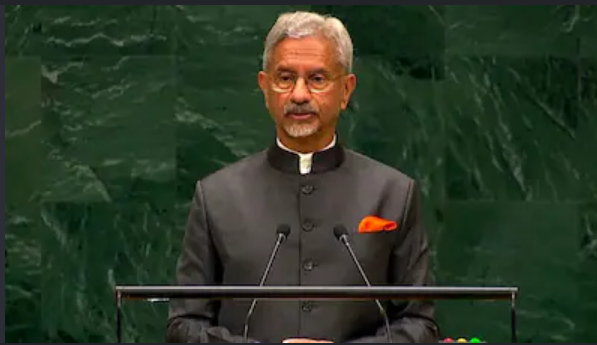
S Jaishankar calls Pakistan a “serial practitioner of terrorism” at UN
S Jaishankar criticised Pakistan at the UN General Assembly, referring to a “serial practitioner of terrorism” and warning against attempts to normalise terrorism.

Dhruv Rathee gets fresh summons in 2018 BJP IT cell video case

Nobody can browbeat judiciary, Chief Justice warns over Rahul Gandhi’s march

India-US trade deal first phase finalised, drafting underway

Election Commission orders voter roll revision in 17 states, UTs

Actor Imran Khan asked to leave India after CJP protest

Delhi Police offers 11-person limit for CJP’s Connaught Place protest
Actor Imran Khan asked to leave India after CJP protest
Election Commission orders voter roll revision in 17 states, UTs
India-US trade deal first phase finalised, drafting underway
Nobody can browbeat judiciary, Chief Justice warns over Rahul Gandhi’s march

Afghan Men Try To Hang With The Jet Engine Of The Aircraft in Kabul- Afghanistan News – Kabul News
Trending Top 10 News: 10000 Crore Fine on Flipkart, Apple to Launch Unique Feature, Hdfc Bank Job Ad

Trending Top 10 News: Nokia 6310, Apple sales, Bachpan ka Pyar Video Kid, Dainik Bhaskar IT Raid

Trending Top 10 News: Canada bans Indian flights, Rain in Delhi NCR, AIMIM Twitter hacked, Raj Kundra case

Trending Top 10 News: Shein India, Apple New Service, Pocket Oxygen, Oppo Launched New Phone
-
 India News13 hours ago
Dhruv Rathee gets fresh summons in 2018 BJP IT cell video case
-
 India News10 hours ago
Nobody can browbeat judiciary, Chief Justice warns over Rahul Gandhi’s march
-
 India News6 hours ago
India-US trade deal first phase finalised, drafting underway
-
 India News3 hours ago
Election Commission orders voter roll revision in 17 states, UTs
-
 India News3 hours ago
Actor Imran Khan asked to leave India after CJP protest
-
 India News2 hours ago
Delhi Police offers 11-person limit for CJP’s Connaught Place protest
