
Latest world news
Kim arrives in Beijing to brief Xi Jinping on Trump summit


Two day visit might be very important for Korean Peninsula
In a swift development away from much media hype, North Korean leader Kim Jong-un has arrived in Chinese capital Beijing on Tuesday, where he is likely to brief President Xi Jinping on his recent summit with U.S. President Donald Trump.
Kim’s third trip to China this year has come in less than a week after his meeting with Trump in Singapore. Following the Singapore summit Trump agree to work with Kim toward complete denuclearization of the Korean peninsula, committed to provide Kim Jong-un regime with security guarantees and pledged to end “war games”, which South Korea and China have long seen as provocative. Kim travelled to Beijing before meeting Trump as well.
Read More:West meets the East in historic summit in Singapore
In an unusual move, Chinese state media announced Kim’s visit and said he would stay for two days. Earlier, China used to confirm Kim’s visit after North Korean leader’s departure from the country. No other details were provided.
China is North Korea’s most important diplomatic and economic supporter but has been angered by Pyongyang’s nuclear and missile tests. Beijing Police tightened security along main Changan Avenue, which leads to the Great Hall of the People and also outside the Diaoyutai State Guest House, where Kim stayed with his wife during his March visit to Beijing.

China has welcomed the warming of ties between Washington and Pyongyang, and offered to help. Reportedly China has been particularly pleased by Trump’s announcement to suspend military drills. China has long pushed for “dual suspension” proposal, whereby https://apnlive.com/topic/north-koreaNorth Korea stops weapons tests and the US and South Korea stop military drills.
Read More: India, major powers welcome Trump-Kim summit
“South Korea and the United States have agreed to suspend all planning activities regarding the Freedom Guardian military drill scheduled for August,” according to a South Korean defence ministry statement.
A Pentagon statement confirmed the suspension and added that there would be a meeting between the secretaries of defence and state as well as Trump’s national security adviser on the issue this week.
Last year, 17,500 American and more than 50,000 South Korean troops participated in the Ulchi Freedom Guardian drills, although the exercise is mostly focused on computerized simulations rather than live field exercises that use weapons, tanks or aircraft.
Read More: Trump-Kim Summit in jeopardy after US-South Korea drill
The decision to halt military exercises in South Korea has angered many current and former U.S. defence officials, who only learned about it when Trump made announcement after the Singapore summit.





Latest world news
S Jaishankar says India is a natural option for Russia amid Europe tensions
External Affairs Minister S Jaishankar said India remained a natural option for Russia as Moscow increasingly turned towards Asia amid strained relations with Europe. He highlighted the continuity of India-Russia ties and their significance for the balance of power in Asia.


Latest world news
Putin praises PM Modi, says he has very good ideas on Ukraine war
Russian President Vladimir Putin has praised Prime Minister Narendra Modi for repeatedly raising the need to end the Ukraine war, describing his ideas for a settlement as “very good”.

Latest world news
S Jaishankar calls Pakistan a “serial practitioner of terrorism” at UN
S Jaishankar criticised Pakistan at the UN General Assembly, referring to a “serial practitioner of terrorism” and warning against attempts to normalise terrorism.

CJP claims Saurav Das, Ashutosh Ranka detained at Jantar Mantar

Supreme Court stays defamation case against Rahul Gandhi over PM Modi remarks

Rahul Gandhi hosts high tea for INDIA bloc after Gyanesh Kumar protests

L Murugan quits Union ministry to strengthen BJP in Tamil Nadu

Amit Shah attacks Rahul Gandhi over Congress poll losses, questions SIR row

PM Modi speaks to Mark Carney as India and Canada push to strengthen ties

S Jaishankar says India is a natural option for Russia amid Europe tensions

CJP leaders Saurav Das, Ashutosh Ranka, Ajinkya Shinde sent to 5-day judicial custody

BJP focuses on religion as opposition pushes BDM strategy in UP
L Murugan quits Union ministry to strengthen BJP in Tamil Nadu

Afghan Men Try To Hang With The Jet Engine Of The Aircraft in Kabul- Afghanistan News – Kabul News
Trending Top 10 News: 10000 Crore Fine on Flipkart, Apple to Launch Unique Feature, Hdfc Bank Job Ad

Trending Top 10 News: Nokia 6310, Apple sales, Bachpan ka Pyar Video Kid, Dainik Bhaskar IT Raid

Trending Top 10 News: Canada bans Indian flights, Rain in Delhi NCR, AIMIM Twitter hacked, Raj Kundra case

Trending Top 10 News: Shein India, Apple New Service, Pocket Oxygen, Oppo Launched New Phone
-
 India News24 hours ago
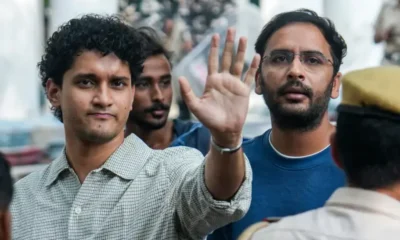
CJP claims Saurav Das, Ashutosh Ranka detained at Jantar Mantar
-
 India News22 hours ago
Supreme Court stays defamation case against Rahul Gandhi over PM Modi remarks
-
 India News14 hours ago
Rahul Gandhi hosts high tea for INDIA bloc after Gyanesh Kumar protests
-
 India News13 hours ago
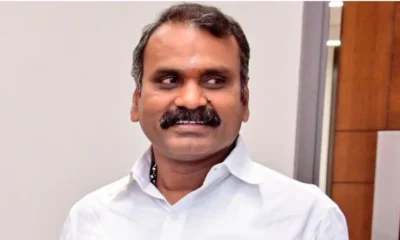
L Murugan quits Union ministry to strengthen BJP in Tamil Nadu
-
 India News14 hours ago
Amit Shah attacks Rahul Gandhi over Congress poll losses, questions SIR row
-
 India News12 hours ago
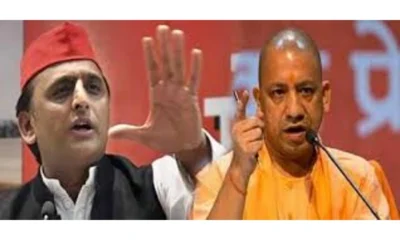
BJP focuses on religion as opposition pushes BDM strategy in UP
-
 India News1 hour ago
CJP leaders Saurav Das, Ashutosh Ranka, Ajinkya Shinde sent to 5-day judicial custody
-
 Latest world news1 hour ago
S Jaishankar says India is a natural option for Russia amid Europe tensions

