
Latest world news
Kim to Shut Down N-Test Site in May With Full Transparency


South Korean President’s spokesman reveals details
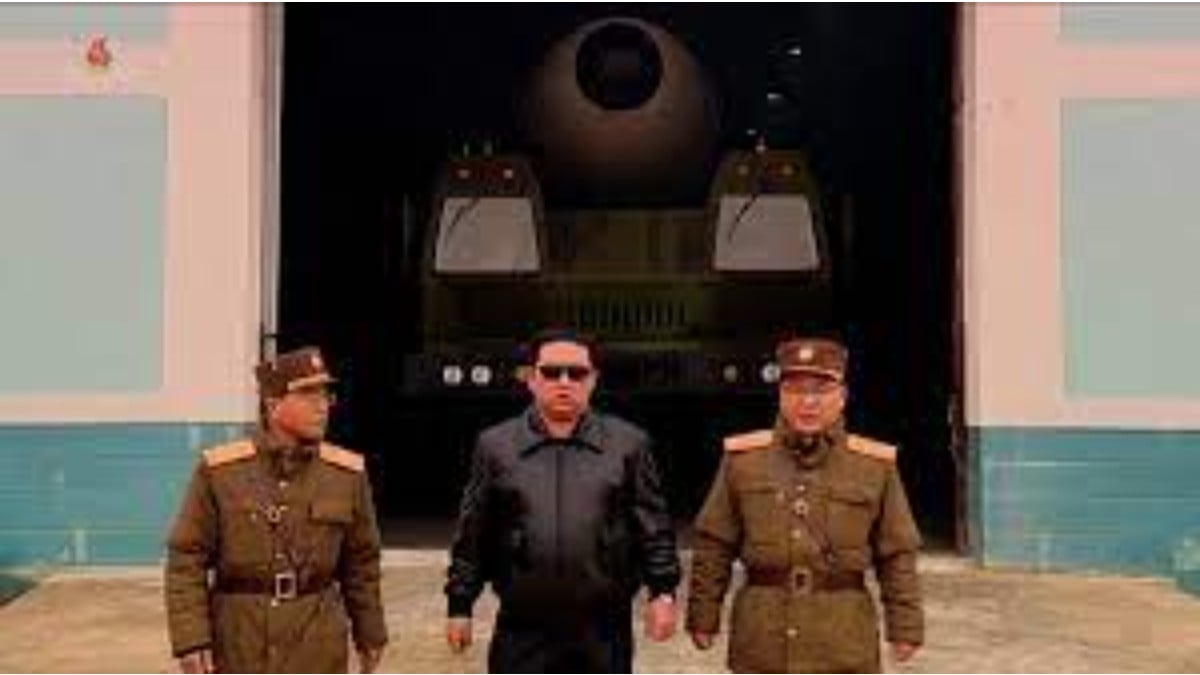
In a major development, North Korean leader Kim Jong-Un has reportedly told South Korean President Moon Jae-in that he would close his country’s nuclear test site in May in full view of the outside world.
This was announced by Moon’s spokesman Yoon Young-Chan on Saturday, while briefing about the historical summit between the leaders of the two Koreas.
“Once we start talking, the United States will know that I am not a person to launch nuclear weapons at South Korea, the Pacific or the United States,” Yoon quoted Kim as saying.
The South Korean official further quoted Kim saying, “If we maintain frequent meetings and build trust with the United States and receive promises for an end to the war and a non-aggression treaty, then why would we need to live in difficulty by keeping our nuclear weapons?”
 Earlier North Korea’s state media has said, before the summit, that Pyongyang would immediately suspend nuclear and missile tests, scrap its nuclear test site and instead pursue economic growth and peace.
South Korean President official residence known as Blue House has also confirmed Kim telling Moon that he would invite experts and journalists from the US and South Korea to ensure “transparency” of the dismantling of the facilities.
Read More: North and South come closer on Korean Peninsula
North Korean leader Kim Jon Un is expected to meet US President Donald Trump sometime in late May or early June this year.
According to Moon’s spokesperson, Kim has also expressed optimism about his meeting with Trump, saying the US president will learn he’s “not a person” to fire missiles towards the US.
Moon and Kim during the summit promised to work towards the “complete denuclearisation” of the Korean Peninsula. Though concrete measures were not outlined for ending the nuclear standoff, observers believe that clearer timeline would be revealed after Kim-Trump summit.
Earlier this month North Korea has announced it has suspended all tests of nuclear devices and intercontinental ballistic missiles and plans to close its nuclear testing ground.
Read More: US, China welcome N Korea halt on Nuclear, Missile tests
In a more symbolic gesture Kim has also revealed plans to re-adjust its current time zone to match the South Korea. North Korea had created its own “Pyongyang time” by setting the clock 30 minutes behind South Korea and Japan “to remove a legacy of Japanese colonial rule” in 2015.
Local time in South Korea and Japan is the same – nine hours ahead of GMT that was set during Japan’s rule over Korean Peninsula from 1910 to 1945.




Latest world news
Magnitude 7 earthquake strikes Tibet after floods
A magnitude 7 earthquake struck northern Tibet on Thursday, October 22. The tremor came weeks after deadly flash floods and landslides hit the mountainous region near the Nepal-China border. Initial reports did not confirm casualties or damage from the earthquake.


Latest world news
Macron rejects Trump’s immigration claims over France riots
French President Emmanuel Macron criticised Donald Trump and other foreign leaders over their comments on France’s recent unrest. Macron rejected claims that the country was being overrun by migrants and Islamists, calling such assertions false.

Latest world news
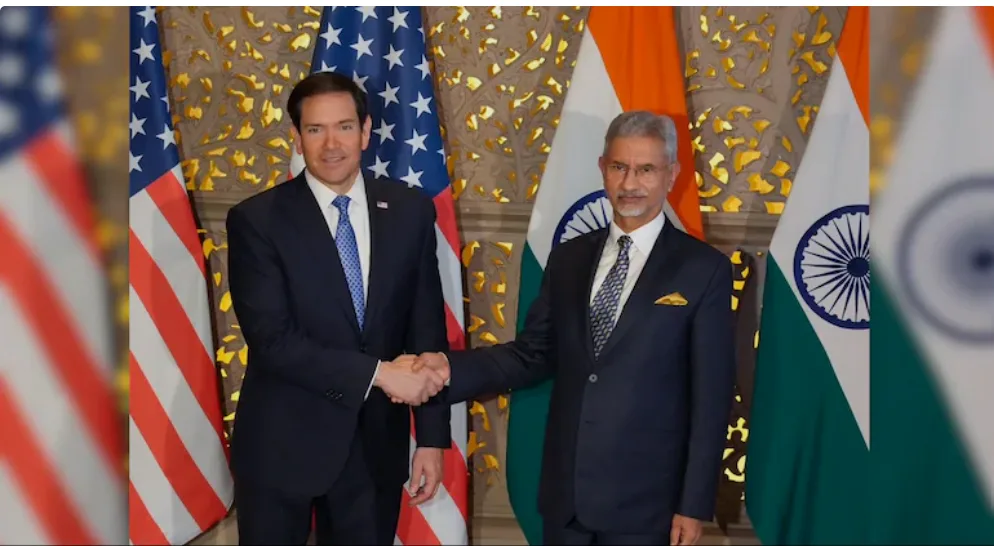
Marco Rubio says India and US share extraordinary alignment on key issues
US Secretary of State Marco Rubio said India and the United States share an extraordinary alignment on core issues, even though disagreements between the two countries may arise.

Om Prakash Mathur sworn in as Keralam Governor

PM Modi to inaugurate Rs 169-crore RBI data centre in Odisha on October 25

MEA responds after ITBP chief flags ongoing face-offs with China in Arunachal

Delhi High Court rejects Neha Bora’s plea against peace bond notice

Thousands bang utensils, beat drums in Manipur protest over continued killings

Congress seeks 175-200 seats in UP, Samajwadi Party stresses on winnability
Thousands bang utensils, beat drums in Manipur protest over continued killings
MEA responds after ITBP chief flags ongoing face-offs with China in Arunachal
Delhi High Court rejects Neha Bora’s plea against peace bond notice
PM Modi to inaugurate Rs 169-crore RBI data centre in Odisha on October 25

Afghan Men Try To Hang With The Jet Engine Of The Aircraft in Kabul- Afghanistan News – Kabul News
Trending Top 10 News: 10000 Crore Fine on Flipkart, Apple to Launch Unique Feature, Hdfc Bank Job Ad

Trending Top 10 News: Nokia 6310, Apple sales, Bachpan ka Pyar Video Kid, Dainik Bhaskar IT Raid

Trending Top 10 News: Canada bans Indian flights, Rain in Delhi NCR, AIMIM Twitter hacked, Raj Kundra case

Trending Top 10 News: Shein India, Apple New Service, Pocket Oxygen, Oppo Launched New Phone
-
 India News19 hours ago
Om Prakash Mathur sworn in as Keralam Governor
-
 India News18 hours ago
PM Modi to inaugurate Rs 169-crore RBI data centre in Odisha on October 25
-
 India News17 hours ago
MEA responds after ITBP chief flags ongoing face-offs with China in Arunachal
-
 India News17 hours ago
Delhi High Court rejects Neha Bora’s plea against peace bond notice
-
 India News4 hours ago
Thousands bang utensils, beat drums in Manipur protest over continued killings
-
 India News3 hours ago
Congress seeks 175-200 seats in UP, Samajwadi Party stresses on winnability
