
Latest world news
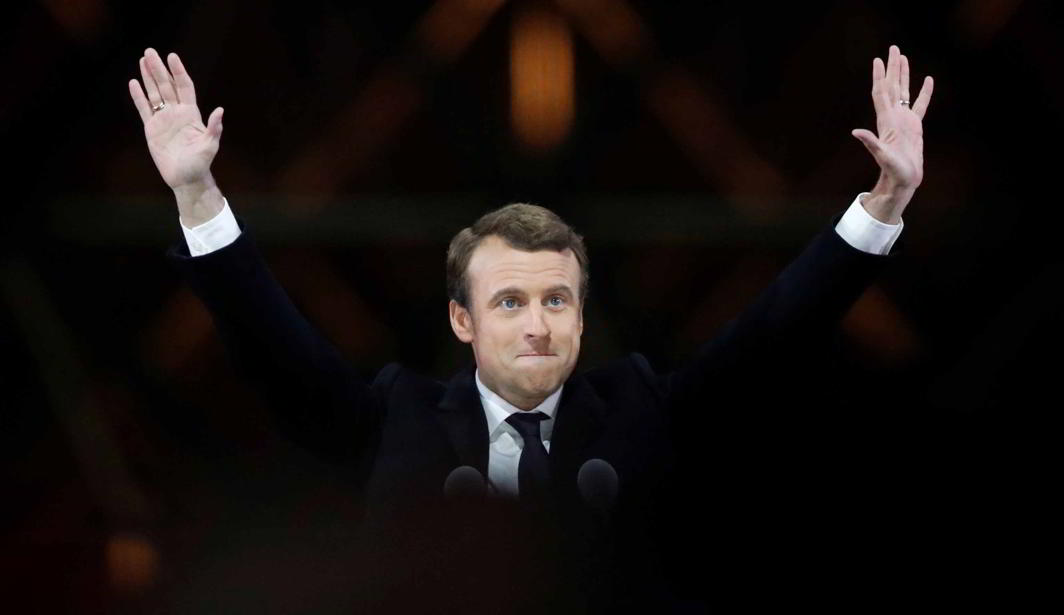
Macron over Le Pen

[vc_row][vc_column][vc_column_text]To the French, a known devil is better than an unknown angel
By Shailaja Paramathma
Congratulations France for walking on the razor’s edge and crossing over intact, your fabled capriciousness saving the day. At a time when nations across the board seem to be giving in to the fear of the other—of Muslims in India, of immigrants in the United States and the European Union, and of the European Union in Britain—the French questioned the fear and arrived at a decision unique to themselves. Their choice in their own words was between “the plague and the cholera” and they decided to go with the “banker instead of the fascist”. So Emmanuel Macron becomes the youngest person to ever become president of any country, raising the ambitions of Generation-X parents across the globe. And Marine Le Pen goes back to a party that has never won the presidential elections in France but has brought it closer this time to the presidential seat than ever before.
Where there is moolah
The French are intellectually snobbish about money. So when they had to choose between pro-globalisation Macron and anti-immigration Le Pen as their next president, it was a war between their disdain for capitalists and their intellect telling them that fascism was wrong. And the more the rest of the world opted for rightism, the more eager they became to distance themselves from the ideology and decisively prove to the world that they were not a part of it.
Post the results of the election on Sunday, they confirmed that they had not fallen for the “poudre de perlimpinpin” (like Macron called Le Pen’s solutions to the economic problems of France), a remedy pretending to be miraculous but is absolutely bogus and ineffective in reality. But this was even as they signed arrogant-sounding petitions before it, saying: “Macron, I will vote for you not because I choose you but because I choose to make Le Pen fail.” This was their way of informing Macron that he had not won over their hearts but had just happened to be at the right place at the right time. To clarify their stand to the rest of the world so that they themselves did not have to go to bed feeling conquered, the petitions also said, “I will celebrate if you (Macron) win on May 7, but know that the very next day I will be part of the opposition.”
How come Le Pen?
While they defiantly insisted that Macron was not their candidate, the fact remains that the guys they claimed to agree with—the conservative François Fillon and the revolutionary Leftist Jean-Luc Mélenchon—did not even make it to the finals. Yes, on the surface it seems like the French did not fall for the development card as we did in India and they did not give in to fear like the Americans did but they did allow Le Pen’s Front National to make it to round two yet again in 2017.
The easy claim that the French can make of intellectual and cultural superiority over the Americans has been testified in literature, movies and art century after century. They unhesitatingly regard Americans as a population without culture or morals who are forever after money, control and power. While these assumptions may ring true to some minds, it is also true that as globalisation created new jobs in big French cities, it also created unemployment in rural France which was double the national average, which is a very American phenomenon. And these are the places where the Front National under Marine Le Pen’s new marketing and self-promotion method of campaigning eked out a pretty strong base for itself.
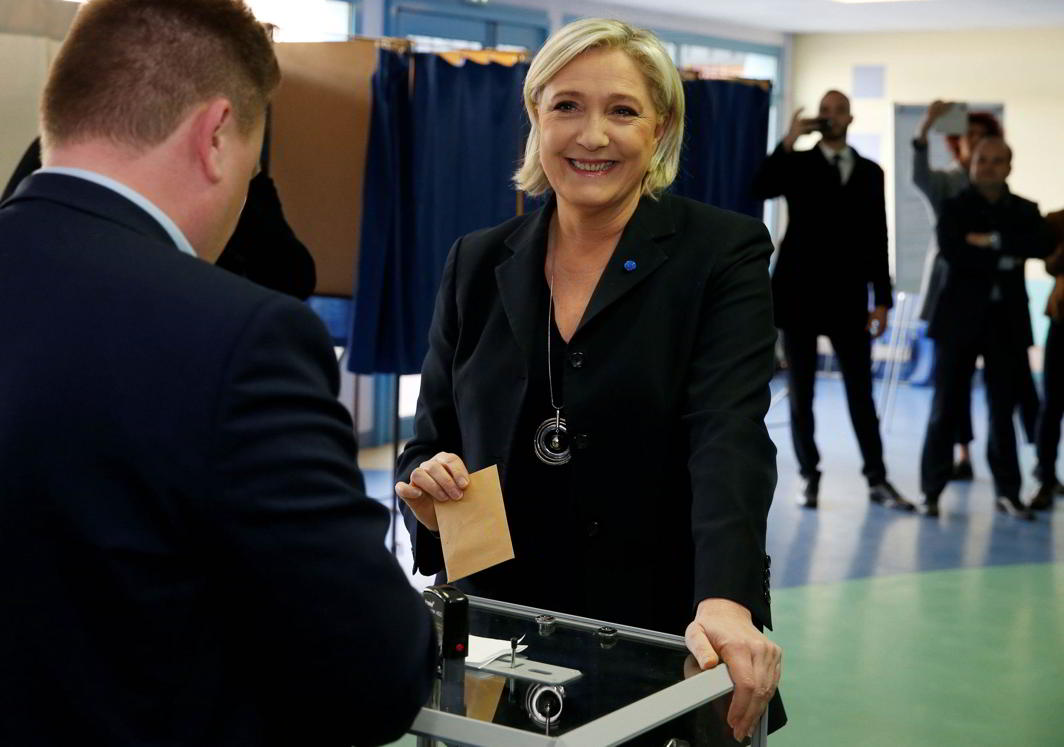
ROUNDLY DEFEATED: Marine Le Pen, French National Front (FN) political party leader and candidate for French 2017 presidential election, casts her ballot in the first round of 2017 French presidential election at a polling station in Henin-Beaumont, Reuters/UNI
Yet, notwithstanding her preference to be called Marine, her inheritance of the tainted Le Pen legacy has for the time being diverted her away from the seat of power. However, one must not over-celebrate this victory and one should definitely not negate the presence of fear and hatred in the French society for the other, for unchecked globalisation and loss in job share.
What next?
Right-of-centre Macron’s win over Le Pen on Sunday in France has liberals all over the world finding at best a sense of vindication and at least a respite. Post the Brexit referendum and following the election of Donald Trump in the US, this is no mean feat. They may breathe easy now but they will have to give space and support to Macron when very soon the establishment will find ways to stall him. They will have to continue to see with their discerning eye through media lies and leaked emails. They will have to remain fearless and take into fold the disenfranchised and the old and make them feel integrated in their societies.
Macron’s party, En Marche, might have won the battle but they are yet to win the war. The way ahead is still a big question mark. The legislative elections that will take place in June are crucial. Mid-June French citizens will once again head to the polls for two rounds of voting to elect the country’s 577 members of parliament. En Marche has currently no parliamentary seats or backing. The result of the June elections will be a test of the authority of the new president’s office. If Macron does not win a parliamentary majority, making his reform proposals see the light of day can become a distant dream. If he is constantly opposed and harassed, the quick-tempered Macron may find himself in a position à la Kejriwal and then it will only be a matter of five years before Le Pen finds herself contesting the elections again with a much bigger promise of getting her hands on the keys to the Élysée Palace.
But irrespective of what lies ahead, next time a Hollywood movie wants to depict a Frenchman as the poor cousin from the village with a flock of sheep following him on a rural road, they need to hold up a mirror to their faces and see themselves for what they truly represent, believe in and have chosen as their president. They largely misrepresent Muslims, too, in their movies but that we can come to at another date. For the time being the French is back in fashion.[/vc_column_text][/vc_column][/vc_row]





Latest world news
S Jaishankar says India is a natural option for Russia amid Europe tensions
External Affairs Minister S Jaishankar said India remained a natural option for Russia as Moscow increasingly turned towards Asia amid strained relations with Europe. He highlighted the continuity of India-Russia ties and their significance for the balance of power in Asia.


Latest world news
Putin praises PM Modi, says he has very good ideas on Ukraine war
Russian President Vladimir Putin has praised Prime Minister Narendra Modi for repeatedly raising the need to end the Ukraine war, describing his ideas for a settlement as “very good”.

Latest world news
S Jaishankar calls Pakistan a “serial practitioner of terrorism” at UN
S Jaishankar criticised Pakistan at the UN General Assembly, referring to a “serial practitioner of terrorism” and warning against attempts to normalise terrorism.

Dhruv Rathee gets fresh summons in 2018 BJP IT cell video case

Nobody can browbeat judiciary, Chief Justice warns over Rahul Gandhi’s march

India-US trade deal first phase finalised, drafting underway

Election Commission orders voter roll revision in 17 states, UTs

Actor Imran Khan asked to leave India after CJP protest

Delhi Police offers 11-person limit for CJP’s Connaught Place protest
Actor Imran Khan asked to leave India after CJP protest
Election Commission orders voter roll revision in 17 states, UTs
India-US trade deal first phase finalised, drafting underway
Nobody can browbeat judiciary, Chief Justice warns over Rahul Gandhi’s march

Afghan Men Try To Hang With The Jet Engine Of The Aircraft in Kabul- Afghanistan News – Kabul News
Trending Top 10 News: 10000 Crore Fine on Flipkart, Apple to Launch Unique Feature, Hdfc Bank Job Ad

Trending Top 10 News: Nokia 6310, Apple sales, Bachpan ka Pyar Video Kid, Dainik Bhaskar IT Raid

Trending Top 10 News: Canada bans Indian flights, Rain in Delhi NCR, AIMIM Twitter hacked, Raj Kundra case

Trending Top 10 News: Shein India, Apple New Service, Pocket Oxygen, Oppo Launched New Phone
-
 India News15 hours ago
Dhruv Rathee gets fresh summons in 2018 BJP IT cell video case
-
 India News11 hours ago
Nobody can browbeat judiciary, Chief Justice warns over Rahul Gandhi’s march
-
 India News7 hours ago
India-US trade deal first phase finalised, drafting underway
-
 India News4 hours ago
Election Commission orders voter roll revision in 17 states, UTs
-
 India News4 hours ago
Actor Imran Khan asked to leave India after CJP protest
-
 India News3 hours ago
Delhi Police offers 11-person limit for CJP’s Connaught Place protest
