English हिन्दी
Connect with us

Latest world news

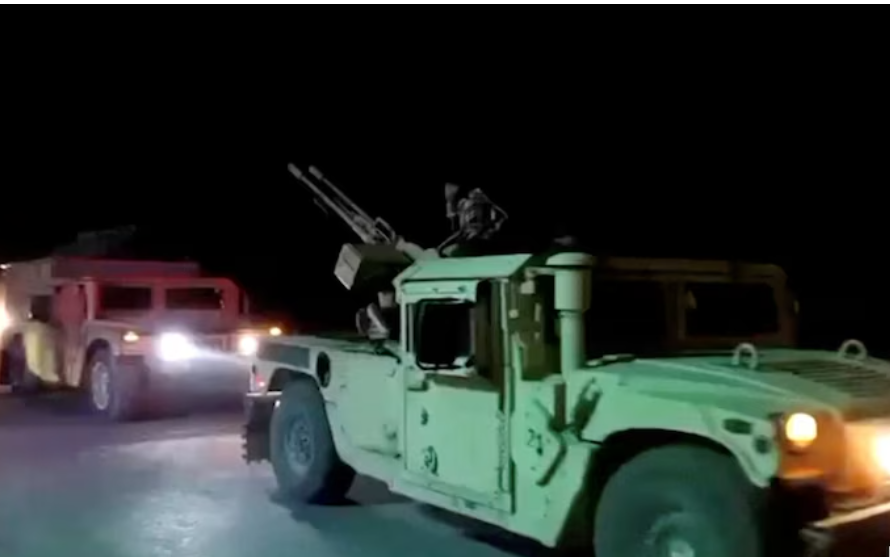
Pakistan declares open war after Kabul strikes, claims 133 Afghan fighters killed

Pakistan has declared “open war” after launching strikes in Kabul and other Afghan cities, claiming 133 Afghan fighters were killed, while Kabul disputes the figures and reports its own casualties.

Published

on

war against Afghanistan

Tensions between Pakistan and Afghanistan have sharply escalated after Islamabad declared “open war” on the Afghan Taliban government following renewed clashes along their shared border.

Pakistan carried out airstrikes in Kabul, Kandahar and Paktia on Friday, hours after Afghan forces attacked Pakistani border troops. The Taliban government described its cross-border assault as retaliation for earlier Pakistani airstrikes this week.

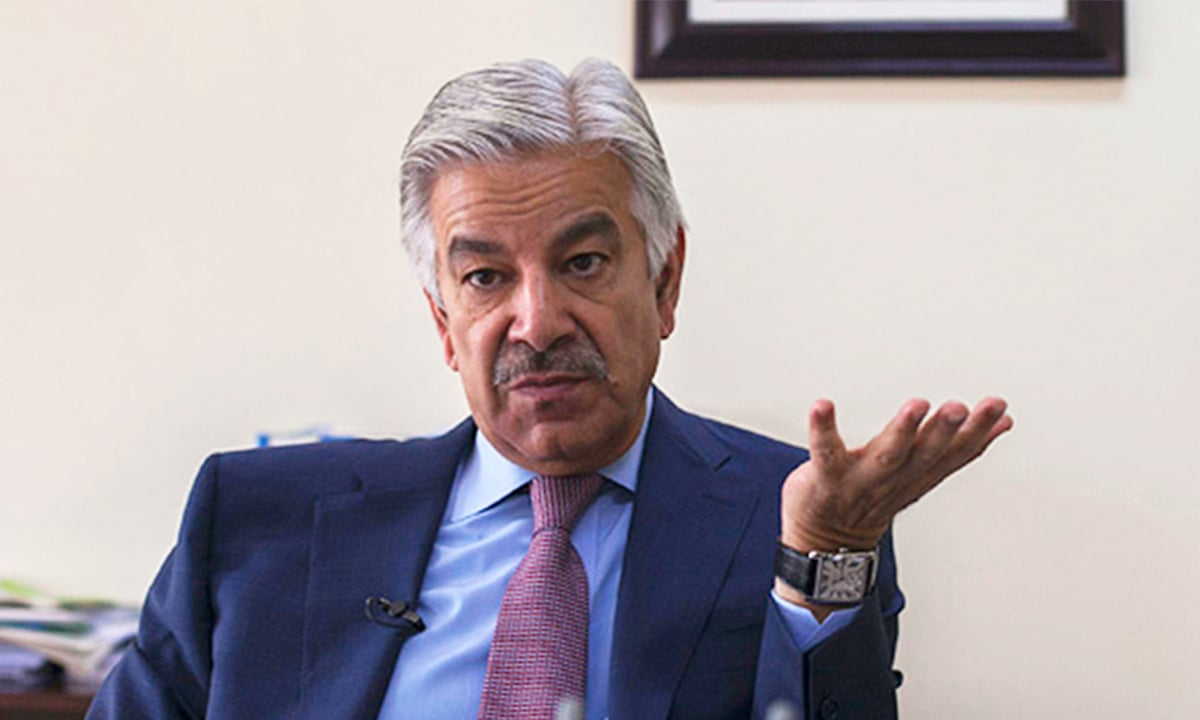
Pakistan’s Defence Minister Khawaja Asif posted on X that Islamabad’s “patience has reached its limit” and announced the launch of Operation Ghazab Lil Haq against Afghanistan.

Afghanistan’s account

According to Taliban officials, at least three explosions were heard in Kabul. Spokesperson Zabihullah Mujahid said Pakistan also conducted strikes in Kandahar and Paktia province. There were no immediate confirmed reports of casualties in Kabul from the airstrikes.

Afghanistan’s defence ministry said its forces had launched an offensive late Thursday across the border into Pakistan, claiming it was in response to deadly Pakistani airstrikes last Sunday. It claimed to have captured more than a dozen Pakistani army posts and reported that eight Afghan soldiers were killed in the land operation, with 11 others wounded.

An Afghan official in Nangarhar province said a mortar shell hit a refugee camp near the Torkham border crossing, injuring several civilians, including women. Afghan authorities later said 13 civilians were wounded in a missile strike on the camp.

Afghanistan also claimed its forces shot down a Pakistani F-16 fighter jet and released video footage of a burning aircraft. The footage could not be independently verified.

Pakistan’s account

Pakistan’s military said it targeted Afghan military facilities in Kabul, Kandahar and Paktia, allegedly destroying brigade and corps headquarters as well as ammunition and logistics installations.

Information Minister Attaullah Tarar described the Afghan cross-border action as “unprovoked firing” and said Pakistan was giving a “strong and effective response.” He initially said two Pakistani soldiers were killed and three wounded, while 36 Afghan fighters had died.

Later, Mosharraf Ali Zaidi, spokesperson for Prime Minister Shehbaz Sharif, claimed at least 133 Afghan fighters were killed and more than 200 wounded. He denied that any Pakistani soldiers had been captured and said 27 Afghan posts were destroyed and nine fighters taken into custody.

Interior Minister Mohsin Naqvi condemned the Afghan Taliban for allegedly targeting civilians, stating that Pakistan’s armed forces had responded “befittingly” to what he termed open aggression.

Mismatch in casualty figures

Both sides have reported sharply differing casualty figures.

Afghanistan’s defence ministry said 55 Pakistani soldiers were killed and several others captured, claiming it destroyed 19 Pakistani posts and two bases. Pakistan, however, maintained that only two of its soldiers were killed and rejected claims of captured personnel.

Exchanges of fire were also reported in the Torkham border area, with residents on both sides moving to safer locations. Pakistani police said mortars fired from Afghanistan landed in nearby villages, though no civilian casualties were reported there.

Rising regional tensions

The latest violence follows months of heightened tension between the two neighbours. Deadly clashes in October had already claimed the lives of soldiers, civilians and suspected militants.

UN Secretary-General Antonio Guterres urged both sides to protect civilians and resolve differences through diplomacy, according to UN spokesperson Stephane Dujarric.

A Qatar-mediated ceasefire between the two countries had largely held in recent weeks, despite sporadic exchanges of fire. However, recent strikes and retaliatory actions have placed the truce under significant strain.

Pakistan has said militant violence within its territory has surged in recent years, blaming the Tehrik-e-Taliban Pakistan (TTP) and Baloch separatist groups. Islamabad accuses the TTP of operating from inside Afghanistan, an allegation denied by both the group and Kabul.

Continue Reading
Click to comment

Leave a Reply

Your email address will not be published. Required fields are marked *

Cricket news

Rinku Singh’s father dies of cancer during T20 World Cup campaign

Published

on

Rinku singh with his father

Indian cricketer Rinku Singh’s father, Khanchand Singh, passed away on Friday after battling stage four cancer. He was receiving treatment at Yatharth Hospital in Greater Noida, where his health deteriorated earlier this week.

Rinku had travelled to see his father ahead of India’s T20 World Cup match against Zimbabwe. Despite medical efforts, Khanchand Singh’s condition did not improve and he was placed on ventilator support. The cricketer later rejoined the squad in time for the fixture but was not included in the playing XI, with Sanju Samson taking his place. Rinku featured in the match as a substitute fielder.

A pillar of support in Rinku’s journey

Khanchand Singh played a significant role in his son’s cricketing career. Working as an LPG cylinder deliveryman in Aligarh, he ensured that financial challenges did not hinder Rinku’s ambitions in the sport. His support over the years was seen as instrumental in shaping the batter’s rise to the Indian team.

Former India spinner Harbhajan Singh expressed condolences in a post on X, saying he was pained to learn of the demise and extended prayers to the family. He acknowledged the difficult time for Rinku, who continues to fulfil his national duties during the tournament.

Mixed outing in the tournament

Rinku’s T20 World Cup campaign has been underwhelming so far. He has scored 24 runs across five innings and has struggled to convert starts into significant contributions. Limited opportunities at the crease and the absence of big scores resulted in Samson being preferred in the lineup.

India are set to travel to Kolkata for their final Super 8 clash against West Indies. The encounter is effectively a virtual quarterfinal, with the winner securing a place in the semifinals. India head into the match after a win over Zimbabwe, while West Indies are coming off a heavy defeat to South Africa.

Continue Reading

Latest world news

PM Modi and Netanyahu pledge deeper defence, trade ties during Israel visit

PM Narendra Modi and Benjamin Netanyahu pledged to deepen defence, trade and connectivity ties during Modi’s visit to Israel, with missile deals and IMEC discussions on the agenda.

Published

on

Prime Minister Narendra Modi and Israeli Prime Minister Benjamin Netanyahu have reaffirmed their commitment to strengthening defence, trade and security cooperation, marking a significant step forward in India-Israel relations during Mr Modi’s visit to Tel Aviv.

Addressing Israel’s parliament, the Knesset, Mr Modi described defence cooperation as an “important pillar” of the bilateral partnership and stressed the need for closer collaboration in an increasingly uncertain global environment.

“In today’s uncertain world, a strong defence partnership between trusted partners like India and Israel is of vital importance,” he said.

Defence deal likely on agenda

During the visit — Mr Modi’s first to Israel in nine years — discussions are expected to include a major order for Israeli-made missile systems. An official in New Delhi familiar with the matter indicated that details of the potential deal may not be publicly disclosed, as both governments are keen to keep the spotlight on broader strategic ties.

India’s Ministry of External Affairs has not commented on the reported missile purchase.

Israel has long been among India’s key arms suppliers. Over the years, the defence relationship has evolved into joint manufacturing projects, including drones and missile systems. Ahead of the visit, Israel’s Ambassador to India, Reuven Azar, said both sides are working towards a more comprehensive defence and security framework that could open doors for cooperation on more sensitive projects.

Focus on trade and investment

Trade and investment featured prominently in the leaders’ discussions. Mr Modi said both governments are committed to expanding bilateral trade, boosting investment flows and promoting joint infrastructure projects.

Israeli negotiators recently travelled to India to begin formal talks on a proposed free-trade agreement, building on terms agreed in November. Such a pact could provide Israel greater access to one of the world’s fastest-growing economies.

According to Israel’s Economy and Industry Ministry, India is Israel’s second-largest trading partner in Asia, with bilateral trade estimated at $5 billion in 2025, excluding defence transactions.

India is also the largest buyer of Israeli defence equipment, accounting for up to 34% of Israel’s total arms exports, according to data from the Stockholm International Peace Research Institute.

Regional security and Gaza ceasefire

The visit comes amid shifting regional alliances and ongoing security challenges. Referring to last year’s ceasefire in Gaza, Mr Modi said the truce created an opportunity for closer cooperation.

He also welcomed the US-brokered peace plan for Gaza, later endorsed by the United Nations, saying it holds the promise of a just and durable peace, including progress on the Palestine issue. However, uncertainty remains over the future of the truce with Hamas, with key governance and security questions yet to be resolved.

Strategic observers note that both leaders see their countries as operating in complex neighbourhoods marked by security threats and geopolitical shifts.

Connectivity push through IMEC

Connectivity initiatives also featured in the discussions. Mr Netanyahu told the Knesset that India and Israel are working on developing a maritime and land corridor linking India to Israel’s port of Haifa and onward to Europe.

The plan builds on the India-Middle East-Europe Economic Corridor initiative unveiled in September 2023. Although the outbreak of the Israel-Hamas conflict soon after raised concerns about the project’s future, Israeli officials have indicated that the corridor remains viable.

Haifa port, partly acquired by India’s Adani Group, is expected to play a key role as the Mediterranean endpoint of the corridor.

As India and Israel seek to reinforce strategic, economic and security ties, the visit underlines the growing convergence between New Delhi and Tel Aviv in defence, trade and regional connectivity.

Continue Reading

Latest world news

Canada softens stance on alleged Indian interference ahead of PM Carney’s India visit

Canada appears to ease its earlier allegations of Indian interference as PM Mark Carney heads to India to strengthen trade and strategic ties.

Published

on

Canada appears to be easing its earlier allegations of Indian interference as Prime Minister Mark Carney prepares for a key visit to India aimed at rebuilding commercial and diplomatic ties.

Senior officials in Ottawa indicated that the Canadian government maintains “mature and robust discussions” with the Government of India on concerns related to foreign interference. They also emphasised that Canada has strong safeguards in place to protect its democratic institutions.

According to officials quoted by media, the Prime Minister would likely not be travelling to India if Ottawa believed New Delhi was actively interfering in Canada’s democratic processes. The remarks suggest a noticeable shift from the strong accusations levelled last year.

Officials said there has been sustained engagement with the government of Narendra Modi at multiple levels, including senior officials, ministers and leadership-level interactions. They expressed confidence that the discussions provide a foundation for further constructive dialogue.

At the same time, a senior official reiterated that Canada maintains “no tolerance” for foreign interference in its domestic affairs.

From allegations to engagement

The recent comments contrast with statements made last June by the Canadian Security Intelligence Service (CSIS), which accused India of being among the primary actors involved in foreign interference and espionage activities in Canada.

CSIS had also described alleged links between Indian authorities and the 2023 killing of Hardeep Singh Nijjar in Vancouver as a “significant escalation” in India’s actions against the Khalistan movement.

India firmly rejected those accusations. The dispute triggered a diplomatic standoff, with both countries expelling senior diplomats from Ottawa and New Delhi in a tit-for-tat move.

Carney’s push to rebuild ties

Prime Minister Carney’s visit to India is being positioned as part of a broader Indo-Pacific outreach and a more pragmatic foreign policy approach. His trip will begin in Mumbai before he heads to New Delhi for talks with Prime Minister Modi.

The visit comes as both nations seek to stabilise relations that deteriorated sharply following Canada’s allegations over Nijjar’s killing — claims that New Delhi strongly denied.

Carney’s office has said discussions will centre on expanding cooperation in trade, energy, technology, artificial intelligence, talent mobility, culture and defence.

Growing trade partnership

India is currently Canada’s seventh-largest trading partner in goods and services. Annual bilateral trade exceeds $21 billion, according to Canadian government data.

The two sides had previously agreed to resume negotiations on a proposed free-trade agreement, targeting bilateral trade of $50 billion by 2030.

More than 600 Canadian companies operate in India across sectors such as information technology, banking, health sciences and financial services. Key Indian exports to Canada include pharmaceuticals, gems and jewellery, precious stones and seafood.

Diplomatic ties show signs of recovery

Canada hosts approximately 2.8 million people of Indian origin. Nearly 400,000 Indian students are enrolled in Canadian universities, making them the largest group of international students in the country.

Canada is also home to the largest Sikh population outside India, including some fringe separatist elements advocating for Khalistan.

Relations between the two countries began to improve after Carney assumed office in March 2025, with envoys restored and diplomatic engagement gradually resuming.

The upcoming visit is being viewed as a significant step toward stabilising ties and advancing economic cooperation amid shifting global trade dynamics and uncertainties linked to policies under US President Donald Trump.

Continue Reading

Trending

© Copyright 2022 APNLIVE.com