English हिन्दी
Connect with us

Latest world news

Cipher case: Former Pakistan PM Imran Khan to remain in jail as judicial remand extended till Sept 13

Judge Abual Hasnat Zulqarnain rejected all of Khan’s five-person legal team’s arguments during the hearing, which got underway less than an hour ago at the Attock District Jail amid security concerns raised by the Interior Ministry.

Published

on

Pakistan PM

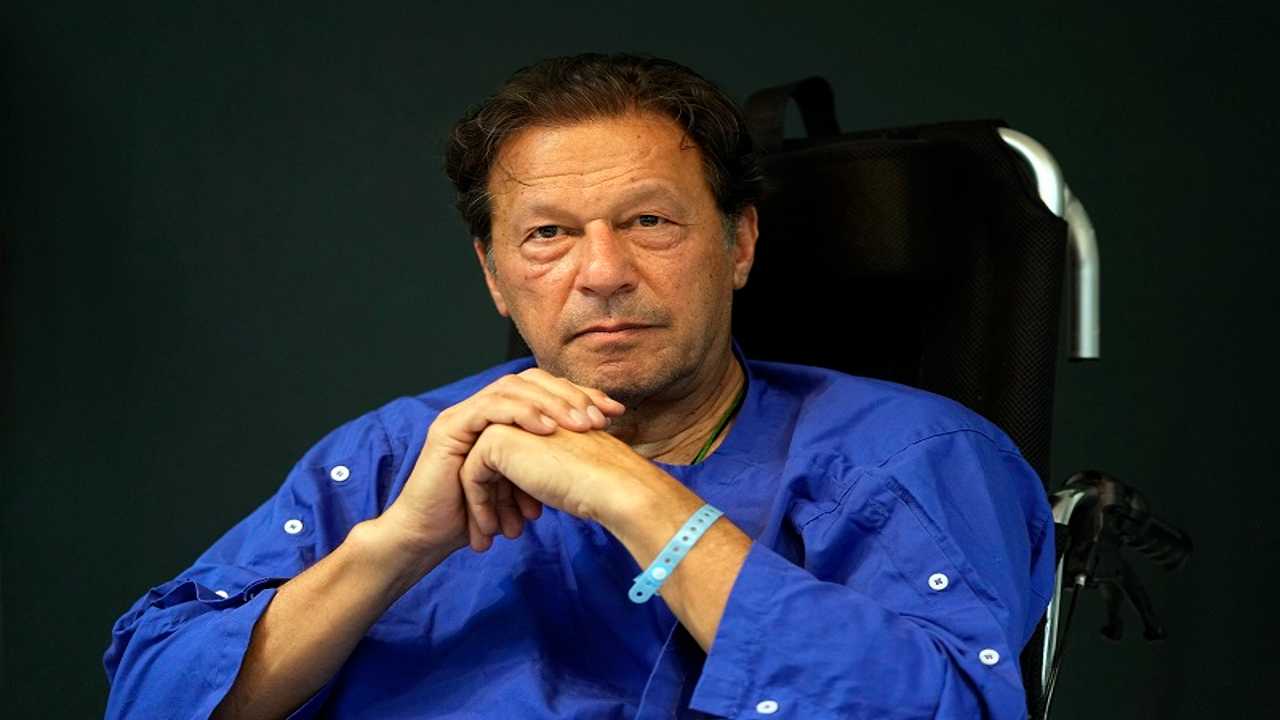
Former Pakistan Prime Minister Imran Khan’s problems are only going to get worse as the High Court postponed the hearing in the Cipher case to September 13. The three-year sentence in the Toshakhana corruption case was suspended by the Islamabad High Court the day prior to this. In a separate case involving the alleged exposure of state secrets, the court had firmly stated that the troubled former premier would continue to be imprisoned.

In the Cipher case, which was heard at the Attock District Jail, a special court formed under the Official Secrets Act kept Pakistan Tehreek-e-Insaf (PTI) Chairman Imran Khan’s judicial imprisonment till September 13, according to sources.

Judge Abual Hasnat Zulqarnain rejected all of Khan’s five-person legal team’s arguments during the hearing, which got underway less than an hour ago at the Attock District Jail amid security concerns raised by the Interior Ministry. Khan’s legal team is led by Advocate Salman Safdar.
It is important to note that the former Prime Minister, who is under attack, has been held at the Attock jail since his August 5 conviction in the Toshakhana case. The Supreme Court noted that the judgement of the Sessions Court had shortcomings earlier last week after hearing numerous petitions challenging the Toshakhana case.

The panel noted that the judgement was delivered in quick succession and without providing the accused with a right of defense. The chief justice declared, Prima facie, the trial court verdict contained errors.

He was kept in judicial custody pending further instructions after the court reserved the order on Monday. On Tuesday, the court delayed the lower court’s decision.

Lawmakers from the ruling party filed the Toshakhana case before the ECP in 2022, saying that Khan had hidden the money from the sale of state gifts. Khan was first disqualified by the ECP before a criminal case was brought against him in a sessions court, which resulted in his conviction and subsequent imprisonment.

Gifts/presents and other similar materials received by individuals to whom these rules apply must be reported to the Cabinet Division in accordance with Toshakhana regulations.

Latest world news

Bondi Beach shooting during Jewish festival leaves at least 15 dead

Australia’s Bondi Beach was rocked by the deadliest shooting in decades as a father and son opened fire during a Jewish festival, killing at least 15 people.

Published

on

Bondi shooting Australia

At least 15 people were killed and dozens injured after a mass shooting at Sydney’s iconic Bondi Beach during a Jewish celebration, in what authorities have described as the deadliest gun attack in Australia in almost 30 years.

Police on Monday confirmed that the two attackers were a father and his son. The older man, identified as 50-year-old Sajid Akram, was shot dead by police at the scene, while his 24-year-old son Naveed Akram was injured and is undergoing treatment at a hospital.

The attack occurred during the “Chanukah by the Sea” event, held to mark the beginning of the eight-day Hanukkah festival. Around 1,000 people were attending the gathering in a small park near the beach when gunfire erupted, triggering panic among crowds enjoying a busy summer evening.

What happened at bondi beach

According to authorities, emergency services received the first calls about shots being fired around 6:45 pm. Witnesses said the attack lasted roughly 10 minutes, with people running across the sand and into nearby streets to escape the gunfire.

Videos from the scene showed two men firing long guns from a footbridge leading to the beach. Police have not officially confirmed the exact weapons used, though footage suggested a bolt-action rifle and a shotgun.

In one widely shared clip, a bystander was seen tackling and disarming one of the gunmen. The man was later praised by state leadership as a “genuine hero.” A public fundraising effort launched for him had raised over A$200,000 by Monday morning.

Attackers and investigation

Police said one of the attackers was known to security agencies, though there was no prior indication of a planned assault. Authorities later confirmed they were confident only two people were involved.

The younger attacker is an Australian-born citizen. Officials said the father had arrived in Australia in 1998 on a student visa, later transitioning to other residency permits. Investigators also searched the family’s home in Bonnyrigg, in western Sydney, where a heavy police presence remained through Monday.

Victims and community impact

Those killed ranged in age from 10 to 87 years. At least 42 others were hospitalised, several of them in critical condition. An Orthodox Jewish organisation confirmed that one of the victims was Rabbi Eli Schlanger, an assistant rabbi and one of the organisers of the event.

Eyewitnesses described scenes of chaos and fear. A young lifesaver present at the beach said seeing injured people, including children, was deeply distressing and unlike anything he had experienced before.

Community leaders urged unity and calm in the aftermath, stressing the importance of supporting those affected rather than allowing anger to divide communities.

Leaders condemn attack

Australian Prime Minister Anthony Albanese visited Bondi Beach on Monday to pay tribute to the victims, calling the shooting a “dark moment for our nation.” He described the incident as an act of antisemitism and terrorism, assuring the Jewish community of the government’s full support.

Several world leaders, including the US President, the French President and India’s Prime Minister Narendra Modi, condemned the attack and expressed solidarity with Australia.

Authorities said the shooting was the most serious antisemitic attack in the country in decades, coming amid a rise in incidents targeting Jewish institutions since late 2023. Investigations into the motive behind the attack are ongoing.

Continue Reading

Latest world news

US lawmakers move resolution to roll back Trump’s 50% tariffs on Indian imports

Three US lawmakers have moved a resolution to end Trump’s emergency declaration that imposed 50% tariffs on Indian goods, calling the move illegal and harmful to trade ties.

Published

on

trump

Three members of the US House of Representatives have introduced a resolution seeking to end former President Donald Trump’s national emergency declaration that led to steep tariffs on imports from India. The lawmakers termed the duties illegal and warned that they have hurt American consumers, workers and long-standing India-US economic ties.

The resolution has been moved by Representatives Deborah Ross, Marc Veasey and Raja Krishnamoorthi. It aims to terminate the emergency powers used to impose import duties that cumulatively raised tariffs on several Indian-origin goods to 50 per cent.

What the resolution seeks to change

According to details shared by media, the proposal specifically seeks to rescind an additional 25 per cent “secondary” tariff imposed on August 27, 2025. This was levied over and above earlier reciprocal tariffs, taking the total duty to 50 per cent under the International Emergency Economic Powers Act.

The House move follows a separate bipartisan effort in the US Senate that targeted similar tariffs imposed on Brazil, signalling growing resistance in Congress to the use of emergency powers for trade actions.

Lawmakers flag impact on US economy and consumers

Congresswoman Deborah Ross highlighted the deep economic links between India and her home state of North Carolina, noting that Indian companies have invested over a billion dollars there, creating thousands of jobs in sectors such as technology and life sciences. She also pointed out that manufacturers from the state export hundreds of millions of dollars’ worth of goods to India each year.

Congressman Marc Veasey said the tariffs amount to a tax on American households already facing high costs, stressing that India remains an important cultural, economic and strategic partner for the United States.

Indian-American Congressman Raja Krishnamoorthi described the duties as counterproductive, saying they disrupt supply chains, harm American workers and push up prices for consumers. He added that rolling back the tariffs would help strengthen economic and security cooperation between the two countries.

Background of the tariff hike

Earlier in August 2025, the Trump administration imposed a 25 per cent tariff on Indian goods, which came into effect from August 1. This was followed days later by another 25 per cent increase, citing India’s continued purchase of Russian oil. The combined duties were justified by the administration as a measure linked to Moscow’s war efforts in Ukraine.

Wider push against unilateral trade actions

The latest resolution is part of a broader push by congressional Democrats to challenge unilateral trade measures and reassert Congress’ constitutional authority over trade policy. In October, the same lawmakers, along with several other members of Congress, had urged the President to reverse the tariff decisions and work towards repairing strained bilateral relations with India.

Continue Reading

Latest world news

Mexico imposes 50% tariff on Indian imports, auto exports maybe hit

Mexico’s approval of 50% import duties on select goods from India and other Asian countries threatens nearly $1 billion worth of Indian exports, especially in the automobile sector.

Published

on

Mexico has cleared steep import duties of up to 50% on several goods from Asian nations, a move that places nearly $1 billion worth of Indian exports at risk from January 1, 2026. The decision targets countries that do not have a trade agreement with Mexico, including India, South Korea, China, Thailand and Indonesia.

Mexico moves to shield domestic industry

The new duties—covering items such as automobiles, auto parts, textiles, plastics, steel, footwear, furniture, toys, appliances, leather goods, and cosmetics—are aimed at strengthening local manufacturing. Mexico says the tariff push is designed to reduce dependence on Asian imports and support domestic producers.

China stands to face the highest impact, with Mexican imports from the country touching $130 billion in 2024. According to Mexico, the revised tax structure is also expected to generate $3.8 billion in additional revenue.

Mexican President Claudia Sheinbaum has backed the decision, framing it as an investment in domestic employment creation. Analysts, however, believe the move may also align with the United States’ expectations ahead of the upcoming United States–Mexico–Canada (USMCA) review.

Impact on India’s automobile exports

The sharpest blow for India will fall on its automobile sector. Imports of passenger cars into Mexico will now face 50% duty instead of the earlier 20%, threatening the competitiveness of major exporters including Volkswagen, Hyundai, Nissan and Maruti Suzuki.

Industry estimates cited in a report say around $1 billion worth of Indian automobile shipments could be affected. Ahead of the tariff announcement, an industry body had urged the Indian government to engage with Mexican authorities to safeguard market access.

Mexico is currently India’s third-largest car export destination, trailing only South Africa and Saudi Arabia.

Continue Reading

Trending

© Copyright 2022 APNLIVE.com