
Latest world news
Pressure mounts on US to withdraw army from Iraq


The US administration is facing growing pressure to withdraw its forces from Iraq, while Washington has been trying to get more forces from NATO member states for deployment in the country with the aim of providing “training” and “advice” to the Iraqi armed forces.
According to Press TV, Hadi al-Ameri, a senior commander of t Iraq’s Popular Mobilization Units (PMU) has told in an interview, on Tuesday, that now Daesh (IS) has been defeated in the country and there is no need for the presence of US troops.
He was quoted saying, “We are told that the presence of US forces in Iraq is on the request of the government in Baghdad. We are yet to get a clear statement from the government regarding the number of US troops which is said to be a large number.”
PMU commander stressed that they will not permit foreign interference in the country’s affairs. “Therefore, our hope is that the government announces the number of American troops which it demands to be in Iraq and the others be asked to leave,” Ameri noted.
The PMU is an Iraqi state-sponsored umbrella organization of some 40 groups, which are mainly Shia Muslims. There are 25000 to 30,000 Sunni tribal fighters, a number of Kurdish Izadi and Christian units among the 100,000 strong force.
The force was founded in 2014 after a decree (fatwa) by Grand Ayatollah Sayyid Ali Siestani, Iraq’s tolp Shia cleric, that called on all capable forces to join the defence of the country against Daesh (IS).
The US forces first came to remove Saddam Hussein regime in 2003. The highest number of US forces in Iraq was recorded at 1,70,300 in November 2007.
However, US began withdrawal of its forces in December 2007 and completed by December 2011. The US forces intervened again when Daesh (IS) advanced from Syria to Iraq’s western provinces along with other coalition partners to defeat the evil forces.
The Popular Mobilization Units (PMU), which has been helping Iraqi army in their fight against Daesh (IS), has on numerous occasions said that they have documented evidence showing that Washington provides Daesh terrorists with weapons and military support.
On February 7, Jaafar al-Husseini, spokesperson for the Kataib Hezbollah, while talking to Beirut based al-Mayadeen TV, had threatened to target the US forces powerfully in Iraq if they refuse to leave the country. “We are serious about getting the Americans out, using the force of arms because the Americans don’t understand any other language”.
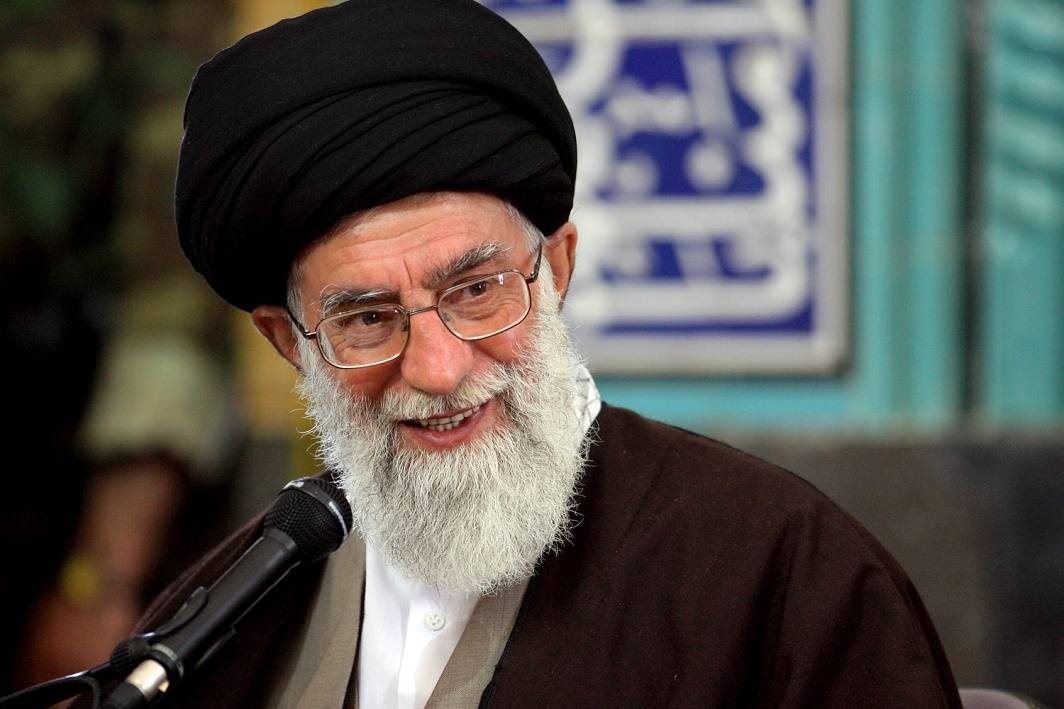
The militia group previously several times made similar threats against the US troops in Iraq, calling them occupation forces on the soil of Iraq. The group is considered to be in close links to Iran’s Revolutionary Guards Corps (IRGC).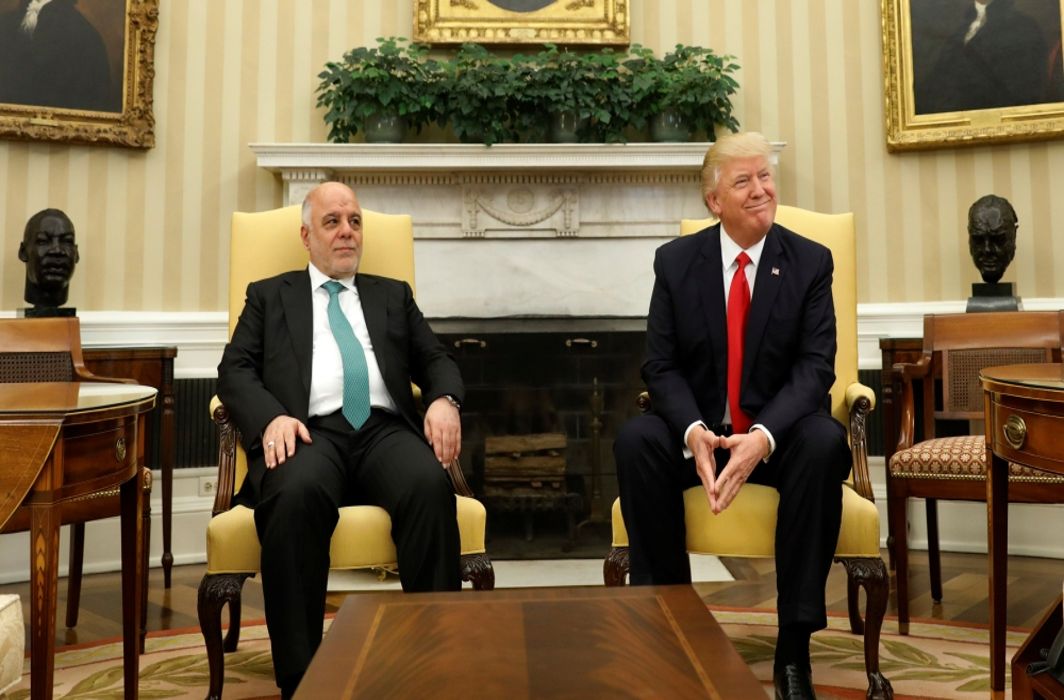
According to Wikipedia, Kataib Hezbollah (Brigades of Party of God) of Hezbollah Brigade is an Iraqi paramilitary group supported by Iran. It has been active on the fight against Daesh (IS) in Iraq and Syria. During the Iraq war, the group fought against American invasion forces.
The Badr Brigade, another powerful militia group within PMU has also said that extension of US military presence in Iraq would cause further instability in the region.
Karim Nuri, spokesperson of Badr Brigade said, “The two governments should coordinate to ensure a full withdrawal. U.S. presence will be the cause for internal polarization and a magnet for terrorists.”
The pressure on US to withdraw from Iraq has been growing when NATO Defense Ministers have recently announced their agreement to deploy a larger military mission to Iraq after the US urged them to look into a long-term stay in Iraq only after the defeat of Daesh terror group.
The NATO Defense Ministers announcement came at Brussels meeting on February 15 when they agreed to expand the alliance’s small mission in Iraq with the aim of providing “training” and “advice” to Iraqi armed forces.
Earlier in January, US Secretary of Defcnse Jim Mattis sent a formal request to NATO while he was quoted saying “We will go to a consistent mission in Iraq”.
In December last, Iraqi commanders had rejected calls by French president Emmanuel Macron to disband the Popular Mobilization Units (PMU), also known as Hash al-Sha’abi.
Iraq’s Vice President and former PM Nouri al-Maleki had also rejected French President’s call through social media saying, “Emmanuel Macron interfered unexpectedly in Iraq’s internal affairs by calling for the dismantling of a legal institution, Hashd al-Sha’abi (…) We don’t want any country to impose its will on the Iraqi government and the brave Iraqi nation.”
Ahmed al-Assadi, one of the PMU’s leaders told AFP that “any such discussion is rejected and we do not accept interference in Iraqi affairs (…) Asking for dissolution of the Hashd is like asking for the dissolution of the Iraqi army, because Hashd are the key element of the Iraqi security.”
Macron, while in Baghdad on December 2, called for a “gradual demilitarization” and the “dismantlement” of all militia forces.
Earlier in October, Iraq’s Prime Minister Haider al-Abadi had strongly defended the PMU in response to similar statements by US Secretary of State Rex Tillerson.
PMU is directly controlled by Prime Minister of the country and has been proven to be an efficient fighting force in the battle against Daesh (IS).
Earlier this month, Fox News had reported that US military was pulling its forces from Iraq to Afghanistan after the defeat of Daesh (IS) militants in the country.
The US soldiers in groups were leaving the base on daily flights. There were 5000 US military personnel stationed in Iraq in 2016, with nearly 4000 were deployed to support and assist local groups fighting the ISIS militants.







Latest world news
S Jaishankar says India is a natural option for Russia amid Europe tensions
External Affairs Minister S Jaishankar said India remained a natural option for Russia as Moscow increasingly turned towards Asia amid strained relations with Europe. He highlighted the continuity of India-Russia ties and their significance for the balance of power in Asia.


Latest world news
Putin praises PM Modi, says he has very good ideas on Ukraine war
Russian President Vladimir Putin has praised Prime Minister Narendra Modi for repeatedly raising the need to end the Ukraine war, describing his ideas for a settlement as “very good”.

Latest world news
S Jaishankar calls Pakistan a “serial practitioner of terrorism” at UN
S Jaishankar criticised Pakistan at the UN General Assembly, referring to a “serial practitioner of terrorism” and warning against attempts to normalise terrorism.


Supreme Court stays defamation case against Rahul Gandhi over PM Modi remarks

Rahul Gandhi hosts high tea for INDIA bloc after Gyanesh Kumar protests

L Murugan quits Union ministry to strengthen BJP in Tamil Nadu

Amit Shah attacks Rahul Gandhi over Congress poll losses, questions SIR row

BJP focuses on religion as opposition pushes BDM strategy in UP

PM Modi speaks to Mark Carney as India and Canada push to strengthen ties

S Jaishankar says India is a natural option for Russia amid Europe tensions

CJP leaders Saurav Das, Ashutosh Ranka, Ajinkya Shinde sent to 5-day judicial custody
BJP focuses on religion as opposition pushes BDM strategy in UP
L Murugan quits Union ministry to strengthen BJP in Tamil Nadu

Afghan Men Try To Hang With The Jet Engine Of The Aircraft in Kabul- Afghanistan News – Kabul News
Trending Top 10 News: 10000 Crore Fine on Flipkart, Apple to Launch Unique Feature, Hdfc Bank Job Ad

Trending Top 10 News: Nokia 6310, Apple sales, Bachpan ka Pyar Video Kid, Dainik Bhaskar IT Raid

Trending Top 10 News: Canada bans Indian flights, Rain in Delhi NCR, AIMIM Twitter hacked, Raj Kundra case

Trending Top 10 News: Shein India, Apple New Service, Pocket Oxygen, Oppo Launched New Phone
-
 India News23 hours ago
Supreme Court stays defamation case against Rahul Gandhi over PM Modi remarks
-
 India News15 hours ago
Rahul Gandhi hosts high tea for INDIA bloc after Gyanesh Kumar protests
-
 India News14 hours ago
L Murugan quits Union ministry to strengthen BJP in Tamil Nadu
-
 India News14 hours ago
Amit Shah attacks Rahul Gandhi over Congress poll losses, questions SIR row
-
 India News13 hours ago
BJP focuses on religion as opposition pushes BDM strategy in UP
-
 India News2 hours ago
CJP leaders Saurav Das, Ashutosh Ranka, Ajinkya Shinde sent to 5-day judicial custody
-
 Latest world news2 hours ago
S Jaishankar says India is a natural option for Russia amid Europe tensions
-
 India News2 hours ago
PM Modi speaks to Mark Carney as India and Canada push to strengthen ties
