English हिन्दी
Connect with us

Latest world news

Prince Abdul Aziz, two prominent clerics among 20 arrested in Saudi Arabia

Published

on

Prince Abdul Aziz, two prominent clerics among 20 arrested in Saudi Arabia
Crushing opposition in the kingdom continues

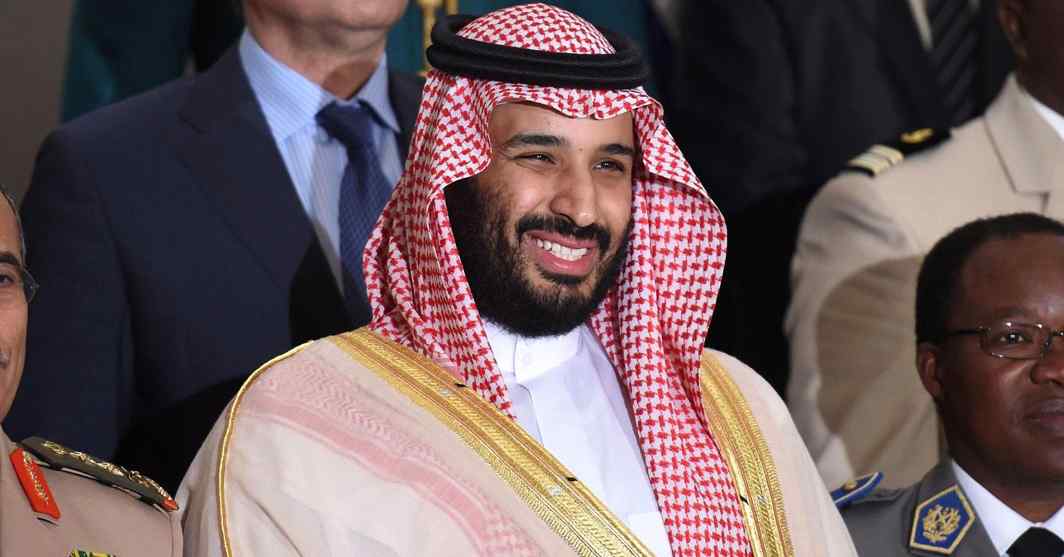
In a bid to safeguard the “kingdom” Saudi security forces have reportedly arrested some twenty political opponents including Prince Abdul Aziz bin Fahd al-Saud, a son of former King Fahad and two prominent clerics.

Tehran based Press TV, quoting multiple unidentified sources and tweets by rights organizations, journalists and others; reports that the arrests come at a time when Salman bin Abdulaziz Al-Saud plans to renounce power in favor of his son, Crown Prince Mohammed.

Two clerics identified as Salman al-Odah and Awad al-Qarni, who had earlier sparked controversies over their opinions about social life in Saudi Arabia, have reportedly been arrested.

Aljazeera, quoting social media postings reports that a prominent Saudi religious leader Sheikh Salman al Ouda (differently spelled due to different dialect in Qatar) has been arrested. But it says that it was not confirmed by Saudi authorities.

Sheikh Ouda, in his last twitter post, had welcomed on Friday suggesting that three month old row between Qatar and four Arab countries led by Saudi Arabia may be resolved.

“May God harmonise between their hearts for the good of their people,” Ouda said on Twitter after a report of a telephone call between Qatari Emir Sheikh Tamim bin Hamad Al Thani and Saudi Crown Prince Mohammed bin Salman to discuss ways to resolve the rift which began in June.

Sheikh Ouda who was imprisoned from 1994-99 for agitating for political change and has 14 million followers on twitter, appears to have been detained over the weekend, Aljazeera suggested.

Saudi human rights group AIQST reported that Sheikh Ouda was arrested on Saturday night for posting a tweet supporting of mediation to settle dispute between Saudi Arabia and Qatar.

Another cleric Sheikh Awad al-Qarni who was also reportedly arrested has been followed by 2.2 million twitter users worldwide.

On Saturday, Riyadh had suspended all communication with Doha after Qatari media allegedly misreported the contents of the first phone call on the crisis between the two Arab states.

On Friday, the Emir of Qatar contacted Saudi Arabia’s Crown Prince Mohammed bin Salman, who is recently elevated to the rank of Crown Prince, by phone to discuss the list of demands issued to Doha by the Saudi led quartet.  The phone call was initiated from Qatari side after US President Donald Trump had recently asked all the Gulf countries to enter into dialogue for resolving the crisis.

Initially it was reported that Sheikh Tamim bin Hamad al-Thani has expressed his willingness to enter into negotiations with the quartet.

However, Saudi state news agency SPA soon broke the news that Riyadh was suspending all dialogue and communication with Doha and accused the Qatar News Agency (QNA) of “distorting facts” while reporting on the phone conversation. Crown Prince Salman was reportedly unhappy because QNA did not clarify as to who initiated the phone call.

There are reports that exiled Saudi opposition activists have called for demonstrations on Friday the 15th September. Most protests are held on Fridays because of large congregation gatherings in Muslim countries.

The Saudi regime is facing criticism over its policies in the region, including imposing war on Yemen, protecting Al-Khalifa regime in Bahrain and discretely supporting IS terrorists in Syria and Iraq.

Latest world news

India closely monitoring situation in Iran, urges nationals to leave

India has advised its citizens in Iran to leave the country as authorities closely monitor the deteriorating security situation, with nearly 9,000 Indians currently residing there.

Published

on

The Indian government on Friday said it is closely monitoring the evolving security situation in Iran and has advised Indian nationals currently in the country to leave using available means. The Ministry of External Affairs (MEA) stressed that ensuring the safety and well-being of Indian citizens remains a priority.

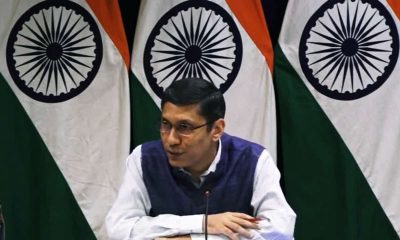
Speaking during the weekly media briefing in New Delhi, MEA spokesperson Randhir Jaiswal said approximately 9,000 Indians are presently residing in Iran, with students forming the majority of the community. He said the government has issued multiple advisories in response to recent developments.

“In light of the situation, we have advised Indian citizens in India not to travel to Iran at this time, and those currently residing there have been asked to leave the country by whatever means are available,” Jaiswal said.

The spokesperson added that the government is maintaining close vigilance over developments and is prepared to take necessary steps for the welfare of Indian nationals.

Embassy advisories and travel warnings

The Indian Embassy in Tehran has issued an advisory asking Indian citizens — including students, businesspersons, pilgrims and tourists — to depart Iran through available transport options, including commercial flights, citing the evolving security environment.

Separately, the MEA reiterated its advisory urging Indians to avoid travel to Iran until further notice. It also recalled an earlier warning issued on January 5, advising Indian nationals in Iran to remain cautious and refrain from participating in protests or demonstrations.

Indian citizens in Iran have been asked to keep essential travel and identification documents, including passports, readily accessible. Those living in the country on resident visas have also been advised to register with the Indian Embassy.

Protests and regional tensions

The advisories come against the backdrop of nationwide protests in Iran, which began at Tehran’s Grand Bazaar in late December following a sharp fall in the Iranian rial. The demonstrations later spread across the country amid mounting economic challenges, including inflation, unemployment, power outages and water shortages.

Regional tensions have also risen amid international warnings of possible military action if the situation escalates further. These developments have prompted several countries, including India, to review travel advisories and safety measures for their citizens in Iran.

India has maintained long-standing ties with Iran, though officials have indicated that recent international trade-related announcements linked to Tehran are expected to have a limited impact, given the relatively small share of bilateral trade in India’s overall commerce.

Continue Reading

Latest world news

Trump calls it a wonderful gesture as Machado presents him Nobel Peace Prize medal

Donald Trump described it as a “wonderful gesture” after Venezuela’s opposition leader Maria Corina Machado presented him with her Nobel Peace Prize medal during a White House meeting.

Published

on

donald-trump

US President Donald Trump has described it as a “wonderful gesture” after Venezuela’s opposition leader Maria Corina Machado presented him with her Nobel Peace Prize medal during a meeting at the White House.

Trump praised Machado publicly after the interaction, saying she had been through “so much” and that the act reflected “mutual respect.” He said the medal was given to him for the work he has done, according to his post on his social media platform.

The gesture, however, has drawn attention as the Nobel Institute has clarified that a Nobel Peace Prize cannot be transferred to another individual.

Nobel Institute rules out transfer of prize

The Nobel Institute has stated that Machado is not permitted to give her Nobel Peace Prize to Trump. Despite this, a White House official confirmed that Trump intends to keep the medal, even if the act remains symbolic.

Trump has long expressed interest in the Nobel Peace Prize, making the episode particularly notable despite the formal limitations placed on such honours.

Political context behind the meeting

Machado had been widely regarded as Venezuela’s democratic leader-in-waiting before Trump’s recent policy decisions regarding the country. Earlier this month, Trump declined to fully back her challenge to Venezuela’s ruling regime and instead signalled openness to engaging with leaders linked to the existing power structure.

Trump has publicly questioned Machado’s ability to lead, saying she lacks sufficient support and respect within Venezuela. Her political party is believed to have won the 2024 elections, results that were rejected by President Nicolas Maduro.

Trump has also indicated a willingness to work with acting President Delcy Rodriguez, who previously served as Maduro’s deputy.

What Machado said after the meeting

Speaking to reporters after leaving the White House and heading to Capitol Hill, Machado said she presented the medal to the US president as recognition of his “unique commitment” to Venezuela’s freedom.

She added that Trump did not provide detailed assurances during their closed-door discussion, including on the issue of elections in Venezuela. No further specifics of the meeting were disclosed.

Afterwards, Machado greeted supporters gathered near the White House gates, hugging several of them. Addressing the crowd, she said they could count on President Trump, prompting brief chants of appreciation from those present.

Machado’s recent public appearance

Before her visit to Washington, Machado had largely stayed out of public view since travelling to Norway last month, where her daughter accepted the Nobel Peace Prize on her behalf. She had spent nearly a year in hiding in Venezuela before appearing at the ceremony.

Continue Reading

Latest world news

US freezes immigrant visa processing for 75 countries, India not in list

The United States suspends immigrant visa processing for 75 countries, excluding temporary visas, as part of stricter immigration measures.

Published

on

The United States has indefinitely suspended immigrant visa processing for 75 countries, targeting individuals seeking permanent residency based on nationality. The move, set to take effect on January 21, excludes tourist and temporary work visas, but is expected to have a significant impact on family-based immigration.

Reasons behind the visa freeze

The US State Department said the suspension aims to prevent the entry of foreign nationals likely to require government welfare and public benefits. “The Trump administration is bringing an end to the abuse of America’s immigration system by those who would extract wealth from the American people,” said State Department spokesman Tommy Pigott.

While the administration cites the risk of immigrants draining government resources, studies by the Cato Institute and other research groups suggest immigrants generally use fewer benefits than US-born citizens.

Who will not be affected

Temporary visas for tourists, business travelers, and sports fans remain unaffected. Exceptions are also allowed for individuals with dual nationality, a valid passport from a country not on the list, or travel serving an “America First” national interest. Approved visas that have not yet been printed must be refused according to the State Department.

Countries affected

The visa freeze covers nations across Africa, Asia, Latin America, the Middle East, and Eastern Europe. Some of the most affected countries include Pakistan, Bangladesh, Somalia, Russia, Iran, Afghanistan, Brazil, Nigeria, and Thailand.

Other countries on the full list include Albania, Algeria, Armenia, Azerbaijan, Bahamas, Barbados, Belarus, Belize, Bhutan, Bosnia and Herzegovina, Myanmar, Cambodia, Cameroon, Cape Verde, Colombia, Côte d’Ivoire, Cuba, Democratic Republic of the Congo, Dominica, Egypt, Eritrea, Ethiopia, Fiji, The Gambia, Georgia, Ghana, Grenada, Guatemala, Guinea, Haiti, Iraq, Jamaica, Jordan, Kazakhstan, Kosovo, Kuwait, Kyrgyzstan, Laos, Lebanon, Liberia, Libya, North Macedonia, Moldova, Mongolia, Montenegro, Morocco, Nepal, Nicaragua, Republic of the Congo, Rwanda, St Kitts and Nevis, St Lucia, St Vincent and the Grenadines, Senegal, Sierra Leone, South Sudan, Sudan, Syria, Tanzania, Togo, Tunisia, Uganda, Uruguay, Uzbekistan, and Yemen.

Trump administration immigration record

The Trump administration has already imposed stricter vetting procedures over the past year, revoking over 100,000 visas and deporting more than 605,000 people, with 2.5 million others leaving voluntarily. Critics highlight that the policy disproportionately affects immigrants from non-European countries.

Continue Reading

Trending

© Copyright 2022 APNLIVE.com