English हिन्दी
Connect with us

Latest world news

PTI’s A R Alvi elected 13th President of Pakistan

Published

on

PTI’s A R Alvi elected 13th President of Pakistan

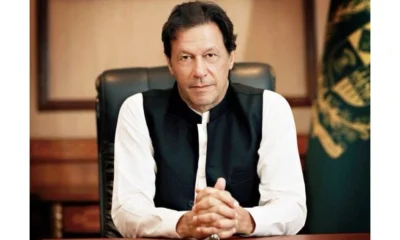
In a first major indication of Pakistan Prime Minister Imran Khan’s smooth sailing, members of National Assembly and four provincial assemblies voted in favour of Pakistan Tehreek-i-Insaf (PTI) candidate Dr Arifur Rehman Alvi and elected him as the 13th President of the country on Tuesday.

Dawn, quoting to the results provided by the Election Commission of Pakistan (ECP), reports that Alvi secured 353 votes, while Muttahida Majlis-e-Amal (MMA) candidate Fazlur Rehman bagged 185 and senior PPP leader Aitzaz Ahsan’s tally stood at 124. Alvi will succeed the outgoing President Mamnoon Hussain.

The ECP, in a press release, said that a total of 1,110 voters participated in the presidential polls held simultaneously at the Parliament House and the four provincial assemblies.

The Election Commission of Pakistan (ECP) has summoned all the three candidates or their agents on Wednesday to witness the tabulation process, after which the official result will be announced and the winner notified.

Read More: PM Modi Congratulates Pak PM-elect Imran Khan

Delivering his victory speech Dr Arifur Rehman Alvi said, “I am grateful to God that the PTI-nominated candidate has been successful in the presidential race today. I am also thankful to Imran Khan for nominating me for such a big responsibility.” He expressed hope that the “fortunes of the poor” take a turn for the better, and that they get “food, shelter and clothing”.

He further added that “from today I am not just a president that was nominated by the PTI but I am the president of the entire nation and all parties. Each party has an equal right on me.”

On Tuesday, a joint sitting of the Senate and the newly elected national and provincial assemblies — together known as the electoral college of Pakistan — was called to elect the country’s 13th president.

Read More: Imran Khan poised to become Pak PM, though party 22 short of majority

Pakistan’s constitution requires the presidential election should be held at least a month before the outgoing president’s last day in office. The voting for electing new president which took place on Tuesday should have instead been held by August 9, as incumbent President Mamnoon Hussain’s term will expire on September 9.  Alvi will take oath of office and secrecy on that day. However, since the Electoral College was not complete by the required deadline, the presidential election was delayed.

Latest world news

Bangladesh envoy meets S Jaishankar, Dhaka foreign minister may visit India in April

India and Bangladesh are stepping up diplomatic engagement as S Jaishankar meets envoy Riaz Hamidullah and discussions begin on a possible visit by Dhaka’s foreign minister.

Published

on

Bangladesh envoy meets S jayshankar

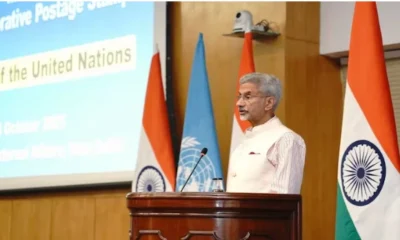
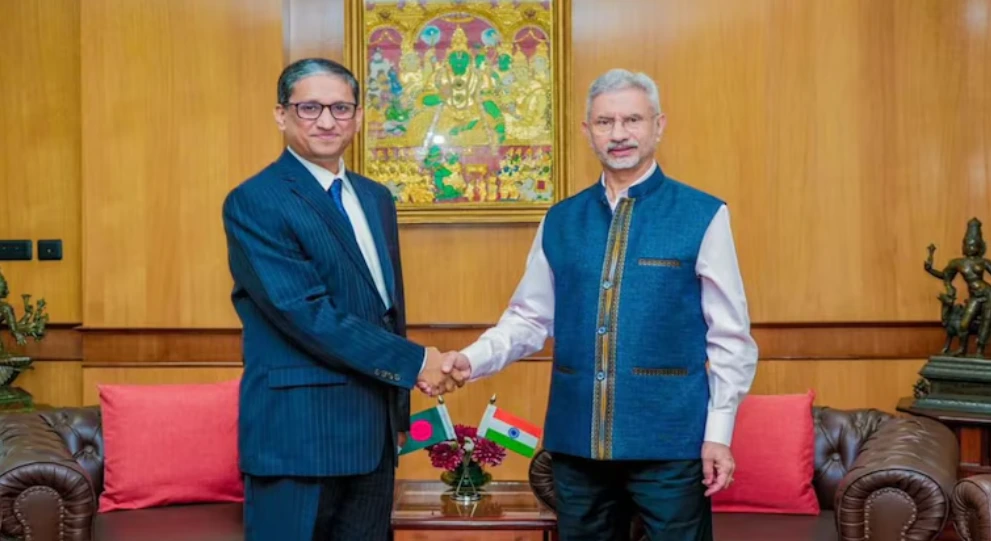
India’s External Affairs Minister S. Jaishankar met Bangladesh High Commissioner Riaz Hamidullah, marking a key diplomatic engagement amid efforts to further strengthen bilateral ties between the two countries.

The meeting assumes significance as it was Hamidullah’s first interaction with a senior Indian cabinet minister since he took charge in May last year.

Following the meeting, Hamidullah shared on social media that he had a “courtesy call” with Jaishankar and reaffirmed Bangladesh’s readiness to work together with India in areas of shared interest and mutual benefit.

Jaishankar also highlighted the importance of the engagement, noting that discussions focused on advancing bilateral relations between the neighbouring nations.

Possible visit by Bangladesh foreign minister

Diplomatic engagements between the two countries are expected to intensify in the coming weeks. According to sources, Bangladesh Foreign Minister Khalilur Rahman may visit India in the second week of April.

The visit is likely to be planned alongside his participation in a ministerial-level meeting of the Indian Ocean Rim Association (IORA) in Mauritius.

Rahman, who previously studied at Jawaharlal Nehru University in New Delhi, is considered familiar with India’s strategic and political landscape. He had also visited India in November last year in his earlier role as national security adviser under the interim government led by Muhammad Yunus.

He was appointed foreign minister after Tarique Rahman assumed office earlier this year.

High-level exchanges expected

Prime Minister Narendra Modi had earlier congratulated Tarique Rahman on his electoral victory and extended an invitation to visit India.

Lok Sabha Speaker Om Birla also attended Rahman’s swearing-in ceremony and later conveyed a personal letter from Modi, reiterating the invitation for an official visit.

The recent meeting between Jaishankar and Hamidullah is seen as part of broader diplomatic efforts to maintain momentum in India-Bangladesh relations through sustained high-level dialogue.

Continue Reading

Latest world news

PM Modi speaks to Qatar, France, Jordan, Oman and Malaysia leaders on Middle East tensions

PM Modi held talks with leaders of five nations, stressing dialogue, condemning attacks on energy infrastructure and urging stability in the Middle East.
Published

on

PM Narendra Modi

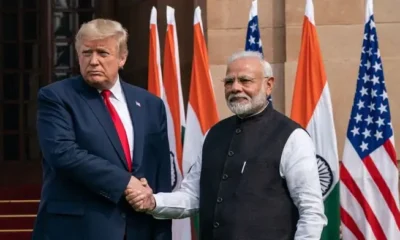
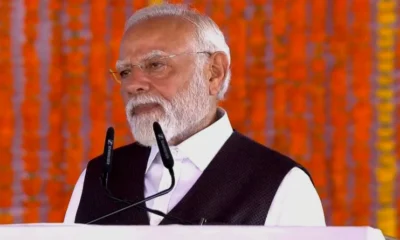
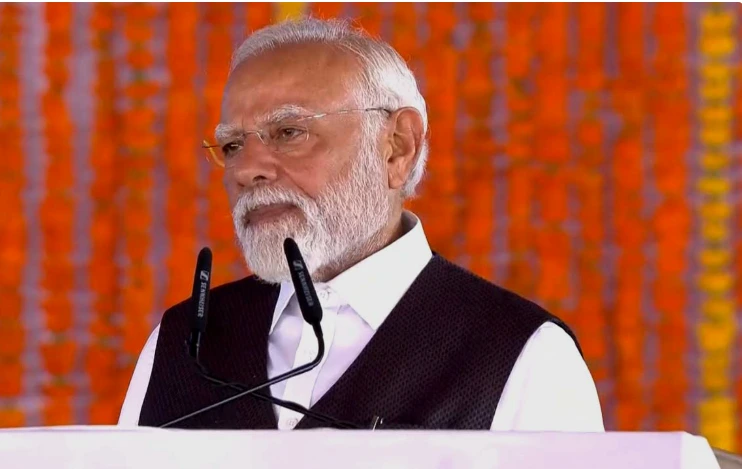
Prime Minister Narendra Modi held a series of high-level conversations with leaders from multiple countries, including Emmanuel Macron, as concerns grow over the escalating situation in the Middle East.

During separate telephonic discussions with leaders of Qatar, Jordan, Oman and Malaysia, the prime minister stressed the urgent need for de-escalation through dialogue and diplomacy. He also strongly condemned recent attacks targeting energy infrastructure in the region, warning that such actions could worsen tensions.

In his interaction with Qatar’s Amir, Sheikh Tamim bin Hamad Al Thani, PM Modi conveyed Eid greetings and reaffirmed India’s solidarity with the Gulf nation. He appreciated the support extended to the Indian community and reiterated the importance of ensuring safe and free navigation through the Strait of Hormuz.

Speaking with King Abdullah II, the prime minister again underlined the need for restoring peace and stability. Both leaders expressed concern over the evolving situation and agreed that attacks on energy infrastructure could trigger avoidable escalation. PM Modi also acknowledged Jordan’s assistance in facilitating the safe return of stranded Indian nationals.

In a separate exchange with French President Emmanuel Macron, the leaders discussed the urgent need to reduce tensions and maintain diplomatic efforts. Both sides agreed to continue close coordination to support peace initiatives in the region.

PM Modi also spoke with Haitham bin Tariq, where the two leaders emphasised prioritising dialogue for restoring stability. The prime minister condemned violations of Oman’s sovereignty and appreciated its role in helping evacuate people, including Indian citizens.

During his conversation with Malaysian Prime Minister Anwar Ibrahim, PM Modi exchanged festive greetings and discussed the broader regional situation. Both leaders reaffirmed their commitment to resolving the crisis through peaceful means.

These diplomatic engagements come amid heightened tensions following military actions involving the United States, Israel and Iran. India has consistently advocated for stability in the region, given its strategic and economic interests, particularly in energy security and maritime trade routes.

Continue Reading

Latest world news

Russian oil tanker rerouted to India amid Middle East crisis, to reach Mangaluru on March 21

A Russian oil tanker bound for China has been diverted to India as Middle East tensions disrupt global energy supply chains.
Published

on

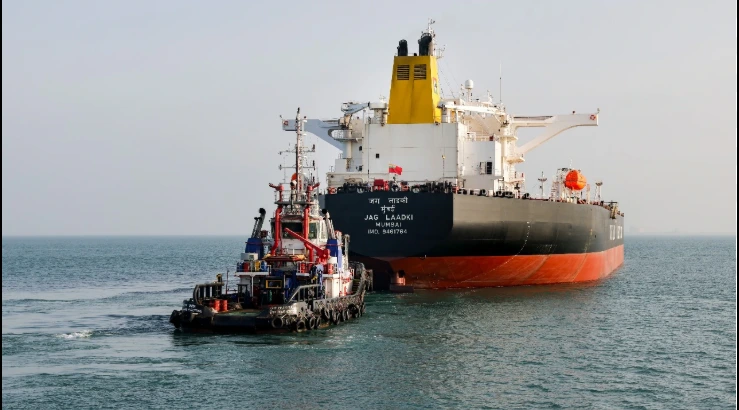
A Russian oil tanker carrying around 7.7 lakh barrels of crude oil is set to arrive at India’s New Mangalore port on March 21 after changing its original route to China, a senior government official said on Thursday.

The vessel, Aqua Titan, which sails under the Cameroon flag, departed from a Russian port on January 18. It altered its course while in the South China Sea and is now heading towards India, reflecting shifting global oil trade patterns amid ongoing geopolitical tensions.

Middle East conflict disrupts global supply

The diversion comes against the backdrop of escalating conflict in the Middle East. The ongoing war involving Iran, along with its retaliatory strikes on Gulf nations, has significantly disrupted oil and natural gas exports from the region. These disruptions have also led to temporary production halts in key energy facilities.

Since the conflict began on February 28, at least four Indian-flagged vessels carrying oil and gas cargo have already reached Indian ports safely.

Indian vessels stranded near Strait of Hormuz

According to the Ministry of Ports, Shipping and Waterways, a large number of Indian vessels remain stuck near the Strait of Hormuz, a critical global oil transit route.

Currently, 22 Indian-flagged cargo ships, along with 611 seafarers, are stranded in the western part of the Persian Gulf. Additionally, two loaded Indian vessels are positioned in the eastern section of the Strait.

Officials confirmed that authorities, including the Directorate General of Shipping, are closely monitoring the situation in coordination with shipowners, recruitment agencies, and Indian embassies. All Indian crew members in the region are reported to be safe, with no incidents recorded in the past 24 hours.

Global shipping crisis deepens

The disruption is not limited to Indian vessels. Around 700 ships from various countries have reportedly been stranded near the Strait of Hormuz for nearly 20 days. This has impacted global oil flows, with nearly 20 percent of crude supplies from the Middle East failing to reach international markets.

India, which imports about 85 percent of its crude oil needs from over 40 countries, is among the nations most affected by the crisis.

Oil prices surge amid attacks on energy infrastructure

Amid rising tensions, global crude prices have surged sharply, with Brent crude crossing $115 per barrel. Iran has threatened further strikes on regional energy installations following attacks linked to Israeli actions.

Recent incidents include missile strikes on Qatar’s Ras Laffan LNG facility, drone attacks on a Saudi refinery along the Red Sea, and fires reported at oil installations in Kuwait.

Government steps up monitoring and response

Authorities have stepped up efforts to manage the situation. The Directorate General of Shipping has facilitated the return of over 472 Indian seafarers so far, including 25 repatriated in the last 24 hours.

Despite the global disruption, India’s ports continue to operate without congestion. Officials confirmed that ports have sufficient storage capacity and are maintaining strict monitoring of vessel movement and cargo handling operations.

Continue Reading

Trending

© Copyright 2022 APNLIVE.com