English हिन्दी
Connect with us

Latest world news

Referendum in Iraq’s Kurdish North Sets Cat Among Pigeons

Published

on

masood barzani

[vc_row][vc_column][vc_column_text]By: Saeed Naqvi

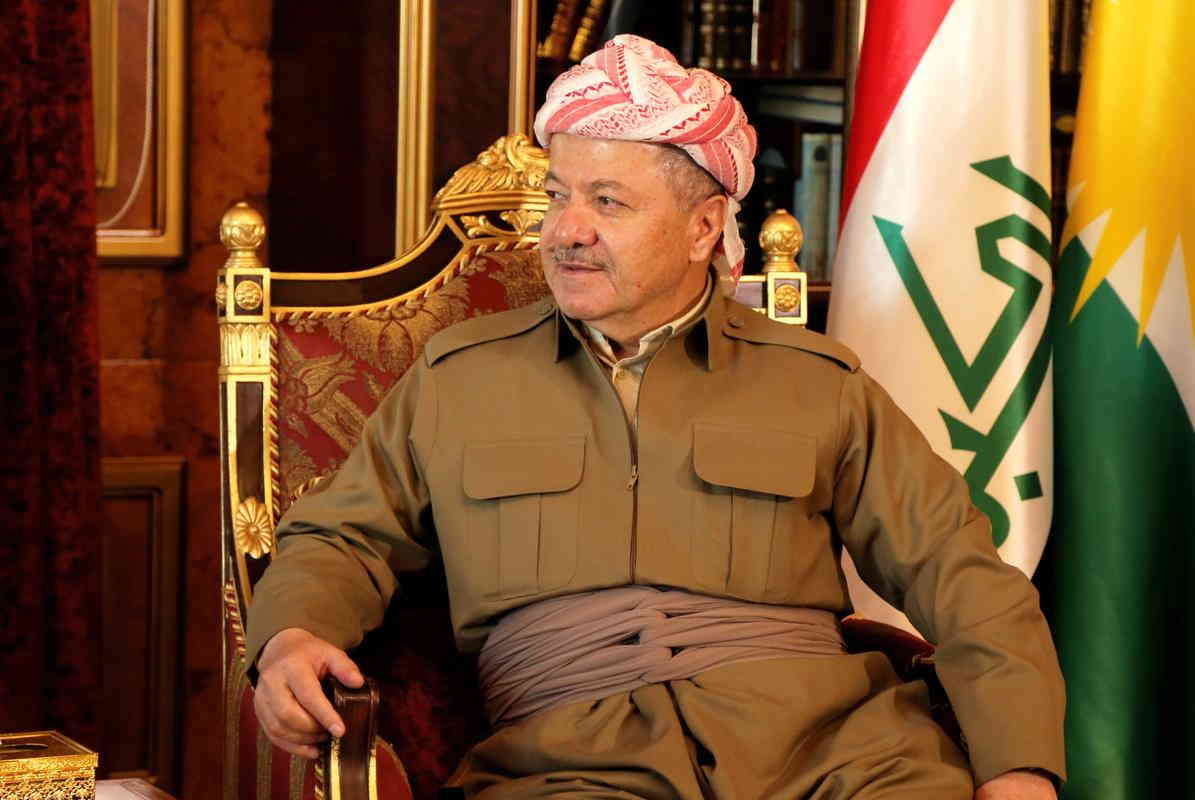
Iraqi Kurdish region’s planned referendum on September 25 for independence has set the cat among the pigeons. Last minute efforts are on to persuade the Kurdish autonomous region’s President, Masoud Barzani, to postpone the referendum because it will distract regional and global powers from their main focus – that of destroying the residual Islamic State elements in the region.

Iraqi Kurdish region’s planned referendum on September 25 for independence has set the cat among the pigeons. Last minute efforts are on to persuade the Kurdish autonomous region’s President, Masoud Barzani, to postpone the referendum because it will distract regional and global powers from their main focus – that of destroying the residual Islamic State elements in the region.

Iraqi Kurdish region’s planned referendum on September 25 for independence has set the cat among the pigeons. Last minute efforts are on to persuade the Kurdish autonomous region’s President, Masoud Barzani, to postpone the referendum because it will distract regional and global powers from their main focus – that of destroying the residual Islamic State elements in the region.

All countries are either opposed to the referendum or, like the United States, opposed to the timing of it. Only Prime Minister Benjamin Netanyahu of Israel stands out in lone splendour, endorsing the referendum. By doing so, he has, of course, let the cat out of the bag. This has added to Iran’s concerns. Tehran says it will seal its Kurdish borders should the referendum take place. The implication is that necessities of daily life, which came from Iran will no longer be available to Iraqi Kurdistan. For a landlocked enclave, this is severe punishment.

It is easy to conclude that the US and Iran are on the same page on the referendum. But this is a wrong impression. For Iran, any suggestion of eventual independence for any of the Kurdish enclaves, is anathema. For the US, the timing of the referendum is inconvenient. It disrupts its script for the region.

New Delhi knows better than anyone else that an independent Iraqi Kurdistan has been US’s pet project ever since its forces entered Iraq, first during operation Desert Storm in February 1992 and finally during the invasion of the country in March-April 2003.

The No Fly Zone imposed on the Kurdish north in 1992 created an autonomous region. This was not without an eye on the future.

It was in 2003-2004 when, President George W. Bush was drooling all over New Delhi, he invited India to take charge of the Kurdish north. Military officials of all ranks, were asked to be ready, to set sail in the largest ships available with the Indian navy. Yes, New Delhi came very close to playing an Imperial role in West Asia as America’s sidekick. It was Prime Minister Atal Behari Vajpayee who saw the US not as a great power but a dangerous one for its adventures in West Asia. He scuttled the deal.

Regional circumstances changed but the original blue print for Iraq’s Kurdish north remained dear to US policy makers. But the timing for the referendum is wrong because, at least on the face of it, the US would like to be seen in the lead, fighting the Islamic State.

There is an even graver concern that the referendum might adversely affect Prime Minister Haider al-Abadi’s fortunes in the April 2018 General elections. Any reversal for Abadi, a loyal US nominee, will be a gain for Iran. This is a disturbing prospect for Netanyahu, Saudi Crown Prince Mohammad bin Salman and Trump.

Iranians see the referendum in two ways: should it lead to independence, they will choke Barzani’s enclave by sealing its borders. The Kurdish north constitutes 20 percent of Iraq. If it separates, Shias, who are an overwhelming majority already, will become 85 percent of the population. It will only consolidate the “Shia crescent”.

Iranians are also not afflicted by fear of their Kurds, barely four percent of the total population, tearing away from the main nation because of ethnicity, religion and language. Iranian Kurds, like the rest of Iran are Aryans, a sizable number being Shia. Their language, Pahlavi, is close to modern Persian.

For Turkey, an Iraqi Kurd enclave is a life and death issue. There is oil in Diyarbakir, the principal Kurd city in Turkey; 15 of their power stations are on rivers flowing through the region. But these are not the reasons why Turkish tanks and troops have been amassed on the border with Iraq. The official Kurdish explanation makes sense: the military presence on the border is designed to block a flow of refugees from the Iraqi side should the situation in the province take a violent turn.

Turkey does have a very real fear of refugees because it is already struggling to assimilate over three million refugees from Syria.

The referendum scare is part of the confusion the US has created in the region. Americans entered Iraq with one script but are having to cope with completely unexpected outcomes.

The no-fly-zone made Kurdish-Iraq into a self governing enclave except for Defence and Foreign Affairs which were left to Baghdad. But the fate of important cities like Kirkuk, one of the world’s great oil bearing areas, would be decided later. Article 140 of Iraq’s constitution, written by the Americans, left the fate of cities like Kirkuk to a referendum by “the people of Iraq” not later than 2007.

Obviously Americans imagined they would control Iraq to their advantage by sheer brute power. But this is not the way events turned out. Eventually, in December 2011, the last US solider left. President Obama failed to extract from Prime Minister, Nouri al-Maliki an honourable status-of-forces agreement. That is why it became unstated US policy to have Maliki replaced by a more “pliable” candidate – Abadi, for example.

When New York Times columnist Thomas Friedman asked Obama in the course of an interview in 2015: why did the President not order air-strikes against the Islamic State as soon as it reared its head? Obama’s response was startling: air strikes against IS at a stage when it was advancing towards Baghdad, would have relieved pressure on Maliki. In other words, the IS was an asset for destabilizing Maliki.

Meanwhile, there is total chaos in the north’s (Erbil) financial dealings with Baghdad. Barzani thought of getting out of this chaos by announcing a referendum. In his framework the timing seemed auspicious because the Iraq army would be less energetic is retaliating since it is tired from the recent wars in the north with the IS[/vc_column_text][/vc_column][/vc_row]

Latest world news

Israel-Lebanon ceasefire to begin within hours as Trump announces 10-day truce

Israel and Lebanon may begin a 10-day ceasefire within hours after a proposal announced by Donald Trump amid ongoing tensions.

Published

on

Donald Trump

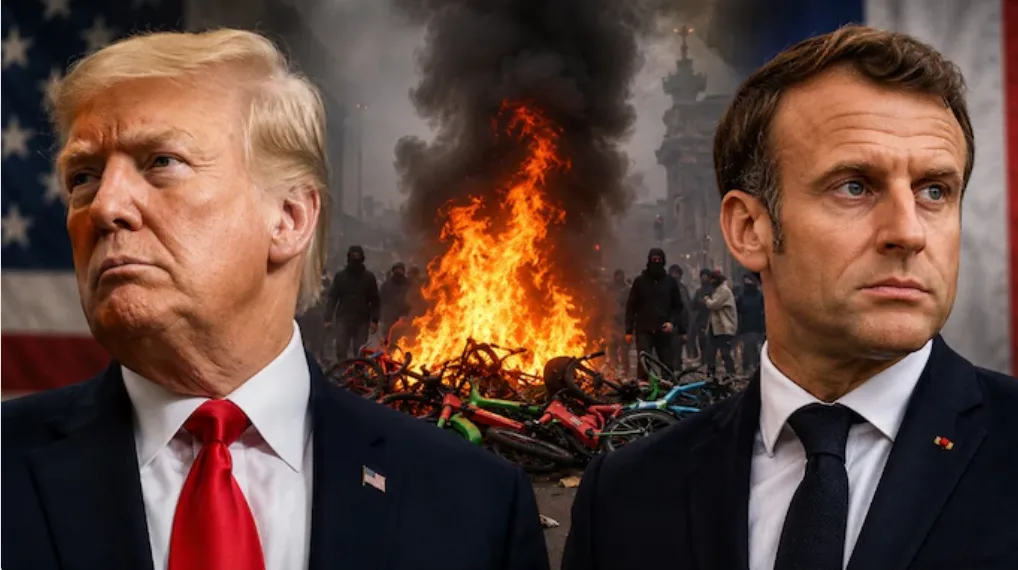
A temporary halt in hostilities between Israel and Lebanon is expected to begin within hours after US President Donald Trump announced a proposed 10-day ceasefire between the two sides, amid ongoing tensions in the region.

According to his statement, the ceasefire is likely to take effect around 5 p.m. Eastern Time, although independent confirmation from both sides is still awaited.

The development follows discussions involving Israeli Prime Minister Benjamin Netanyahu and Lebanese President Joseph Aoun, with mediation efforts led by the United States.

Officials indicated that the proposed truce is aimed at creating a limited window to reduce violence and potentially pave the way for broader diplomatic engagement. The situation along the Israel-Lebanon border has remained tense in recent weeks, with escalation linked to the activities of Hezbollah.

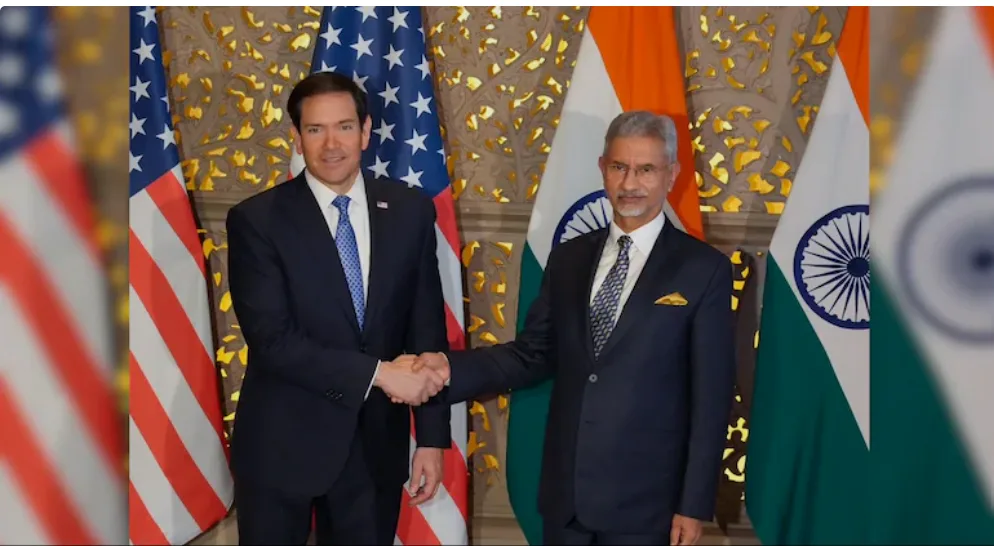
Diplomatic efforts have intensified in recent days, with discussions facilitated by the United States, including the involvement of US Secretary of State Marco Rubio. However, details of the agreement and the extent of coordination between the parties remain unclear.

The situation remains fluid, and the success of the ceasefire will depend on adherence by all sides involved. The conflict has already led to significant humanitarian and geopolitical consequences, including displacement and disruption in affected areas.

While the proposed ceasefire is being seen as an important step toward de-escalation, broader negotiations involving regional stakeholders are expected to be necessary for any lasting resolution.

Continue Reading

Latest world news

US ends oil sanctions waiver for Iran and Russia, impact likely on India’s energy imports

The US decision to end the Iran and Russia oil waiver may impact India’s oil imports, fuel prices and global energy markets.

Published

on

US oil tanker

The United States has decided not to extend a temporary sanctions waiver that allowed limited trade in Iranian and Russian oil, marking a shift towards stricter enforcement of economic restrictions.

The waiver, introduced in March 2026, had permitted the sale of oil already loaded on ships to stabilise global supply during heightened geopolitical tensions. However, it is now set to expire around mid-April without renewal.

US officials have indicated that the move is part of a broader strategy to increase pressure on both Iran and Russia amid ongoing conflicts and geopolitical tensions.

What the waiver did and why it mattered

The short-term waiver allowed millions of barrels of oil—estimated at around 140 million barrels—to enter global markets, helping ease supply shortages and prevent sharp price spikes.

It also enabled countries like India to purchase discounted crude oil from Russia and resume limited imports from Iran after years of restrictions.

Impact on India

India, one of the world’s largest oil importers, is expected to feel the impact of the decision in several ways:

  • Reduced access to discounted oil
    India had been buying cheaper Russian crude and recently resumed Iranian imports under the waiver. Its end may limit these options.
  • Potential rise in fuel costs
    With fewer discounted supplies available, India may need to rely more on costlier sources, which could increase domestic fuel prices.
  • Supply diversification pressure
    India may need to explore alternative suppliers in the Middle East, Africa, or the US to maintain energy security.
  • Geopolitical balancing challenge
    The move adds pressure on India to align with US sanctions while managing its own economic interests.

Global energy market concerns

The end of the waiver comes at a time when global oil markets are already under stress due to conflict in West Asia and disruptions in key routes like the Strait of Hormuz.

Analysts warn that tightening sanctions could:

  • Reduce global oil supply
  • Increase price volatility
  • Intensify competition among major buyers like India and China

Bigger picture

The US decision reflects a broader shift from temporary relief measures to stricter enforcement of sanctions, even if it risks tightening global energy markets.

For India, the development highlights a recurring challenge—balancing affordable energy access with geopolitical realities.

Continue Reading

Latest world news

Sanctioned tanker fails to breach US blockade, turns back near Strait of Hormuz

A US-sanctioned tanker failed to cross the Hormuz blockade and turned back, underscoring rising tensions and disruption in global shipping routes.

Published

on

A US-sanctioned oil tanker failed to break through a newly imposed American naval blockade and was forced to turn back near the Strait of Hormuz, highlighting growing tensions in the region.

The vessel, identified as the Rich Starry, reversed its course after attempting to exit the Gulf, according to shipping data. The development comes just days after the United States enforced restrictions on ships linked to Iranian ports.

The blockade was announced by Donald Trump following the collapse of recent diplomatic talks with Iran. The move aims to restrict maritime traffic associated with Iranian trade.

Officials said that during the first 24 hours of enforcement, no vessel successfully crossed the blockade. Several ships, including the sanctioned tanker, complied with instructions from US forces and turned back toward regional waters.

The tanker is reported to be linked to a Chinese company previously sanctioned for dealing with Iran. It was carrying a cargo of methanol loaded from the United Arab Emirates at the time of the incident.

The situation underscores the rising risks in one of the world’s most critical oil transit routes. The Strait of Hormuz typically handles a significant share of global energy shipments, but traffic has sharply declined due to ongoing geopolitical tensions.

The blockade, which applies specifically to vessels travelling to or from Iranian ports, has added further uncertainty for shipping companies, insurers and global energy markets.

Continue Reading

Trending

© Copyright 2022 APNLIVE.com