
Latest world news
Saudi Crown Prince recognise Israelis right to their own land


In a major development bringing Saudi Arabia and Israel closer, Crown Prince Mohammed Bin Salman, also known as MBS, has virtually recognised Israel, stressing that Israelis are entitled to their own land. The two countries do not enjoy diplomatic relations or air-travel connection.
In the surprising move, MBS brought the behind-the-scene activities in full public view, while responding to questions during an exclusive interview with Jeffrey Goldberg of US news magazine Atlantic in Washington, said, “I believe that each people, anywhere, has a right to live in their peaceful nation. I believe the Palestinians and the Israelis have the right to have their own land.” The interview was published on Monday.
He further said, “But we have to have a peace agreement to assure the stability for everyone and to have normal relations.” Both Saudi Arabia and Israel consider Iran as their biggest enemy and United States as their key ally.
Saudi Arabia’s Crown Prince MBS told the American journalist that he had no “religious objection” to Israelis living alongside Palestinians, so long as the main Muslim holy site in Jerusalem — the Al-Aqsa mosque compound — is protected.
He was quoted saying, “We have religious concerns about the fate of the holy mosque in Jerusalem and about the rights of the Palestinian people. This is what we have. We don’t have any objection against any other people.”
The Saudi powerful crown prince said that Kingdom has no problems with Jews and that “there are a lot of interests we share with Israel”. He expressed his country’s readiness to establish economic ties with Tel Aviv after settlement of Israel-Palestine conflict.
MBS statement is considered to be an important step towards normalisation of ties between Saudi Arabia, the home to the two grand mosques of Muslim world and Israel. This may affect the regional dynamics in the Middle East.
Saudi Arabia and Israel do not have any official diplomatic relations. However, news reports have revealed behind the scene diplomatic and intelligence cooperation. Riyadh’s ties with Palestinian National Authority headed by Mehmoud Abbas have been deteriorating, especially after Trump’s Jerusalem move.
According to Israel’s leading newspaper Haaretz, there are regular meetings between the officials of the two countries in the joint war room where Jordan, Saudi Arabia and US coordinate.
In August 2016, some journalists in Saudi Arabia reported that Saudi Arabia had started shifting its tone towards Israel and had started to criticise anti-Semitism in Arab countries. Israeli media described the move an apparent media campaign to shape a positive public opinion for deepening the ties between the two countries.
Since 2002, Saudi Arabia has been working hard to achieve the US sponsored Arab Peace Initiative, which envisions a two-state solution to the Israeli-Palestinian conflict.
So far no senior Saudi official has accepted that Israel has a “right” to any land beyond the practical need to secure a lasting deal.
After 1979 Islamic revolution, Iran had severed all diplomatic and economic ties with Israel. Iran does not recognise the legitimacy of Israel as a state. Iranian media calls Israel as Zionist entity and avoids calling it a country.

Tehran does not support US sponsored two-state solution. Iran’s Supreme Leader Ayatollah Khamenei had in recent months reiterated that Israel will not see 25 more years of its existence. A countdown watch at main squares in Tehran are already showing the remaining days of Israel’s existence.
Iranian leaders say that earlier Israel used to argue for its expansion from Nile to Euphrates. But due to sense of insecurity in the changed scenario Israel is now building boundary walls for its protection.





Latest world news
Magnitude 7 earthquake strikes Tibet after floods
A magnitude 7 earthquake struck northern Tibet on Thursday, October 22. The tremor came weeks after deadly flash floods and landslides hit the mountainous region near the Nepal-China border. Initial reports did not confirm casualties or damage from the earthquake.


Latest world news
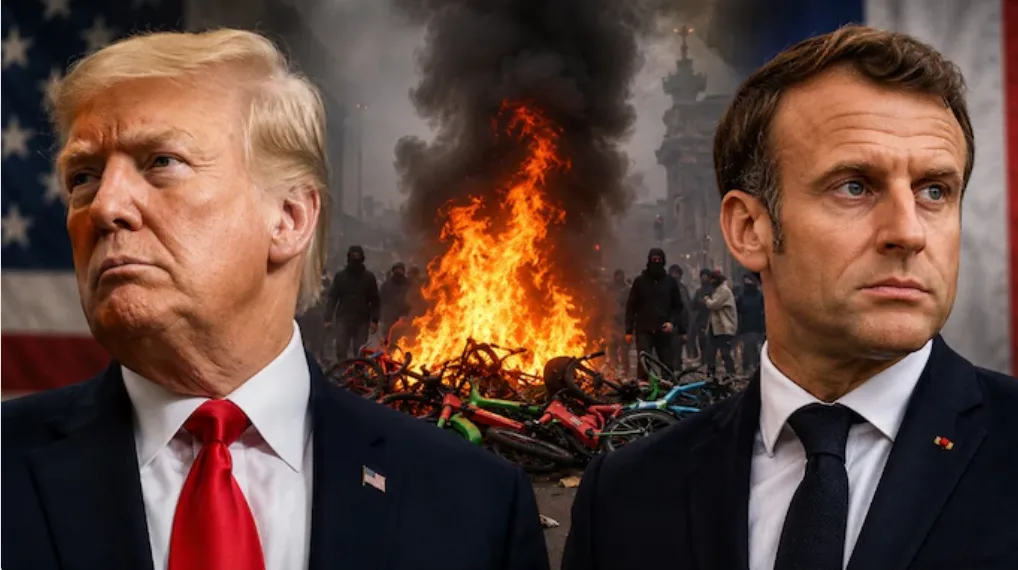
Macron rejects Trump’s immigration claims over France riots
French President Emmanuel Macron criticised Donald Trump and other foreign leaders over their comments on France’s recent unrest. Macron rejected claims that the country was being overrun by migrants and Islamists, calling such assertions false.
Latest world news
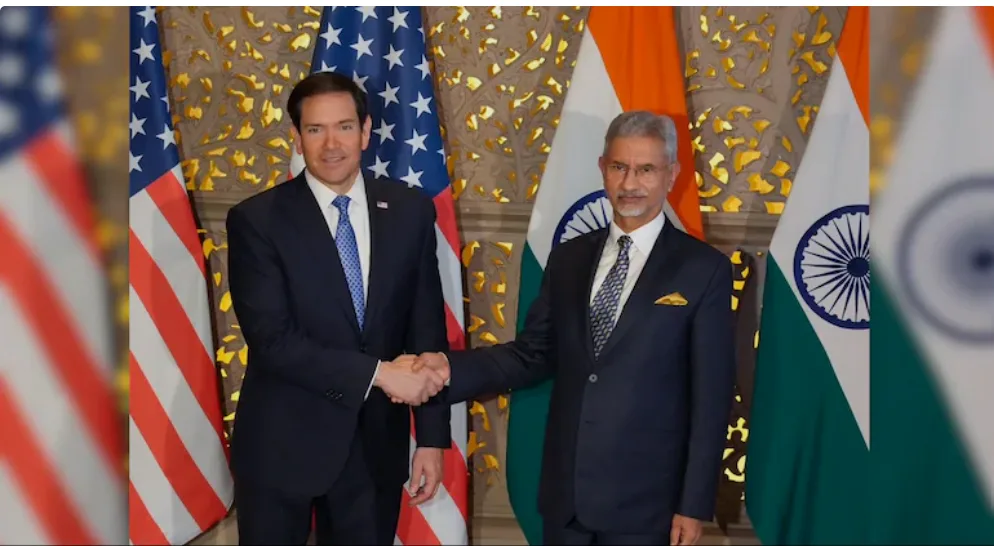
Marco Rubio says India and US share extraordinary alignment on key issues
US Secretary of State Marco Rubio said India and the United States share an extraordinary alignment on core issues, even though disagreements between the two countries may arise.

Punjab strike hits public services as 3 lakh employees and roadways workers protest

Two election commissioners complained against senior poll officer, RTI reveals

Om Prakash Mathur sworn in as Keralam Governor

PM Modi to inaugurate Rs 169-crore RBI data centre in Odisha on October 25

Delhi High Court rejects Neha Bora’s plea against peace bond notice

MEA responds after ITBP chief flags ongoing face-offs with China in Arunachal
Delhi High Court rejects Neha Bora’s plea against peace bond notice
PM Modi to inaugurate Rs 169-crore RBI data centre in Odisha on October 25
Om Prakash Mathur sworn in as Keralam Governor
Two election commissioners complained against senior poll officer, RTI reveals

Afghan Men Try To Hang With The Jet Engine Of The Aircraft in Kabul- Afghanistan News – Kabul News
Trending Top 10 News: 10000 Crore Fine on Flipkart, Apple to Launch Unique Feature, Hdfc Bank Job Ad

Trending Top 10 News: Nokia 6310, Apple sales, Bachpan ka Pyar Video Kid, Dainik Bhaskar IT Raid

Trending Top 10 News: Canada bans Indian flights, Rain in Delhi NCR, AIMIM Twitter hacked, Raj Kundra case

Trending Top 10 News: Shein India, Apple New Service, Pocket Oxygen, Oppo Launched New Phone
-
 India News14 hours ago
Punjab strike hits public services as 3 lakh employees and roadways workers protest
-
 India News14 hours ago
Two election commissioners complained against senior poll officer, RTI reveals
-
 India News3 hours ago
Om Prakash Mathur sworn in as Keralam Governor
-
 India News3 hours ago
PM Modi to inaugurate Rs 169-crore RBI data centre in Odisha on October 25
-
 India News2 hours ago
Delhi High Court rejects Neha Bora’s plea against peace bond notice
-
 India News1 hour ago
MEA responds after ITBP chief flags ongoing face-offs with China in Arunachal
