
Latest world news
Turkey: Erdogan Sworn In As Powerful Executive President


More than 125,000 people sacked a day before swearing ceremony
Turkish President Recep Tayyip Erdogan has assured his people for delivering improvement in “every” area under his new term as more powerful executive presidency after recent elections.
Speaking after taking oath as country’s first executive president, Erdogan said, “In the new era, Turkey will improve in every field, including democracy, fundamental rights, freedoms, economy and large investments.”
He further said, “Turkey is leaving behind a system which cost the country politically, socially, economically. We will try to be worthy of our nation, aware that we are not only of our supporters, but all 81 million Turkish citizens.”
Read More: Erdogan re-elected as President, with more executive powers
Under the modified constitution Erdogan leads the state’s executive branch and has the right to appoint and dismiss vice-presidents, a newly introduced position, as well as ministers, high-level officials and senior judges – without obtaining parliamentary nod.
He also enjoys power to dissolve parliament, issue executive decrees and impose a state of emergency. The prime ministry will not exist in the new system.
 His inauguration concluded the transition from a parliamentary system to an executive presidency, in line with the constitutional changes approved in a referendum in April 2017.
The guests at the inaugural ceremony comprised also of dozens of foreign leaders and dignitaries including Russian Prime Minister Dmitry Medvedev, Venezuelan President Nicolas Maduro and Qatari Emir Sheikh Tamim bin Hamad Al Thani.
Later on Monday, Erdogan announced his new 16-member cabinet, in which he named his son-in-law, Beraat Albayrak, as treasury and finance minister. He had served as the energy and natural resources minister since 2015.
Mevlut Cavusoglu was retained as foreign minister, while Suleyman Soylu remained interior minister. Other members, including Vice-President Fuat Oktay, were former bureaucrats, NGO leaders, business people and advisers. Oktay has served as an executive with national carrier Turkish Arilines.
He has repeatedly stressed that a powerful executive presidency will create a stable environment that will allow the country to take “steps for the future in a stronger manner”.
But opposition parties, Turkey’s Western allies and other critics argue that the system grants the top office major powers without the necessary checks and balances, calling it a “one-man rule”.
Read More: Turkey orders 104 opponents life imprisonment for failed 2016 coup
On Sunday, a day before the swearing ceremony, Erdogan’s government sacked another 18,000 state workers, including soldiers, police and academics in the latest purge triggered after a failed coup in 2016. A TV channel and three newspapers have also been closed.
Since the failed coup his government has sacked more than 125,000 people, sent 160,000 people in jail, introduced emergency rule and clamped down on the media and the opposition.
Erdogan’s government blames the coup attempt on the US based Muslim cleric Fethullah Gulen, who denies involvement. Gulen, based in San Francisco, used to run large number of educational institutions and media houses before the 2016 failed coup.
Last month President Erdogan was re-elected with 53% votes. He says his increased authority will empower him to address country’s economic woes and defeat Kurdish rebels. His AKP party also controls the parliament. He has been in power for more than 15 years – either as prime minister or president.




Latest world news
S Jaishankar says India is a natural option for Russia amid Europe tensions
External Affairs Minister S Jaishankar said India remained a natural option for Russia as Moscow increasingly turned towards Asia amid strained relations with Europe. He highlighted the continuity of India-Russia ties and their significance for the balance of power in Asia.


Latest world news
Putin praises PM Modi, says he has very good ideas on Ukraine war
Russian President Vladimir Putin has praised Prime Minister Narendra Modi for repeatedly raising the need to end the Ukraine war, describing his ideas for a settlement as “very good”.

Latest world news
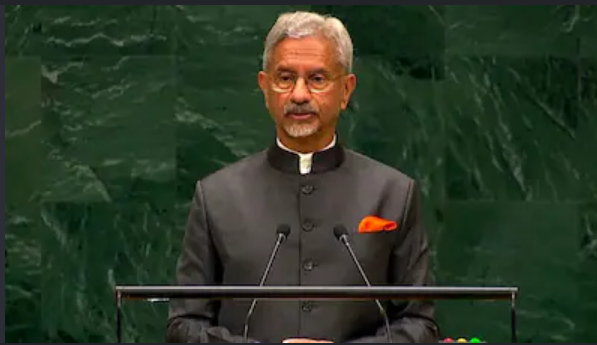
S Jaishankar calls Pakistan a “serial practitioner of terrorism” at UN
S Jaishankar criticised Pakistan at the UN General Assembly, referring to a “serial practitioner of terrorism” and warning against attempts to normalise terrorism.

Dhruv Rathee gets fresh summons in 2018 BJP IT cell video case

Nobody can browbeat judiciary, Chief Justice warns over Rahul Gandhi’s march

India-US trade deal first phase finalised, drafting underway

Election Commission orders voter roll revision in 17 states, UTs

Actor Imran Khan asked to leave India after CJP protest

Delhi Police offers 11-person limit for CJP’s Connaught Place protest
Actor Imran Khan asked to leave India after CJP protest
Election Commission orders voter roll revision in 17 states, UTs
India-US trade deal first phase finalised, drafting underway
Nobody can browbeat judiciary, Chief Justice warns over Rahul Gandhi’s march

Afghan Men Try To Hang With The Jet Engine Of The Aircraft in Kabul- Afghanistan News – Kabul News
Trending Top 10 News: 10000 Crore Fine on Flipkart, Apple to Launch Unique Feature, Hdfc Bank Job Ad

Trending Top 10 News: Nokia 6310, Apple sales, Bachpan ka Pyar Video Kid, Dainik Bhaskar IT Raid

Trending Top 10 News: Canada bans Indian flights, Rain in Delhi NCR, AIMIM Twitter hacked, Raj Kundra case

Trending Top 10 News: Shein India, Apple New Service, Pocket Oxygen, Oppo Launched New Phone
-
 India News14 hours ago
Dhruv Rathee gets fresh summons in 2018 BJP IT cell video case
-
 India News10 hours ago
Nobody can browbeat judiciary, Chief Justice warns over Rahul Gandhi’s march
-
 India News6 hours ago
India-US trade deal first phase finalised, drafting underway
-
 India News4 hours ago
Election Commission orders voter roll revision in 17 states, UTs
-
 India News3 hours ago
Actor Imran Khan asked to leave India after CJP protest
-
 India News2 hours ago
Delhi Police offers 11-person limit for CJP’s Connaught Place protest
