
Latest world news
Venezuela: Nicolas Maduro re-elected as President


Opposition demand re-poll, US, EU deny recognition
In another set-back to US in its backyard, Nicolas Maduro has been re-elected for a second six year term as Venezuela’s president. US government has already said it will not recognize outcome of the Venezuelan presidential election. Opposition has also rejected the election result as “illegitimate” and demanded a repeat vote be held later this year.
According to the results announced by Tibisay Lucena, president of the National Electoral Council (CNE), President Maduro obtained 5.8 million votes while his main opponent, Henri Falcon, got a total of 1.8 million votes. A total of 8.6 million Venezuelans voted, putting turnout at 46.01 percent, much lower than 2013 presidential elections when over 80 percent voters turned to the polling stations.
During the previous elections, polling stations were kept open beyond its closing time at 6 pm. “as long as there are people in line to cast their vote”.
Read More: Trump Expands Travel Ban to North Korea, Venezuela And Chad
Maduro, the political heir to the late leftist President Hugo Chavez, hailed his win as a victory against “imperialism,” but his main rival refused to recognize the results, alleging irregularities.
Maduro, 55, while thanking his supporters amidst fireworks on Sunday night, said, “This was a historic day!.. the day of a beautiful victory. They underestimated me. Never before has a presidential candidate taken 68 percent of the popular vote. We are the force of history turned into a permanent popular victory.”
His supporters gathered outside his Miraflores presidential palace in downtown Caracas, celebrating with fireworks.
Maduro further said, “The whole of Venezuela has triumphed! Democracy has triumphed! Peace has triumphed! Constitutionality has triumphed [These were] elections that were constitutional, legitimate and legal,” he said. “We have a president of the people! A working president!”
The country’s main opposition coalition, the Democratic Unity Roundtable had boycotted the election, while the two opposition leaders, Henrique Capriles and Leopoldo Lopez, were barred from contesting the elections.
Read More: Trump Faces Latin American States after Threats to Venezuela
Maduro’s main rival, Henri Falcon has called for a new vote, alleging the election was marred by irregularities and lacked legitimacy. “We do not recognize this electoral process as valid,” he told local media. “There must be new elections in Venezuela.”
According to reports, the ballots were recorded electronically, making the voting quick and easy. The presence of government troops around polling stations also ensured the safety of voters. Some 150 international observers from 30 countries and international organizations were present in the Venezuela to monitor the whole election process.
Maduro also called on his political rivals to join him for negotiations about the future of the country. He said “permanent dialog” is needed with the entire opposition so that Venezuela could set aside political disputes.
Several of Venezuela’s Latin American neighbors as well as the European Union also joined voices with Maduro’s rival and said they would not recognize the results of the election. They alleged that the conditions did not exist for the election to be free and fair.
Read More: Venezuelan Supreme Court faces helicopter “terrorist attack”
However, former Spanish Prime Minister Jose Luis Rodriguez Zapatero, who is in Venezuela as an international observer, said he has no “doubt about the voting process.”
“It is an advanced automatic voting system. I come here to keep peace, coordinate and promote dialogue so as to improve the democratic mechanism here. What I need to do here is to see whether people can cast their ballots at their own discretion. Now we all see how people vote, don’t we?” he added.
Washington has already imposed sanctions against Venezuela and blamed its allies in the region and elsewhere for the country’s acute economic crisis. On Saturday, the US ramped up pressure on Caracas by imposing new sanctions against the government’s top officials.
However, Maduro’s government said the US was using new sanctions to sabotage the election. It called Washington’s move as part of “a systematic campaign of aggression” by President Donald Trump’s administration and said they had no legal base.
Presidential elections were held on 20 May. Earlier it was scheduled to be held in December this year. Some western analysts have described the poll as a show election.
Several Venezuelan NGOs have expressed their concern over the alleged irregularities of the electoral schedule, including lack of Constituent Assembly’s competences to summon the elections, impeding participation of opposition political parties and the lack of time for standard electoral functions.






Latest world news
Magnitude 7 earthquake strikes Tibet after floods
A magnitude 7 earthquake struck northern Tibet on Thursday, October 22. The tremor came weeks after deadly flash floods and landslides hit the mountainous region near the Nepal-China border. Initial reports did not confirm casualties or damage from the earthquake.


Latest world news
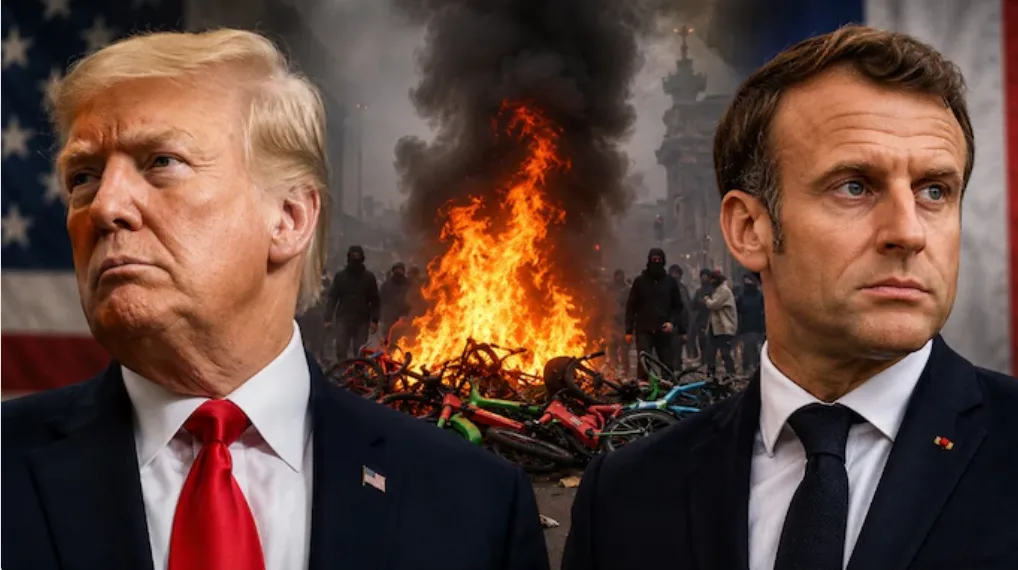
Macron rejects Trump’s immigration claims over France riots
French President Emmanuel Macron criticised Donald Trump and other foreign leaders over their comments on France’s recent unrest. Macron rejected claims that the country was being overrun by migrants and Islamists, calling such assertions false.
Latest world news
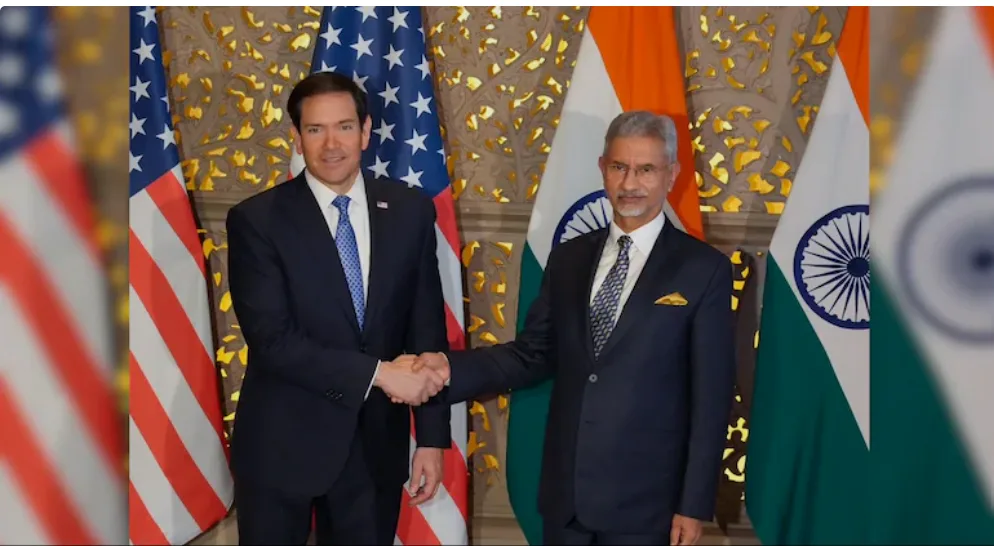
Marco Rubio says India and US share extraordinary alignment on key issues
US Secretary of State Marco Rubio said India and the United States share an extraordinary alignment on core issues, even though disagreements between the two countries may arise.

Punjab strike hits public services as 3 lakh employees and roadways workers protest

Two election commissioners complained against senior poll officer, RTI reveals

Om Prakash Mathur sworn in as Keralam Governor

PM Modi to inaugurate Rs 169-crore RBI data centre in Odisha on October 25

Delhi High Court rejects Neha Bora’s plea against peace bond notice
Delhi High Court rejects Neha Bora’s plea against peace bond notice
PM Modi to inaugurate Rs 169-crore RBI data centre in Odisha on October 25
Om Prakash Mathur sworn in as Keralam Governor
Two election commissioners complained against senior poll officer, RTI reveals
Punjab strike hits public services as 3 lakh employees and roadways workers protest

Afghan Men Try To Hang With The Jet Engine Of The Aircraft in Kabul- Afghanistan News – Kabul News
Trending Top 10 News: 10000 Crore Fine on Flipkart, Apple to Launch Unique Feature, Hdfc Bank Job Ad

Trending Top 10 News: Nokia 6310, Apple sales, Bachpan ka Pyar Video Kid, Dainik Bhaskar IT Raid

Trending Top 10 News: Canada bans Indian flights, Rain in Delhi NCR, AIMIM Twitter hacked, Raj Kundra case

Trending Top 10 News: Shein India, Apple New Service, Pocket Oxygen, Oppo Launched New Phone
-
 India News13 hours ago
Punjab strike hits public services as 3 lakh employees and roadways workers protest
-
 India News13 hours ago
Two election commissioners complained against senior poll officer, RTI reveals
-
 India News2 hours ago
Om Prakash Mathur sworn in as Keralam Governor
-
 India News1 hour ago
PM Modi to inaugurate Rs 169-crore RBI data centre in Odisha on October 25
-
 India News18 mins ago
Delhi High Court rejects Neha Bora’s plea against peace bond notice
