English हिन्दी
Connect with us

Latest world news

Yemen’s Houthi attack Saudi Arabia’s Capital airport

Published

on

map-saudi

[vc_row][vc_column][vc_column_text]Riyadh claims of intercepting missile before reaching target

Saudi Arabia has claimed to have intercepted and destroyed a ballistic missile near Riyadh’s King Khaled international airport on Saturday. It was verified by Yemen’s Houthi forces  with their claimed of firing a long range ballistic missile travelling more than 800 km over the border with Saudi Arabia.

The military alliance led by Saudi Arabia has been pounding Yemen since March 2015 in an attempt to crush the popular Houthi Ansarullah movement and reinstate its ally former president Abd Rabbuh Mansur Hadi in that country.

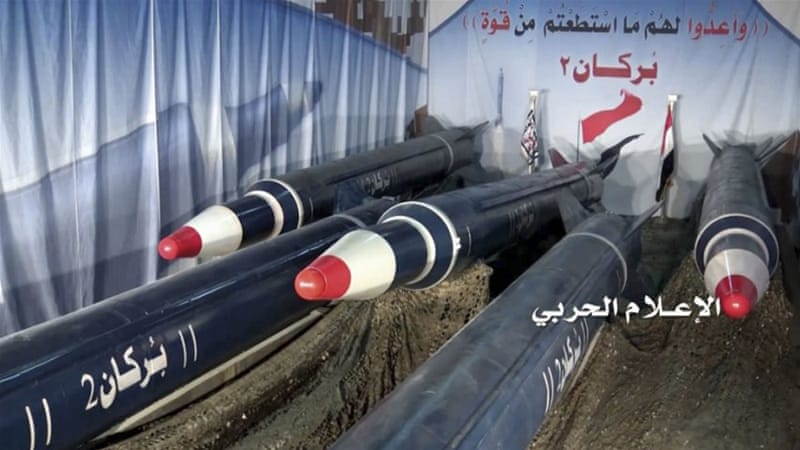
Aljazeera quoted a Houthi spokesman that they launched a Burkan 2H missile, a scud type missile with a range of more than 800 km towards Riyadh late on Saturday.

Saudi lead coalition spokesman claimed that air defence intercepted the missile, bringing it down to the north of the airport.  He said, “Shattered fragments from the intercepted missile landed in an uninhabited area of the airport and there were no injuries.”

The Houthi spokesman extended  their threat to hit other capitals in the region who were part of the Saudi led coalition. He said, “The capital cities of countries that continually shell us, targeting innocent civilians, will not be spared from our missiles.”

The Saudi lead intervention in Yemen includes UAE, Bahrain, Kuwait, Qatar, Egypt, Jordan, Morocco, Senegal and Sudan. The coalition is supported by US, UK, Canada and Trukey.

On the other side, Yemen’s Revolutionary Committee is supported by Yemen Army (pro-Saleh Abdullah (former President) and Houthis), Yemen Republican Guard, Yemen Air Force and Shia Ahrar al-Najran Movement. Houthis are allegedly being supported by Iran and Hezbollah.

Meanwhile, Yemen’s official Saba news agency has reported that the missile force of the army and popular forces have claimed that the “ballistic missile hit the target accurately.”

Moreover, a military official told the news agency on Saturday that the popular forces targeted gatherings of Saudi mercenaries’ sites in some places in Asir province killing and injuring dozens of them.
missile-yemen

A Houthi spokesman Colonel Aziz Rashed has reportedly told Tehran based Press TV on Sunday morning, “Our Yemeni forces succeeded in launching a missile, a Borkan H2 long distance missile, at the King Khalid international airport in north eastern Riyadh which was in response to the massacres committed by the US-Saudi coalition in Yemen.”

He further said, “This comes in order to even out power between the coalition and Yemen, who have been attempting to fight more than one country in the past three years.”

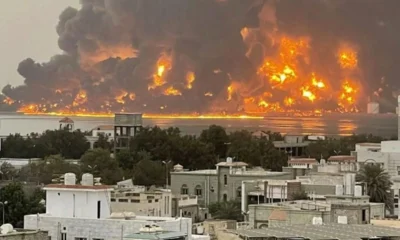
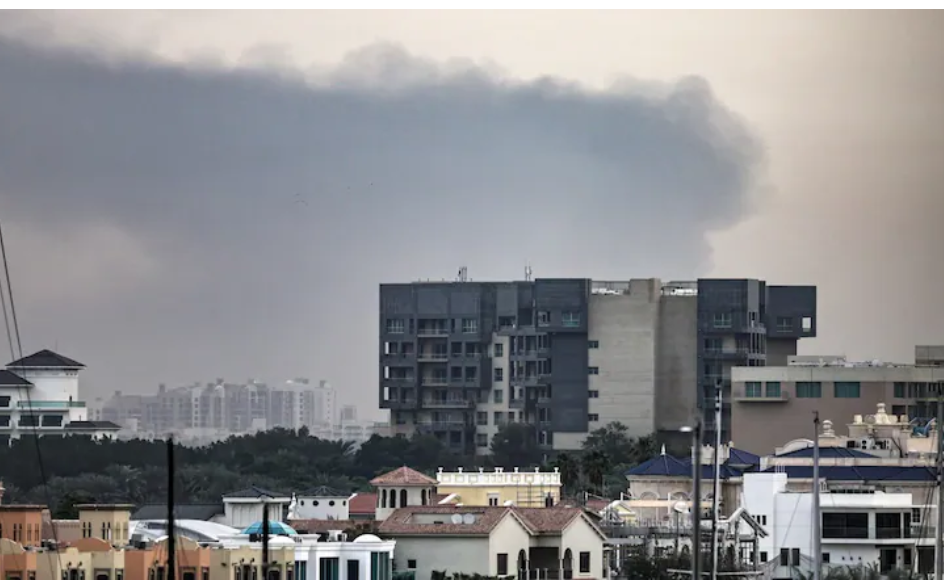
Videos on social media showed smoke rising from an area near Riyadh’s King Khalid International Airport.

Following Saturday night Houthi missile attack, Saudi warplanes engaged in airstrikes on Yemen, hitting targets in Sana’a and Sa’ada provinces. The targets included Defence Ministry, Interior Ministry and the national Security Council buildings.

On the other side, Saudi state news channel Al Ekhbariya said, “The missile was of limited size (and) no injuries or damage” were reported.  It further said that the missile was destroyed near Riyadh’s King Khaled international airport, which was functioning normally.

Meanwhile Saudi Press Agency (SPA) reported on Saturday that Saudi-led military coalition has claimed that an air strike that hit a market in Yemen’s northern Sa’ada province was a legitimate military target.

On Wednesday an air strike carried out by the Saudi led coalition killed 26 people at a hotel and an adjoining market, where the Houthi fighters gather.

Till date more than 12,000 people have been killed in more than two and half years destroying infrastructure including hospitals, schools and factories.

Recently Saudi Arabia’s Crown Prince Muhammed bin Salman had vowed not to allow Yemen’s Houthi Ansarullah movement to emerge as another Hezbollah in the region.[/vc_column_text][/vc_column][/vc_row]
Latest world news

Trump again threatens forceful takeover of Greenland citing US security concerns

Donald Trump has again suggested the US could use force to take control of Greenland, brushing aside Denmark’s sovereignty and linking the move to Arctic security concerns.

Published

on

donald trump

US President Donald Trump has once again raised the possibility of using force to take control of Greenland, dismissing Denmark’s sovereignty over the autonomous Arctic island and framing the issue as a matter of US national security.

Speaking at a White House meeting with oil executives on Friday, Trump said the United States would act on Greenland “whether they like it or not,” reiterating his long-standing interest in acquiring the mineral-rich territory.

“I would like to make a deal, the easy way. But if we don’t do it the easy way, we’re going to do it the hard way,” Trump said when asked about Greenland.

Trump links Greenland control to Arctic security

Trump argued that Washington cannot allow rival powers to gain a foothold in Greenland, citing increased military activity by Russia and China in the Arctic region.

“We’re not going to have Russia or China occupy Greenland. That’s what they’re going to do if we don’t,” he said, adding that the US would act either “the nice way or the more difficult way.”

While Russia and China have stepped up their presence in the Arctic in recent years, neither country has made any territorial claim over Greenland.

Denmark and allies react with concern

Trump’s remarks have sparked strong reactions in Denmark and among European allies. Denmark, which governs Greenland as an autonomous territory, has expressed shock over the repeated threats.

Danish Prime Minister Mette Frederiksen warned that any invasion of Greenland would bring an end to “everything,” referring to NATO and the post-World War II security framework.

The United States already operates a military base in Greenland, underscoring its existing strategic presence in the region.

Trump dismisses Danish sovereignty claims

Despite the backlash, Trump played down Denmark’s concerns and questioned its historical claim over the island.

“I’m a fan of Denmark, too,” he said, adding that the country had been “very nice” to him. However, he remarked that Denmark’s historical presence did not automatically translate into ownership of Greenland.

“The fact that they had a boat land there 500 years ago doesn’t mean that they own the land,” Trump said.

Meanwhile, US Secretary of State Marco Rubio is scheduled to meet Denmark’s foreign minister and representatives from Greenland next week, as diplomatic tensions over the issue continue.

Continue Reading

Latest world news

Anti-Khamenei protests intensify across Iran as Reza Pahlavi issues rallying call

Anti-regime protests have intensified across Iran amid soaring inflation and an internet shutdown, with demonstrators chanting against Supreme Leader Ayatollah Khamenei as unrest spreads nationwide.

Published

on

Ayatollah Ali Khamenei

Anti-government protests against Iran’s Islamic regime have intensified across Tehran and other parts of the country, with demonstrators chanting slogans against Supreme Leader Ayatollah Ali Khamenei amid a deepening economic crisis and widespread restrictions imposed by authorities.

As night fell on Thursday, neighbourhoods across the Iranian capital echoed with chants after exiled Crown Prince Reza Pahlavi called on people to protest at 8 pm local time. Witnesses said crowds gathered despite heavy security presence, with slogans including “Death to the dictator” and “Death to the Islamic Republic” heard in multiple areas.

Internet shutdown and warnings from authorities

Iranian authorities cut off internet access and international telephone calls as the demonstrations gained momentum. The judiciary and security forces warned of a harsh response, even as protesters continued chanting calls for freedom.

Pahlavi accused the government of attempting to silence dissent by shutting down communication networks. He said landlines, internet services and possibly satellite signals had been disrupted to prevent images and voices from reaching the outside world.

The exiled prince urged European leaders to join US President Donald Trump in holding the Iranian regime accountable and called for technical and diplomatic efforts to restore communication access for Iranians.

Support for monarchy slogans resurfaces

Some demonstrators were heard chanting slogans in praise of Iran’s former monarchy, including “This is the last battle, Pahlavi will return.” While such chants were once punishable by death, their re-emergence reflects growing anger over economic hardship and political repression.

It remains unclear whether the slogans indicate direct support for Reza Pahlavi or a broader rejection of the system established after the 1979 Islamic Revolution.

Protests spread nationwide, casualties reported

Demonstrations have continued to spread to cities and rural towns across Iran, with markets and bazaars shutting down in solidarity. At least 42 people have been killed and more than 2,270 detained since the unrest began, according to human rights groups based outside Iran.

Reports have also emerged of security personnel being killed or injured during clashes. Iranian media have reported fatal attacks on police officers and security forces in multiple provinces, including Tehran’s outskirts, Kermanshah, and northeastern regions.

Economic crisis fuels unrest

The current wave of protests, the largest in three years, began in Tehran’s Grand Bazaar after shopkeepers protested the sharp fall of the national currency. Iran’s inflation rate stood at 52 per cent year-on-year in December, according to official data.

The rial has continued to weaken, with one US dollar now costing around 1.4 million rials. Protesters have blamed economic mismanagement, sanctions, and restrictions on social and political freedoms for their worsening living conditions.

President Masoud Pezeshkian has acknowledged the economic pain faced by citizens and described protesters’ demands as legitimate, though he admitted the government’s ability to reverse the currency collapse is limited.

Leaderless movement and uncertain outcome

Despite the scale of the unrest, the protests remain largely leaderless. Analysts note that the absence of a clear alternative leadership has weakened previous protest movements in Iran, with many potential leaders having been arrested, exiled or silenced over the years.

Authorities have yet to launch a full-scale crackdown, though past internet shutdowns have often preceded harsher measures.

Trump issues warning to Tehran

US President Donald Trump warned Iran last week against violently suppressing peaceful protesters, saying the country would “pay hell” if security forces killed demonstrators. He stopped short of confirming any direct engagement with Pahlavi, stating that it was too early to determine who might emerge as a leader of the movement.

As protests continue and communication restrictions remain in place, the situation inside Iran remains tense, with uncertainty over how the regime will respond in the coming days.

Continue Reading

Latest world news

US to control Venezuela oil exports indefinitely under Trump plan

The US says it will control and sell Venezuelan oil indefinitely, holding revenues in American accounts as it pushes US energy companies to revive the country’s oil industry.

Published

on

donald trump

Washington says proceeds from crude sales will be held in US accounts as American firms are encouraged to rebuild Venezuela’s oil sector

The United States will take control of Venezuela’s oil exports indefinitely and market the crude on global markets, holding the proceeds in US Treasury accounts, Energy Secretary Chris Wright said, outlining Washington’s clearest strategy yet for managing the South American nation’s most valuable resource.

Speaking at a conference in Miami on Wednesday, Wright said the plan would begin with crude currently stored in Venezuela, which has been piling up due to US restrictions and risks forcing production shutdowns.

“We’re going to get that crude moving again and sell it,” Wright said, adding that the US would continue selling Venezuelan oil production going forward.

The move comes as the Trump administration pushes for American energy companies to help rebuild Venezuela’s decaying oil infrastructure and revive output that has suffered after years of underinvestment, corruption and sanctions.

President Donald Trump said earlier this week that Venezuela would relinquish as much as 50 million barrels of oil for the US to sell, worth around $2.8 billion at current prices. The White House confirmed that Washington has already begun marketing Venezuelan crude.

According to officials, revenue from the oil sales will be placed in US Treasury accounts, shielding the funds from Venezuela’s creditors. The money will be used for the benefit of both the American and Venezuelan people.

“We’re not stealing anyone’s oil,” Wright said in a separate interview, stressing that the funds would remain in Venezuela’s name and eventually be brought back for public benefit.

Sanctions eased, compensation put on hold

As part of the strategy, the US is selectively rolling back sanctions on Venezuela’s oil sector. However, Wright said proceeds from early oil sales would not be used to compensate US companies such as Exxon Mobil and ConocoPhillips, whose assets were nationalised under former president Hugo Chávez. Compensation, he said, remains a long-term issue.

Venezuela’s state oil company confirmed it is negotiating with Washington over crude sales under a framework similar to its existing arrangement with Chevron, the only major US oil firm still operating in the country.

Meanwhile, US forces have seized two additional sanctioned oil tankers as the administration tightens control over Venezuelan crude exports. One vessel was intercepted in the Atlantic south of Iceland, while the other was seized in the Caribbean.

US firms urged to revive oil production

The Trump administration is urging companies including Chevron, ConocoPhillips and Exxon to help restore Venezuela’s oil infrastructure after the removal of former president Nicolás Maduro. Officials said discussions have already taken place, and Trump is expected to meet energy executives later this week. Secretary of State Marco Rubio may also attend.

Venezuela’s oil output has fallen to less than one million barrels per day. Wright estimated production could rise by several hundred thousand barrels per day in the short to medium term, though restoring the industry fully would require massive investment over many years.

Global oil prices slipped about 1.5 per cent on Wednesday, trading near $60 a barrel.

Continue Reading

Trending

© Copyright 2022 APNLIVE.com