English हिन्दी
Connect with us

India News

Hurrah! A social media party!

Published

on

Verdict 2017

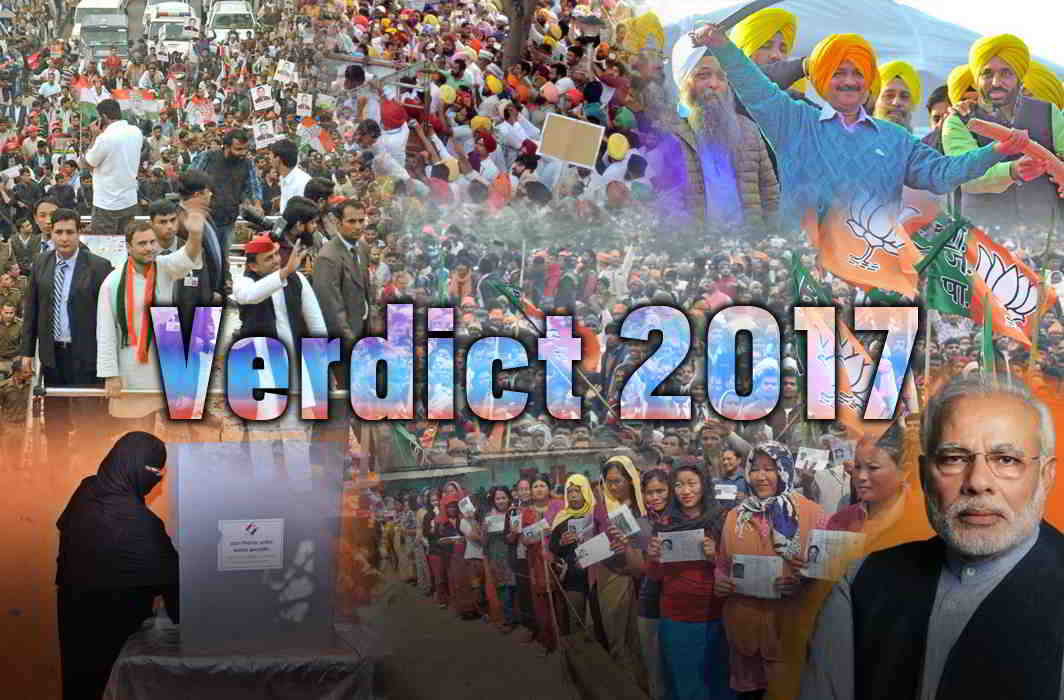
[vc_row][vc_column][vc_column_text]This spring, various political parties went on social media with all guns blazing canvassing respective vote banks as well as undecided electors. While some parties like the AAP and the BJP had a strong and clearly-defined social media strategy, others, like BSP, were late jumping onto the bandwagon. However, all conducted a significant part of their campaign on social media.

Of the 121 crore (1.25 billion) Indians, 83.3 crore live in rural areas while 37.7 crore stay in urban areas. India’s literacy rate is 74.04%. India has over a billion smartphone users; of them, close to 30% own mobile phones. However, as of 2010, an estimated 200 to 300 million people in India (15 to 20 percent of the total population) lack electricity—to even charge those phone batteries. Under such circumstances, how impactful is a social media campaign? Actually, plenty, as the 2014 general election results and even some earlier assembly poll outcomes show.

But how effective have they been this time? How much of this ballot outcome was the result of a battle fought by various parties online? The figures speak for themselves.

Meanwhile, here’s a look at the online electoral campaigns of various political parties. 

BJP

The social media campaign by BJP in the run-up of assembly elections in UP, Uttarakhand, Manipur, Punjab and Goa seems to have reaped rich dividends for the party. The campaign was handled by Amit Malviya.

The party conducted their social media campaign on Facebook and Twitter which managed to strike a chord with the followers. The Facebook handle of BJP which goes by the name by BJP4UP managed to garner over 20 lakh followers. The same handle by the name of BJP4UP in Twitter had 41,000 followers.

The Facebook account for the BJP in UP focussed on the achievements of the party in the last three years—especially in rooting out black money by launching the digital revolution in the wake of demonetisation.

Samajwadi Party

Twitter account: @samajwadiparty

589,000 followers

FB account: Samajwadi Party

1,775, 518 likes

The electoral campaign of the Samajwadi Party was designed by Harvard professor professor Steve Jarding. In an interview to APN, he had said a few days ago: “I am very impressed with Akhilesh. I have worked with him, travelled with him in the countryside…and think he can do whatever he wants. He is extremely talented. I am impressed with his wife. I am impressed with the way they have handled things, I am impressed with his vision which he did not waiver from. With his drive and passion for the people of India, his future is very bright.”

But it seems that the political strategist doesn’t have hand on the pulse of the electorate, or of social media needs.

It was a deadpan social media strategy. The staid posts on its Twitter and FB account are a reflection of the limbo that the party found itself in due to family strife. On the social media account of SP, all you get are pictures and videos of the various rallies that Akhilesh Yadav conducted. In this age of Twitter, when you have to grip reader’s attention in 140 characters, who has the time to go through the tedium of watching the whole video unless you it’s accompanied with some catchy phrases!

The tagline “Kaam bolta hai”, both on the masthead as well as in various tweets, didn’t help either. If only, it inspired quite a few jokes.

Saurabh Chauhan: Bhaiya agar kaam bolta toh mare hue saap ko Gale mai daal Kar ghumna nahi padta

(If work really speaks for itself, one wouldn’t have to go around with that albatross around the neck). The reference was in all likelihood to Rahul Gandhi.

4Bharat Jai: यही कारण है कि उत्तर प्रदेश के लोगों को अन्य राज्यों में रोजगार के लिए भीख मांगने के लिए जाना है, उत्तर प्रदेश के लोग उत्तर प्रदेश में रोजगार देने के लिए अखिलेश यादव से पूछना चाहिए- अखिलेश यादव ने 2012 से राज्य में सत्तारूढ़ है

(Which is why people from UP have to beg for work in other states. Akhilesh is in power since 2012. People from UP should demand work in UP)

But some were optimistic. Here’s a sample:

Mohammed Muzaffaruddeen: Akhileshji and Rahulji don’t believe these idiotic Exit polls. Advance congrats. Your parties will give a fitting defeat to these communal parties. Electronic media almost all channels will cut a sorry figure ultimately.

Pavanjot Singh Gandhi: Recently had the opportunity to drive through UP and that too after sunset left Delhi at 6.30 pm and drove to Patna Saheb on 3rd Jan 2017 lovely roads safe driving had enjoyed my drive driving all night passing Agra Kanpur alllabhad very safe driving well maintained roads

The website, though, is a far more informative platform and lists the SP achievements on the development and education front far more succinctly.

BSP

The Bahujan Samajwadi Party, led by Mayawati Prabhu Das, has a handsome number of followers on Twitter. With 15.7K followers, their Twitter handle is maintained by Afzal Siddiqui. Afzal was picked as the young Muslim face of Bahujan Samajwadi party and has been an active campaigner throughout the election session. The Twitter handle of the party was, however, created only recently—in March 2016. As in offline campaign, the party stuck to the strategy of wooing Muslim voters who might have gone to the SP or Congress camp. The Twitter trail repeatedly urged the Muslim voters of the area to remember the atrocities against them during the tenure of the SP government. At other times, they talked about voting in an inclusive government. The exit polls were not a favorite topic in the Twitter space. There are numerous posts questioning the efficacy of exit polls and reminding everybody of their shortcomings in the Bihar and Tamil Nadu elections.

AAP

Name of person handling the social media strategy: Ankit Lal

Name of accounts

@AamAadmiParty

Aam Aadmi Party (FB)

No. of followers on each

@AamAadmiParty 3.06 million

Aam Aadmi Party (FB) 3.01 million

Aam Aadmi Party-Punjab (FB) 9.6 lakh

Slogans:

Punjab: Kejriwal, Kejriwal, sara Punjab tere naal

Goa: Iss baar chalegi zhaadu

Social media strategy/campaign methodology

Campaign strategy was different for different states. For instance, Punjab has a lot of 4G connectivity; however, it is Goa which has more urban and social media-savvy voters. Again, Punjabis are more active on WhatsApp while Goans like to use Facebook more often. We focused on regional languages. We ran our campaigns in Konkani and Marathi in Goa, and in Punjabi in Punjab, with only a little bit of Hindi and English used in between. In Goa, we depended heavily on local volunteers.

Responses

The response has been “phenomenal”. No one among our rivals was even near to us in social media presence. I personally ran the campaign from Arvind’s page. Every day or two, we would post live videos. They got as many as 7-8,000 shares each and had a reach of 15 million viewers.

A well-wisher comments on Facebook: “It needs smartness, wisdom and the courage to sow the seeds of revolution but it needs a better sense of understanding, experience, responsibility and maturity to stick to the ideals and nourish the revolution to its successful conclusions. I do hope that under the able leadership of a leader like Mr Kejriwal, people will be able to succeed. I pray for it.” It possibly sums up what many supporters have been feeling, especially since the party came to power in Delhi.

Prediction of outcome at this stage

“I would go with 85% in Punjab and double digits in Goa.” ~ Ankit Lal

Congress

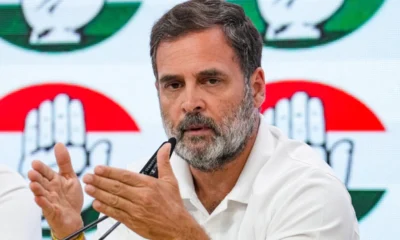
The social media campaign by the Congress in the run-up of the assembly elections in UP, Uttarakhand, Goa, Manipur and Punjab largely centred on enumerating the ill-effects of demonetization. Rahul Gandhi became the popular face on the social media campaign whereby most of the social media handles on Twitter and Facebook carried his speeches targeting Prime Minister Narendra Modi and his policies.

Compiled by Meha Mathur, Sucheta Dasgupta, Puneet Mishra, Usha Rani Das and Amitava Sen

[/vc_column_text][/vc_column][/vc_row]

India News

Rahul Gandhi accuses Modi of foreign backing, BJP hits back with UK clip

Rahul Gandhi alleged that foreign forces helped Narendra Modi become Prime Minister and continue in power. The Congress leader also challenged Modi to an open debate, while the BJP responded by sharing an old video of his remarks during a UK visit.

Published

on

Rahul Gandhi

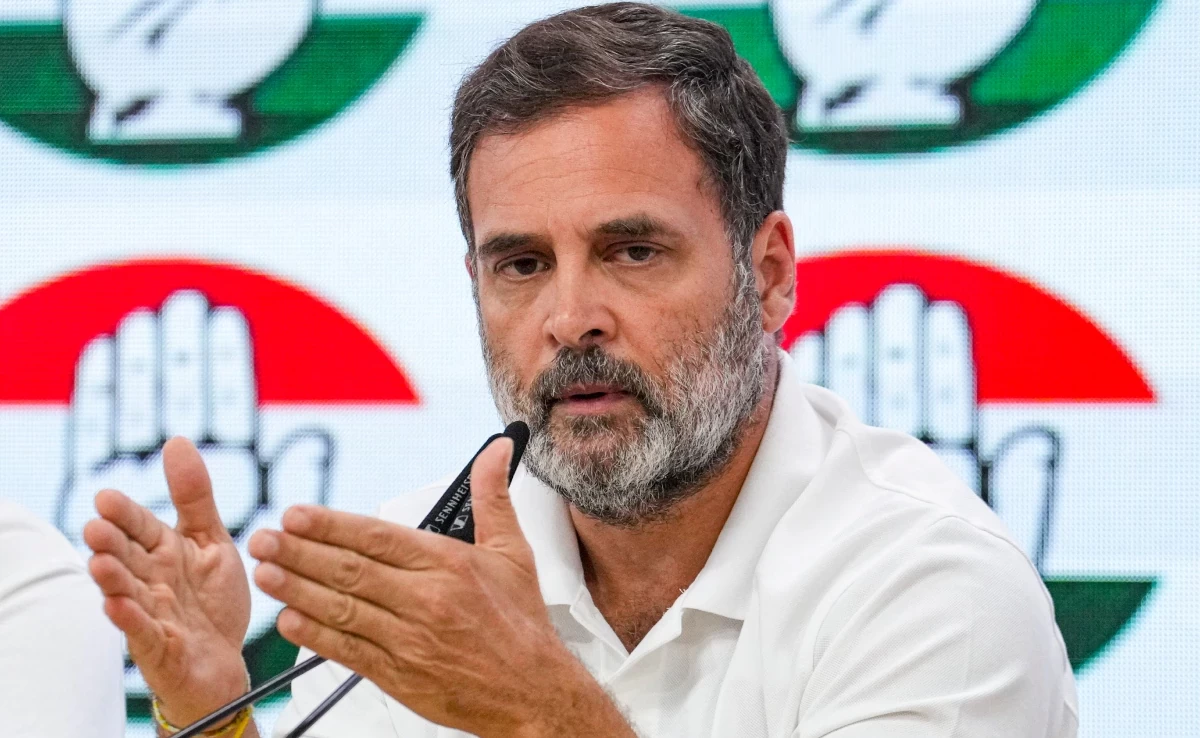
A fresh political confrontation has erupted between the Congress and the Bharatiya Janata Party (BJP) after Leader of Opposition Rahul Gandhi accused Prime Minister Narendra Modi of becoming and remaining in power with foreign assistance.

Gandhi also challenged the Prime Minister to an open debate on the issue, saying he was ready to face him on any platform and at any time.

The BJP responded by bringing up an old video of Gandhi from his visit to the United Kingdom, reviving the controversy surrounding his remarks about India’s democratic institutions and the role of foreign countries.

What Rahul Gandhi said about PM Modi

Gandhi’s remarks came in response to Modi’s recent comments targeting the Opposition during his address at the Rashtriya Ekta Diwas celebrations in Gujarat on October 31.

In a post on X on Monday, Gandhi accused the Prime Minister of relying on foreign support to attain and retain power.

“Mr Modi, stop lying to this nation. You became PM because of foreign help. You remain PM because of foreign help,” Gandhi wrote.

He further alleged that India’s financial system was fully controlled and supported by foreign entities and claimed that foreign social media platforms backed the Prime Minister.

The Congress leader also challenged Modi to discuss the allegations publicly.

“I challenge you to an open debate about this. Any stage, any time. Come if you have the guts,” he said, adding that the Prime Minister would not accept the challenge because of what Gandhi claimed to know about him.

Why PM Modi criticised the Opposition

Gandhi’s response followed Modi’s address at the Rashtriya Ekta Diwas event in Ekta Nagar, Gujarat, marking the 151st birth anniversary of Sardar Vallabhbhai Patel.

During his speech, the Prime Minister accused the Opposition of moving away from its democratic responsibility of questioning the government and instead becoming an obstructionist force.

Modi described the Opposition as an “Avrodh Paksh” rather than a “Virodh Paksh”, alleging that it was creating obstacles to the country’s development.

Without directly naming Gandhi, the Prime Minister also raised questions about the foreign visits of certain political leaders and their alleged connections with forces opposed to India.

“Who is secretly meeting whom abroad? Whom are the anti-India forces supporting? Who is speaking the language of India’s enemies?” Modi asked.

He also expressed concern over the use of social media to spread rumours and attempts to damage India’s image.

BJP brings back Rahul Gandhi’s old UK remarks

The BJP responded to Gandhi’s allegations by sharing an old video from his UK visit, bringing attention back to his earlier comments about India’s democratic institutions and the involvement of foreign countries.

During an interaction at Chatham House in London in March 2023, Gandhi had alleged that several Indian institutions, including the Press, judiciary, Parliament and Election Commission, were under threat.

He had also questioned why Europe and the United States were not doing enough to raise concerns about what he described as threats to democracy in India.

The remarks had triggered a political controversy at the time, with the BJP accusing Gandhi of seeking foreign intervention in India’s internal affairs.

BJP leaders had demanded an apology from the Congress leader over his comments during the UK visit.

The resurfacing of the old video has brought those earlier remarks back into the political debate as the Congress and BJP trade accusations over alleged foreign backing.

Political confrontation intensifies

The latest exchange comes amid an ongoing confrontation between the ruling BJP and the Opposition over several issues, including allegations of electoral irregularities and the role of constitutional institutions.

Gandhi’s challenge to Modi for an open debate has added another dimension to the political dispute, with both parties questioning each other’s alleged connections with foreign forces.

While Gandhi has accused the Prime Minister of benefiting from foreign support, the BJP has repeatedly questioned the Congress leader’s overseas remarks and alleged attempts to involve foreign countries in India’s internal political matters.

Neither side’s allegations about foreign backing should be treated as established facts without supporting evidence.

Continue Reading

India News

Delhi Pollution: GRAP-II curbs imposed across NCR as AQI hits 324

Delhi’s air quality deteriorated to the very poor category on November 2, prompting the CAQM to implement GRAP Stage II across Delhi-NCR. The measures aim to control dust and vehicular pollution.

Published

on

Delhi-Pollution

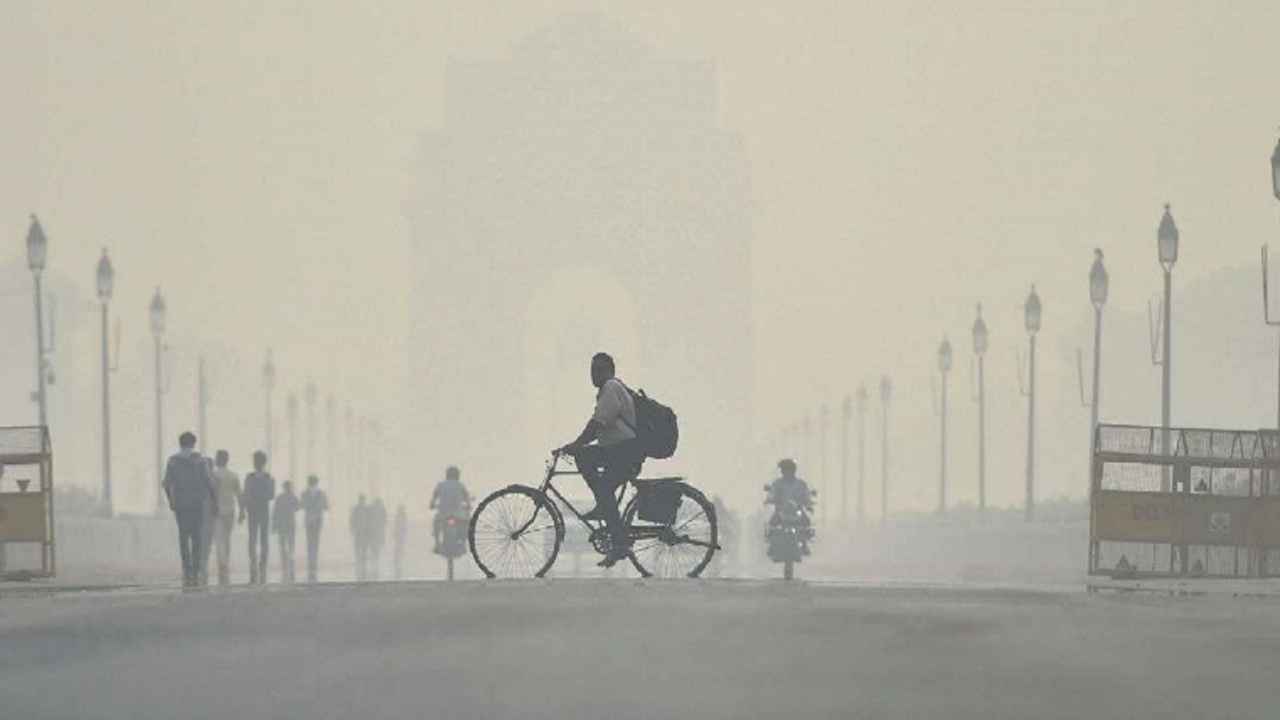
Delhi’s air quality deteriorated to the ‘very poor’ category on Monday, November 2, prompting the Commission for Air Quality Management (CAQM) to invoke Stage II of the Graded Response Action Plan (GRAP) across the National Capital Region (NCR) with immediate effect.

The national capital’s Air Quality Index (AQI) reached 324 at 4 pm, placing it in the very poor category. The deterioration followed a sharp increase in pollution levels over three days, with the AQI rising from 117 on October 31 to 261 on November 1 before crossing the 300 mark on Monday.

The CAQM attributed the worsening air quality to unfavourable meteorological conditions. Forecasts by the India Meteorological Department (IMD) and the Indian Institute of Tropical Meteorology (IITM) also indicated that Delhi’s air quality could remain in the very poor category over the coming days.

What is GRAP Stage II and why has it been imposed?

The Graded Response Action Plan is a set of emergency measures designed to tackle worsening air pollution in Delhi-NCR. It has different stages based on the severity of air quality.

Under the AQI classification, readings between 301 and 400 fall in the very poor category. GRAP Stage II is applicable when air quality reaches this range.

With Delhi’s AQI climbing to 324, the CAQM directed authorities to implement Stage II measures across the NCR. The directions also require agencies to continue implementing measures under the earlier stages of GRAP.

What restrictions come under GRAP Stage II?

The second stage of GRAP focuses on strengthening pollution-control measures, particularly those related to road dust, vehicular emissions and other sources of pollution.

Some of the important measures include:

  • Road cleaning: Authorities are required to intensify mechanical sweeping of roads and water sprinkling to control dust.
  • Traffic management: Traffic police are directed to manage congestion at busy roads and intersections.
  • Vehicle checks: Enforcement teams are required to intensify checks for valid Pollution Under Control (PUC) certificates and take action against visibly polluting vehicles.
  • Parking charges: Higher parking fees are among the measures intended to discourage the use of private vehicles.
  • Diesel generators: The use of diesel generator sets is subject to stricter regulation.
  • Public transport: Authorities are required to encourage the use of public transport to reduce vehicular emissions.

These measures are intended to reduce pollution levels across Delhi-NCR.

Delhi’s AQI worsens over three days

Delhi witnessed a significant deterioration in air quality over a short period.

The AQI stood at 117 on October 31, placing it in the moderate category. It subsequently increased to 261 on November 1, entering the poor category.

On November 2, the reading climbed further to 324 by 4 pm, pushing the national capital into the very poor category.

The situation was also reflected in readings from individual monitoring stations. Several locations recorded AQI levels above 300.

Among the areas reporting high pollution levels were RK Puram, ITO, Akshardham, India Gate, Alipur, Dwarka Sector 8 and Delhi University’s North Campus.

With pollution levels worsening and unfavourable weather conditions expected to persist, authorities have been directed to strengthen enforcement of the prescribed pollution-control measures across the region.

Continue Reading

India News

PM Modi to inaugurate Pune metro pink line, launch Rs 21,800 crore projects

Prime Minister Narendra Modi will inaugurate Pune Metro’s Pink Line and lay the foundation stone for Phase II projects worth around Rs. 13,500 crore on November 3. The combined value of the projects is approximately Rs. 21,800 crore.

Published

on

PM Modi

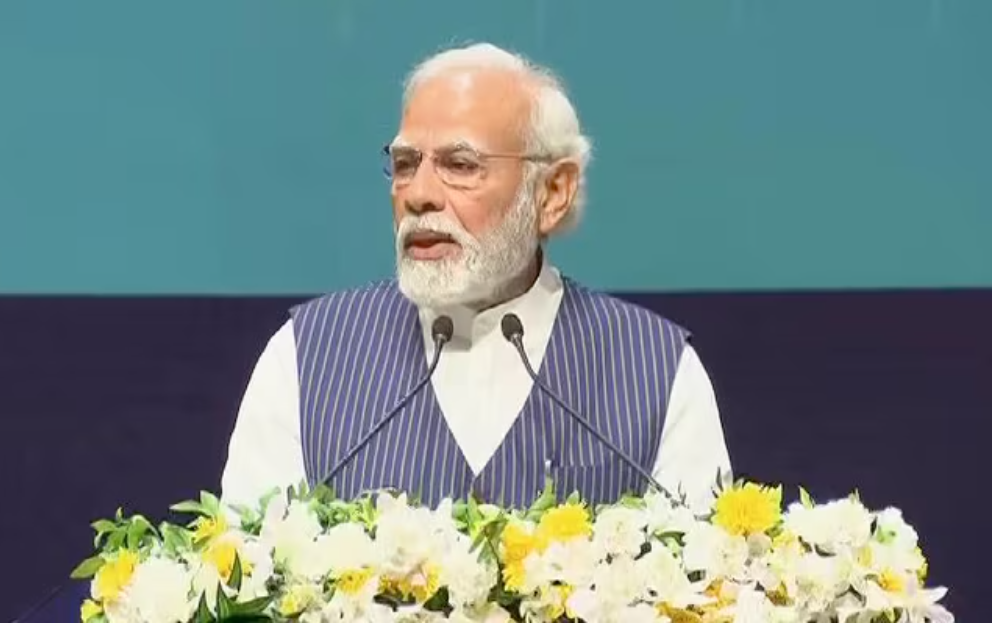
Prime Minister Narendra Modi will inaugurate Pune Metro Line 3, also known as the Pink Line, and lay the foundation stone for four new metro corridors under Phase II on November 3. The projects, taken together, are estimated to be worth around Rs. 21,800 crore.

The inauguration and foundation stone-laying ceremony will take place through video conferencing at 12:30 pm. The Prime Minister will also address the gathering.

The programme includes the inauguration of the approximately 23-km-long Pink Line, developed at a cost of over Rs. 8,300 crore, and the launch of Pune Metro Phase II, which has an estimated cost of around Rs. 13,500 crore.

Pune Metro Pink Line to connect Hinjewadi and Shivajinagar

The Pink Line, officially known as Pune Metro Line 3, will connect Maan with District Court Metro station. The approximately 23-km corridor will provide metro connectivity between Hinjewadi, one of Pune’s major IT hubs, and Shivajinagar.

The new line is expected to improve access to important employment, commercial and residential areas, particularly benefiting IT professionals and other daily commuters.

It will also integrate with Pune’s existing metro network, allowing passengers to travel between different parts of the city more conveniently.

The project is expected to reduce dependence on private vehicles, ease traffic congestion and help lower vehicular emissions.

Pink Line to be operated entirely by women

An important feature of Pune Metro’s Pink Line is that it will be operated entirely by women train operators. The initiative has been highlighted as a step towards women’s empowerment and gender-inclusive public transportation.

The corridor also incorporates renewable energy measures. Around 30 per cent of its total electricity requirements are envisaged to be met through solar power.

Four new corridors planned under Pune Metro Phase II

Along with inaugurating Line 3, PM Modi will lay the foundation stone for Pune Metro Phase II, estimated to cost around Rs. 13,500 crore.

The expansion will comprise four corridors — Lines 2A, 2B, 4 and 4A — aimed at improving connectivity across major residential, commercial and IT hubs.

The proposed routes include:

  • Line 2A: Vanaz to Chandani Chowk.
  • Line 2B: Ramwadi to Vitthalwadi.
  • Line 4: Kharadi to Khadakwasla.
  • Line 4A: Nal Stop to Manik Baug.

Lines 2A and 2B will together cover approximately 12.75 km. Line 4 will span around 25.52 km, while Line 4A will cover approximately 6.12 km.

The eastern extension between Ramwadi and Vitthalwadi is expected to improve connectivity to developing residential, commercial and IT areas in Kharadi and Wagholi.

Key Pune areas to benefit from metro expansion

The proposed Phase II corridors will connect several important locations across Pune, including Kharadi, Magarpatta, Hadapsar, Swargate, Manik Baug, Nanded City, Pune Cantonment and Warje.

The new corridors will also integrate with the existing Pune Metro network and intercity bus services through interchange facilities at Swargate, Nal Stop and Kharadi Bypass.

The expansion is aimed at strengthening public transportation infrastructure and providing commuters with a more integrated urban mobility network across the city.

Continue Reading

Trending

© Copyright 2022 APNLIVE.com