English हिन्दी
Connect with us

Latest world news

Putin Expels Over 750 US Diplomats against New Sanctions

Published

on

Vladimir Putin

[vc_row][vc_column][vc_column_text]Washington says it was uncalled-for act

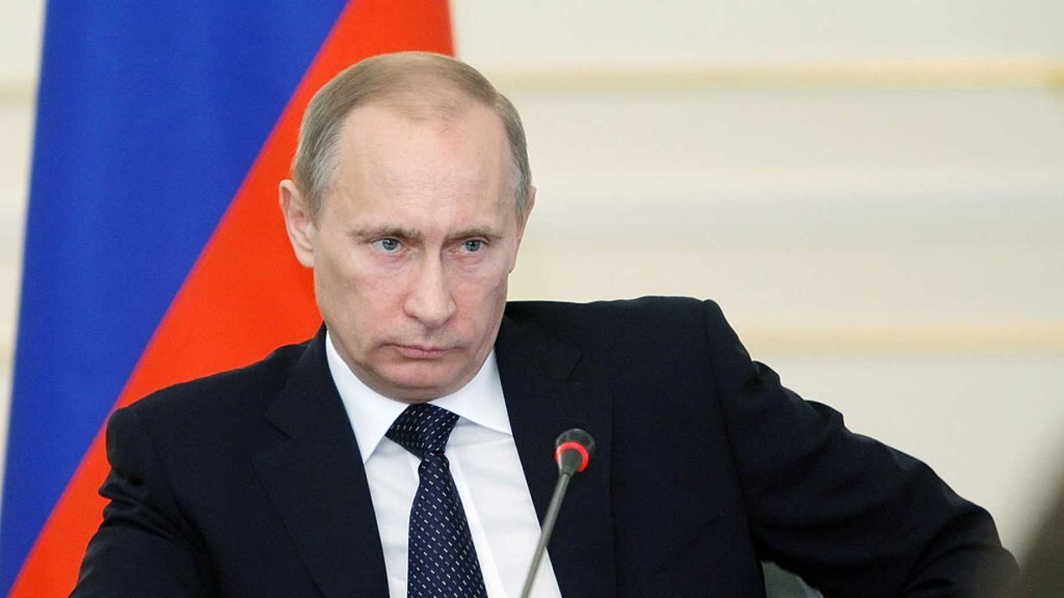
In the largest diplomats’ expulsion witnessed in the modern history, Russian President Vladimir Putin has announced that 755 staff must leave US diplomatic missions from his country. This came after US Congress passed a bill imposing sanctions against Russia, Iran and North Korea.

President Putin, while speaking in an exclusive interview with Rossiya 1 TV channel, on Sunday said that more than 750 American diplomats will have to leave Russia as a result of Washington’s own policies.

The American side has made a move which, it is important to note, hasn’t been provoked by anything, to worsen Russian-US relations. [It includes] unlawful restrictions, attempts to influence other states of the world, including our allies, who are interested in developing and keeping relations with Russia,he said. 

Vladimir Putin, who recently held friendly meetings with Donald Trump during G-20 Summit in Hamburg, Germany, said, We’ve been waiting for quite a long time that maybe something would change for the better, we had hopes that the situation would change. But it looks like it’s not going to change in the near future… I decided that it is time for us to show that we will not leave anything unanswered. 

However Russian President said that there were a number of “important spheres of cooperation” between Moscow and Washington, which he hoped would not suffer because of America’s anti-Russia policies. “Those include the joint fight against terrorism, obligations to nuclear arms control ad space projects rather than economic relations,” he said.

According to RT, an official Russian television network, earlier this week, following the US Congress’ approval of new sanctions against Russia, Iran and North Korea, the Russian Foreign Ministry announced that Moscow told Washington to reduce the number of its diplomatic staff in Russia to 455 people.

This order was aimed to equal the number of Russian diplomats in US by September 1. As of now, it “greatly exceeds” the number of Russia’s embassy staff in the US, the ministry said. Presently more than 1200 US personnel were posted in US missions in Russia.

The US administration expelled 35 Russian diplomats and seized two Russian diplomatic compounds in their territory in December last year, under the Barak Obama administration. The move was reportedly undertaken in response to alleged hacking of the US Democratic Party and Hillary Clinton’s campaign.

The US State department, while reacting to the Russian move, expressed regret arguing it was “uncalled-for act”.  The statement further said, “We are assessing the impact of such a limitation and how we will respond to it.”

The new US sanctions on Russia were overwhelmingly approved by both the houses of Congress, despite objections by President Donald Trump who wants warmer ties between the two countries. Trump had indicated his concerns about a provision in the new bill that limits his ability to lift sanctions – forcing him to consult Congress first.

The US sanctions were in part a response to conclusions by US intelligence agencies that Russia meddled in 2016 presidential elections in favor of Donald Trump and also to further punish Russia for its annexation of Crimea in 2014.

Russia has always denied interfering in the 2016 elections and Donald Trump also insists there was no collusion with Kremlin.

There are reports that some European countries were also angry because the new law imposing sanctions against Russia could penalize European companies for investing in some big Russian oil and gas projects.[/vc_column_text][/vc_column][/vc_row]

Latest world news

US ends oil sanctions waiver for Iran and Russia, impact likely on India’s energy imports

The US decision to end the Iran and Russia oil waiver may impact India’s oil imports, fuel prices and global energy markets.

Published

on

US oil tanker

The United States has decided not to extend a temporary sanctions waiver that allowed limited trade in Iranian and Russian oil, marking a shift towards stricter enforcement of economic restrictions.

The waiver, introduced in March 2026, had permitted the sale of oil already loaded on ships to stabilise global supply during heightened geopolitical tensions. However, it is now set to expire around mid-April without renewal.

US officials have indicated that the move is part of a broader strategy to increase pressure on both Iran and Russia amid ongoing conflicts and geopolitical tensions.

What the waiver did and why it mattered

The short-term waiver allowed millions of barrels of oil—estimated at around 140 million barrels—to enter global markets, helping ease supply shortages and prevent sharp price spikes.

It also enabled countries like India to purchase discounted crude oil from Russia and resume limited imports from Iran after years of restrictions.

Impact on India

India, one of the world’s largest oil importers, is expected to feel the impact of the decision in several ways:

  • Reduced access to discounted oil
    India had been buying cheaper Russian crude and recently resumed Iranian imports under the waiver. Its end may limit these options.
  • Potential rise in fuel costs
    With fewer discounted supplies available, India may need to rely more on costlier sources, which could increase domestic fuel prices.
  • Supply diversification pressure
    India may need to explore alternative suppliers in the Middle East, Africa, or the US to maintain energy security.
  • Geopolitical balancing challenge
    The move adds pressure on India to align with US sanctions while managing its own economic interests.

Global energy market concerns

The end of the waiver comes at a time when global oil markets are already under stress due to conflict in West Asia and disruptions in key routes like the Strait of Hormuz.

Analysts warn that tightening sanctions could:

  • Reduce global oil supply
  • Increase price volatility
  • Intensify competition among major buyers like India and China

Bigger picture

The US decision reflects a broader shift from temporary relief measures to stricter enforcement of sanctions, even if it risks tightening global energy markets.

For India, the development highlights a recurring challenge—balancing affordable energy access with geopolitical realities.

Continue Reading

Latest world news

Sanctioned tanker fails to breach US blockade, turns back near Strait of Hormuz

A US-sanctioned tanker failed to cross the Hormuz blockade and turned back, underscoring rising tensions and disruption in global shipping routes.

Published

on

A US-sanctioned oil tanker failed to break through a newly imposed American naval blockade and was forced to turn back near the Strait of Hormuz, highlighting growing tensions in the region.

The vessel, identified as the Rich Starry, reversed its course after attempting to exit the Gulf, according to shipping data. The development comes just days after the United States enforced restrictions on ships linked to Iranian ports.

The blockade was announced by Donald Trump following the collapse of recent diplomatic talks with Iran. The move aims to restrict maritime traffic associated with Iranian trade.

Officials said that during the first 24 hours of enforcement, no vessel successfully crossed the blockade. Several ships, including the sanctioned tanker, complied with instructions from US forces and turned back toward regional waters.

The tanker is reported to be linked to a Chinese company previously sanctioned for dealing with Iran. It was carrying a cargo of methanol loaded from the United Arab Emirates at the time of the incident.

The situation underscores the rising risks in one of the world’s most critical oil transit routes. The Strait of Hormuz typically handles a significant share of global energy shipments, but traffic has sharply declined due to ongoing geopolitical tensions.

The blockade, which applies specifically to vessels travelling to or from Iranian ports, has added further uncertainty for shipping companies, insurers and global energy markets.

Continue Reading

Latest world news

Jaishanakar discusses Middle East crisis with Kuwait and Singapore counterparts, focus on Indian community

Jaishankar holds talks with Kuwait and Singapore counterparts on West Asia tensions, highlights Indian community safety.

Published

on

India’s External Affairs Minister S. Jaishankar held discussions with his counterparts from Kuwait and Singapore amid the ongoing crisis in West Asia, focusing on regional developments and the safety of Indian nationals.

In separate telephonic conversations, Jaishankar exchanged views with Kuwait’s Foreign Minister Sheikh Jarrah Jaber Al-Ahmad Al-Sabah and Singapore’s Foreign Minister Vivian Balakrishnan. The discussions come at a time of heightened tensions in the Middle East region.

According to details shared by the minister, his conversation with the Kuwaiti counterpart primarily revolved around the evolving regional situation and the well-being of the Indian community residing in Kuwait.

He described the interaction as a constructive exchange, highlighting India’s continued attention to the safety and interests of its citizens abroad during the crisis.

In a separate interaction with Singapore’s foreign minister, Jaishankar said the two sides discussed the ongoing conflict in West Asia and its broader implications.

The talks reflect India’s ongoing diplomatic engagement with key global partners as tensions in the Middle East continue to escalate, impacting regional stability and international concerns.

The latest outreach is part of a series of high-level communications by India aimed at closely monitoring developments in the region while safeguarding its strategic and humanitarian interests.

Continue Reading

Trending

© Copyright 2022 APNLIVE.com