
India News
BJP has no problem with Kerala consuming beef: newly inducted union minister Alphons

[vc_row][vc_column][vc_column_text]– By Abhishek Kumar
With eyes set on expanding political base in the south, north-east India, is BJP trying for an image makeover as far as food choices are concerned?
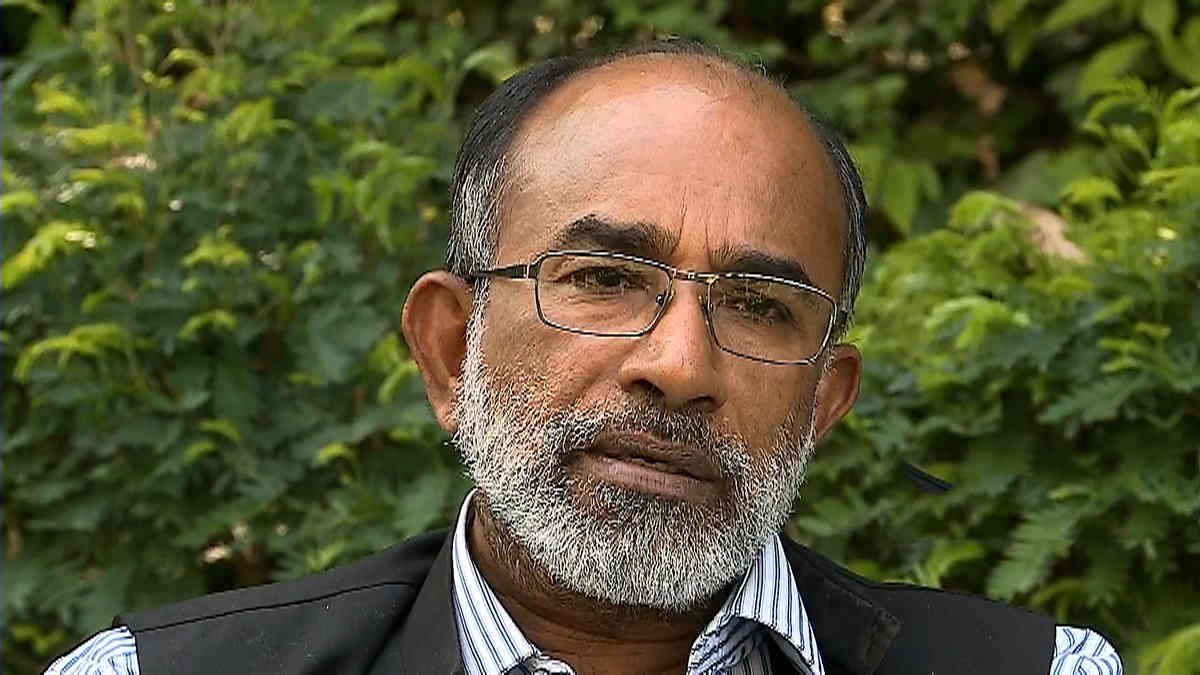
Newly inducted Union minister for tourism, Alphons Kannanthanam, has asserted that the BJP “doesn’t have a problem” with consumption of beef in his home state, Kerala.
The former IAS officer, who was a surprise entrant in Team Modi’s cabinet expansion on Sunday when he was roped in as a minister of state with independent charge, rejected all claims of the BJP being against the consumption of beef, hailing the party’s government at the Centre as “very inclusive” and insisting that Prime Minister Narendra Modi’s message to the people is clear – “believe whatever you want, I will protect you”.
“Kerala is a beef-eating state. It is not going to stop eating beef. It will continue to eat beef. BJP doesn’t have a problem,” Alphons told media persons on Monday, while adding that Goa, which is also a BJP-ruled state had also not banned the consumption of beef.
On the face of it, the comments by Alphons would appear as being far from reality. Over the past three years, ever since Narendra Modi led the BJP to a stunning victory in the Lok Sabha polls, the incidents of mob lynchings against those suspected of consuming beef or involved in cow slaughter have seen a sharp rise across India. Add to this are the spiteful and often threatening statements by a string of BJP leaders, including UP chief minister Yogi Adityanath, party MPs Sakshi Maharaj, etc, against those who support beef consumption.
But then, can the emphatic assertion by Alphons have a greater meaning?
The former babu, who has an excellent rapport within the politically crucial Syrian Christian community of Kerala and members of the Church in the state where the Christian clergy plays in important role in elections, is the first ever minister in a BJP-led central government to belong to Kerala, a state where the party has been desperate to make inroads in.
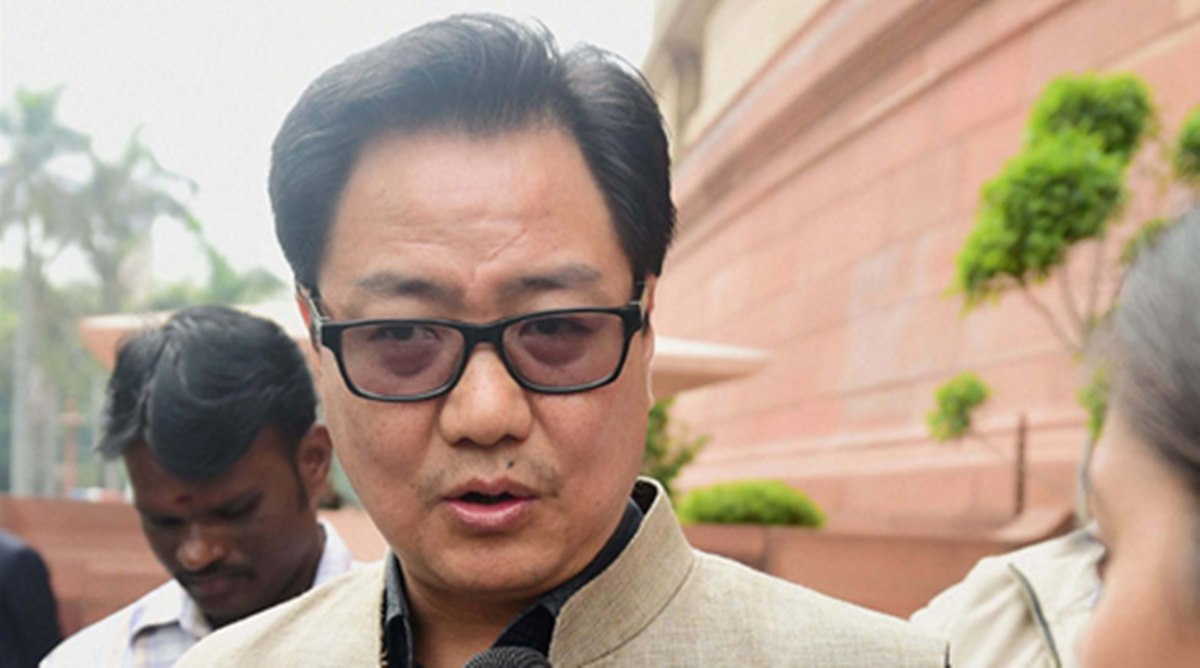
The tourism minister’s comments should be viewed along with similar comments made by another Union minister, Kiren Rijiju, who is the party’s face in Arunachal Pradesh, another beef eating state. Back in 2015 when the BJP was facing sharp criticism from all quarters on its opposition to beef consumption and cow slaughter, Rijiju had publicly declared his love for beef and claimed that no one can stop him from eating the meat.
More recently, the Manohar Parrikar government in Goa refused to ban consumption of beef while Union home minister Rajnath Singh too indicated that the Centre was not for a country-wide beef ban, while he acknowledged India’s diversity, albeit without explicitly mentioning the words beef or cow slaughter.
So, if Alphons’ statement is to be viewed in light of all these comments by other BJP leaders, what does it suggest?
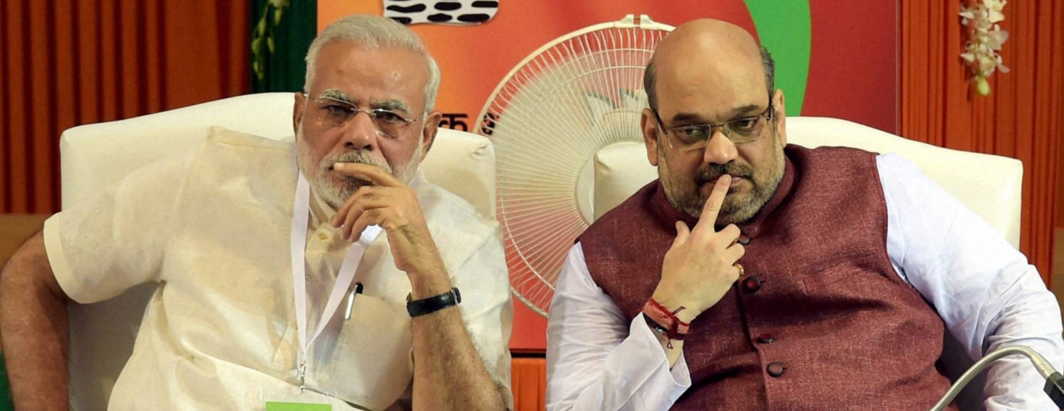
As BJP national president Amit Shah continues with his nationwide tour with the intent of expanding the BJP footprint across India in the run up to the 2019 Lok Sabha polls, could be BJP be opening up to a dilution of its well-known stand against consumption of beef? Several parts of India – especially Kerala, the north-eastern states, parts of Karnataka (though the BJP is now a major player there), Jammu and Kashmir (where again the BJP is in a shaky coalition albeit with electoral presence only in the Hindu-dominated Jammu) – are known to be major beef consumers. In many of these states and regions, the BJP has been struggling to make political inroads and both Narendra Modi and Amit Shah have been on an overdrive to expand the BJP base here.
By showing the party as being open, even if selectively, to people’s choice of what they wish to eat and letting ministers assert this in media interactions, could the BJP be eyeing an image-makeover that will ultimately make it more acceptable in areas where it currently is seen as a political pariah?
The saffron party’s national spokesperson and in charge of Meghalaya unit Nalin Kohli was among the first BJP leaders to publicly declare that the Centre wasn’t making any attempt to bring a country-wide legislation against cow slaughter, asserting that doing so was the express purview of respective state governments.
“Every state government that decides to have a law or not have a law on cow slaughter, does so keeping in mind local food habits… in the north-east too every state government will keep this in account,” Kohli had said.
Of course a large number of states – mostly BJP-ruled, like Maharashtra, MP, Gujarat, UP, etc – have banned cow slaughter. But with elections to be won and its presence to be expanded in beef-consuming states, are Modi and Shah now willing to make selective exemptions in the party’s stand against cow slaughter?[/vc_column_text][/vc_column][/vc_row]









India News
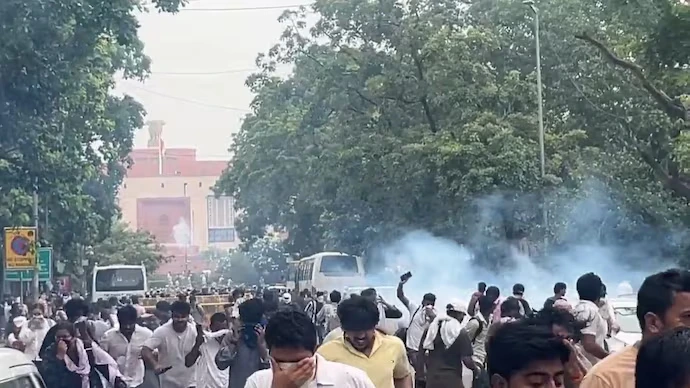
Delhi deploys 25,000 personnel, installs CCTV cameras ahead of CJP march
More than 25,000 police and paramilitary personnel have been deployed in Delhi ahead of the CJP’s planned protest march at Connaught Place. Authorities have also imposed restrictions and stepped up CCTV surveillance.

India News
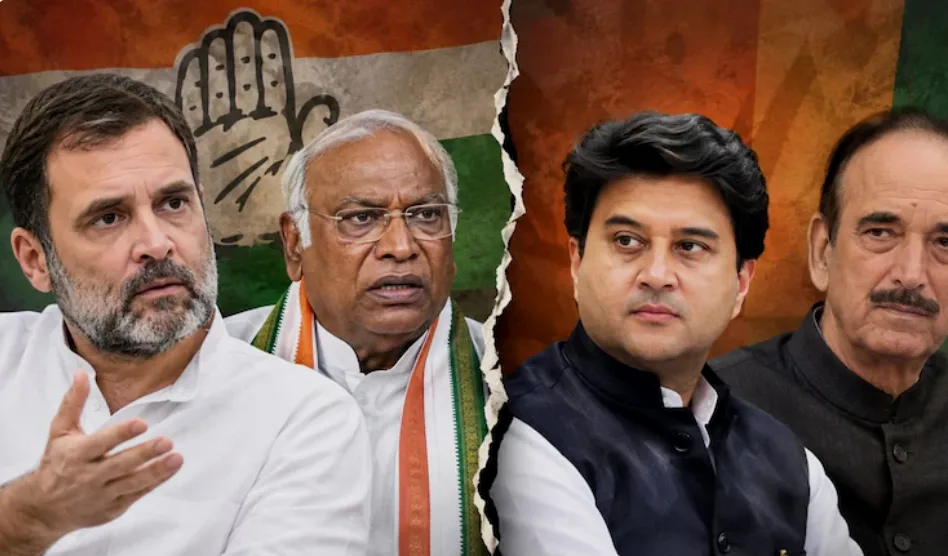
Mallikarjun Kharge’s ‘Your Friends’ jab at Rahul Gandhi over congress exits
Congress president Mallikarjun Kharge took a dig at Rahul Gandhi after the Leader of the Opposition reportedly described former party leaders Jyotiraditya Scindia and Ghulam Nabi Azad as among those who had left the Congress.
India News
Delhi Police offers 11-person limit for CJP’s Connaught Place protest
Delhi Police has offered to facilitate a group of 11 people at Central Park in Connaught Place for the Cockroach Janata Party’s October 16 protest, while warning that violations of prohibitory orders could invite legal action.


Election Commission orders voter roll revision in 17 states, UTs

Actor Imran Khan asked to leave India after CJP protest

Delhi Police offers 11-person limit for CJP’s Connaught Place protest

Mallikarjun Kharge’s ‘Your Friends’ jab at Rahul Gandhi over congress exits

Delhi deploys 25,000 personnel, installs CCTV cameras ahead of CJP march

Magnitude 7 earthquake strikes Russia’s Kamchatka Peninsula
Delhi deploys 25,000 personnel, installs CCTV cameras ahead of CJP march
Mallikarjun Kharge’s ‘Your Friends’ jab at Rahul Gandhi over congress exits
Delhi Police offers 11-person limit for CJP’s Connaught Place protest
Actor Imran Khan asked to leave India after CJP protest

Afghan Men Try To Hang With The Jet Engine Of The Aircraft in Kabul- Afghanistan News – Kabul News
Trending Top 10 News: 10000 Crore Fine on Flipkart, Apple to Launch Unique Feature, Hdfc Bank Job Ad

Trending Top 10 News: Nokia 6310, Apple sales, Bachpan ka Pyar Video Kid, Dainik Bhaskar IT Raid

Trending Top 10 News: Canada bans Indian flights, Rain in Delhi NCR, AIMIM Twitter hacked, Raj Kundra case

Trending Top 10 News: Shein India, Apple New Service, Pocket Oxygen, Oppo Launched New Phone
-
 India News22 hours ago
Election Commission orders voter roll revision in 17 states, UTs
-
 India News22 hours ago
Actor Imran Khan asked to leave India after CJP protest
-
 India News21 hours ago
Delhi Police offers 11-person limit for CJP’s Connaught Place protest
-
 India News9 hours ago
Mallikarjun Kharge’s ‘Your Friends’ jab at Rahul Gandhi over congress exits
-
 India News9 hours ago
Delhi deploys 25,000 personnel, installs CCTV cameras ahead of CJP march
-
 Latest world news9 hours ago
Magnitude 7 earthquake strikes Russia’s Kamchatka Peninsula
