
Latest News
Supreme Court reserves verdict on criminalising marital rape

[vc_row][vc_column][vc_column_text]Centre has insisted that consideration of rape in marriages would weaken traditional family values in India, and that marriage presumes consent for sexual intercourse
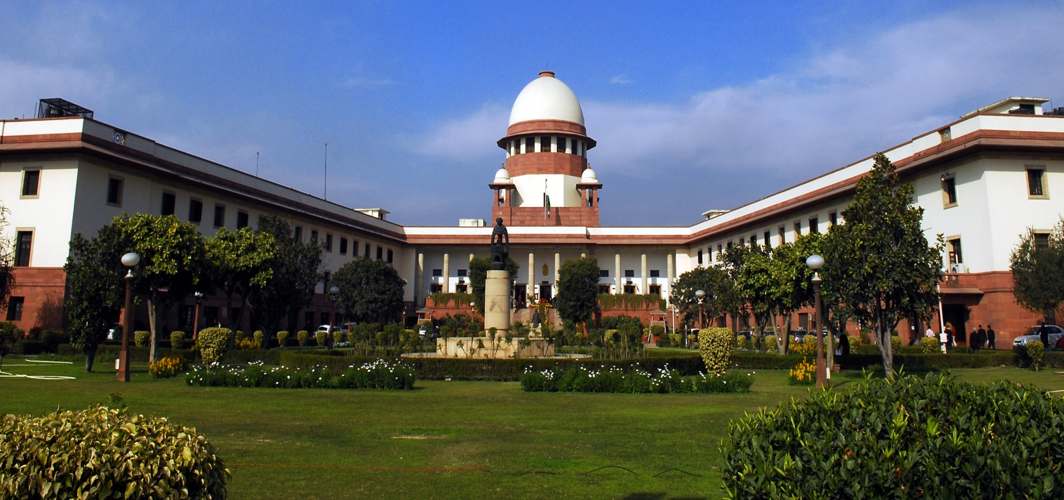
The Supreme Court bench of Justices Madan B Lokur and Deepak Gupta, on Wednesday (September 6), reserved its judgment in the critical case of criminalising marital rape and sexual intercourse between a husband and his minor wife – where the wife is aged between 15 and 18 years.
The case is about a plea filed by the NGO Independent Thought, questioning the constitutionality of a provision permitting a man to have physical relationship with his wife even if she is aged between 15 and 18, without her consent. Terming this as marital rape, the NGO has challenged Exception 2 to Section 375 of the Indian Penal Code and sought that marital rape be made a criminal offence.
Under the definition of rape in Section 375 of the Indian Penal Code, a man is said to commit rape if he indulges in specified sexual acts with a girl under the age of 18 – with or without her consent. However, Exception 2 says sexual intercourse or sexual acts by a man with an underage girl will not be considered rape so long as the girl is his wife and is not under 15 years of age. Independent Thought and Child Rights Trust, an intervener in the case, has urged the apex court to strike down this provision.

The petitioners have asked how marriage of a girl aged between 15 and 18 can justify denying her a legal protection which is extended to girls of the same age group who are not married. Independent Thought, through its counsel, advocate Gaurav Agarwal, has submitted before the court that the same law which says that any girl aged between 15 and 18 is incapable of giving her consent for sexual intercourse also assumes that a girl of the same age group, if married, is capable of doing so. The counsel has said that this interpretation of the law creates an unreasonable category of married minor girls and denies them their right to protection from the State against rape by their husbands.
In an argument that can only be described as revoltingly regressive, the Centre has defended Exception 2 and sexual intercourse between a husband and his minor wife on the ground that it is traditional and that the Parliament was aware of the inconsistency between provisions of the Indian Penal Code and the Prohibition of Child Marriage Act, 2006 when it chose to retain the exception, while increasing the age of consent from 16 to 18 for girls in 2013.
On Wednesday, senior advocate Rana Mukerjee, arguing for the Union of India, said: “The Law Commission’s 77th report makes a provision for the girl to report any sexual offence, directly to highest police authorities. From the 13th Law Commission report pertaining to consent to have sexual intercourse, a committee was formed which raised the age of consent from 16 to 18years.”
“A committee formed under Justice (JS) Verma, relied on this reference and recommended a compulsory age of 18 years to have sexual intercourse,” the counsel said, while asserting that “consideration of rape in marriages would weaken traditional family values in India, and that marriage presumes consent.”
The counsel said that 15 years to 18 years is a qualified age to have sexual intercourse. Even, Muslim Law recognises 15 years as the age of puberty.
The case had through the course of arguments in the Supreme Court raised a debate on media and social media platforms over the constitutionality of allowing a married minor girl to be subjected to sexual activity, and in many cases marital rape, by her husband, with several child rights activists and medical experts also highlighting the ill-effects that this has on the health of the girl or ‘child bride’.
Recently, Swaraj Kaushal, the former Governor of Mizoram and husband of Union external affairs minister Sushma Swaraj, had been trolled on Twitter after he tweeted saying: “There is nothing like marital rape. Our homes should not become police stations.”[/vc_column_text][/vc_column][/vc_row]








India News
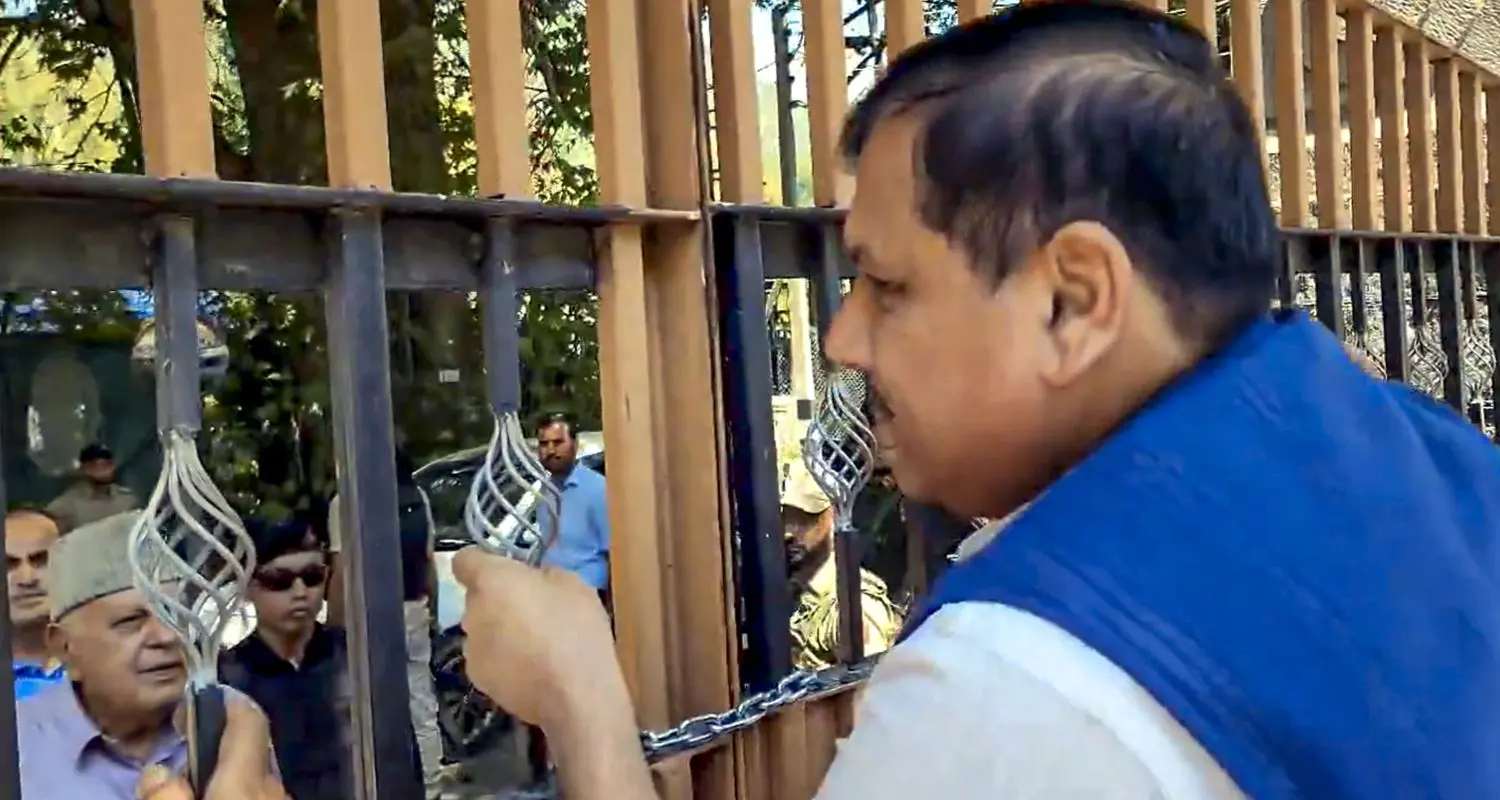
AAP MP Sanjay Singh accuses J&K authorities of house arrest, Farooq Abdullah condemns move


Dhruv Rathee gets fresh summons in 2018 BJP IT cell video case

Nobody can browbeat judiciary, Chief Justice warns over Rahul Gandhi’s march

India-US trade deal first phase finalised, drafting underway

Election Commission orders voter roll revision in 17 states, UTs

Actor Imran Khan asked to leave India after CJP protest

Delhi Police offers 11-person limit for CJP’s Connaught Place protest
Actor Imran Khan asked to leave India after CJP protest
Election Commission orders voter roll revision in 17 states, UTs
India-US trade deal first phase finalised, drafting underway
Nobody can browbeat judiciary, Chief Justice warns over Rahul Gandhi’s march

Afghan Men Try To Hang With The Jet Engine Of The Aircraft in Kabul- Afghanistan News – Kabul News
Trending Top 10 News: 10000 Crore Fine on Flipkart, Apple to Launch Unique Feature, Hdfc Bank Job Ad

Trending Top 10 News: Nokia 6310, Apple sales, Bachpan ka Pyar Video Kid, Dainik Bhaskar IT Raid

Trending Top 10 News: Canada bans Indian flights, Rain in Delhi NCR, AIMIM Twitter hacked, Raj Kundra case

Trending Top 10 News: Shein India, Apple New Service, Pocket Oxygen, Oppo Launched New Phone
-
 India News19 hours ago
Dhruv Rathee gets fresh summons in 2018 BJP IT cell video case
-
 India News16 hours ago
Nobody can browbeat judiciary, Chief Justice warns over Rahul Gandhi’s march
-
 India News11 hours ago
India-US trade deal first phase finalised, drafting underway
-
 India News9 hours ago
Election Commission orders voter roll revision in 17 states, UTs
-
 India News9 hours ago
Actor Imran Khan asked to leave India after CJP protest
-
 India News7 hours ago
Delhi Police offers 11-person limit for CJP’s Connaught Place protest
