English हिन्दी
Connect with us

India News

Rohingyas a threat to national security, should be deported: Govt to SC

Published

on

Rohingyas a threat to national security, should be deported: Govt to SC
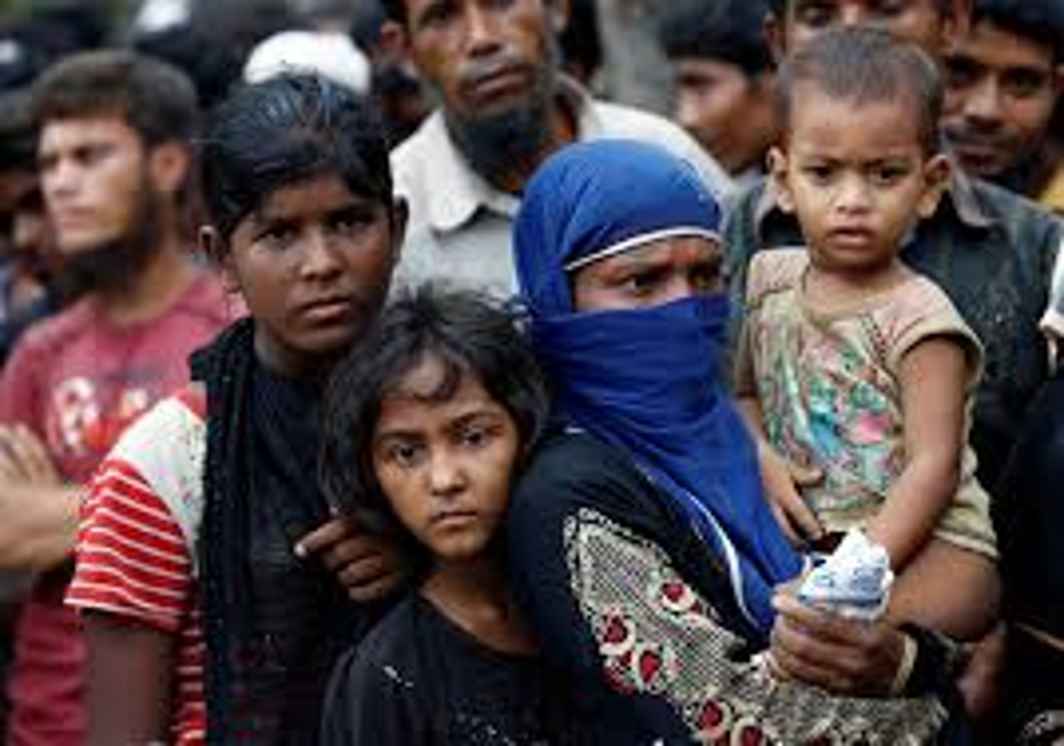
Affidavit reportedly claims that intelligence inputs suggest Rohingya militant groups active in Jammu, Delhi, Hyderabad and Mewat; could be used by IS

Amid a global outrage over the continued persecution of Rohingya Muslims by the Myanmar establishment, the Union government, on Thursday, told the Supreme Court that it cannot allow the illegal immigrants from Rakhine State to stay in India as refugees as they pose a threat to national security.

The Union home ministry which filed an affidavit on the Rohingya issue in the Supreme Court on Thursday, has reportedly said that refugees of Myanmar’s ethnic minority group who are settled in scattered camps across India could be used by domestic and foreign terror groups to foment trouble in the country.

The affidavit, it is learnt, claims that inputs received from various Indian intelligence agencies suggest that at least some Rohingya groups living in India have links with terror groups. The Centre claimed Rohingya militant groups are active in Jammu, Delhi, Hyderabad and Mewat (in Haryana), and could be used by the Islamic State.

However, no evidence of this claim has been provided in the home ministry’s affidavit, which adds “National interest warrants their (Rohingyas) deportation. No illegal immigrant has the right to stay in India.”

The affidavit has been submitted before the Bench of Chief Justice Dipak Misra and Justices AM Khanwilkar and DY Chandrachud, which is presiding over proceedings on a bunch of public interest litigations and intervener petitions that have either sought deportation of the Rohingya Muslims or for directions to the Union government to provide a safe haven to these refugees.

The affidavit comes at a time when Prime Minister Narendra Modi’s government has been at the receiving end of criticism from various human rights groups and also the United Nations for not recognizing the persecution of Rohingyas as a humanitarian issue and instead indicating its willingness to deport them to Myanmar where thousands from the ethnic minority have been killed by the Junta over the past few weeks. India and Myanmar do not recognize the term Rohingya and the issues of the world’s most persecuted ethnic minority are referred to by both nations as ‘developments in the Rakhine state’ or matters of illegal immigrants.

Earlier this week, the United Nations’ top human rights official Zeid Ra’ad al-Hussein had criticised India for wanting to deport Rohingya refugees. “I deplore current measures in India to deport Rohingyas at a time of such violence against them in their country (Myanmar),” Zeid said. Zeid had also implored India to bear in mind its obligations under international law and said: “India cannot carry out collective expulsions, or return people to a place where they risk torture or other serious violations.”

But the Indian government, as suggested by the affidavit placed before the Supreme Court, maintains that it sees Rohingyas as a threat to the country’s national security.

Next week, the Supreme Court is scheduled to hear a plea filed by two Rohingya immigrants, Mohammad Salimullah and Mohammad Shaqir, challenging the Indian government’s decision to deport illegal Rohingya Muslim immigrants back to Myanmar. The plea, filed by advocate Prashant Bhushan on behalf of the two, claims that Salimullah and Shaqir had taken refuge in India after escaping from Myanmar due to widespread discrimination, violence and bloodshed against the community there.

Opposing the plea, former RSS ideologue KN Govindacharaya has also moved the apex court seeking to make him a party in the case filed by the two Rohingya Muslims. Govindacharya has opposed their plea saying they were “a burden” on the country’s resources and posed a serious threat to national security.

Meanwhile, India has extended humanitarian assistance for Rohingya refugees in Bangladesh through its ‘Operation Insaniyat’ by sending food and other essential items to the neighbour to help it deal with the huge influx of Rohingyas who have fled from Myanmar in recent weeks.

India News

People will come and go, says Sanjay Raut amid revolt by six Sena UBT MPs

Sanjay Raut said Shiv Sena (UBT) is not dependent on MPs and will continue to move forward despite a rebellion by six Lok Sabha members.

Published

on

Shiv Sena (UBT) MP Sanjay Raut

Senior Shiv Sena (UBT) leader Sanjay Raut has sought to downplay the impact of a rebellion by six Lok Sabha MPs from the party, asserting that the organisation will continue to move forward despite the latest political setback.

Speaking as Shiv Sena marked its 60th foundation year, Raut said the party’s future does not depend on elected representatives and that it has overcome several challenges during its long history. He remarked that people may come and go, but the party continues its journey forward.

The comments come amid growing turmoil within the Uddhav Thackeray-led faction after six MPs signalled their intention to break away. According to reports, the rebel lawmakers are dissatisfied with the leadership style of Uddhav Thackeray and have also expressed concerns over the party’s closeness to the Congress.

Among those seeking to leave the party are MPs Omraje Nimbalkar, Sanjay Dina Patil, Sanjay Jadhav, Sanjay Deshmukh, Nagesh Patil Ashtikar and Bhausaheb Vakchaure. Reports indicate that the lawmakers recently met Lok Sabha Speaker Om Birla and cited concerns about the party’s political direction.

Party can rebuild after setbacks, says Raut

Referring to the latest round of defections, Raut maintained that Shiv Sena (UBT) has faced betrayals and internal challenges before and has always managed to recover. He stressed that the party remains cadre-based and is not dependent on MPs or MLAs for its existence.

The Rajya Sabha MP also accused the ruling BJP of attempting to weaken regional political parties across the country. According to Raut, efforts have been made over the past decade to diminish the role of regional forces, and a healthy democracy requires a strong opposition.

The rebellion has intensified speculation about another split within the Thackeray camp, which has already faced major political upheaval in recent years. However, the party leadership has indicated that it intends to continue its organisational work and focus on rebuilding support despite the current crisis.

Continue Reading

India News

Delhi High Court denies interim relief to Telegram in challenge against NEET-related ban

Telegram did not receive interim relief from the Delhi High Court in its challenge to the Centre’s temporary restriction imposed before the NEET-UG 2026 re-examination.

Published

on

Delhi High Court issues notice to the Centre but does not stay the temporary restriction imposed ahead of the NEET-UG 2026 re-examination.

Messaging platform Telegram has not received interim relief from the Delhi High Court in its challenge to the Centre’s temporary restriction on the app ahead of the NEET-UG 2026 re-examination.

The court issued notice to the Union government and agreed to hear the matter, but did not pass any immediate order suspending the restriction. The temporary curbs were imposed until June 22 as part of measures aimed at preventing exam-related fraud and the circulation of fake paper leak claims before the June 21 re-test.

Telegram has argued that the restriction affects millions of users and is disproportionate to the alleged misuse by a small number of individuals. The company has also questioned the legality and procedure followed while imposing the restriction.

During the proceedings, the Centre defended its decision, maintaining that the measure was necessary to protect the integrity of the high-stakes medical entrance examination. Government representatives argued that Telegram had been used to spread leaked exam material, misinformation and fraudulent claims linked to the examination process.

The court sought the Centre’s response and scheduled further consideration of the matter. Until a final decision is reached, the temporary restriction remains in effect.

The dispute comes amid heightened scrutiny of examination security following the cancellation of the original NEET-UG 2026 exam and the decision to conduct a re-examination for affected candidates.

Continue Reading

India News

IT stocks drag markets lower as Accenture outlook sparks selloff

A sharp selloff in IT stocks after Accenture’s weak outlook weighed on Indian markets, pushing Sensex and Nifty lower while major technology shares recorded significant losses.

Published

on

Indian equity benchmarks came under pressure on Friday as a sharp decline in information technology stocks erased a portion of the gains made during the recent market rally. Weak guidance from global technology services giant Accenture triggered concerns about demand trends in the IT sector, leading to broad-based selling across major Indian technology companies.

The benchmark Sensex and Nifty opened lower, while the Nifty IT index emerged as the worst-performing sectoral gauge of the day. Shares of major IT firms, including TCS, Infosys, Wipro and HCLTech, witnessed steep declines as investors reacted to concerns over slowing technology spending and limited visibility on future demand.

Accenture guidance rattles investor confidence

Market sentiment weakened after Accenture reported quarterly results and revised its revenue outlook, citing softer demand conditions. The development raised concerns about the broader global technology services industry, particularly for Indian IT companies that derive a significant portion of their revenue from overseas clients.

Analysts noted that Accenture’s cautious commentary added to existing worries about discretionary technology spending and delayed client decision-making. The company’s outlook is often viewed as an indicator of global demand trends for IT services.

Nifty IT sees sharp decline

The Nifty IT index dropped more than 5%, with all constituent stocks trading in negative territory. TCS, Infosys, Wipro and HCLTech were among the major laggards, falling between roughly 3% and 8% during trading.

The weakness in technology shares also weighed on broader market sentiment, ending the momentum seen in recent sessions. Investors turned cautious amid concerns about global growth, technology spending trends and earnings visibility for export-focused IT companies.

Broader market under pressure

Apart from the IT selloff, analysts pointed to profit-booking after the recent rally, weaker global cues and risk aversion among investors as additional factors behind the market decline. Mid-cap and small-cap indices also traded lower, reflecting broader weakness across sectors.

Continue Reading

Trending

© Copyright 2022 APNLIVE.com