English हिन्दी
Connect with us

India News

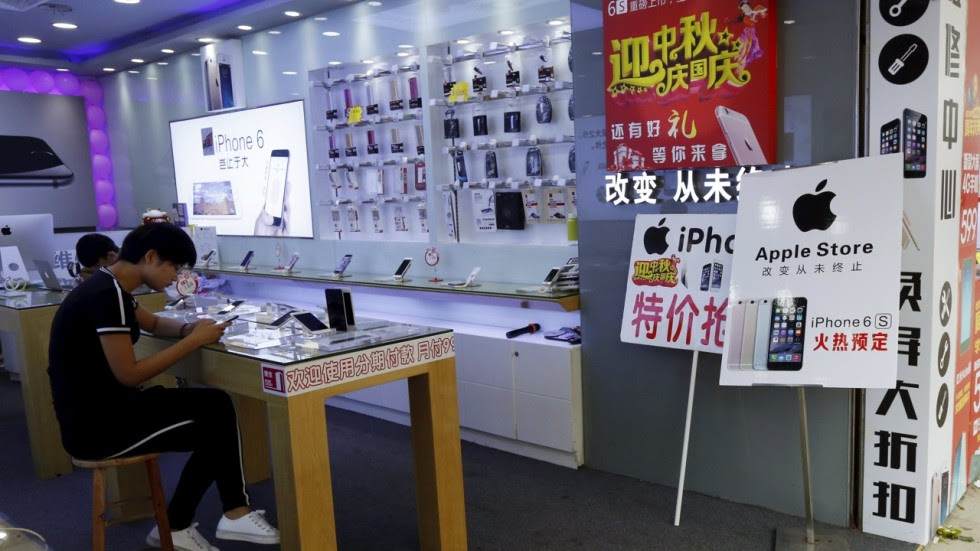
Ready for the launch: iPhone 8 cases hit Shenzen markets before Apple’s product launch

Published

on

[vc_row][vc_column][vc_column_text]They come in plastic in shocking red, jet black or electric blue, selling for anything from 10 yuan to 30 yuan (US$4.60) apiece

Even before Apple Inc lifts the curtains on the next iteration of its iconic handset, vendors in southern China are already touting cases and accessories for the iPhone 8, its larger sibling iPhone 8 Plus, and a possible iPhone X to mark the 10th anniversary of the world’s most successful smartphone.

They come in plastic in shocking red, jet black or electric blue, selling for anything from 10 yuan to 30 yuan (US$4.60) a piece at the Huaqiangbei electronics mall in southern China’s technology hub of Shenzhen.

“Producing iPhone cases is a sure win,” said Li Hong, a saleswoman at one of the mall’s scores of stores. “Suppliers have already shipped the cases to Huaqiangbei, so I can immediately fill out orders after the iPhone’s launch tonight. I didn’t want to keep the accessories too far ahead of the launch as I didn’t want any inventory pressure.”

Apple is scheduled to unveil its new phones Tuesday at the newly completed Apple Park headquarters in Cupertino, California, during the wee hours of Hong Kong time.

The sizes and dimensions of the to-be-released phones have already been known for weeks through leaks on Apple fan sites, bulletin boards, media reports or information provided by the hundreds of Apple component suppliers, many based in China.

The iPhone 8 is supposed to come with a 4.7-inch liquid crystal display (LCD) touch screen, while the bigger iPhone 8 Plus sports a 5.5-inch LCD screen and the iPhone X will have a 5.8-inch curved screen using organic light-emitting diode (OLED).

Thin-film screen protection plastic shields are also available at Huaqiangbei, guaranteed to fit the screen of the yet-to-be-released iPhone, or so the vendors claim.

“It’s more money for the first with the product,” said Zhao Ziming, a senior analyst at Pintu Tank in Beijing, a firm that conducts research on the internet industry. “Chinese manufacturers can easily know the appearance and size of any new iPhones now. It is more and more difficult for Apple to make the phone production process confidential when its productions scale is expanding.”

Nowhere is the launch more keenly watched than in China, where the company that arguably invented the smartphone now needs a game-changing product to reverse six quarters of shrinking sales in the world’s largest smartphone market.

Competition is heating up in a market where an estimated 2.33 billion mobile phones, including 650 million smartphones, are in circulation, according to data by the internet Society of China. Chinese brands like Huawei, Oppo, Vivo and Xiaomi have been snatching market share away from Apple, offering cheaper but well-crafted alternatives that run on the Android operating system.

Xiaomi, whose smartphones outsold Apple in China during the second quarter, even stole a march on the iPhone by launching its most expensive model a full 24 hours before the American release.

China’s smartphone shipments fell 3 per cent to 113 million devices in the second quarter, according to data by Canalys.

“Chinese manufactures, some of whom have invested hundreds of thousands, or even millions of yuan, to produce iPhone accessories, have their own ways to get the accurate iPhone data to guarantee their products are able to fit the new products,” Li said.[/vc_column_text][/vc_column][/vc_row]

India News

PM Narendra Modi flags off Amrit Bharat Express trains linking UP with Maharashtra

Prime Minister Narendra Modi flagged off two Amrit Bharat Express trains connecting Varanasi to Pune and Ayodhya to Mumbai, enhancing long-distance rail connectivity.

Published

on

Prime Minister Narendra Modi on April 28 flagged off two new Amrit Bharat Express trains, strengthening rail connectivity between Uttar Pradesh and Maharashtra.

The newly launched weekly services will operate on two key routes — Varanasi (Banaras) to Hadapsar in Pune and Ayodhya to Mumbai’s Lokmanya Tilak Terminus.

Improved connectivity between spiritual and economic hubs

The new trains are designed to link major spiritual centres like Varanasi and Ayodhya with important economic cities such as Pune and Mumbai. This is expected to improve travel convenience for passengers, including pilgrims and migrant workers.

The Ayodhya–Mumbai route, in particular, is likely to support religious tourism linked to the Ram Temple while also easing long-distance travel demand between Uttar Pradesh and Maharashtra.

Focus on affordable and inclusive rail travel

The Amrit Bharat Express trains are aimed at providing affordable, non-AC long-distance travel with improved safety and comfort features. These services are part of a broader push to make rail transport more accessible to the common public.

Officials said the trains will run weekly and pass through multiple key stations across states, enhancing regional connectivity along the route.

Boost to indian railways network

The launch is part of the government’s ongoing efforts to expand railway infrastructure and improve connectivity across regions. With these additions, direct rail links between northern and western India are expected to become more efficient and accessible.

Continue Reading

India News

PM Narendra Modi inaugurates projects worth over Rs 1,050 crore in Varanasi

PM Narendra Modi inaugurated projects worth Rs1,050 crore and laid foundation for Rs 5,300 crore initiatives in Varanasi, focusing on infrastructure and urban development.

Published

on

pm modi

Prime Minister Narendra Modi on Tuesday inaugurated development projects worth over Rs1,050 crore in Varanasi, while also laying the foundation stone for additional projects valued at around Rs 5,300 crore.

The initiatives are part of a broader push to strengthen infrastructure and public services in the Prime Minister’s parliamentary constituency.

Focus on infrastructure and connectivity

According to official details, a total of 48 completed projects were inaugurated, covering key sectors such as road connectivity, rail infrastructure and urban services.

Among the major highlights is the widening of the Varanasi-Azamgarh road, aimed at easing traffic flow and improving regional connectivity.

Additionally, new rail over bridges at Kazzakpura and Kadipur have been opened to reduce congestion and enhance transport efficiency in the city.

Urban development and public utilities

The Prime Minister also inaugurated a sewage treatment plant in Bhagwanpur with a capacity of 55 million litres per day, targeting improved sanitation and water management in the region.

These projects are expected to support long-term urban development and improve quality of life for residents.

Foundation laid for larger development push

In addition to the inaugurated works, Modi laid the foundation stone for 112 new projects worth around Rs 5,300 crore.

The upcoming projects span multiple sectors and are aimed at further strengthening infrastructure, boosting economic activity, and supporting urban expansion in Varanasi.

Financial support to dairy farmers

During the visit, the Prime Minister also announced a financial boost for dairy farmers by transferring over Rs 105 crore as bonus payments to milk suppliers associated with Banas Dairy in Uttar Pradesh.

Continue Reading

India News

BJP sweeps all 15 municipal corporations in Gujarat, AAP loses Surat stronghold

The BJP has secured a sweeping victory in Gujarat civic polls, winning all 15 municipal corporations, with AAP suffering a major setback in Surat.

Published

on

BJP

The Bharatiya Janata Party (BJP) has recorded a sweeping victory in Gujarat’s local body elections, winning all 15 municipal corporations across the state and reinforcing its dominance in urban governance.

The results underline the party’s strong grip in key cities, including Ahmedabad, Surat, Vadodara and Rajkot, where it secured overwhelming majorities and left opposition parties far behind.

In Ahmedabad, the BJP won 146 out of 192 seats, while the Congress lagged significantly with just a handful of seats. Similar trends were seen in other major cities, where the ruling party maintained a clear lead.

The most notable political shift emerged in Surat, where the Aam Aadmi Party (AAP) suffered a sharp decline. After making gains in the previous election, AAP managed to secure only four seats this time, while the BJP surged ahead with 115 seats, effectively ending AAP’s position as a strong urban challenger in the city.

Across Rajkot and Vadodara as well, the BJP posted dominant performances, winning large seat shares and keeping the Congress confined to limited numbers.

Overall, the results reflect a broader trend of BJP consolidation not only in urban centres but also across local governance structures. The party also performed strongly in municipalities, district panchayats and taluka panchayats, though opposition parties retained small pockets of support in some rural areas.

The outcome is being seen as a significant political boost for the BJP in its traditional stronghold, while raising concerns for opposition parties struggling to expand their base in the state.

Continue Reading

Trending

© Copyright 2022 APNLIVE.com