English हिन्दी
Connect with us

Latest world news

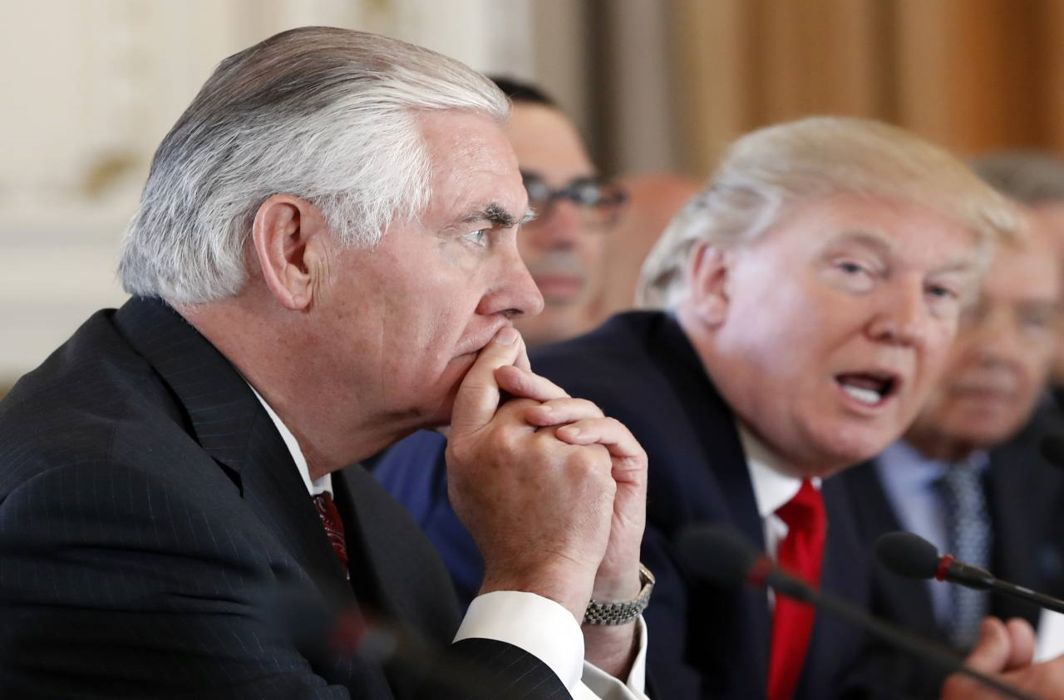
Now Trump throws challenge to Rex Tillerson for IQ test

Published

on

[vc_row][vc_column][vc_column_text]White House planned Forbes interview creates another controversy

Caught with ongoing debate on Tillerson’s reported “moron” comment, US President Donald Trump has chosen to throw challenge to Secretary of State to compare IQ tests and expressed his full confidence of winning. However Tillerson has chosen to remain silent.

In an effort to come out of the unprecedented embarrassing situation, Trump responded to a question posed by Forbes journalist Randall Lane in the luxury of his Oval Office. Trump first tried to deny such comment from his cabinet colleague. However, he tried to tactfully handle the question saying “I think it’s fake news. But if he did (say) that, I guess we’ll have to compare IQ tests. And I can tell you who is going to win.”

President spoke to the magazine on Friday and the interview was published on Tuesday. Recently NBC had claimed Vice President Mike Pence had to talk Tillerson out of resigning this summer, and that Tillerson called Trump a “moron”. Some reports said that Tillerson called the president “a fucking moron” an adjective commonly used by the Americans.

Knowing the fate of 12 White House senior functionaries who have either resigned or were fired during last nine months, Tillerson suddenly called a press conference and announced that he has never considered resigning. However, he neither denied nor confirmed about his reported “moron” comment.

President Trump, while commenting after the interview was placed in public domain, on Tuesday, denied undercutting Tillerson by questioning his IQ. “No, I didn’t undercut anybody, I don’t believe in undercutting people.”

Trump’s comments on Tillerson’s IQ made White House press secretary Sarah Sander’s job difficult. Responding to journalist’s query she insisted: “The president never implied the secretary of state was not incredibly intelligent. He made a joke – nothing more than that. He has full confidence in the secretary of state … They’re working hand in hand to move the president’s agenda forward.”

She further tried to convince media persons as if it was not a serious issue. She said, “Maybe you guys should get a sense of humor and try it sometime … He’s got 100% confidence in the secretary of state.”

Meanwhile London based “The Independent” chose to speak with some IQ experts for getting the clearer picture on the issue.

Joel Schneider, Professor at Philadelphia based  Temple University ,who is considered to be expert on assessment of intelligence has reportedly said, “My money’s on Tillerson” pointing to his previous experience as CEO of Exxon Mobil. He further argues, “Large companies like that generally aren’t run by unintelligent people.” Schneider has 31 books, 589 citations and 7,148 reads to his credit.

However, Schneider thinks that Trump would actually be considered “bright” compared to the general population.

Another expert, Stephen Ceci, a Professor of Developmental Psychology at New York based Cornell University, has declined to discuss the IQ comparison. He said Trump would likely come somewhere in the “mid-range” of IQ scores, based on his word usage an lack of inhibition. Ceci is the winner of one of the American Psychological Society’s two most prestigious awards.

Jack Naglieri, a psychological research professor, believes Mr Donald Trump is lacking in “executive function”- the process of strategising, evaluating, decision makine and impulse control. Naglieri is Reserach Professor at the Curry School of Education at University of Verginia who has penned several books and over 300 scholarly papers.

His assessment about Tillerson is altogether different. He said, “Tillerson is clearly a person who has impulse control, who thinks things through….He’s not blurting out, he’s not impulsive, he’s not flying off the handle. He’s not telegraphing his anger like Trump does.”  He concluded saying, “I’d put my money on Tillerson any day.”[/vc_column_text][/vc_column][/vc_row]

Latest world news

PM Modi to begin two-day Israel visit, defence and trade in focus

PM Narendra Modi begins a two-day Israel visit aimed at strengthening defence cooperation, trade ties and upgrading bilateral relations to a special strategic partnership.

Published

on

pm modi

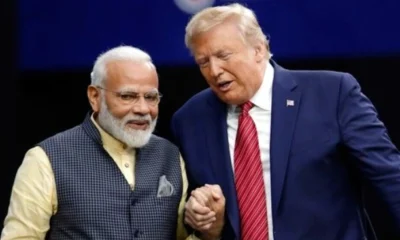
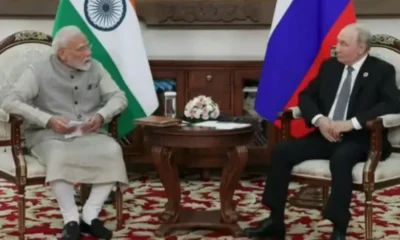
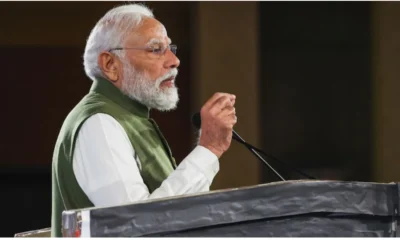
Prime Minister Narendra Modi will begin a two-day visit to Israel on Wednesday, with defence and trade cooperation high on the agenda. The visit is expected to further deepen the growing strategic engagement between the two countries.

During the trip, India and Israel are set to upgrade their relationship to a “special strategic partnership”, marking a significant step beyond the strategic partnership established in July 2017 during the Prime Minister’s first visit to the country.

Sources indicated that the new framework would enable expanded collaboration, including joint development of advanced defence systems and a strengthened understanding to support each other during times of need.

High-level engagements in Jerusalem

Mr Modi will be received at the airport by Israeli Prime Minister Benjamin Netanyahu and his wife Sara. The two leaders are scheduled to hold a one-on-one meeting shortly after his arrival.

In Jerusalem, the Prime Minister will interact with members of the Indian community before addressing lawmakers at the Knesset, a distinction reserved for select global leaders.

On Wednesday evening, he will attend a technology exhibition showcasing Israel’s advancements, with leading Israeli industry executives expected to be present. Mr Netanyahu will also host a private dinner in his honour.

Tribute at Yad Vashem and presidential meeting

On Thursday morning, Mr Modi will pay tribute to Holocaust victims at Yad Vashem. He is also scheduled to meet Israeli President Isaac Herzog during the visit.

Defence cooperation and technology partnerships

Several memorandums of understanding are expected to be signed, including a widely discussed agreement in the defence sector. As part of the proposed arrangement, a secrecy mechanism will reportedly be created to facilitate expanded cooperation in previously restricted areas.

Local media reports have indicated discussions around air defence systems and possible integration of India into Israel’s laser-based air defence system, Or Eitan.

Beyond defence, the two nations are expected to formalise cooperation in emerging and disruptive technologies such as artificial intelligence, quantum research and cybersecurity.

In New Delhi, the Ministry of External Affairs said the visit would reaffirm the deep-rooted strategic partnership and provide an opportunity to align efforts in addressing shared challenges while strengthening collaboration between the two democracies.

Defence cooperation has been a cornerstone of India-Israel relations, with Israel supplying a range of military platforms and weapon systems to India in recent years. Bilateral ties have also expanded in fields including scientific research, innovation and cybersecurity.

Continue Reading

Latest world news

Trump says tariffs will replace income tax, criticises Supreme Court setback in key address

Donald Trump has said tariffs collected from foreign nations could eventually replace income tax in the US, while criticising a Supreme Court ruling against his earlier import duties.

Published

on

trump

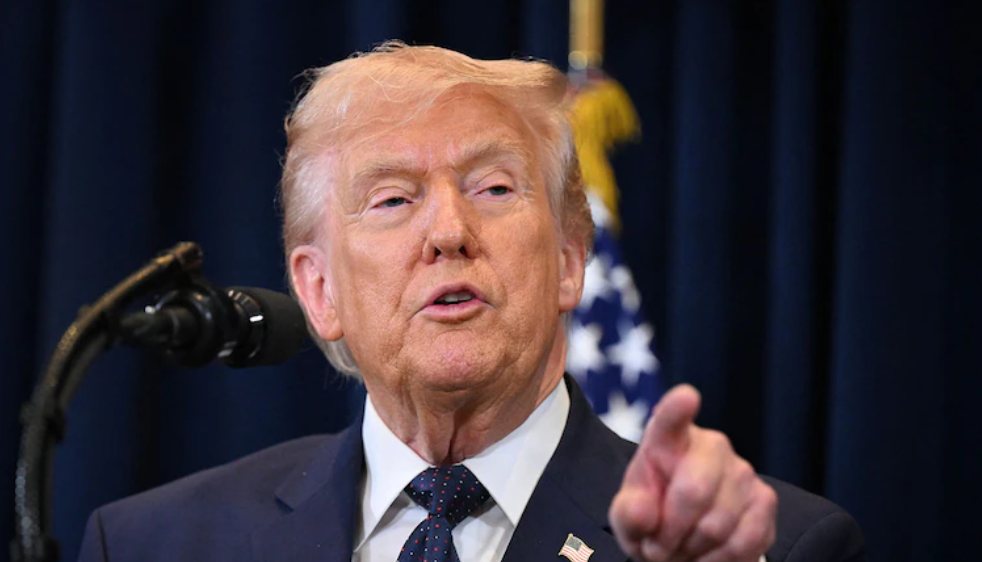
US President Donald Trump has said that tariffs collected from foreign countries could eventually replace the modern system of income tax in the United States, arguing that such a shift would ease the financial burden on American citizens.

Speaking during his annual State of the Union address, Trump defended his sweeping tariff measures, asserting that countries which had “ripped off” the US for years were now paying billions of dollars in duties.

“As time goes by, I believe that tariffs, paid for by foreign countries, will, like in the past, substantially replace the modern-day system of income tax, taking a great financial burden off the people that I love,” he said.

The Republican leader credited tariffs as a key driver behind what he described as an economic turnaround. According to him, the US collected “hundreds of billions of dollars” through import duties, which he said helped secure favourable economic and national security deals.

“Countries that were ripping us off for decades are now paying us hundreds of billions of dollars,” Trump said, adding that the arrangements had resulted in growth and no inflation during that period.

Supreme Court ruling draws sharp reaction

Trump also criticised a recent 6-3 ruling by the Supreme Court of the United States that struck down his earlier sweeping import duties. He termed the verdict “very unfortunate” but maintained that most countries and corporations would continue to honour agreements already negotiated.

He said alternative legal provisions would allow his administration to retain similar tariff measures without requiring new congressional approval. “They’re a little more complex, but they’re actually probably better,” he said, referring to the legal statutes under which the revised duties would be imposed.

Hours after the ruling, Trump signed a fresh order imposing a 15 per cent tariff on imports from around the world. The new measure falls under a law that limits such duties to 150 days and is expected to take effect almost immediately.

Reciprocal tariffs and global backlash

On April 2, Trump announced “reciprocal” tariffs of up to 50 per cent on imports from countries with which the US runs trade deficits, along with a 10 per cent baseline tariff on most other nations. He invoked a 1977 law to declare the trade deficit a national emergency, which he said justified the sweeping import taxes.

Following global backlash, the administration suspended the reciprocal tariffs for 90 days to allow negotiations. According to Trump, several countries agreed to new trade terms during that period, while others faced steeper duties for not complying.

Reiterating his stance, Trump also linked tariffs to what he described as conflict resolution efforts abroad, saying the “threat of tariffs” had helped him settle disputes.

Continue Reading

Latest world news

Trump repeats claim of averting India-Pakistan nuclear war during Operation Sindoor

Donald Trump has claimed that Pakistan’s Prime Minister told him 35 million people could have died during Operation Sindoor if the US had not intervened. India denies any third-party mediation.

Published

on

US President Donald Trump has once again asserted that his administration prevented a potential nuclear conflict between India and Pakistan during last year’s military tensions, claiming that Pakistan’s Prime Minister told him that millions of lives were at stake.

Trump cites Pakistan PM in fresh remarks

Addressing a joint session of the US Congress during his State of the Union speech, Trump said he had ended eight wars within the first ten months of his second term, including tensions between India and Pakistan.

“Pakistan and India would have had a nuclear war,” Trump said. “Thirty-five million people, said the Prime Minister of Pakistan, would have died if it were not for my involvement.”

He attributed the remark to Pakistan Prime Minister Shehbaz Sharif, claiming Sharif told him that US intervention helped prevent catastrophic casualties during the crisis.

Repeated claims of mediation

Trump has repeatedly stated that his administration brokered peace between the two South Asian neighbours. Since May 10 last year, he has claimed on multiple occasions — including through social media posts — that Washington facilitated a “full and immediate” ceasefire between India and Pakistan following talks.

The tensions followed India’s launch of Operation Sindoor on May 7. The operation targeted what India described as terror infrastructure in Pakistan and Pakistan-occupied Kashmir. New Delhi said the strikes were carried out in response to the April 22 Pahalgam attack that left 26 civilians dead.

India rejects third-party role

India has consistently denied any external mediation in the cessation of hostilities. According to New Delhi, the understanding to stop military action was reached through direct communication between the Directors General of Military Operations (DGMOs) of both countries.

Indian officials have maintained that no third-party intervention played a role in the talks that led to the halt in hostilities.

Trump’s renewed remarks are likely to draw attention again, given India’s firm stance that the de-escalation was the result of bilateral military-level engagement rather than US-led diplomacy.

Continue Reading

Trending

© Copyright 2022 APNLIVE.com