English हिन्दी
Connect with us

Latest world news

Zimbabwe: Mugabe bows down to pressure, leaves office after 37-years

Published

on

Zimbabwe: Mugabe bows down to pressure, leaves office after 37-years

[vc_row][vc_column][vc_column_text]Former VP Emmerson Mnangagwa may succeed

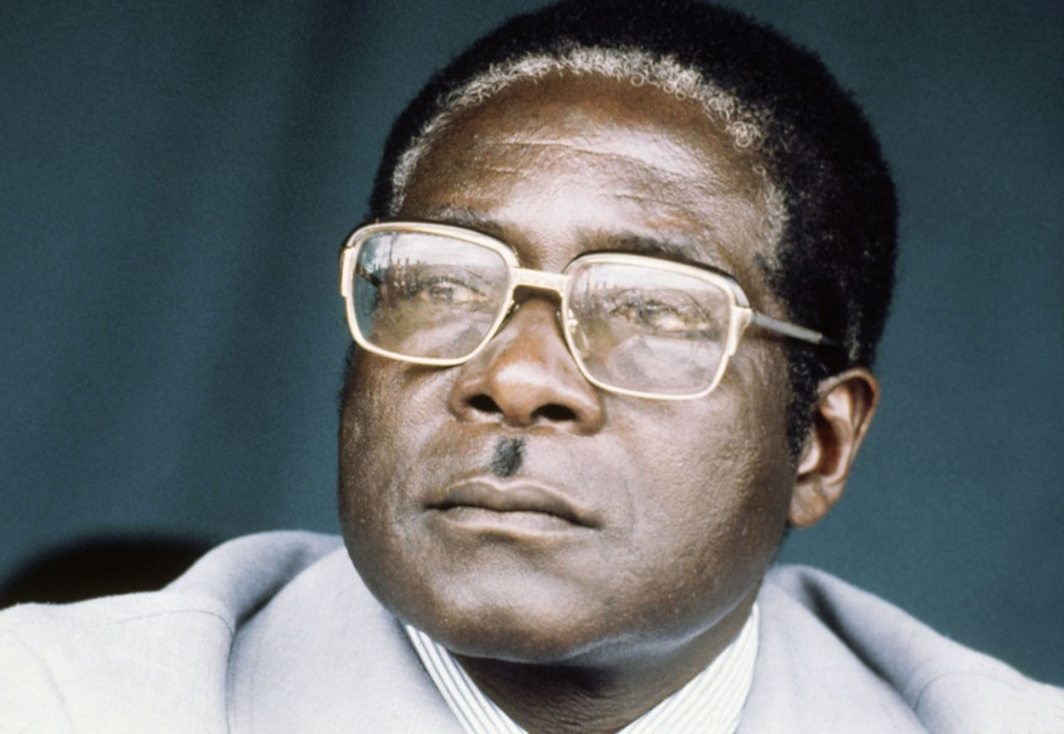
Finally Zimbabwe’s President Robert Mugabe has ended political controversy by resigning from his office, after ruling nearly four decades, on Tuesday evening while impeachment proceedings were underway in the parliament.
His letter of resignation reached speaker of the parliament Jacob Mudenda while he was heading the debate on impeachment. Mugabe wrote, “I Robert Gabriel Mugabe in terms of section 96 of the constitution of Zimbabwe hereby formally tender my resignation … with immediate effect.”
Mugabe wrote a message on tweet indicating he feels free from all responsibilities and is looking for home made food;[/vc_column_text][vc_raw_html]JTNDYmxvY2txdW90ZSUyMGNsYXNzJTNEJTIydHdpdHRlci10d2VldCUyMiUyMGRhdGEtbGFuZyUzRCUyMmVuJTIyJTNFJTNDcCUyMGxhbmclM0QlMjJlbiUyMiUyMGRpciUzRCUyMmx0ciUyMiUzRVJpZ2h0JTJDJTIwdGhhdCUyNiUyMzM5JTNCcyUyMG92ZXIuJTIwQW55b25lJTIwc2VlbiUyMG15JTIwd2lmZSUzRiUyMEklMjBjb3VsZCUyMHVzZSUyMGElMjBob21lJTIwY29va2VkJTIwbWVhbC4lMjAlM0NhJTIwaHJlZiUzRCUyMmh0dHBzJTNBJTJGJTJGdHdpdHRlci5jb20lMkZoYXNodGFnJTJGemltYmFid2UlM0ZzcmMlM0RoYXNoJTI2YW1wJTNCcmVmX3NyYyUzRHR3c3JjJTI1NUV0ZnclMjIlM0UlMjN6aW1iYWJ3ZSUzQyUyRmElM0UlMjAlM0NhJTIwaHJlZiUzRCUyMmh0dHBzJTNBJTJGJTJGdHdpdHRlci5jb20lMkZoYXNodGFnJTJGbXVnYWJlJTNGc3JjJTNEaGFzaCUyNmFtcCUzQnJlZl9zcmMlM0R0d3NyYyUyNTVFdGZ3JTIyJTNFJTIzbXVnYWJlJTNDJTJGYSUzRSUzQyUyRnAlM0UlMjZtZGFzaCUzQiUyMFJvYmVydCUyME11Z2FiZSUyMCUyOCU0MFJHTXVnYWJlJTI5JTIwJTNDYSUyMGhyZWYlM0QlMjJodHRwcyUzQSUyRiUyRnR3aXR0ZXIuY29tJTJGUkdNdWdhYmUlMkZzdGF0dXMlMkY5MzMwMjY3MTk3MDI5MDA3MzYlM0ZyZWZfc3JjJTNEdHdzcmMlMjU1RXRmdyUyMiUzRU5vdmVtYmVyJTIwMjElMkMlMjAyMDE3JTNDJTJGYSUzRSUzQyUyRmJsb2NrcXVvdGUlM0UlMEElM0NzY3JpcHQlMjBhc3luYyUyMHNyYyUzRCUyMmh0dHBzJTNBJTJGJTJGcGxhdGZvcm0udHdpdHRlci5jb20lMkZ3aWRnZXRzLmpzJTIyJTIwY2hhcnNldCUzRCUyMnV0Zi04JTIyJTNFJTNDJTJGc2NyaXB0JTNFJTBB[/vc_raw_html][vc_column_text]Mugabe defied demands for resignation for almost a week after military took over the country’s control which was followed by his expulsion from his own party ZANU-PF.

However, he escaped a more embarrassing departure by sending his papers while parliament had started proceedings to impeach him. The proceedings were immediately suspended.

All parliamentarians, irrespective of their party affiliation were jubilant. They thanked Mugabe for his right move. Cheers were witnessed all over the session.
Zimbabwe: Mugabe bows down to pressure, leaves office after 37-years

People also came out on Harare streets in jubilation as large crowds cheered, danced and sang celebrating Mugabe’s departure for hours.

According to reports people were coming out onto the streets calling this day as Independence Day. Some people did not believe as to what has happened. They expressed their excitement and hoped for a better future. People were seen removing Mugabe’s pictures from their business establishments and offices.

On November 15, Zimbabwe, was suddenly plunged into political uncertainty while Major General SB Moyo, Chief of Staff Logistics took control of the country for targeting assault on “criminals” around Presdent Mugabe. He assured that leader and his family was safe and sound.

Next day nobody came out to support Mugabe against the military takeover. Harare remained calm while offices and schools remained open. Business remained usual in the market.

On November 18, more than ten thousand people participated in huge rally demanding Mugabe’s resignation. This was a rare show of public defiance in country’s history.
Zimbabwe: Mugabe bows down to pressure, leaves office after 37-years

On November 19, Mugabe addressed the nation but did not announce his resignation. It was quite disappointing for the military and the people who participated in massive demonstrations. Despite expulsion by his own ZANU-PF party, Mugabe announced that he will lead the upcoming party’s congress to be held in December.

However, the very next day on November 20, a source close to Mugabe had claimed that the leader was ready to resign. The report indicated that army generals have accepted Mugabe’s demands including full immunity for himself and his wife and permission to keep his private properties in the country.

Mugabe, 93, led Zimbabwe’s movement for independence in 1970s and came to power in 1980. During his 37-year rule he was criticised for repression of the dissidents, alleged election rigging and causing economic collapse of the country.

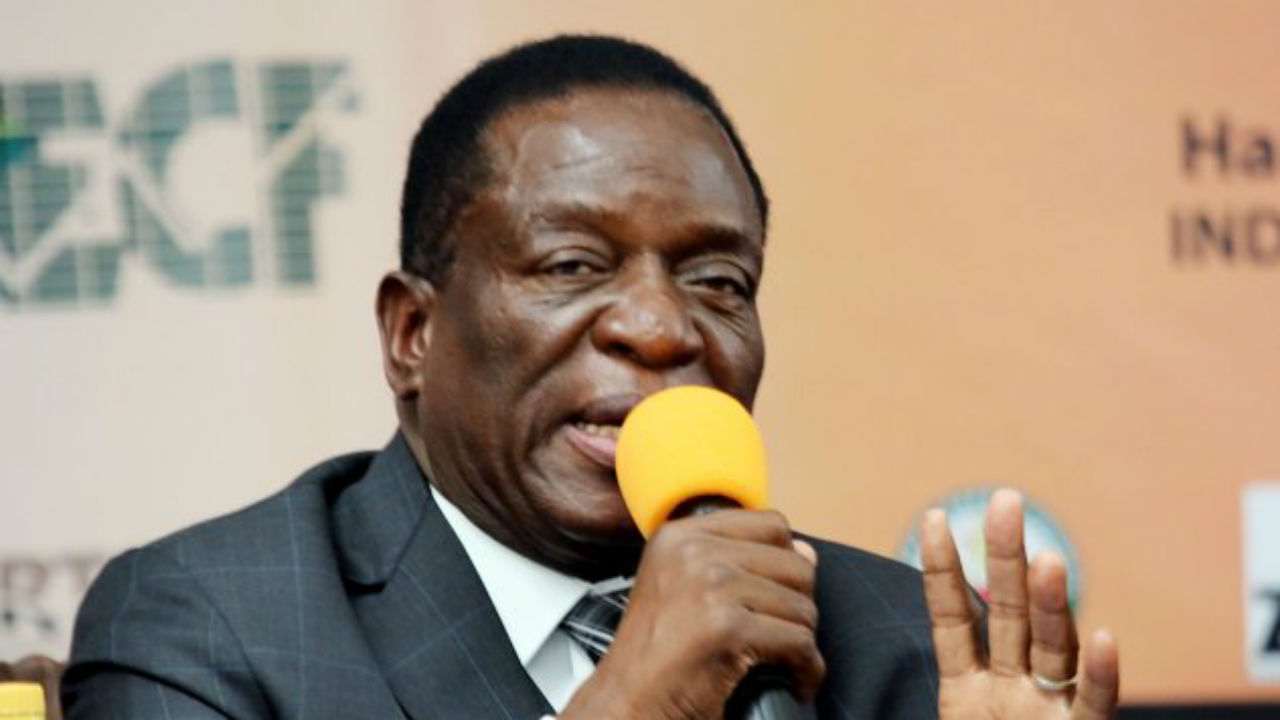
Though Mugabe’s resignation has not specified his successor’s name but it seems almost certain that the ousted Vice President Emmerson Mnangagwa, will lead the country. ZANU-PF had, in its recent meeting anointed him as the next president. He is expected to be sworn in within next two days.[/vc_column_text][/vc_column][/vc_row]

Latest Politics News

Tarique Rahman-led BNP set for landslide win in Bangladesh elections

BNP led by Tarique Rahman has crossed the majority mark in Bangladesh’s national elections, with projections suggesting a two-thirds majority. Jamaat has conceded defeat.

Published

on

Tariq Rehman

The Bangladesh Nationalist Party (BNP), led by Tarique Rahman, is heading towards a decisive victory in Bangladesh’s national elections, with projections indicating a clear parliamentary majority.

Early media projections at 8:00 am local time suggested that the BNP had comfortably crossed the 150-seat mark required to form the government in the 300-member parliament. One projection placed the party at 212 seats, putting it well on course for a two-thirds majority.

The BNP has already declared that it is prepared to form the next government after securing what it described as a majority mandate from voters.

Meanwhile, the Islamist-led alliance headed by Shafiqur Rahman of Jamaat-e-Islami was projected to win 70 seats. Although a significant improvement compared to its previous performance, the tally fell short of its expectations. Shafiqur Rahman conceded defeat and said his party would avoid confrontational opposition politics, adding that it would engage in “positive politics.”

Final results awaited, US extends congratulations

The Election Commission is yet to announce the final results for 299 constituencies where voting took place. An additional 50 seats reserved for women will be allocated based on party lists.

Even before the official declaration, the United States embassy in Dhaka congratulated Tarique Rahman and the BNP, describing the outcome as a “historic victory.”

Political transition under way

Bangladesh’s interim leader Muhammad Yunus is expected to step down once the new government assumes office. The Nobel Peace Prize winner has led the country since the ouster of Sheikh Hasina in August 2024 following a mass student-led uprising.

Yunus’s administration had barred the Awami League from contesting the elections by suspending its registration.

This election marked the first in decades without the participation of two dominant political figures — Sheikh Hasina and former prime minister Khaleda Zia, who passed away in December last year.

After nearly 17 years in exile, Tarique Rahman, 60, returned to Bangladesh following his mother Khaleda Zia’s death and quickly emerged as the frontrunner for the prime minister’s post.

Referendum on reforms held alongside polls

Voters also participated in a referendum on the July National Charter, a reform package negotiated by the Yunus-led interim administration and multiple political parties. The proposals include limiting prime ministers to two terms, forming an upper house of parliament, and restoring a caretaker government system to oversee elections for 90 days to ensure neutrality.

Sheikh Hasina criticised the election process, calling it “deceptive” and alleging low voter turnout. In a statement, she demanded cancellation of what she described as an “illegal and unconstitutional election” and sought Yunus’s resignation.

India watching developments closely

India is closely monitoring the situation due to its strategic and diplomatic interests in the region. Following recent political shifts in Dhaka and concerns over minority safety, New Delhi has emphasised that it will assess the mandate once results are officially declared.

When asked about the polls, MEA spokesperson Randhir Jaiswal said India would wait for the final outcome before commenting further.

With final results expected soon, Bangladesh appears set for a major political transition, with the BNP poised to return to power in a significant comeback.

Continue Reading

Latest world news

Jamaat, BNP supporters clash in Dhaka as Bangladesh votes in 13th parliamentary polls

Clashes erupted in Dhaka’s Mirpur as Bangladesh voted in its 13th parliamentary elections, marking the first polls after Sheikh Hasina’s ouster.

Published

on

bangladesh protest

Clashes broke out between supporters of Jamaat-e-Islami and the Bangladesh Nationalist Party (BNP) in Dhaka’s Mirpur-10 constituency as Bangladesh voted in its 13th parliamentary elections on Thursday.

Jamaat-e-Islami chief Shafiqur Rahman is contesting from the Mirpur-10 seat. Polling is being conducted for 299 seats in the Jatiya Sangsad, Bangladesh’s parliament.

Voting details and electoral process

Voting began at 7.30 am local time (7 am IST) under the first-past-the-post system. Results are expected to start coming in by evening.

Out of the 300 parliamentary constituencies, polling in Sherpur-3 has been cancelled following the death of a candidate. A total of 12.77 crore registered voters are eligible to cast their ballots. The majority mark in the 299-seat contest stands at 150.

In addition to these seats, 50 positions in the Jatiya Sangsad are reserved for women. These members are elected by Members of Parliament through proportional representation using the single transferable vote system.

First polls after Hasina’s ouster

This election marks the first parliamentary contest since former prime minister and Awami League chief Sheikh Hasina was removed from office following massive student protests in August 2024. Her long-time political rival, BNP leader Khaleda Zia, passed away in December the following year.

Hasina and Zia alternated in power from 1991 until Hasina returned to office in 2009. She remained prime minister for over 15 years and 200 days and had won the 2024 elections before being deposed months later.

For the first time in decades, voters are participating in national elections without either of the two dominant political figures shaping the contest.

Changing political landscape

With the Awami League excluded from participating due to its crackdown during the student protests, the political space has shifted significantly.

Tarique Rahman, son of Khaleda Zia, returned to Bangladesh in December after nearly 17 years in exile. The 60-year-old has emerged as a frontrunner for the prime minister’s post, drawing on the support base of the BNP and his late mother.

Jamaat-e-Islami, once allied with the BNP, is now leading its own coalition. It has secured backing from the National Citizen Party, a student and Gen-Z platform that emerged from the anti-Hasina protests.

Referendum on July National Charter

Alongside the general election, voters are also participating in a referendum on the July National Charter. The charter has been agreed upon by the Muhammad Yunus-led interim government and several political parties.

Key proposals in the charter include limiting prime ministers to two terms or 10 years, creating an upper House of parliament, and restoring the caretaker government system to oversee elections for 90 days to ensure free and fair polls.

Regional implications

The outcome of the election is expected to influence regional dynamics involving India, China and Pakistan.

Bangladesh had been seen as closer to India during Sheikh Hasina’s tenure. However, there has been a shift towards Beijing and Islamabad in recent times. Relations between India and Bangladesh have reportedly been tense under the Yunus-led interim arrangement.

Among the two principal contenders, the BNP is considered relatively more inclined towards New Delhi than Jamaat-e-Islami.

India is also monitoring the situation amid reports of attacks on minorities and killings of Hindus following Hasina’s ouster. Authorities have expressed concerns about potential violence on polling day.

Continue Reading

Latest world news

Donald Trump calls India trade deal historic, highlights rise in US coal exports

Donald Trump describes the India trade deal as historic and links it to rising US coal exports, while India reiterates national interest in energy decisions.

Published

on

Donald Trump

US President Donald Trump has described the recent trade agreement with India as “historic”, saying it has contributed to a sharp rise in American coal exports.

Speaking at the Champion of Coal Event on Wednesday, Trump said the United States has strengthened its position as the world’s leading energy producer and is rapidly expanding its footprint as an energy exporter.

He said that trade deals signed in recent months with countries including Japan, South Korea and India have helped increase coal exports from the US.

“America is now the number one energy producer in the world. We’re becoming a massive energy exporter. In just the past few months, we’ve made historic trade deals with Japan, Korea, India, and others to increase our coal exports dramatically. The quality of our coal is supposed to be the finest anywhere in the world,” Trump said.

He also asserted that American coal is considered among the best globally in terms of quality.

India says national interest will guide energy choices

Meanwhile, on February 9, Foreign Secretary Vikram Misri said that India’s energy-related decisions will continue to be guided by national interest.

During a special briefing by the Ministry of External Affairs (MEA), Misri underlined that India’s energy policy is driven by adequate availability, fair pricing and reliable supply. His remarks came amid reports suggesting that India may be reducing its oil imports from Russia.

Clarifying how energy sourcing decisions are made, Misri said procurement is handled by oil companies based on prevailing market conditions. These companies assess availability, risks, pricing and logistical considerations while following internal accountability and fiduciary processes.

“As far as the actual sourcing of energy is concerned, this is undertaken by oil companies, which make decisions based on market conditions. They assess availability, evaluate risks, analyse costs, and follow their internal accountability processes and fiduciary responsibilities. At any given time, there is a complex matrix of considerations, including financial and logistical aspects, that these companies must take into account,” he said.

He added that both government and business decisions in the energy sector would continue to prioritise national interest.

Misri also noted that India remains a net importer of oil and gas and, as a developing economy, must remain mindful of resource availability and the inflationary impact of import dependence.

Continue Reading

Trending

© Copyright 2022 APNLIVE.com