English हिन्दी
Connect with us

India News

Opposition moves no-trust motion against Lok Sabha Speaker Om Birla

The opposition has submitted a notice under Article 94(c) seeking the removal of Lok Sabha Speaker Om Birla, citing alleged partisan conduct and repeated denial of speaking time in the House.

Published

on

Om Birla

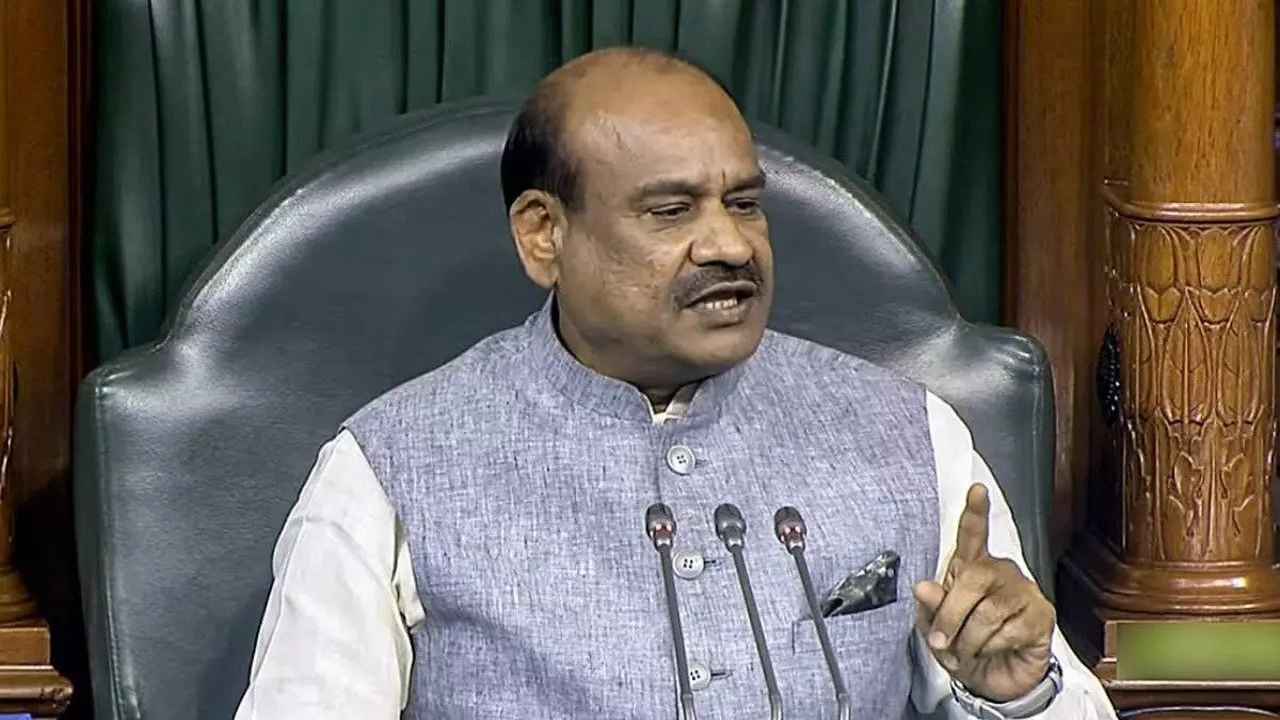
The opposition has submitted a notice seeking the removal of Lok Sabha Speaker Om Birla, accusing him of partisan conduct and repeatedly denying opposition leaders the opportunity to speak in the House.

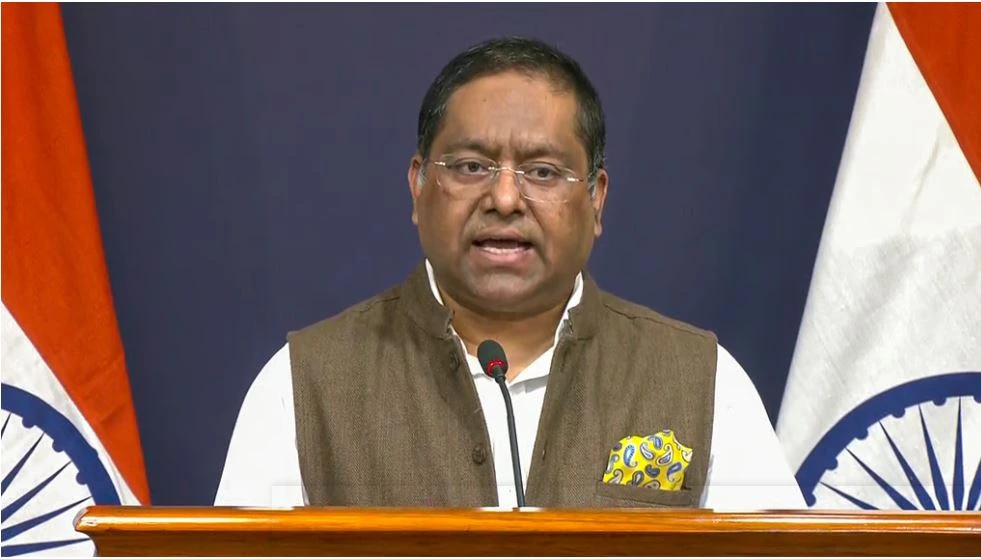
Congress MP Gaurav Gogoi said on Tuesday that the notice was filed under Article 94(c) of the Constitution, which provides for the removal of the Speaker or Deputy Speaker of the Lok Sabha through a resolution passed by a majority of the total membership of the House.

According to parliamentary sources, the notice has been submitted to the Secretary-General of the Lok Sabha and will be examined and processed in accordance with established rules and procedures.

Opposition alleges bias and denial of speaking time

Addressing reporters after filing the notice, Gogoi said the motion expresses no confidence in the Speaker and reflects concerns shared by multiple opposition parties.

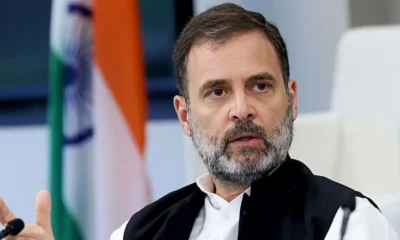
He said the Leader of the Opposition, Congress MP Rahul Gandhi, has been repeatedly denied permission to speak in Parliament, adding that this has been a persistent issue throughout recent sittings of the House.

Opposition parties have accused the Speaker of favouring ruling party members, particularly in matters related to allotment of speaking time and permitting or blocking remarks critical of the government.

Article 94(c) procedure and timeline

Under Article 94(c), a motion for removal of the Speaker requires a minimum 14-day notice period before it can be taken up for consideration in the Lok Sabha.

Given the remaining calendar of the current session, the motion is unlikely to be tabled before the session concludes on February 13. Parliament is scheduled to reconvene for the next session on March 9.

Recent parliamentary standoffs add to tensions

The notice comes amid escalating tensions between the government and the opposition during recent sittings of Parliament.

Last week, Rahul Gandhi was denied permission to read from former Army chief General M M Naravane’s memoir during a discussion related to the 2020 Ladakh border standoff with China. This decision triggered strong protests from opposition members inside the House.

The situation further deteriorated after repeated adjournments of both Houses over the past two weeks, with protests disrupting proceedings and leading to the cancellation of a scheduled Lok Sabha speech by Prime Minister Narendra Modi.

Allegations involving BJP MPs and Speaker’s remarks

Sources said the opposition’s notice highlights three key issues, including the Speaker’s refusal to allow Rahul Gandhi to read from the former Army chief’s book, while BJP MP Nishikant Dubey was permitted to read from books critical of the Congress and the Gandhi family.

During that episode, the presiding officer reportedly asked Dubey to stop, but the BJP MP continued. Opposition parties have questioned the absence of disciplinary action in that instance.

The notice also refers to the Speaker’s remarks alleging that some women opposition MPs had planned to take action against the Prime Minister inside Parliament. Om Birla later said he had advised the Prime Minister not to enter the House after women MPs from the Congress were seen near the Prime Minister’s seat holding banners.

The move to submit a no-trust motion against the Speaker underscores the deepening mistrust between the ruling party and the opposition, with parliamentary functioning increasingly affected by confrontations and protests.

India News

Nirmala Sitharaman reviews AI cybersecurity risks in banking, calls for stronger safeguards

Sitharaman urges banks to boost cybersecurity and adopt real-time intelligence sharing to counter AI threats.

Published

on

Nirmala Sitharaman

Union Finance Minister Nirmala Sitharaman chaired a high-level meeting with bank heads and key stakeholders to assess cybersecurity risks linked to artificial intelligence (AI) in the banking sector.

The meeting comes amid global concerns over advanced AI models that could potentially expose vulnerabilities in financial systems. Authorities discussed how such technologies may be misused to exploit software weaknesses and compromise sensitive banking data.

Banks asked to strengthen cybersecurity frameworks

During the discussions, banks were advised to take pre-emptive measures to secure IT systems, protect customer data, and safeguard financial assets.

The government emphasised the need for robust cybersecurity infrastructure, including stronger monitoring systems and improved incident response protocols. Banks were also encouraged to enhance internal preparedness against evolving digital threats driven by AI technologies.

Focus on real-time threat intelligence sharing

A key takeaway from the meeting was the push to establish a real-time threat intelligence sharing mechanism between banks, regulatory bodies, and cybersecurity agencies such as CERT-In.

This system is expected to help identify emerging risks early and enable faster response across the financial ecosystem, reducing the chances of large-scale disruptions.

Concerns linked to advanced AI models

The review gains significance in light of concerns around advanced AI systems, including models that reportedly highlight vulnerabilities in widely used software environments.

Officials noted that while AI offers significant benefits, it also introduces new challenges, particularly in cybersecurity, requiring coordinated action across institutions.

Government adopts proactive approach

The meeting reflects the government’s broader strategy to stay ahead of technological risks while promoting digital growth.

With increasing adoption of AI in financial services, authorities are focusing on ensuring that innovation is matched with strong safeguards to maintain trust and stability in the banking system.

Continue Reading

India News

Turnout crosses 80% in Bengal and Tamil Nadu till 5 PM in key elections

Bengal phase 1 and Tamil Nadu elections witness strong voter turnout, crossing 80% with largely peaceful polling.

Published

on

Voter Turnout

Polling for the 2026 Assembly elections is underway in West Bengal and Tamil Nadu, with voters turning out in large numbers across key constituencies.

In West Bengal, voting is being held across 152 constituencies, with around 3.6 crore voters expected to participate in this phase. Security arrangements were tightened, and long queues of voters were seen at polling stations from early morning.

Turnout rises steadily through the day

Voter participation increased consistently as polling progressed. By afternoon, turnout had crossed the halfway mark in both states, indicating steady engagement.

As per latest updates till 5 PM, West Bengal recorded 89.92% turnout, while Tamil Nadu reported 82.24% voter participation.

Large electorate participates in phase 1

In West Bengal, nearly 3.6 crore eligible voters took part in the first phase across several districts, including Darjeeling and Jalpaiguri.

Tamil Nadu is witnessing a three-way contest between the DMK-led alliance, the AIADMK-BJP alliance, and actor Vijay’s entry into the political space.

Sporadic incidents reported

Polling has been largely peaceful, though isolated incidents were reported, including an attack on BJP MLA Agnimitra Paul’s car and a boycott reported in parts of Tamil Nadu.

Despite these disruptions, voting continued without major interruptions, and authorities maintained overall control.

High-stakes political contest

The elections are being closely watched as major political parties compete for power. West Bengal is witnessing a closely fought contest, while in Tamil Nadu, key regional rivals are battling for control of the state Assembly.

The outcome is expected to play an important role in shaping the political landscape of both states.

Continue Reading

Education

UP Board result 2026 declared: Class 10 pass rate at 90.42%, class 12 at 80.38%

UP Board 2026 results are out with strong pass rates. Here’s how to check your score and key highlights.

Published

on

Result

The Uttar Pradesh Madhyamik Shiksha Parishad has declared the UP Board Class 10 and Class 12 results for 2026 on April 23 at 4 pm.

This year, more than 52 lakh students registered for the exams, including over 27 lakh candidates in Class 10 and nearly 25 lakh in Class 12. The examinations were conducted between February 18 and March 12 across around 8,000 centres in the state.

Pass percentage and performance trends

The overall performance remains strong:

  • Class 10 pass percentage: 90.42%
  • Class 12 pass percentage: 80.38%

Girls have once again outperformed boys in both classes, continuing the trend seen in previous years.

How to check UP Board result 2026

Students can access their results through official platforms by following these steps:

  • Visit the official website: upmsp.edu.in or upresults.nic.in
  • Click on the result link for Class 10 or Class 12
  • Enter roll number and required details
  • View and download the provisional marksheet

Alternatively, results are also available via DigiLocker and other digital platforms.

What students should do after results

Students are advised to:

  • Download and print the provisional marksheet immediately
  • Collect the original marksheet from their respective schools later
  • Apply for re-evaluation or compartment exams if required

Continue Reading

Trending

© Copyright 2022 APNLIVE.com

Left Menu Icon