English हिन्दी
Connect with us

Latest world news

Pakistan tries to “save face” on its India policy

Published

on

[vc_row][vc_column][vc_column_text]Amidst US pressure to act against terror groups functioning from its soil and normalising relations with India, Pakistan seems to be seriously engaged in formulating its new policy.

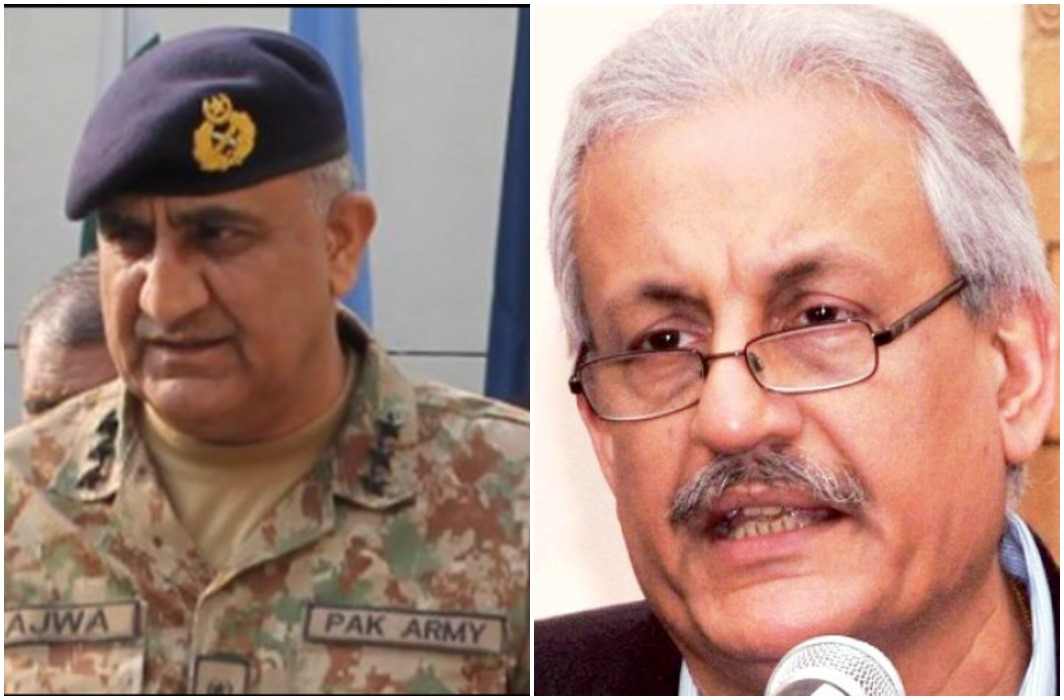
The turbulence was felt on Wednesday when Senate Chairman Mian Raza Rabbani criticised lawmakers for allegedly leaking details of  an in-camera briefing by Army Chief Gen Qamar Javed Bajwa held on Tuesday.

By doing that, Rabbani was trying to wrap Gen Bajwa’s unprecedented submission to law makers asking “to try to improve relations with India” before the senate committee. In this meeting Army Chief had also assured the lawmakers of his full support to their efforts.

Gen Bajwa was quoted saying, “The military is ready to back political leadership’s initiative for normalization of relations with India.”

Some lawmakers had reportedly revealed the details to Dawn, a leading newspaper.

Taking notice of the details made public, Rabbani said that by disclosing the details of the proceedings the lawmakers had violated the sanctity of the upper house as Rule 225 prohibits the publicity of an in camera session.

“If we keep up with the same attitude, no one will be able to take the house into confidence,” the chairman said. He has forwarded the matter to the House Business Advisory Committee to consider the case.

Bajwa, invited by senate chairman Raza Rabbani, was accompanied by ISI chief Naveed Mukhtar and top military officers during the four-and-a-half hour session.

Moreover, Gen Bajwa claimed that a large part of Indian military deployments was against Pakistan and accused India of fomenting instability and terrorism in Pakistan. He stated that New Delhi had developed a strong link with Afghan intelligence agency National Directorate of Security (NDS).

In late August, US President Donald Trump, while unveiling his south Asia policy said, “We can no longer be silent about Pakistan’s safe havens for terrorist organizations, the Taliban, and other groups that pose a threat to the region and beyond.  Pakistan has much to gain from partnering with our effort in Afghanistan.  It has much to lose by continuing to harbor criminals and terrorists.”

Pakistan witnessed lots of protests against Trump’s new policy. Pakistan’s foreign minister cancelled his Washington trip while US Assistant Secretary Alice Wells was asked to defer her Islamabad visit.

In early November Pakistan’s foreign minister Khwaja Asif, while addressing an event at a think tank in Islamabad, had assured that their security forces have dismantled terrorist network across the country and welcomed US mediation for easing its ties with India.

He said that Pakistan has always opted for comprehensive dialogue for a peaceful neighbourhood. Asif shared dais with US Ambassador David Hale after a while on this occasion.

Recently US had warned Pakistan that it could “lose control of its territory” if it does not severe ties with Haqqanis and other terror groups[/vc_column_text][/vc_column][/vc_row]

Latest world news

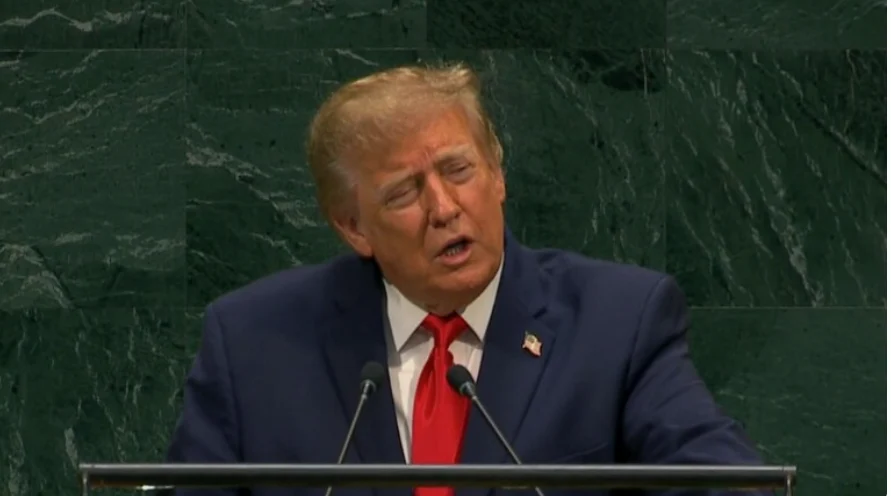
Trump says India-US trade deal likely soon, calls PM Modi a good friend

Donald Trump has expressed confidence that India and the United States will soon finalize a trade agreement, while praising Prime Minister Narendra Modi and highlighting ongoing bilateral negotiations.

Published

on

Donald Trump statement

US President Donald Trump has expressed confidence that the United States and India will reach a trade agreement in the near future, even as discussions continue amid concerns over potential new tariffs. Trump also praised Prime Minister Narendra Modi, describing him as a good friend and highlighting the strong relationship between the two leaders.

Speaking to reporters at the White House, Trump said he expects the two countries to finalize a deal and pointed to his personal rapport with Prime Minister Modi. He said the relationship between Washington and New Delhi remains strong and that ongoing negotiations are moving toward an agreement.

The remarks come shortly after a US trade delegation concluded discussions in India on an interim bilateral trade arrangement. According to Indian officials, the talks were conducted in a cooperative atmosphere, with both sides reaffirming their commitment to a mutually beneficial agreement aimed at strengthening economic ties.

During the interaction, Trump also repeated his criticism of India’s past tariff policies, arguing that India had imposed high duties on American goods for many years. He claimed recent US trade measures were intended to address what he views as an imbalance in the trading relationship.

His comments come days after the US administration proposed additional tariffs on imports from India and several other economies under a separate trade investigation related to forced-labour concerns. The proposal remains under review and has become one of the issues running alongside broader trade negotiations between the two countries.

Despite the tariff dispute, both governments have continued negotiations. Recent statements from officials on both sides suggest that substantial progress has already been made on several aspects of the proposed agreement, with discussions focused on resolving the remaining issues.

The United States is one of India’s largest trading partners, and a bilateral agreement is expected to further expand trade and investment flows between the two countries. Trump’s latest remarks are being seen as a sign that both sides remain committed to finding common ground despite ongoing trade disagreements.

Continue Reading

Latest world news

India considers tax relief to attract foreign investors amid Iran war impact

India is evaluating tax incentives, including a possible capital gains tax exemption on government securities for foreign investors, to support capital inflows amid economic pressures linked to the Iran war.

Published

on

India is considering a set of measures aimed at attracting more foreign investment as the ongoing Iran war continues to create pressure on the country’s economy, according to reports citing government sources. One of the key proposals under discussion is the removal of capital gains tax on investments made by foreign portfolio investors (FPIs) in government securities.

The move comes at a time when geopolitical tensions in West Asia have pushed up global oil prices, weakened investor sentiment and increased pressure on the Indian rupee. India, which imports a significant share of its crude oil requirements, has been among the countries closely monitoring the economic fallout from the conflict.

Government exploring ways to boost capital inflows

Officials are reportedly evaluating tax-related incentives to make Indian debt markets more attractive to overseas investors. The proposed exemption on capital gains from government securities is aimed at encouraging foreign portfolio investment and supporting capital inflows during a period of heightened global uncertainty.

The government is seeking to counter the impact of foreign capital outflows that have intensified amid concerns over the Iran conflict and its implications for energy markets and global economic growth.

Rupee and markets under pressure

Recent weeks have seen increased volatility in financial markets, with foreign investors pulling money out of Indian equities. Analysts have linked part of the pressure on the rupee to rising oil prices and continued overseas investor withdrawals.

Market participants believe that measures aimed at attracting foreign investment into government securities could help improve investor confidence and provide support to the domestic currency.

Broader economic concerns

The Iran war has added to concerns about inflation, economic growth and India’s external sector. Higher energy prices can increase import costs and put pressure on inflation, while sustained foreign capital outflows may affect financial market stability.

While no final decision has been announced, discussions on easing tax rules for foreign investors reflect the government’s efforts to strengthen capital inflows and cushion the economy from external shocks.

Continue Reading

Latest world news

US proposes new tariffs on India over forced labour concerns amid trade negotiations

The United States has proposed additional tariffs on imports from India and 59 other economies following a Section 301 investigation into forced labour-related trade concerns.

Published

on

Donald Trump statement

The United States has proposed imposing additional tariffs on imports from India and 59 other economies after concluding that these countries have not taken sufficient steps to prevent the importation of goods allegedly linked to forced labour. The proposal was announced by the Office of the US Trade Representative (USTR) as part of an investigation conducted under Section 301 of the US Trade Act.

According to the USTR’s findings, India could face an additional tariff of 12.5% on goods exported to the United States. The proposed measure is part of a broader plan targeting 60 economies, with tariff rates ranging between 10% and 12.5% depending on the findings related to each country.

India among countries facing higher tariff proposal

The USTR said India had not effectively enforced restrictions on imports made using forced labour, describing the issue as a burden on US commerce. The agency argued that inadequate enforcement by major trading partners creates unfair competition for American workers and businesses.

While countries including Canada, Mexico, the European Union and the United Kingdom are proposed to face a 10% tariff, India is among a larger group of economies that could be subjected to a 12.5% duty under the recommendation.

Proposal comes during India-US trade discussions

The tariff proposal has emerged while Indian and US officials are engaged in trade negotiations aimed at strengthening economic ties between the two countries. A US delegation led by Assistant USTR Brendan Lynch is currently holding discussions with Indian officials in New Delhi.

India’s Commerce Ministry has indicated that discussions with the United States on the matter are continuing and noted that the proposed tariffs have not yet been finalised. The USTR has invited public comments on the proposal until July 6, with a public hearing scheduled for July 7 before any final decision is taken.

Certain products may remain exempt

The proposed tariffs include exemptions for several categories of goods, including some energy products, pharmaceuticals, rare earth materials and selected agricultural commodities. Additional details regarding sector-specific measures, including proposed textile-related actions, are expected to be released separately.

The latest move follows a Section 301 investigation launched earlier this year into forced labour concerns across global supply chains. Any final decision on imposing the tariffs will be made after the consultation process is completed.

Continue Reading

Trending

© Copyright 2022 APNLIVE.com