
Latest world news
Syria regains control of 30 towns and villages


Aljazeera reports of 110 civilians’ death
In a major development Syrian Army along with allied forces has regained control over 30 towns and villages in Hama, Aleppo, and Idlib provinces, north of Damascus, after eliminating the remnants of Daesh (IS) terrorists.
According to official SANA news agency, the Syrian army continued its operations against Daesh in the isolated pockets in Hama, Aleppo, and Idlb, culminating in regaining control of 29 villages and towns. The agency listed the names of the liberated areas.
The sources in Damascus have claimed that army operations have successfully eliminated large numbers of Daesh terrorists and destroyed weapons and ordinance. It also claimed that engineering units dismantled the landmines and IEDs planted by the terrorists in the liberated villages and towns.

Meanwhile, Aljazeera has reported that Russian and Syrian forces have killed at least 110 civilians over the past 48 hours in Eastern Ghouta, a suburb of Damascus. It says that 30 civilians were killed on Monday and 80 were on Tuesday. At least 22 children and 21 women were among the dead.
“Scenes of entire buildings, housing whole families crashing down with the residents – women, children and men – still inside have become a frequent image,” Abu Salem al-Shami, a resident and activist, told Al Jazeera by phone from Eastern Ghouta, an area that has been under opposition control since 2013.
Syrian government has been critical of Aljazeera and Al-Arabia TV channels coverage from the very beginning of the crisis in 2011. There were certain incidents which were inflated by Arab media, belonging to opponents of Bashar al-Assad regime in the region.
Eastern Ghauta, not very far from Damascus airport, was under Daesh terrorists control and large number of videos and pictures emerged from the town about the heinous killing of civilians and government employees who were allegedly defying Daesh’s so called Islamic Sharia.
The London based Syrian Observatory for Human Rights (SOHR), has claimed that Tuesday marked the “largest massacre in Syria” on Khan Sheikhoun in Idlib province when more than 80 people were killed. Large number of Daesh terrorists and their sympathizers were moved from Aleppo, Raqqa and other areas to Idlib under agreement with Damascus government. Idlib is located in north-western Syria closer to Turkish border.







Latest world news
Putin praises PM Modi, says he has very good ideas on Ukraine war
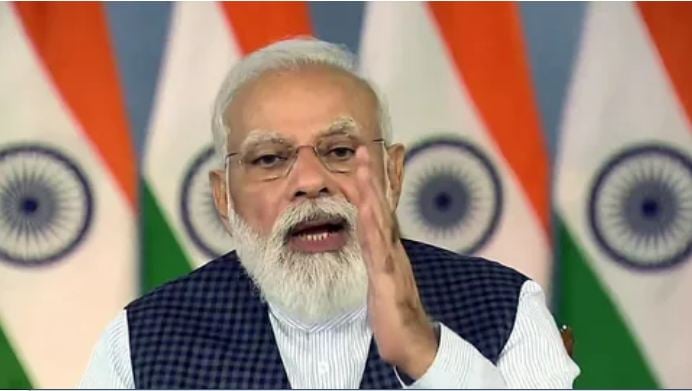
Russian President Vladimir Putin has praised Prime Minister Narendra Modi for repeatedly raising the need to end the Ukraine war, describing his ideas for a settlement as “very good”.


Latest world news
S Jaishankar calls Pakistan a “serial practitioner of terrorism” at UN
S Jaishankar criticised Pakistan at the UN General Assembly, referring to a “serial practitioner of terrorism” and warning against attempts to normalise terrorism.

Latest world news
Trump rejects Iran’s 7-day peace plan, says deal can come after US polls
US President Donald Trump rejected Iran’s seven-day proposal to end hostilities and indicated that a deal could come after the US midterm elections in November.


New UP Congress chief Aradhana Mishra backs stronger alliance with SP

CJP announces October 10 Delhi protest against Gyanesh Kumar

India beat Pakistan by 19 runs to win Asian Games cricket gold

Tariffs, export controls increasingly used for strategic purposes, says PM’s Principal Secretary

Yogi Adityanath transfers over Rs. 148 crore to 4.60 lakh students

Indore voter deletions: 1.36 lakh names, but digital records not maintained
Yogi Adityanath transfers over Rs. 148 crore to 4.60 lakh students
Tariffs, export controls increasingly used for strategic purposes, says PM’s Principal Secretary
India beat Pakistan by 19 runs to win Asian Games cricket gold
New UP Congress chief Aradhana Mishra backs stronger alliance with SP

Afghan Men Try To Hang With The Jet Engine Of The Aircraft in Kabul- Afghanistan News – Kabul News
Trending Top 10 News: 10000 Crore Fine on Flipkart, Apple to Launch Unique Feature, Hdfc Bank Job Ad

Trending Top 10 News: Nokia 6310, Apple sales, Bachpan ka Pyar Video Kid, Dainik Bhaskar IT Raid

Trending Top 10 News: Canada bans Indian flights, Rain in Delhi NCR, AIMIM Twitter hacked, Raj Kundra case

Trending Top 10 News: Shein India, Apple New Service, Pocket Oxygen, Oppo Launched New Phone
-
 India News12 hours ago
New UP Congress chief Aradhana Mishra backs stronger alliance with SP
-
 India News12 hours ago
CJP announces October 10 Delhi protest against Gyanesh Kumar
-
 Cricket news6 hours ago
India beat Pakistan by 19 runs to win Asian Games cricket gold
-
 India News4 hours ago
Tariffs, export controls increasingly used for strategic purposes, says PM’s Principal Secretary
-
 India News4 hours ago
Yogi Adityanath transfers over Rs. 148 crore to 4.60 lakh students
-
India News3 hours ago
Indore voter deletions: 1.36 lakh names, but digital records not maintained
