
Latest world news
India joins UN in condemning terror attacks in Afghanistan


UN chief say terrorists must not succeed in deterring Afghan citizens from taking part in forthcoming elections
India has joined UN in condemning Sunday’s terror attacks in Afghanistan calling them “cowardly” and “barbaric” leading to the deaths of nearly 70 civilians.
The statement issued by Ministry of External Affairs Sunday evening said, “What makes this attack particularly reprehensible is the fact that the terrorists and their backers chose to attack a voters’ registration centre for the upcoming parliamentary and district council elections.”
It further said, “The attack has resulted in the death of Afghans who firmly support and believe in the democratic process to empower themselves and make their voice heard. This is not only an attack on innocent civilians but also an attack on the democratic rights of the Afghan people.”
Read More: India succeeds hurting Pakistan’s trade interest in Afghanistan
At least 57 people were killed in Kabul by a suicide bomber who walked into the crowd at the doorway of an ID distribution centre and detonated his explosives. However, Doha based Al-Jazeera TV network has confirmed the death of 63 people and wounding of hundreds others.
 The targeted election ID centre is situated in Dasht-e-Barchi area, a neighbourhood known for being dominated by Shia Hazara community.
Read More: IS target mosques to create Sunni-Shia violence in Afghanistan
Hours later, six more people, belonging to one family, were killed in Pul-e-Khumri city in Baghlan province, when their vehicle struck a roadside bomb near another voting centre.
The terrorist group Daesh (IS) has taken responsibility for the Kabul attack while no group has owned the attack in Baghlan province so far.
According to The Kabul Times, President Mohammad Ashraf Ghani and country’s Chief Executive Officer (CEO) Abdullah Abdullah have condemned the heinous terrorist attacks in Kabul and Pul-e-Khumri.
Afghan President, in his statement, wished “Allah’s mercy upon those who martyred, speedy recovery to the wounded, and conveyed his deep condolences to the victims’ families”.
Abdullah Abdullah, said in his statement, “Our resolve for fair and transparent election will continue and terrorists won’t win against the will of Afghan people”.
Meanwhile Antonio Guterres, the UN Secretary-General, while condemning the attack said, “They must not be allowed to succeed in deterring Afghan citizens from carrying out their constitutional right to take part in forthcoming elections.”
 Tolo news reports that exact figures on how many people had been waiting at the Kabul voter ID centre were not available but officials said that particular office had in recent days been processing about 100 ID applications a day.
Tolo news further reports that by Sunday mid-day, there had been five attacks in less than a week against the election process. Last week three other attacks took place. Media outlets in such terror-infected countries keep reporting hour by hour because of fragile situation and recurring attacks, sometimes many in a single day.
On Tuesday, unknown armed men attacked a voter registration center in Ghor province and kidnapped three Independent Election Commission (IEC) employees and two policemen. Ghor police spokesman had claimed that said the attackers were Taliban.
On Thursday, two policemen were killed in the ensuing gunfire when unknown armed men attacked them in Jalalabad City. The policemen were guarding a voter registration centre.
On Friday, a police officer was killed by unknown armed men at a voter registration centre in Qala-e-Naw, the center of Badghis province. The officer was deployed to secure the centre.
Prime Minister Narendra Modi had inaugurated the parliament building in Kabul in December 2015. On that occasion he was quoted saying “We must support Afghanistan without timelines because new clouds of extremism are rising, even as the old ones continue to darken our skies”. The construction of building, conducted by India, began in 2009 and missed its completion deadlines at least three times since 2011.
The election for the Afghan parliament is now scheduled to be held on 20 October 2018. They were originally scheduled to be held in October 2016, but due to election reforms and security situation the parliamentary elections were postponed to July 2018 and then to October this year.
Read More: Trump meets Saudi Crown Prince MBS, sells weapons
Most of the terror outfits active in Africa, Middle East, Afghanistan and elsewhere, who are ideologically influenced by Saudi origin Wahabism, oppose democracy. They opposed elections in Iraq after the fall of Saddam Hussein regime in 2003. This was confirmed by a minister in Saudi establishment who reportedly said that more than 2000 Saudi youth had entered into Iraqi territory for “jihad” who will pose danger if they return to the kingdom.
Saudi Arabia is the closest ally of United States and Israel in the region. This has been confirmed repeatedly by officials and leadership in all three countries. Saudi Arabia leads Gulf Cooperation Council (GCC) and Arab League (AL).
Read More: Trump: Arab Monarchs wouldn’t survive for two weeks if US leaves
US President Donald Trump had chosen Saudi Arabia for his maiden foreign visit in May last year when Riyadh managed to gather more than 50 heads of Muslim states as audience. Major arms sale agreements were signed by Donald Trump in Riyadh.
Read More: Saudi Crown Prince recognise Israelis right to their own land








Latest world news
S Jaishankar says India is a natural option for Russia amid Europe tensions
External Affairs Minister S Jaishankar said India remained a natural option for Russia as Moscow increasingly turned towards Asia amid strained relations with Europe. He highlighted the continuity of India-Russia ties and their significance for the balance of power in Asia.


Latest world news
Putin praises PM Modi, says he has very good ideas on Ukraine war
Russian President Vladimir Putin has praised Prime Minister Narendra Modi for repeatedly raising the need to end the Ukraine war, describing his ideas for a settlement as “very good”.

Latest world news
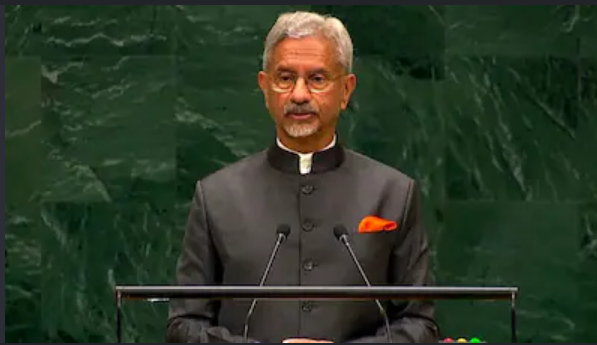
S Jaishankar calls Pakistan a “serial practitioner of terrorism” at UN
S Jaishankar criticised Pakistan at the UN General Assembly, referring to a “serial practitioner of terrorism” and warning against attempts to normalise terrorism.

Dhruv Rathee gets fresh summons in 2018 BJP IT cell video case

Nobody can browbeat judiciary, Chief Justice warns over Rahul Gandhi’s march

India-US trade deal first phase finalised, drafting underway

Election Commission orders voter roll revision in 17 states, UTs

Actor Imran Khan asked to leave India after CJP protest

Delhi Police offers 11-person limit for CJP’s Connaught Place protest
Actor Imran Khan asked to leave India after CJP protest
Election Commission orders voter roll revision in 17 states, UTs
India-US trade deal first phase finalised, drafting underway
Nobody can browbeat judiciary, Chief Justice warns over Rahul Gandhi’s march

Afghan Men Try To Hang With The Jet Engine Of The Aircraft in Kabul- Afghanistan News – Kabul News
Trending Top 10 News: 10000 Crore Fine on Flipkart, Apple to Launch Unique Feature, Hdfc Bank Job Ad

Trending Top 10 News: Nokia 6310, Apple sales, Bachpan ka Pyar Video Kid, Dainik Bhaskar IT Raid

Trending Top 10 News: Canada bans Indian flights, Rain in Delhi NCR, AIMIM Twitter hacked, Raj Kundra case

Trending Top 10 News: Shein India, Apple New Service, Pocket Oxygen, Oppo Launched New Phone
-
 India News15 hours ago
Dhruv Rathee gets fresh summons in 2018 BJP IT cell video case
-
 India News12 hours ago
Nobody can browbeat judiciary, Chief Justice warns over Rahul Gandhi’s march
-
 India News8 hours ago
India-US trade deal first phase finalised, drafting underway
-
 India News5 hours ago
Election Commission orders voter roll revision in 17 states, UTs
-
 India News5 hours ago
Actor Imran Khan asked to leave India after CJP protest
-
 India News4 hours ago
Delhi Police offers 11-person limit for CJP’s Connaught Place protest
