
Latest world news
Malaysia see “terror” angle into Hamas scientist killings


Hamas and father allege Mossad for the act
In another seemingly trans-national terror operation, new facts were emerging in the incident of dramatic killing of a Palestinian scientist Fadi al-Batsh in Malaysian capital Kuala Lumpur on Saturday.
The chief of Kuala Lumpur police Mazlam Lazim says the killing of a Palestinian academic is an “international issue” that is being investigated from all angles.
The Malaysian authorities said an autopsy was carried out Sunday morning on the body of Hamas member Fadi al-Batsh, a day after the drive-by shooting that Hamas and the victim’s family blamed on Israel’s secret agency Mossad.
Fadi al-Batsh, a 35 year old Palestinian academic was shot dead by two gunmen riding a motorcycle while he was heading to mosque in the Kuala Lumpur suburb of Gombak for dawn prayers on Saturday.
His father has accused Israel’s intelligence agency Mossad of being behind the killing and appealed Malaysian authorities to look into who carried out the “assassination” as soon as possible.
“We are investigating all angles. I have to investigate very carefully and deeply. This is an international issue,” police chief said.
Gaza’s ruling Hamas movement said al-Batsh was an important member of the organisation and also accused Mossad intelligence agency of being behind the killing. Hamas called him a “loyal” member who was a “scientist of Palestine’s youth scholars” who made “important contributions” and participated in international forums in the field of energy.
According to Malaysian official news agency Bernama, Deputy Prime Minister Ahmad Zahid Hamidi said that the suspects were believed to be Europeans with links to a foreign intelligence agency.
According to police chief Datuk Seri Mansor Lazim, the two attackers had waited for al-Batsh in front of a residential building in Setapak district for almost 20 minutes, and fired at least 10 bullets, four of which instantly killed him. He was shot in the “body and head”. Police says that they are investigating all angles including “terrorism”.
 On Saturday, Ismail Haniyeh, the former Prime Minister of Palestine told that based on previous assassinations “Mossad is not away from this disgraceful, terrible crime”. He visited the mourning tent outside the house of al-Batsh’s family in Jabaliya in the north of the Gaza Strip.
Meanwhile, Haaretz, a leading Israeli daily reports that Defense Minister Avigdor Lieberman, has suggested that assassination may have been result of a settling of accounts within Islamist group.
However, he did not respond directly when asked if Israel was behind the killing. He said that there’s a tradition at this point among terrorist organisations of blaming Israel for every settling of accounts.










Latest world news
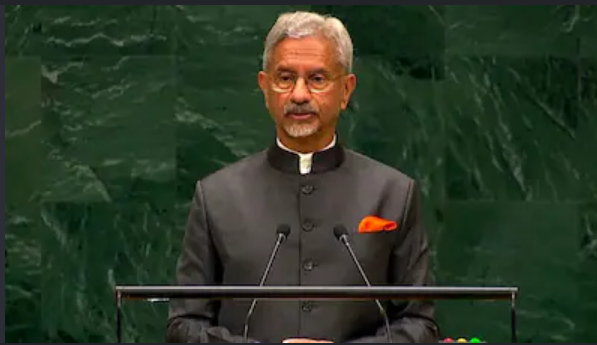
S Jaishankar says India is a natural option for Russia amid Europe tensions
External Affairs Minister S Jaishankar said India remained a natural option for Russia as Moscow increasingly turned towards Asia amid strained relations with Europe. He highlighted the continuity of India-Russia ties and their significance for the balance of power in Asia.


Latest world news
Putin praises PM Modi, says he has very good ideas on Ukraine war
Russian President Vladimir Putin has praised Prime Minister Narendra Modi for repeatedly raising the need to end the Ukraine war, describing his ideas for a settlement as “very good”.

Latest world news
S Jaishankar calls Pakistan a “serial practitioner of terrorism” at UN
S Jaishankar criticised Pakistan at the UN General Assembly, referring to a “serial practitioner of terrorism” and warning against attempts to normalise terrorism.

CJP leaders Saurav Das, Ashutosh Ranka, Ajinkya Shinde sent to 5-day judicial custody

S Jaishankar says India is a natural option for Russia amid Europe tensions

PM Modi speaks to Mark Carney as India and Canada push to strengthen ties

Meerut murder: Muskaan Rastogi and Sahil Shukla get death sentence

Rahul Gandhi joins India Gate protest by Ankita Bhandari’s parents

Supreme Court questions EC over missing records in Sringeri election dispute
Rahul Gandhi joins India Gate protest by Ankita Bhandari’s parents
Meerut murder: Muskaan Rastogi and Sahil Shukla get death sentence
PM Modi speaks to Mark Carney as India and Canada push to strengthen ties
S Jaishankar says India is a natural option for Russia amid Europe tensions

Afghan Men Try To Hang With The Jet Engine Of The Aircraft in Kabul- Afghanistan News – Kabul News
Trending Top 10 News: 10000 Crore Fine on Flipkart, Apple to Launch Unique Feature, Hdfc Bank Job Ad

Trending Top 10 News: Nokia 6310, Apple sales, Bachpan ka Pyar Video Kid, Dainik Bhaskar IT Raid

Trending Top 10 News: Canada bans Indian flights, Rain in Delhi NCR, AIMIM Twitter hacked, Raj Kundra case

Trending Top 10 News: Shein India, Apple New Service, Pocket Oxygen, Oppo Launched New Phone
-
 India News23 hours ago
CJP leaders Saurav Das, Ashutosh Ranka, Ajinkya Shinde sent to 5-day judicial custody
-
 Latest world news23 hours ago
S Jaishankar says India is a natural option for Russia amid Europe tensions
-
 India News22 hours ago
PM Modi speaks to Mark Carney as India and Canada push to strengthen ties
-
 India News12 hours ago
Meerut murder: Muskaan Rastogi and Sahil Shukla get death sentence
-
 India News11 hours ago
Rahul Gandhi joins India Gate protest by Ankita Bhandari’s parents
-
 India News11 hours ago
Supreme Court questions EC over missing records in Sringeri election dispute
