English हिन्दी
Connect with us

Top Stories

Shraddha Walkar case: Delhi Police finds audio clip of Aaftab, Shraddha fight, accused to go for voice sampling test

The police said that the voice sampling test could be considered as big evidence to establish the motive behind the spine-chilling murder.

Published

on

Shraddha Walkar Murder case

In the latest development in the Shraddha Walkar case, the Delhi Police has found an audio clip in which the accused, Aaftab Poonawala, can be heard arguing with her. The Delhi Police described the alleged fight between the two as a key lead in the investigation after they overheard Poonawala using abusive language against her.

As per the Delhi court’s order, Poonawala will be produced before the forensic laboratory of the Central Bureau of Investigation (CBI) today for a voice sampling test. The officials will then compare the recently received audio clip with the voice sample to get a fresh breakthrough in the case.

The police said that the voice sampling test could be considered as big evidence to establish the motive behind the spine-chilling murder.
Read Also: CBI reopens probe against Lalu Prasad Yadav in railway projects corruption case

The accused and his lawyer objected to the court’s order for a voice sample, but the court dismissed them, stating that consent of the accused is only required for tests like brain mapping, polygraph and narco analysis.

Metropolitan Magistrate Vijayshree Rathore said True, a fair trial is right of an accused but it is also true that fair investigation is also required in the larger public interest as the offense cannot escape and the crime cannot go unnoticed merely because the accused is not ready to aid in the investigation. Thus, the application moved by the IO (investigation officer) seeking permission for a voice sampling test of the accused is allowed.

On Friday, the court also extended Aaftab’s judicial custody by 14 days. Aaftab, who appeared before the court via video conferencing, has been under judicial custody since November 26.

Aaftab Poonawala, 28, has been accused of killing his live-in partner Shraddha Walkar, 27, at their flat in South Delhi’s Chhatarpur Pahadi on May 18 this year. He has also been accused of chopping her body into 35 pieces and keeping them in a 300-litre fridge for almost three weeks before dumping them across the city over several days.

Tunisha Sharma suicide case: Mumbai Police discard love jihad angle, reveal Zeeshan-Tunisha broke up 15 days prior to her death

Latest world news

S Jaishankar defends Russian oil imports, says it won’t end Ukraine war

S Jaishankar defended India’s Russian oil purchases, saying the Ukraine war can only be resolved through dialogue, diplomacy and negotiations


Published

on

External Affairs Minister S Jaishankar has defended India’s continued purchase of Russian crude oil, saying that stopping the trade would not bring an end to the war in Ukraine.

Speaking to the media during his official visit to Kyiv, Jaishankar said the conflict, now in its fifth year, can only be resolved through dialogue, diplomacy and negotiations. He was responding to questions about Western pressure on India to reduce its purchases of Russian energy.

“This conflict, which is today in its fifth year, will not be solved because somebody is buying or not buying oil or alumina or minerals or metals or fertiliser,” Jaishankar said. He added that dialogue, diplomacy and negotiation were the way to resolve the conflict.

Jaishankar stresses India’s energy security

Jaishankar also highlighted the challenge of ensuring energy security for India’s 1.4 billion people amid difficult global energy conditions.

He said India respects Ukraine’s perspective on the issue but expects other countries to respect New Delhi’s position as well.

India imports around 88 per cent of its crude oil requirement from overseas. According to the report, about one-third of those imports currently come from Russia.

Western pressure over Russian oil

Jaishankar’s comments came amid continued pressure from Western countries over India’s purchases of Russian crude.

The United States and the United Kingdom have backed the argument that restricting Russia’s energy revenues could reduce the funds available to support its military operations in Ukraine.

Last month, the US Senate passed a bipartisan bill that could allow President Donald Trump to impose tariffs of up to 100 per cent on goods from countries, including India and China, that continue importing Russian oil and gas.

India remains a major buyer of Russian crude

Russia has remained India’s largest source of crude oil despite pressure from Washington. However, Indian imports of Russian crude declined in August after reaching record levels in June and July.

Before Russia’s invasion of Ukraine in February 2022, Russian crude accounted for only around 0.2 per cent of India’s crude imports. After Western countries moved away from Russian oil following the invasion, India emerged as the largest buyer of discounted Russian crude.

India imported around 2.1 million barrels of Russian crude per day in August, according to data cited in the report. That represented more than 40 per cent of India’s crude imports, down from around 2.6 million barrels per day in June and July.

Russian exporters increasingly rely on Asian buyers

Russia has also become more dependent on Asian markets after European sanctions disrupted its traditional energy trade.

Countries such as India and China have emerged as important buyers of Russian crude. Continued demand from Indian refiners has helped Russian exporters maintain significant volumes despite restrictions affecting Western shipping, insurance and financial services.

Jaishankar, meanwhile, maintained that the Ukraine conflict requires a diplomatic solution rather than an attempt to resolve it through decisions by individual countries over oil purchases.

Continue Reading

India News

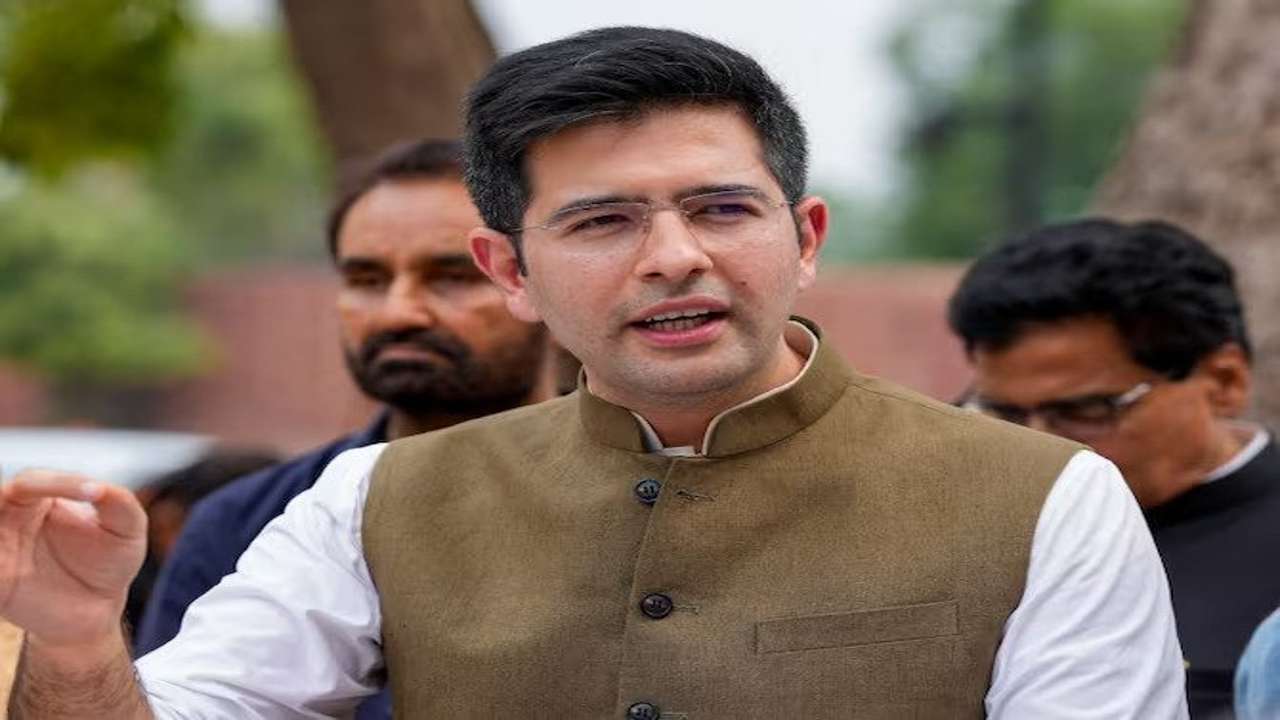
Raghav Chadha marked as shifted in Punjab draft voter rolls, alleges AAP vendetta

Raghav Chadha has alleged political vendetta after his name was marked “shifted” in Punjab’s draft electoral rolls during the SIR exercise.
Published

on

Raghav Chadha

BJP Rajya Sabha MP Raghav Chadha has raised questions after his name was marked as “shifted” in Punjab’s draft electoral rolls prepared during the Special Intensive Revision (SIR) of voter lists.

Chadha, who remains a Rajya Sabha member from Punjab and has his voter registration in Mohali, alleged that the classification was not a routine clerical error and accused the Aam Aadmi Party-led Punjab government of political vendetta.

The electoral rolls currently under discussion are draft lists, with the final rolls scheduled to be published in October 2026.

Raghav Chadha questions voter list classification

Chadha said he was surprised to find his name classified as “shifted” despite being a sitting MP from Punjab.

He questioned how such a classification was made and pointed to the involvement of officials at different stages of the electoral roll revision process. According to Chadha, Booth Level Officers, Assistant Electoral Registration Officers, Electoral Registration Officers and District Election Officers are part of the process.

He alleged that these officials could potentially face political pressure because their transfers and postings are controlled by the state government.

Chadha also referred to Paragraph 4(d) of the Election Commission of India’s SIR guidelines. He said the provision requires public representatives, including MPs and MLAs, whose names are flagged in the electoral database to be included in the draft rolls so that they can participate in the claims and objections process.

He alleged that this provision was not followed in his case.

Punjab CEO seeks report on Chadha’s voter status

Punjab Chief Electoral Officer Anindita Mitra told that she was not aware of any deletion of Chadha’s name from the electoral rolls.

She said a detailed report would be sought from the district election authorities to determine whether his name had actually been deleted and, if so, the reason for the action.

Mitra also pointed out that the claims and objections process is currently underway. September 13 is the deadline for filing appeals over changes or discrepancies in the electoral rolls.

AAP rejects political vendetta allegation

The controversy has also drawn a response from the Aam Aadmi Party.

AAP leader Neel Garg rejected Chadha’s allegation, saying the party had no interest in deleting the vote of any individual. He instead alleged that the issue was being raised by the BJP and referred to the SIR exercises in Bihar and West Bengal.

Chadha joined the BJP in April 2026 along with six other AAP Rajya Sabha MPs.

The dispute comes as Punjab’s electoral rolls undergo revision ahead of the 2027 Assembly elections. Since the claims and objections process is still open, the status of Chadha’s name is subject to the ongoing electoral process.

Continue Reading

India News

SBI defends 7.8% GDP growth, explains controversy over revised data

SBI has defended India’s 7.8% GDP growth for April-June 2026-27, saying comparisons with unrevised figures from the old GDP series are incorrect.
Published

on

State Bank of India researchers have pushed back against questions surrounding India’s latest GDP growth figures, arguing that comparisons based on figures from the old GDP series have created an incorrect picture of economic growth.

India recorded 7.8% GDP growth in the April-June quarter of 2026-27, according to the latest data released on August 31. The figure has prompted debate over the impact of the change in the GDP base year and the subsequent revision of earlier figures.

SBI explains the GDP data revision

Soumya Kanti Ghosh, Group Chief Economic Adviser at SBI and a member of the 16th Finance Commission, said the latest figures need to be assessed using the revised GDP series.

According to Ghosh, the National Statistical Office had used 2011-12 as the GDP base year when it released figures for the April-June quarter of 2025-26 last year. At that time, nominal GDP for the quarter was reported at around Rs 86.1 lakh crore.

Following the introduction of the new GDP series with 2022-23 as the base year, the corresponding figure for the previous year was revised to around Rs 80.4 lakh crore.

The latest nominal GDP for the April-June quarter of 2026-27 stands at Rs 88.3 lakh crore, which forms the basis for the reported 7.8% growth rate.

SBI economist rejects 2.6% growth interpretation

Ghosh said some estimates had arrived at a growth rate of around 2.6% by comparing the latest nominal GDP figure of Rs 88.3 lakh crore with the earlier, unrevised figure of Rs 86.1 lakh crore.

He described this comparison as inappropriate and said the latest figure should instead be compared with the revised figure for the corresponding quarter under the new GDP series.

SBI’s research also argued that GDP revisions are a normal part of the statistical process and are made to incorporate newer information and factors into the estimates.

GDP revisions can move in both directions

Ghosh said revisions to GDP data are not necessarily downward. According to him, historical quarterly data show that revisions can occur in both upward and downward directions, although they have mostly been upward.

He also cited an earlier revision in which GDP growth under the old series was initially estimated at 9.2% before being revised to 7.2%.

Ghosh said GDP figures should be examined carefully and rigorously rather than being rejected simply because the revised numbers differ from earlier estimates.

The SBI research comes amid questions raised by former Reserve Bank of India governor Raghuram Rajan, former finance secretary Subhash Chandra Garg and some Congress leaders over the latest GDP numbers.

Continue Reading

Trending

© Copyright 2022 APNLIVE.com