English हिन्दी
Connect with us

Gadgets

India at the bottom in environment performance index, 177th among 180 countries: CSE

Published

on

India at the bottom || 177th among 180 countries || in environment performance index: CSE

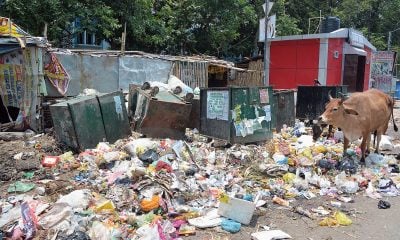
Playing the host nation on World Environment Day and getting praise for its contribution in fighting climate change, there was a rude shock that came as a reality check: India’s poor performance in tackling environmental problems was brought out in a report that showed that the country has, in fact, slid in ratings.

Failing to improve its air quality, protect biodiversity, and cut greenhouse gas emissions, India stands at the bottom of the Global Environment Performance Index (EPI) rankings.

In 2016, the country had ranked 141 out of 180 countries. In 2018, according to the State of India’s Environment (SoE) 2018 in Figures, it has slipped to the 177th position. The State of India’s Environment (SoE) report was put together by Down To Earth magazine, which Centre for Science and Environment (CSE) helps publish.

Air quality: India scored 5.75 out of 100 in air quality. India’s disappointing performance and the gravity of the situation is further highlighted when compared with countries such as Switzerland and Japan which have scored over 90, said the SoE report.

Delhi is always in the news for its poor air quality. However, an analysis of the winter (November and December 2017) and summer (April-May 27, 2018) air quality levels of 10 state capital cities shows that they too are in the dangerous grip of a multi-pollutant crisis, and are currently facing a severe health challenge.

While in the summer months Delhi had 65 per cent days when poor and very poor air quality was recorded, in winters this percentage increased to 85. On only about 1 per cent of the monitored days in summer months was the air quality observed to be satisfactory in the city.

Lucknow fared much worse in the winter months, where very poor air quality was recorded on over 70 per cent of the monitored days and severe levels of air pollution witnessed on around 24 per cent of the days.

Thiruvananthapuram, Bengaluru and Chennai, on the other hand, experienced comparatively better air quality.

Moreover, there is serious lack of data on air quality. Said Anumita Roychowdhury, who has headed CSE’s air pollution control team for many years: “The SoE in Figures finds a lack of data on air quality in several Indian cities. Even in places where pollution levels are being monitored, gaps in data pose a serious challenge to successful implementation of the National Clean Air Programme (NCAP).”

Water: The Ministry of Drinking Water and Sanitation launched the Har Ghar Jal Yojana to provide piped water supply to every household by 2030 to meet the Sustainable Development Goals. However, in 18 Indian states and UTs, over 82 per cent rural households, which is the national average, remain without a tapped connection.

Worse, according to Suresh Rohilla, the head of CSE’s water management team, “The dependency on groundwater has increased between 2004 and 2013.”

SoE in Figures says that 70,736 rural habitats with a combined population of 47.4 million live on contaminated groundwater. Traces of new contaminants are now being reported in the country, suggesting a steady decline in the quality of groundwater. 

Sanitation: Under the Swachh Bharat scheme, 72.1 million individual household toilets have been constructed; however, little has been done to popularise their use — rendering the scheme ineffective. Funds allocated for spreading awareness among people, crucial for success in rural areas, have been lying unused.

The situation in urban areas is much worse, according to CSE’s water and sanitation experts — with close to a million households waiting for over six months for toilets to be constructed.

Energy: India is lagging seriously behind in meeting targets of renewable energy, said the report. After missing its targets for two consecutive years, the Centre, it appears, is fast losing interest in meeting its ambitious target of installing 175 gigawatt (GW) of renewable energy by 2022. The poor performance will also hit the job-creation potential of the scheme which was estimated to be over 300,000. Only 9 per cent of the roof-top solar target has been met so far.

On the other hand, even as the Centre’s Ujjwala Yojana has covered all states, LPG distribution has taken place significantly in only 15 states. And even here, a substantial portion of rural population relies on unhealthy firewood for cooking.

Forests: While India’s total forest cover has registered a 0.2 per cent increase between 2015 and 2017, there are some serious concerns over the growth pattern.

Says Richard Mahapatra, managing editor, Down To Earth: “The bulk of the increase has taken place in the open forest category, which includes commercial plantations – which is worrying. And this has happened at the cost of moderately dense forest category, which is normally the area close to human habitations.”

When it comes to forest clearances, in 2017, the Central government, on an average, gave clearances to close to six developmental projects a day in forest areas. Overall, there has been a 146 per cent increase in forestland diversion for non-forest activities in the past one year with maximum diversions recorded in Madhya Pradesh, Telangana and Odisha, which together accounted for 54 per cent of the total diverted area.

Adding to the woe is the increasing number of forest fires in the country – which have gone up by 125 per cent within just two years (2015-2017). The government, in this regard, has not only failed to utilise funds earmarked to contain forest fires but has also missed two NGT deadlines for coming up with a national policy to fight the fires.

Environmental crimes: Since the National Green Tribunal (NGT) was set up in 2010, the number of environment-related police cases seem to be gradually decreasing. However, the number of court cases has drastically gone up.

In 2016, the number of registered environment-related crimes stood at 4,732, while 1,413 cases were pending police investigation. Cases pending in the courts were at a staggering 21,145.  This made up for 86 per cent of the total environment-related offences in the country. With the NGT forced to close its regional benches in 2018 due to staff crunch, the situation is likely to worsen.

The number of cases being disposed per day stands at 9.3 on an average, according to 2016 data. At this pace, it will take six years for the court to finish the existing backlog. To make matters worse, 15 states registered an increase in environmental crimes between 2015-16 — Uttar Pradesh, Rajasthan, Maharashtra and Assam were among the states that witnessed the highest number of registered environmental crimes.

Gadgets

Samsung Galaxy S25 FE India price leak suggests launch similar to S24 FE

Samsung Galaxy S25 FE India price has surfaced online, hinting at a similar launch price as the S24 FE. The phone brings a 6.7-inch AMOLED display, Exynos 2400 chip, triple rear cameras, and a 4,900mAh battery.

Published

on

Samsung Galaxy S25 FE, which was unveiled globally on September 4, is yet to receive official pricing for the Indian market. However, a fresh leak indicates that the handset could debut in India at the same price point as its predecessor, the Galaxy S24 FE.

Expected price and availability in India

According to tipster Yogesh Brar, the Samsung Galaxy S25 FE may be priced at ₹59,999 for the base 8GB RAM + 128GB storage variant in India. This matches the launch price of last year’s Galaxy S24 FE, which started at ₹59,999 for the same configuration. The higher 8GB RAM + 256GB model of the S24 FE was earlier priced at ₹65,999.

Globally, the Galaxy S25 FE has been introduced at $650 (around ₹58,000) for the base variant and $710 (around ₹63,000) for the 8GB + 256GB version. In India, the smartphone is expected to go on sale in October, similar to last year’s rollout schedule for the S24 FE.

The phone is offered in Icyblue, Jetblack, Navy, and White colour options.

Key specifications

  • Display: 6.7-inch full-HD+ Dynamic AMOLED 2X, 120Hz refresh rate, 1,900 nits peak brightness, Vision Booster, Gorilla Glass Victus+ protection.
  • Processor: Exynos 2400 SoC.
  • RAM & Storage: 8GB RAM standard, up to 512GB UFS 4.0 storage.
  • Rear Cameras: 50MP wide-angle + 8MP telephoto + 12MP ultrawide; 8K video recording at 30fps.
  • Front Camera: 12MP selfie shooter.
  • Battery: 4,900mAh with 45W wired and 15W wireless charging.
  • Build: 7.4mm thick, 190g weight, IP68-rated water and dust resistance.
  • Cooling: 10% larger vapour chamber compared to the Galaxy S24 FE.

Continue Reading

Gadgets

iPhone 17 series launched in India: Price starts at Rs 82,900, goes up to Rs 2.29 lakh

Apple has launched the iPhone 17 series in India with prices starting at Rs 82,900. Pre-booking begins on 12 September, and the phones will be available from 19 September.

Published

on

iphone 17

Apple has officially launched its much-awaited iPhone 17 series in India, introducing four models – iPhone 17, iPhone 17 Air, iPhone 17 Pro and iPhone 17 Pro Max. The series comes with advanced features, multiple storage variants, and a starting price of Rs 82,900. Pre-bookings will open from 12 September, while sales begin on 19 September.

iPhone 17 and iPhone 17 Air price in India

The standard iPhone 17 is priced at Rs 82,900 for the 256GB base variant. Meanwhile, the iPhone 17 Air, designed with a slimmer and more premium look, starts at Rs 1,19,900.

Key features of iPhone 17

  • Display: 6.3-inch Super Retina XDR OLED, 120Hz ProMotion, up to 3000 nits brightness with Ceramic Shield 2 protection.
  • Camera: Dual 48MP setup (Fusion main + Ultra Wide) with 2X telephoto capability, along with a new Centre Stage front camera.
  • Performance: Powered by the A19 chipset, runs on iOS 26, 40% faster than iPhone 16.
  • Battery: Up to 8 hours longer backup compared to its predecessor.

iPhone 17 Pro and Pro Max price in India

The premium segment begins with iPhone 17 Pro priced at Rs 1,34,900, while the iPhone 17 Pro Max starts at Rs 1,49,900. The top-end Pro Max with the highest storage option goes up to Rs 2,29,900. These models are available in Cosmic Orange, Deep Blue, and Silver colours.

Key features of Pro models

  • Display: iPhone 17 Pro with 6.3-inch and Pro Max with 6.9-inch Super Retina XDR OLED, both featuring 120Hz refresh rate and 3000 nits brightness.
  • Chipset: New A19 Pro with Vapour Chamber Cooling for heavy usage.
  • Camera: Triple 48MP system including an advanced telephoto lens with 8X optical zoom and 40X digital zoom, plus an 18MP front camera.
  • Battery & Charging: Best-ever battery backup on Pro Max, with USB-C fast charging – 50% charge in just 20 minutes.

Why the iPhone 17 series stands out

The new iPhones not only bring improved design and performance but also integrate Apple Intelligence AI features for messaging, calls and visual tools.

Offers and EMI options

  • No-cost EMI: Available for up to 6 months.
  • Cashback: ICICI Bank users can avail up to Rs 5,000 instant cashback.
  • For instance, buying the iPhone 17 Pro Max (Rs 1,49,900) on a 6-month no-cost EMI plan brings effective savings of Rs 11,525, including cashback and EMI benefits.

Continue Reading

Gadgets

Lava Yuva Smart 2 launched in India with 5,000mAh battery and dual cameras

Lava has launched the Yuva Smart 2 in India with a 5,000mAh battery, dual cameras, Android 15 Go Edition, and a price tag of Rs 6,099.

Published

on

Lava phone

Lava has introduced its latest entry-level smartphone, the Lava Yuva Smart 2, in India. Priced at Rs 6,099, the device offers a large display, a massive battery, and dual cameras, making it a budget-friendly choice for first-time smartphone buyers.

Lava Yuva Smart 2 price and availability

The Yuva Smart 2 is priced at Rs 6,099 for the single 3GB RAM + 64GB storage variant. It will be available in Crystal Blue and Crystal Gold colour options. Lava has announced doorstep service across India, though official sale dates are yet to be disclosed.

Lava Yuva Smart 2 specifications

The smartphone runs on Android 15 Go Edition and is powered by the Unisoc 9863a octa-core chipset. It comes with 3GB RAM (expandable up to 6GB with virtual RAM) and 64GB internal storage.

It features a 6.75-inch HD+ display with a 90Hz refresh rate. For photography, the phone sports a 13MP AI dual rear camera housed in a square module, along with a 5MP front camera for selfies.

Backed by a 5,000mAh battery with 10W wired charging via USB Type-C, the device also includes a side-mounted fingerprint scanner and face unlock support for security.

Continue Reading

Trending

© Copyright 2022 APNLIVE.com