English हिन्दी
Connect with us

India News

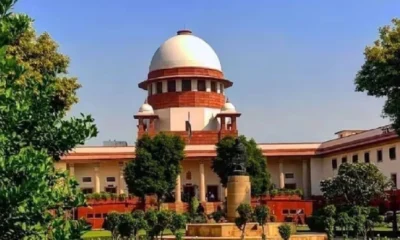
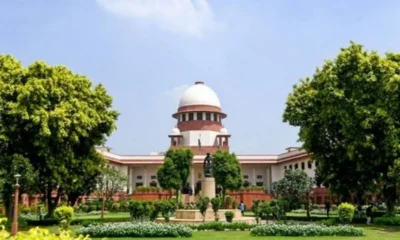
Supreme Court to Delhi LG: You say you have powers, you are Superman, but have no responsibility

Published

on

Supreme Court to Delhi LG: You say you have powers, you are Superman, but have no responsibility

Claiming to be Delhi’s de facto ruler with all powers put Delhi Lt Governor Anil Baijal in the Supreme Court’s line of fire on Thursday, July 12, with the top court slamming him for not doing anything to rid the city of mountains of garbage.

The LG had told the SC that garbage disposal in the city was the job of the civic body and he was in charge of monitoring it. The SC, which is looking into the solid waste management issue across the country, had asked who was responsible for the “mountains of garbage” that were slowly burying the city, the Centre or the Delhi government.

“You (the Lieutenant Governor) say ‘I have power, I am a Superman’. But you don’t do anything,” the judges said after amicus curiae Colin Gonsalves said no one from the LG office has attended any meeting on the clean-up at three main landfill sites of Delhi at Gazipur, Okhla and Bhalaswa.

The court said the LG had the power to clear the mess but was not exercising it. In what is likely to be seen as a further boost for Delhi Chief Minister Arvind Kejriwal, the court said the CM cannot be blamed.

“You can’t drag the CM into this because LG has said he has the authority. It seems he (LG) thinks everything is honky dory,” the bench told Additional Solicitor General Pinky Anand who was arguing the matter.

“He (LG) says he has the power, but he won’t exercise it. How many directions has he issued? How long will you take to clear this mess?” the court asked on Thursday.

“You say the corporations are answerable to you,” the court said. “Tell us within how much time will you clear the sites. Why should the corporations be asked? You are the LG. You should have found out by now.”

Additional Solicitor General Pinky Anand refused to commit to a timeline to clean the garbage, the Hindustan Times reported. She told the court she will revert after getting instructions.

While the Aam Aadmi Party leads the government in Delhi, all the civic bodies are under the control of the Bharatiya Janata Party. In the last few years, there have been several instances of sanitation workers going on strike for long periods to protest against unpaid wages among other things. AAP leaders have blamed the BJP-led municipal corporations for the garbage problem while the BJP has accused the Delhi government of “playing politics” and not releasing funds.

The court’s rebuke comes days after Delhi Chief Minister Arvind Kejriwal had accused the LG of fueling what he called a strike by the IAS officers of Delhi to hobble the elected government. The officers, he said were repeatedly skipping meetings chaired by ministers, severely affecting administration. The matter was partly solved with a judgment from the top court, which said the centre’s representative in Delhi has control only over land, police and public order.

In March, the top court had said that the day is not far when garbage mounds at the Ghazipur landfill will compete with the height of 73-metre-high Qutab Minar and red beacon lights will have to be used to ward off aircraft flying over it.

“There is no change in the ground level from 2015 since we started monitoring the case. Another three years will go,” said a bench of Justices Justices Madan B Lokur and Deepak Gupta.

This comes two days after the apex court said that Delhi was getting buried under garbage while Mumbai was sinking underwater in the monsoon. The government, the SC said, was doing nothing. “You see, Delhi is getting buried under mountain loads of garbage and Mumbai is sinking. But yet, the government does not do anything. When the courts intervene, we are attacked for judicial activism. We are given lectures on separation of powers and encroachment of jurisdiction,” it said.

The bench was annoyed after it was informed that around 13 states and several Union Territories have not yet formulated their policy for a solid waste management strategy. The top court slapped a fine of Rs one lakh each on Bihar, Chhattisgarh, Goa, Himachal Pradesh, Jammu and Kashmir, West Bengal, Kerala, Karnataka, Meghalaya, Punjab, Lakshadweep, and Puducherry for not filing the affidavit despite earlier directions. The bench also slapped a fine of Rs two lakh each on “remaining defaulting states/UTs” whose lawyers were also not present in the courtroom during the hearing, without naming these states.

India News

Four militants killed as rival Naga groups clash in Manipur village

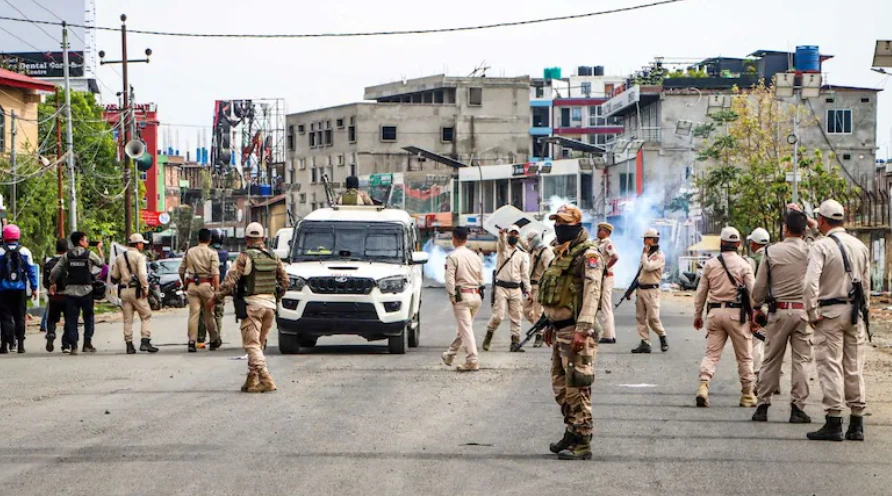
Four militants were killed in a gunfight between suspected rival Naga groups at Taodaijang village in Manipur’s Noney district on Wednesday.

Published

on

Manipur violence

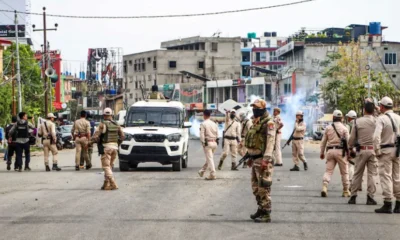
At least four militants were killed in a gunfight between suspected rival Naga militant groups in Manipur’s Noney district on Wednesday, November 4.

The exchange of fire took place at Taodaijang village in the Khoupum area of the Naga-majority district. According to officials, the cadres involved were suspected to belong to rival Naga militant outfits, including the Zeliangrong United Front-Jenchui (ZUF-J) and the Zeliangrong United Front-Kamson (ZUF-K).

Initial reports indicated that the gunfight continued for several hours, leaving three cadres of ZUF-J and one cadre of ZUF-K dead.

The bodies of the deceased militants were subsequently recovered by local residents.

Residents appeal to armed groups to stop firing

Following the gunfight, local residents, including women, reached the spot in an attempt to prevent further violence between the rival groups.

They also used a public address system to appeal to the armed cadres to stop firing and prevent the situation from escalating further.

Further details about the circumstances surrounding the clash were awaited.

Manipur government reviews security situation

In a separate development, Manipur Chief Minister Yumnam Khemchand Singh directed senior security officials to identify active armed groups suspected of involvement in recent incidents of violence in the state.

The directive excluded groups engaged in peace talks with the state government.

The Chief Minister issued the instructions during a review meeting on the state’s law and order situation on Tuesday night.

He also asked security agencies, including the Army and central paramilitary forces, to submit a detailed report on the involvement of the suspected groups.

The Chief Minister said the state Cabinet could consider declaring such groups unlawful if their involvement in violence against innocent civilians was established.

He also emphasised that necessary action would be initiated against groups continuing to perpetrate violence against civilians.

Continue Reading

India News

Agnipath scheme gets 2-year extension for Agniveers, tenure may rise to 6 years

The Centre has introduced a two-year extension for the remaining 75% of Agniveers under the Agnipath scheme, creating another opportunity for them to seek enrolment in the regular armed forces.

Published

on

The Centre has introduced a significant change to the Agnipath recruitment scheme, offering a two-year extension to Agniveers who were earlier expected to leave the armed forces after completing their initial four-year service.

Chief of Defence Staff (CDS) General NS Raja Subramani announced the decision on Wednesday following a Union Cabinet meeting. Under the revised arrangement, the 75% of Agniveers who were not initially selected for absorption into the regular armed forces will be offered an additional two-year engagement period.

The development creates another opportunity for these personnel to continue serving in the armed forces beyond their original four-year tenure.

What changes under the revised Agnipath scheme?

Under the original Agnipath framework, Agniveers were recruited for a four-year service period, including training. At the end of this tenure, up to 25% of each batch could be selected for permanent enrolment into the regular armed forces, while the remaining 75% were expected to return to civilian life.

The revised arrangement introduces an additional two-year engagement for the latter group. This means their potential service period could increase from four to six years.

The extension also creates another opportunity for Agniveers to seek enrolment into the regular armed forces after completing the additional two years.

What happens after the additional two years?

According to General NS Raja Subramani, Agniveers completing the extended engagement period and willing to continue serving will be considered for enrolment in the regular armed forces.

Their selection will be based on objective criteria.

This creates an additional pathway for those who are not absorbed into the regular forces after their initial four-year tenure. However, the revised arrangement does not mean that every Agniveer will automatically receive permanent enrolment.

Why has the decision been taken now?

The announcement comes as the first batch of Agniveers recruited under the scheme approaches the completion of its initial four-year service period.

The Agnipath scheme was introduced on June 14, 2022, to recruit personnel into the Indian Army, Navy and Air Force for a fixed four-year engagement.

General Raja Subramani said the scheme had been undergoing periodic reviews, with the performance of Agniveers being continuously evaluated. He also indicated that feedback on their performance had been very positive.

The latest Cabinet decision creates an additional route for retaining personnel beyond the initial engagement period.

What was the original Agnipath arrangement?

Under the original framework, the armed forces could retain up to 25% of Agniveers in the regular cadre after their four-year service period, subject to selection.

The remaining 75% were to complete their engagement and transition to civilian life.

With the latest revision, this group will receive an additional two-year engagement opportunity before being considered for enrolment into the regular armed forces under the prescribed selection criteria.

The change therefore modifies the earlier arrangement by providing an additional opportunity for Agniveers to continue their military careers.

Continue Reading

India News

Hardeep Singh Puri set to win Rajya Sabha bypoll unopposed

Union Minister Hardeep Singh Puri is set to be elected unopposed to the Rajya Sabha from Madhya Pradesh after the returning officer rejected the nomination papers of two independent candidates.

Published

on

Hardeep Puri

Union Petroleum Minister Hardeep Singh Puri is set to enter the Rajya Sabha unopposed from Madhya Pradesh after the nomination papers of two independent candidates were rejected during scrutiny on Tuesday.

The two candidates whose nominations were rejected were Kante Sayanna and Rajkumar Lohani, the latter being backed by the Congress. Their rejection leaves Puri as the only candidate in the contest for the vacant Rajya Sabha seat.

According to an official, the result will be announced on November 5, which is also the last date for withdrawal of nominations.

The Returning Officer, Umesh Sharma, examined the nomination papers on the last day of scrutiny and rejected the two independent candidates’ applications.

Objections raised against Hardeep Puri’s nomination

The nomination papers submitted by Puri also faced objections from the two independent candidates and Congress leader Hemant Katare.

They questioned the validity and completeness of Puri’s affidavit filed in Form 26, raising concerns over whether the mandatory details had been properly furnished.

However, after examining the objections, Returning Officer Umesh Sharma concluded that Puri had not violated any requirements under the Representation of the People Act.

Sharma stated in his order that no defect had been found in Puri’s nomination papers that could justify their rejection.

Following the decision, Katare and Congress MLA Atif Aqeel announced that they would approach the court against the order.

Calling the decision an attack on Indian democracy, the Congress leaders said in a statement that Puri’s nomination should have been rejected despite what they described as significant errors.

Why the Madhya Pradesh Rajya Sabha seat fell vacant

The by-election was necessitated by the resignation of Union Minister L Murugan, which left a Rajya Sabha seat vacant in Madhya Pradesh.

With the nomination papers of both independent candidates rejected and Puri’s nomination cleared, the Union minister is set to be elected unopposed.

The final announcement is expected on November 5, the last day for withdrawal of nominations.

Continue Reading

Trending

© Copyright 2022 APNLIVE.com