English हिन्दी
Connect with us

India News

ED arrests Chhattisgarh Excise Department official in Rs 2,000 liquor scam

The probe agency has also seized his laptop and mobile phone and will also analyze the seized gadgets for further investigation.

Published

on

ED arrests Chhattisgarh Excise Department official

The Enforcement Directorate (ED) on Monday arrested the special secretary of the Chhattisgarh Excise Department in a money laundering case. The probe agency arrested Arunpati Tripathi on Friday from New Delhi.

The ED has sent Arunpati Tripathi to three-day custody in a case linked to the alleged Rs 2,000 crore liquor syndicate scam in Chhattisgarh. Tripathi is the first government official to be arrested in the case.

Tripathi, an Indian Telecom Service officer, is posted in Raipur on deputation as special secretary of the excise department. He is also the Managing Director of the Chhattisgarh State Marketing Corporation Limited (which controls retail sales of all kinds of alcoholic beverages in the state).

The investigation agency brought him before a special Prevention of Money Laundering Act (PMLA) court, which remanded him in the custody of the ED for three days.

Read Also: Gurugram woman accuses house help of secretly filming her, blackmailing for Rs 2 lakh

The probe agency’s lawyer said the scheme entailed selectively granting permits to liquor manufacturers in exchange for a commission, distributing the acquired funds, and collecting commission from liquor shops.

The agency told the court that there was enough evidence against Tripathi on all three counts, the first part deals with giving a selective license to liquor manufacturers and collecting commission while the other parts are about commission collection and distribution as well as about how to collect commission from liquor shops.

The probe agency has also seized his laptop and mobile phone and will also analyze the seized gadgets for further investigation.

Tripathi will be produced again in the court along with co-accused Anwar Dhebar, Nitesh Purohit and Trilok Singh Dhillon alias Pappu (who were arrested earlier) on May 15.

Basavaraj Bommai resigns as Karnataka CM, takes responsibility for party’s defeat

Karnataka election results 2023: PM Modi congratulates Congress, promises to serve Karnataka better

India News

Delhi-NCR wakes up to heavy rain, thunderstorms and waterlogging

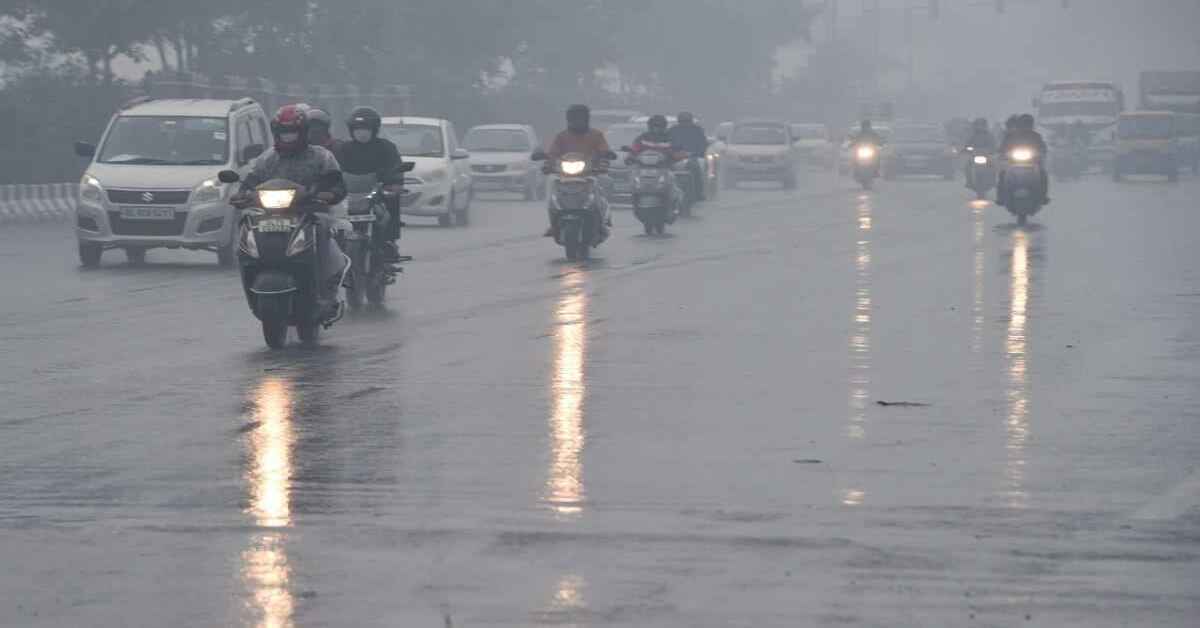
Delhi-NCR experienced heavy rain and thunderstorms on Monday morning, October 12, with waterlogging reported in several areas. The downpour also brought cooler weather to the region.

Published

on

Delhi Rain

Delhi and the National Capital Region woke up to heavy rainfall and thunderstorms on Monday morning, October 12, as changing weather conditions brought rain to several parts of the region. Waterlogging was reported in multiple areas, affecting local conditions during the morning hours.

The downpour also brought cooler weather to the national capital and surrounding areas. The rainfall comes amid forecasts of further rain and thunderstorms in Delhi-NCR.

Waterlogging reported in several areas

Heavy rain led to water accumulation in several parts of Delhi. The Jhandewalan Temple area in Karol Bagh was among the locations where waterlogging was reported.

The conditions highlighted the local impact of the morning downpour, particularly in areas where accumulated rainwater can affect movement.

Thunderstorms accompany rainfall

The rainfall was accompanied by thunderstorms, with the India Meteorological Department forecasting continued moderate to heavy rain and thunderstorms over Delhi-NCR for the next two to three hours, according to a report published on Monday morning.

Residents and commuters should follow official weather and traffic updates for information about changing conditions.

Rain brings cooler weather to Delhi-NCR

The heavy rainfall brought a noticeable change in weather conditions across the region, with cooler conditions following the downpour.

The development comes as Delhi-NCR experiences unsettled weather on October 12. Further rainfall and thunderstorms could affect local conditions through the morning.

Continue Reading

India News

PM Modi inaugurates Chennai Metro Phase II stretch worth Rs. 4,900 crore

Prime Minister Narendra Modi inaugurated the Poonamallee–Vadapalani stretch of Chennai Metro Phase II, a project built at an estimated cost of Rs. 4,900 crore. The section is part of Corridor 4 of Chennai Metro Phase II and features a 3.7-kilometre double-decker structure.
Published

on

PM Modi

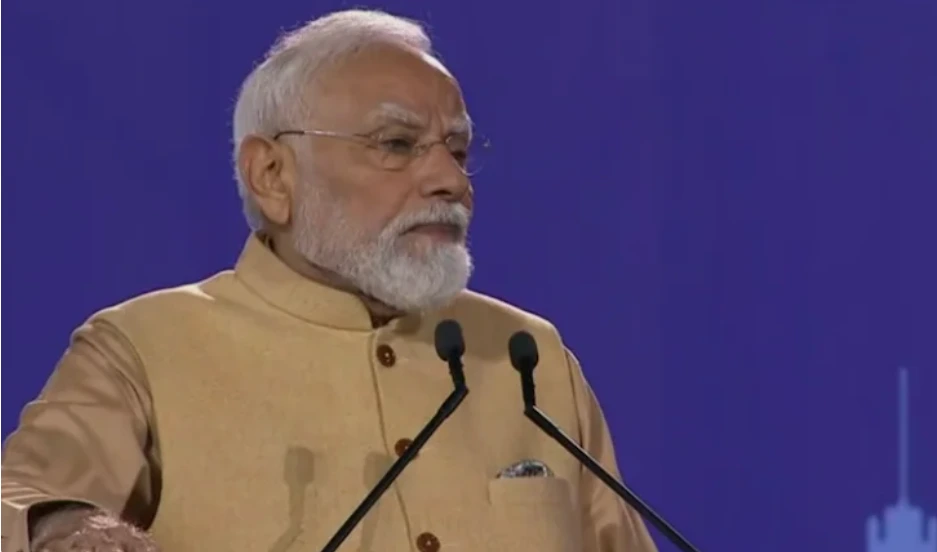
Prime Minister Narendra Modi on Sunday inaugurated a new stretch of Chennai Metro Phase II, connecting Poonamallee and Vadapalani. The project, constructed at a cost of around Rs. 4,900 crore, is aimed at improving public transport connectivity across parts of Chennai.

The inauguration took place on October 11, 2026, as part of the Prime Minister’s visit to Tamil Nadu, during which development projects worth more than Rs. 13,000 crore were scheduled to be launched or dedicated to the nation.

The newly opened section forms part of Corridor 4 of Chennai Metro Phase II. The corridor features advanced signalling systems designed to support driverless train operations. 

Chennai Metro Phase II to improve connectivity

The Poonamallee–Vadapalani stretch is expected to strengthen links between Chennai’s western suburbs and the city centre. The expansion is expected to improve connectivity and provide commuters with an additional public transport option. 

One of the corridor’s key infrastructure features is a 3.7-kilometre double-decker structure. The section is part of the broader Phase II expansion of the Chennai Metro Rail Project.

During his visit, Modi travelled on the Metro between Porur Bypass Station and Poonamallee Bypass Station and back. Tamil Nadu Chief Minister C Joseph Vijay was also present during the inauguration programme.

Other infrastructure projects in Tamil Nadu

The Metro inauguration formed part of a wider development programme involving projects worth more than Rs. 13,000 crore across Tamil Nadu.

The programme included national highway projects worth around Rs. 3,700 crore, along with railway infrastructure works valued at more than Rs. 750 crore. Other initiatives covered port infrastructure and development projects at Chennai Port, Kamarajar Port and V.O. Chidambaranar Port.

Modi was also scheduled to dedicate the Sudha Gopalakrishnan Brain Centre at IIT Madras and participate in the golden jubilee celebrations of Jaigopal Garodia Hindu Vidyalaya Matriculation Higher Secondary School in Chennai.

The Chennai Metro Phase II expansion is intended to improve urban connectivity and provide commuters with additional public transport options as the city develops its Metro network.

Continue Reading

India News

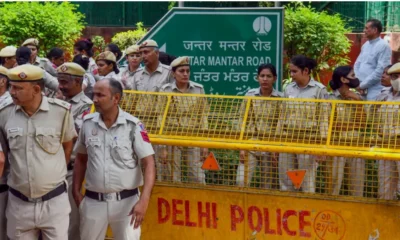
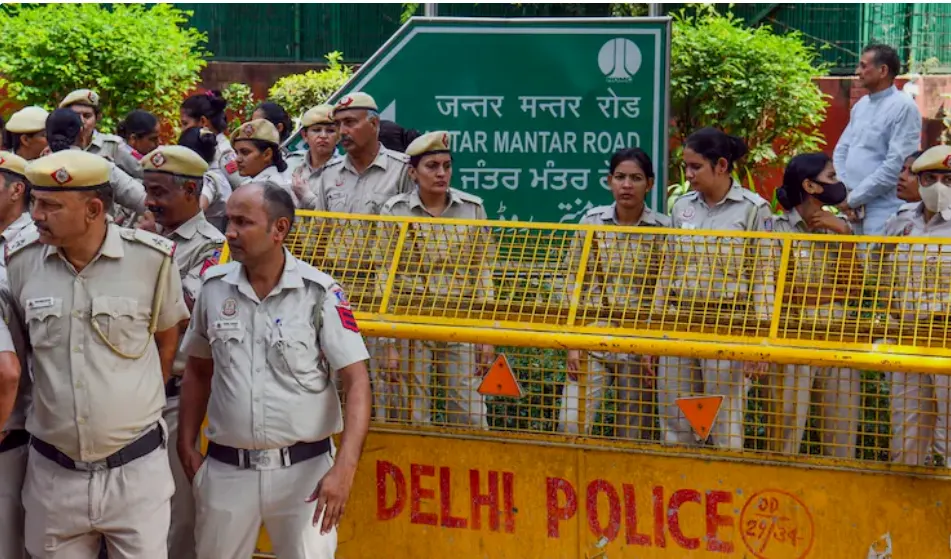
Supreme Court tells centre to remove Delhi barricades unless necessary

The Supreme Court has directed authorities to remove barricades unless absolutely necessary and withdraw restrictions imposed under Section 163 of the Bharatiya Nagarik Suraksha Sanhita near the courts. The observations came during a hearing concerning movement restrictions and detentions linked to the CJP protest in Delhi.
Published

on

Supreme Court on Delhi CJP Protest

The Supreme Court has directed authorities to remove barricades in Delhi unless they are “absolutely warranted”, calling for the normalisation of public movement amid restrictions imposed in connection with the Cockroach Janta Party (CJP) protest.

The observations were made on Sunday, October 11, during a special sitting concerning petitions over restrictions linked to the planned protest. The court said that free movement should be normalised, subject to necessary regulation in situations involving public order.

Supreme Court On Section 163 Restrictions

The court also directed authorities to withdraw restrictions imposed under Section 163 of the Bharatiya Nagarik Suraksha Sanhita (BNSS), 2023, in and around the Supreme Court.

The bench of Justices Joymalya Bagchi and V Mohana said the restrictions should be lifted to ensure that access to the Supreme Court and other courts was not impeded.

The bench’s observations came amid concerns over the restrictions imposed in Delhi ahead of the CJP protest, including the closure of Metro stations and disruption to transport services.

Supreme Court Issues Notice Over Detentions

The hearing followed a contempt petition filed by lawyer Shailendra Mani Tripathi. The petition referred to the Supreme Court’s October 9 order concerning restrictions on Metro and train services ahead of the planned demonstration.

The court had previously directed the Centre to ensure there was no complete prohibition on the movement of Metro services and trains arriving in Delhi because of the protest.

The petitioner argued that Metro stations had remained closed despite the earlier order.

During Sunday’s hearing, the Supreme Court issued notices to authorities, including the Delhi Police, the Union Home Secretary and the Delhi Metro Rail Corporation (DMRC), seeking responses concerning the detentions and the circumstances surrounding them.

The court ordered the authorities to submit a compliance report by Tuesday.

Supreme Court Says Right To Protest Must Follow The Law

The bench also reiterated that people have a right to protest, but demonstrations must remain within the framework of applicable law.

“You have a right to protest, absolutely no quarrel on that but the process in which you protest has to be within the Police Act,” the Supreme Court said.

Justice Bagchi told the petitioner that the right to protest could not be treated as being beyond the law.

The court also heard concerns raised by lawyers and said they should not be prevented from carrying out their professional duties. At the same time, it reminded lawyers to protest peacefully and not instigate others.

Why Were Restrictions Imposed In Delhi?

The restrictions were imposed ahead of a planned CJP demonstration in the national capital. The party and opposition groups have been seeking the resignation of Chief Election Commissioner Gyanesh Kumar over alleged irregularities in the Special Intensive Revision (SIR) process.

The allegations concern the revision of electoral rolls. The court’s observations on barricades and movement restrictions came amid the wider dispute over the handling of the planned protest.

The Supreme Court’s position underscored the need to balance public order with the movement of citizens and access to courts. It also maintained that the right to protest must be exercised in accordance with the law.

Continue Reading

Trending

© Copyright 2022 APNLIVE.com