English हिन्दी
Connect with us

Latest Politics News

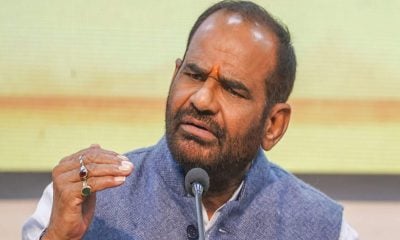
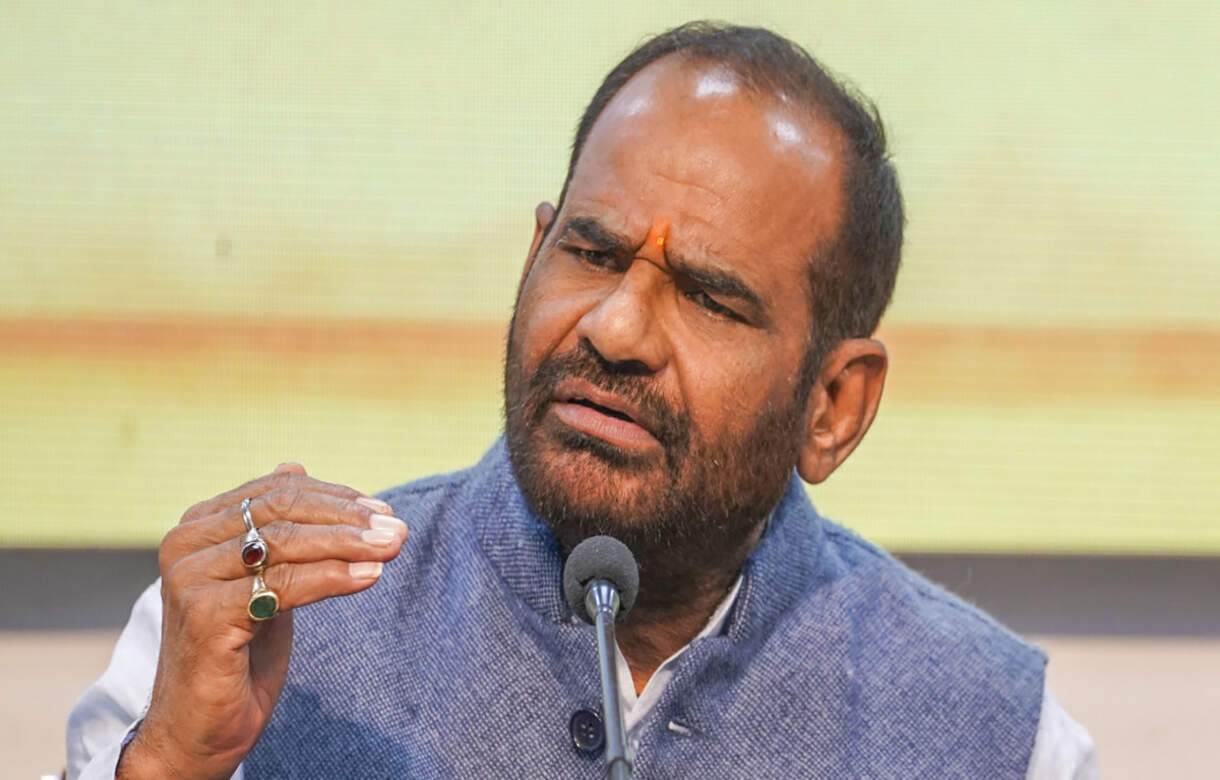
Opposition slams BJP as Ramesh Bidhuri gets key Rajasthan poll responsibility, says BJP rewards hate

Rajya Sabha MP Kapil Sibal took to X, formerly Twitter and wrote that BJP rewards hate. He added that Bidhuri is rewarded for attacking Danish Ali (BSP) in the Special Session of Parliament.

Published

on

Opposition slams BJP as Ramesh Bidhuri gets key Rajasthan poll responsibility, says BJP rewards hate

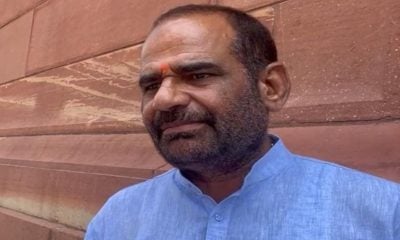
The opposition slammed Bharatiya Janata Party after it gave election responsibility to Lok Sabha member Ramesh Bidhuri. On Wednesday, MP Ramesh Bidhuri was appointed as the party’s election in-charge of the Tonk constituency in Rajasthan.  The BJP MP is in the eye of a storm for his derogatory remark against his parliament colleague BSP MP Danish Ali. 

Slamming the move, Rajya Sabha MP Kapil Sibal took to X, formerly Twitter and wrote that BJP rewards hate. He added that Bidhuri is rewarded for attacking Danish Ali (BSP) in the Special Session of Parliament. He noted that the Muslim population in Tonk is 29. 25% and that this move symbolises hate for political dividends.
Notably, with the Gurjar community present in large numbers in the Tonk district, which has four assembly seats, including the one held by senior Congress leader Sachin Pilot, the BJP believes Ramesh Bidhuri can help it swing the votes as he is also from the same caste.

The Congress leader is also from the Gurjar community. Evidently, Tonk is Sachin Pilot’s stronghold. The Rajasthan Legislative Assembly election is scheduled to be carried out in or before November of this year to elect representatives for the 200-member house.

In addition, Congress general secretary Jairam Ramesh also took to the social media platform and said that BJP’s, Sabka saath, sabka vikas, sabka vishwas is a fake campaign. Trinamool Congress (TMC) MP Mahua Moitra also criticized the BJP and said Bidhuri had been rewarded for his remarks against a Muslim MP. She further questioned, how does a showcaused person be given a new role by BJP. 

During the discussion of Chandrayaan 3 success, Bidhuri’s remarks calling Danish Ali a terrorist, militant etc triggered an uproar in the House with opposition leaders demanding strong action against him. 

Previously, speaking on Bidhuri’s remarks, BSP MP Danish Ali expressed that he will now see if the BJP is taking any action against Bidhuri or if he will be promoted and included in the central cabinet of ministers.

India News

Didn’t violate party line: Shashi Tharoor defends stand on Operation Sindhoor

Shashi Tharoor says his stance on Operation Sindhoor was driven by national interest and insists he did not violate the Congress party line.

Published

on

Congress MP Shashi Tharoor says his views on Operation Sindhoor were guided by national interest and aligned with India’s security priorities

Congress MP Shashi Tharoor on Saturday said he has never crossed the Congress party’s stated positions inside Parliament, asserting that his only principled public disagreement was related to Operation Sindhoor.

Speaking during a session at the Kerala Literature Festival, Tharoor said he had taken a firm stand on the issue and remained “unapologetic” about it. His remarks come amid recent reports highlighting differences between him and sections of the party leadership, with speculation around his dissatisfaction over not being adequately acknowledged at a recent event in Kochi and alleged attempts by state leaders to sideline him.

Clarifying his position, Tharoor said that as a writer and observer, he had penned a newspaper column after the Pahalgam incident, arguing that the attack should not go unpunished and calling for a limited kinetic response. He added that while India’s primary focus remains development, the country should not be drawn into a prolonged conflict with Pakistan.

According to Tharoor, any response should be restricted to targeting terrorist camps rather than escalating tensions. He noted that he was surprised when the government eventually took steps that mirrored the approach he had outlined.

Referring to Jawaharlal Nehru’s famous words, “Who lives if India dies?”, Tharoor said that when the country’s security and global standing are at stake, national interest must take precedence over political differences.

He added that while political parties may disagree on various issues in the process of strengthening democracy, India must come first whenever core national interests are involved.

Continue Reading

India News

Shashi Tharoor likely to skip key Congress meet amid unease with party leadership

Shashi Tharoor is expected to remain absent from a crucial Congress meeting in Kerala, with sources citing dissatisfaction over his treatment during Rahul Gandhi’s Kochi visit.

Published

on

Senior Congress MP Shashi Tharoor is likely to skip an important meeting of the party’s Kerala leadership scheduled for Friday afternoon, with sources indicating that the four-time Lok Sabha member is upset over a perceived lack of due respect during Rahul Gandhi’s recent visit to Kochi.

The meeting, set to be attended by senior leaders including Rahul Gandhi and Congress president Mallikarjun Kharge, is aimed at reviewing preparations for the Kerala Assembly election later this year. Tharoor, who represents Thiruvananthapuram, is expected to be absent.

Sources said the diplomat-turned-politician has been unhappy with the party’s handling of his role during the Kochi visit, adding to existing strain between him and the Congress’ central leadership.

Tharoor has in recent months found himself under scrutiny within the party following remarks that were seen as appreciative of Prime Minister Narendra Modi and the ruling Bharatiya Janata Party. These include comments on the Prime Minister’s response to the April 22 Pahalgam terror attack and subsequent military strikes on Pakistan, as well as occasional critical observations aired through media interactions.

The tension resurfaced on Thursday after Tharoor shared a selfie with former BJP MP and current India men’s cricket team head coach Gautam Gambhir. In his post, Tharoor praised Gambhir for handling what he described as “the second-hardest job in India,” after the Prime Minister’s role.

The post drew a sharp response from a BJP spokesperson, who linked Tharoor’s comments on cricket fans questioning coaching decisions to the opposition’s criticism of the Prime Minister. The BJP leader accused the opposition of prioritising family interests over national concerns and suggested that Tharoor’s remarks once again highlighted divisions within the Congress.

The episode underscores the continuing unease between Shashi Tharoor and the Congress leadership, a rift that political rivals have frequently highlighted in public discourse.

Continue Reading

India News

BJP calls Congress anti-Hindu after Rahul Gandhi questions G-RAM-G scheme

The BJP has accused the Congress of being anti-Hindu after Rahul Gandhi said he was unfamiliar with the new G-RAM-G employment guarantee scheme that replaces MNREGA.

Published

on

Rahul-Gandhi

The Bharatiya Janata Party on Wednesday accused the Congress of being “anti-Hindu” after senior leader Rahul Gandhi said he was unfamiliar with the name of the newly introduced G-RAM-G employment guarantee scheme, which has replaced the Mahatma Gandhi National Rural Employment Guarantee Act.

Speaking at a conference held at Delhi’s Jawahar Bhavan, Rahul Gandhi remarked, “I don’t know what G-RAM-G is,” while addressing an event focused on MNREGA, the flagship rural employment programme launched during the Congress-led government. Congress president Mallikarjun Kharge made similar comments at the event.

BJP response and political backlash

The BJP reacted sharply, alleging that Rahul Gandhi’s remarks reflected hostility towards Lord Ram. Party leaders claimed the comments had “exposed the Congress’ anti-Hindu mindset,” a charge that intensified the political confrontation over the new legislation.

Several opposition leaders have argued that one of the core concerns with the G-RAM-G scheme is the replacement of Mahatma Gandhi’s name with that of a religious figure, a move they say politicises a welfare programme that was previously secular in identity.

Congress alleges attempt to weaken employment guarantee

At the conference, Rahul Gandhi said MNREGA had given poor households a legal right to employment, which he claimed Prime Minister Narendra Modi was attempting to dismantle. He also referred to the now-repealed farm laws of 2020, saying sustained public pressure had earlier forced the government to withdraw them.

“If we stand together, the government will be forced to back down and MNREGA will be restarted,” Gandhi said, asserting that the employment guarantee programme could be revived through collective resistance.

Mallikarjun Kharge accused the BJP of trying to erase Mahatma Gandhi’s legacy from public memory and said the Congress would raise the issue again during the upcoming Budget session of Parliament.

States move to support MNREGA

As the political debate continues, at least two opposition-ruled states have taken steps to support MNREGA. Karnataka and Tamil Nadu have both indicated plans to pass Assembly resolutions backing the older scheme.

In Karnataka, proceedings were disrupted after Governor Thawar Chand Gehlot declined to read out portions of a government-prepared speech that criticised the G-RAM-G framework. In Tamil Nadu, Chief Minister MK Stalin said his government would also move a resolution in support of MNREGA.

What the G-RAM-G scheme changes

The new G-RAM-G law introduces several structural changes compared to MNREGA. The guaranteed number of workdays has been increased to 125 from 100, but employment is limited to areas officially notified as rural by the central government.

Under the revised funding structure, states are now required to bear 40 per cent of the scheme’s costs, while the Centre will contribute the remaining amount. Hill states and northeastern states will pay only 10 per cent, and Union Territories will continue to receive full central funding.

The Centre will also adopt a “normative” allocation model, deciding annual fund limits for states based on defined parameters, rather than demand. This gives the Centre greater control over fund releases and the authority to suspend allocations in cases of serious irregularities.

While the government has said the changes will encourage states to take financial ownership without imposing excessive burdens, the opposition has described the scheme as “anti-poor,” warning that it could reduce employment opportunities by straining state finances.

Continue Reading

Trending

© Copyright 2022 APNLIVE.com