English हिन्दी
Connect with us

Latest Politics News

In Chhattisgarh, BJP manifesto makes room for proposed Congress schemes

It would be difficult for the BJP to explain how it will not extend the same benefits to farmers in Bihar or Uttar Pradesh or even Madhya Pradesh and Rajasthan which are going to elections at the same time.

Published

on

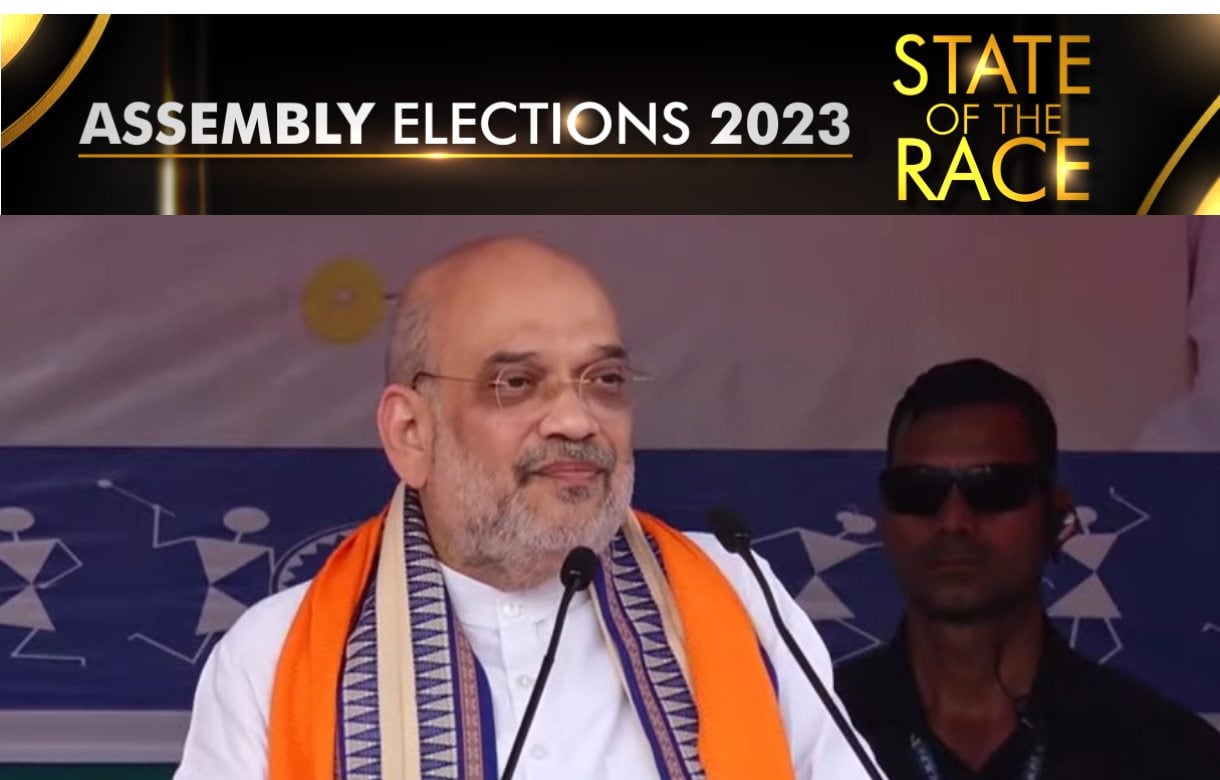
Amit Shah at a public rally in Chhattisgarh

By Neeraj Mishra

In a move akin to eating crow, the BJP has promised to buy paddy from Chhattisgarh farmers at Rs 3,100 per quintal against the Congress promise of MSP plus Rs 500 which would be about Rs 2800. In 2018, the BJP national leadership had steadfastly refused to allow Raman Singh to give Rs 300 as bonus or announce an equivalent Rs 2500 that the Congress had promised.

In the pre-Christmas gift package that Home Minister Amit Shah announced in Raipur releasing the BJP manifesto or Ghoshna Patra, he also promised to buy 21 quintals per acre from farmers besting the Congress’ 20 quintals. At the same time now, all parties want to give gas cylinder at Rs 500 so does BJP which otherwise sells it for Rs 1200 in the rest of the country. There is also of course the mandatory Rs 10 lakh health insurance and host of other promises that the Congress also made. The crucial thing missing in the list of promises is farm loan waiver.

It is believed that like last time when the Congress promised Rs 2,500 per quintal paddy procurement price and loan waiver, this time the farm loan waiver may be the big ticket. The Bhupesh Baghel government has established its credentials by steadfastly giving Rs 500 per quintal “bonus” to farmers for five years even though it was done in instalments. Farmers are likely to believe that the farm loan waiver will happen as soon as the Congress is back. It is believed that some Rs 25,000 crore loans had been taken by farmers. Of this, Rs 9,000 crore had been waived by Baghel last time but an equal amount may have accumulated now in the five years hence.

This bonus scheme was equally steadfastly opposed by the Modi Sarkar which even refused to buy central quota of rice if the bonus was distributed. But Baghel managed to do so by borrowing as much as he could from as many places as he could. Now it’s rich of the BJP to adopt the same theme as the Congress and come up with the same promises.

It would, however, be difficult for the BJP to explain how it will not extend the same benefits to farmers in Bihar or Uttar Pradesh or even Madhya Pradesh and Rajasthan which are going to elections at the same time. The paddy procurement price is mostly lower than even the MSP in most states since other state governments are unable to procure in time or pay on time. Sugar cane and wheat procurement amounts in UP and Bihar remain unpaid for several seasons.

Chhattisgarh has been luckier than other states where the crop payment has almost always been done within one month of procurement. It has been so, for past 20 years which has led to some prosperity among farmers. The Congress is taking all the credit for it but there is little doubt that Raman Singh’s policies have also contributed to the state’s leap in prosperity over Bihar, Odisha and UP etc. 

India News

PM Modi assures no discrimination in women’s quota, delimitation debate intensifies in Parliament

PM Narendra Modi has assured that women’s reservation will be implemented without discrimination, amid a heated debate over delimitation in Parliament.

Published

on

PM modi

Prime Minister Narendra Modi has assured that there will be no discrimination in the implementation of women’s reservation, as Parliament witnessed a sharp debate over the proposed linkage between the quota and delimitation exercise.

During the ongoing special session, the government reiterated its commitment to ensuring fair representation while addressing concerns raised by opposition parties regarding the timing and structure of the legislation.

The proposed framework aims to reserve 33 percent of seats for women in the Lok Sabha and state assemblies. However, its implementation is tied to a fresh delimitation exercise, which is expected after the next census.

Opposition questions timing and intent

Opposition leaders have raised concerns that linking the women’s quota to delimitation could delay its implementation. They argue that the process of redrawing constituencies may push the actual rollout further into the future.

The issue has triggered a broader political confrontation, with multiple parties questioning whether the move could alter representation across states.

Some critics have also alleged that the delimitation exercise could disproportionately benefit certain regions based on population, a charge the government has rejected.

Government reiterates commitment to fair implementation

Responding to these concerns, the Centre has maintained that the reforms are necessary to ensure accurate and updated representation based on population data.

Leaders from the ruling side have repeatedly emphasized that the process will be carried out transparently and without bias. The assurance that there will be “no discrimination” is aimed at addressing fears among states and opposition parties.

The debate marks a key moment in Parliament, with both sides engaging in intense exchanges over one of the most significant electoral reforms in recent years.

Continue Reading

India News

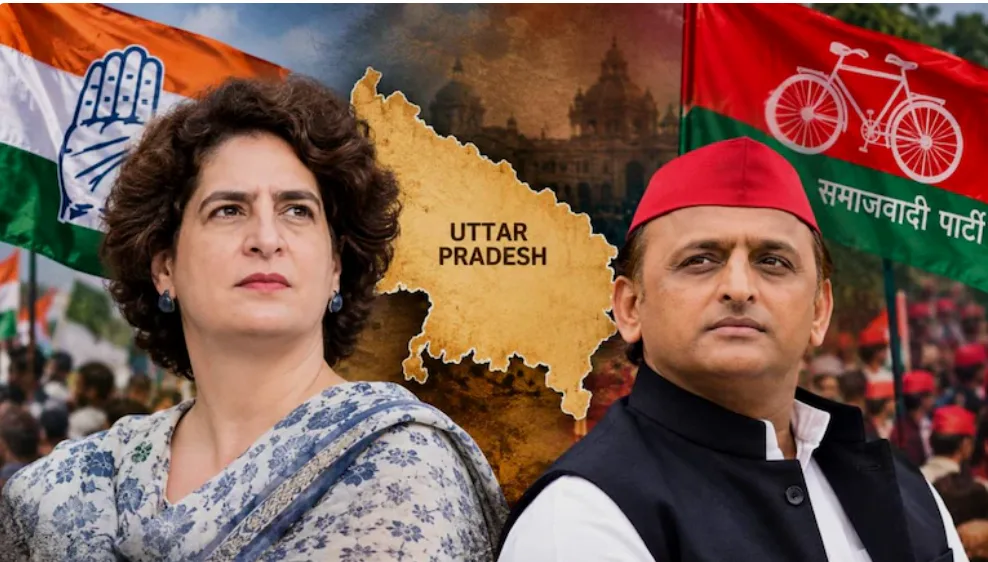
Give all tickets to Muslim women, Amit Shah says, attacking Akhilesh Yadav on sub-quota demand

A sharp exchange between Amit Shah and Akhilesh Yadav in Parliament over sub-quota for Muslim women highlights key divisions on women’s reservation implementation.

Published

on

A heated exchange broke out in Parliament during discussions on the women’s reservation framework, with Union Home Minister Amit Shah and Samajwadi Party chief Akhilesh Yadav locking horns over the demand for a sub-quota for Muslim women.

The debate unfolded as the government pushed forward key legislative measures to implement 33% reservation for women in the Lok Sabha and state assemblies.

Akhilesh Yadav argued that the proposed reservation must ensure representation for women from marginalised communities, including Other Backward Classes (OBCs) and Muslim women. He said that without such provisions, large sections could remain excluded from political participation.

He also questioned the timing of the bill, alleging that the Centre was avoiding a caste census. According to him, a census would lead to renewed demands for caste-based reservations, which the government is reluctant to address.

Government rejects religion-based quota

Responding to the demand, Amit Shah made it clear that reservation based on religion is not permitted under the Constitution.

He stated that any proposal to provide quota to Muslims on religious grounds would be unconstitutional, firmly rejecting the idea of a separate sub-quota for Muslim women within the broader reservation framework.

The government has maintained that the existing framework already includes provisions for Scheduled Castes (SC) and Scheduled Tribes (ST) women within the overall reservation structure.

Wider political divide over implementation

The issue of sub-categorisation within the women’s quota has emerged as a major flashpoint, even as most opposition parties broadly support the idea of women’s reservation.

Samajwadi Party leaders reiterated that their support for the bill depends on inclusion of OBC and minority women, while the government continues to defend its constitutional position.

The debate is part of a broader discussion during the special Parliament session, where multiple bills linked to delimitation and implementation of the women’s quota are being taken up.

Continue Reading

India News

Raghav Chadha’s security withdrawn by Punjab amid AAP rift, Centre steps in with cover

Punjab withdraws Raghav Chadha’s security amid party tensions, Centre offers fresh protection.

Published

on

The Punjab government has withdrawn the Z+ category security cover provided to Raghav Chadha, amid an ongoing rift within the Aam Aadmi Party.

According to sources, the security personnel deployed by Punjab Police have been asked to report back, marking a significant development in the political dispute involving the Rajya Sabha MP.

The move comes shortly after Chadha was removed from his position as deputy leader of the party in the Rajya Sabha, signalling deepening differences between him and the party leadership.

Centre offers fresh security arrangement

Soon after the withdrawal, the Ministry of Home Affairs stepped in to provide security cover to Chadha.

Sources indicate that he will now receive Z-category security in Delhi and Punjab, while a Y-category cover may be provided in other parts of the country.

This shift ensures continued protection for the MP despite the withdrawal of state-provided security.

Fallout linked to political disagreement

The development is part of a broader fallout between Chadha and his party. He was recently replaced as deputy leader in the Rajya Sabha, with the party reportedly expressing dissatisfaction over his political approach and conduct in Parliament.

Chadha, however, has denied the allegations, calling them baseless and asserting that his focus has been on raising public issues rather than engaging in political confrontation.

Growing divide within party ranks

Once considered a close associate of Arvind Kejriwal and a prominent face of the party, Chadha’s recent removal from key roles and the withdrawal of his security underline a widening internal divide.

He is among the few leaders in the party who have recently found themselves at odds with the leadership, indicating shifting dynamics within the organisation.

Continue Reading

Trending

© Copyright 2022 APNLIVE.com