
Latest world news
Erdogan: Turkey Can’t Remain Silent’ Over Khashoggi Fate


Exerting more pressure on Saudi authorities on its alleged role in killing dissident journalist Jamal Khashoggi at its consulate in Istanbul, Turkish President Recep Tayyip Erdogan has said that Ankara ‘cannot remain silent to such an incident”.
While speaking to reporters on his return from Hungary on thursday, Erdogan expressed disbelief at Saudi claims that Khashoggi disappeared without being recorded by security cameras after leaving the mission.
He said, “How is it possible for a consulate, an embassy not to have security camera systems? Is it possible for the Saudi Arabian consulate where the incident occurred not to have camera systems? If a bird flew, if a mosquito appeared, these systems would catch them and [I believe] they would have the most advanced of systems.”
Meanwhile Turkish investigators have claimed that a consular source heard screams and sounds of struggle, obviously while Khashoggi was facing the death squad.
Read More: Turkish Official Confirm Khashoggi Killed On Saudi Royal Order
The Aljazeera correspondent Jamal Elshayyal reports from Istanbul that the investigators have heard testimony from a source who was inside the Saudi consulate at the time of Khashoggi’s disappearance. He has reportedly claimed to have heard sounds of a struggle.
 Elshayyal said, “I have learned earlier that, among the evidence with the investigation is testimony from inside the consulate at the time that Jamal [Khashoggi] was there, which includes sounds of loud screams and shouting, as well as calls for help and the sound of a struggle and then sudden silence.”
He reports that despite earlier reports to the contrary, Turkish authorities have yet to be given permission to search the Saudi consulate “in the way or with the team that they would like”.
Turkish authorities have also requested to search a number of vehicles registered to the consulate and home of the consul general, after a van with tinted windows was seen leaving the consulate and driving to the home a couple of hours after Khashoggi entered the mission.
Read More: Erdogan asks Saudis to provide video of Khashoggi’s departure
In another development, the designations of the 15-member Saudi ‘assassination squad’ are revealed by the investigators. Authorities in Ankara believe that they carried out Khashoggi’s assassination.
It is said that the head of the forensic unit in the Saudi defence forces, a former head of intelligence at the Saudi Arabian embassy in London and several special forces officers were among the group, which flew into Istanbul on October 2, the day when Khashoggi disappeared.
The investigators have found that all 15 men had booked four nights in two hotels situated near the Saudi consulate but left Turkey less than 24 hours after arriving.
The Washington Post and New York Times have reported that Saudi Royal Court: i.e. Crown Prince Mohammed bin Salman himself ordered an operation targeting Jamal Khashoggi.
Read More: Istanbul: Missing Journalist Khashoggi Killed In Saudi Mission
Earlier US intelligence intercepts have also proved that Saudi officials were heard discussing a plan to lure Khashoggi from the US, where he resides, back to Saudi Arabia where he would be detained.
 Meanwhile, US President Donald Trump, while responding on a telephonic interview with Fox News Channel on Wednesday as to whether the Saudis were responsible for Khashoggi’s disappearance, has said: “I guess you would have to say so far it’s looking a little bit like that, and we’re going to have to see.”
Trump also expressed reluctance to act on calls to withhold US arms sales to Saudi Arabia, saying that US jobs and economic strength are tied to such trade deals.
“Part of that is what we’re doing with our defense systems and everybody’s wanting them. And frankly I think that would be a very, very tough pill to swallow for our country. I mean, you’re affecting us and, you know, they’re always quick to jump that way,” he said.
In a related development, more than 20 Republican and Democratic senators, in a joint letter to President Trump have instructed to order an investigation into Khasoggi’s disappearance under legislation that authorises imposing sanctions on perpetrators of extrajudicial killings.
The Saudi ambassador to Washington, Prince Khalid bin Salman bin Abdulaziz, has described the allegations as “malicious leaks and grim rumours” and said the kingdom is “gravely concerned” about Khashoggi.
Earlier, Saudi authorities have claimed that Khashoggi left the consulate shortly after entering. However, they have failed to provide video footage showing his departure.
Besides Secretary of State Mike Pompeo, National Security Adviser John Bolton and senior adviser Jared Kushner – Donald Trump’s son-in-law – spoke to Saudi Crown Prince Mohammed bin Salman about Khashoggi’s disappearance.




Latest world news
S Jaishankar says India is a natural option for Russia amid Europe tensions
External Affairs Minister S Jaishankar said India remained a natural option for Russia as Moscow increasingly turned towards Asia amid strained relations with Europe. He highlighted the continuity of India-Russia ties and their significance for the balance of power in Asia.


Latest world news
Putin praises PM Modi, says he has very good ideas on Ukraine war
Russian President Vladimir Putin has praised Prime Minister Narendra Modi for repeatedly raising the need to end the Ukraine war, describing his ideas for a settlement as “very good”.

Latest world news
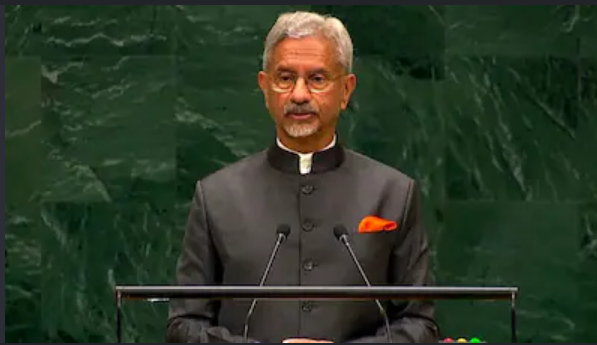
S Jaishankar calls Pakistan a “serial practitioner of terrorism” at UN
S Jaishankar criticised Pakistan at the UN General Assembly, referring to a “serial practitioner of terrorism” and warning against attempts to normalise terrorism.

Dhruv Rathee gets fresh summons in 2018 BJP IT cell video case

Nobody can browbeat judiciary, Chief Justice warns over Rahul Gandhi’s march

India-US trade deal first phase finalised, drafting underway

Election Commission orders voter roll revision in 17 states, UTs

Actor Imran Khan asked to leave India after CJP protest

Delhi Police offers 11-person limit for CJP’s Connaught Place protest
Actor Imran Khan asked to leave India after CJP protest
Election Commission orders voter roll revision in 17 states, UTs
India-US trade deal first phase finalised, drafting underway
Nobody can browbeat judiciary, Chief Justice warns over Rahul Gandhi’s march

Afghan Men Try To Hang With The Jet Engine Of The Aircraft in Kabul- Afghanistan News – Kabul News
Trending Top 10 News: 10000 Crore Fine on Flipkart, Apple to Launch Unique Feature, Hdfc Bank Job Ad

Trending Top 10 News: Nokia 6310, Apple sales, Bachpan ka Pyar Video Kid, Dainik Bhaskar IT Raid

Trending Top 10 News: Canada bans Indian flights, Rain in Delhi NCR, AIMIM Twitter hacked, Raj Kundra case

Trending Top 10 News: Shein India, Apple New Service, Pocket Oxygen, Oppo Launched New Phone
-
 India News15 hours ago
Dhruv Rathee gets fresh summons in 2018 BJP IT cell video case
-
 India News12 hours ago
Nobody can browbeat judiciary, Chief Justice warns over Rahul Gandhi’s march
-
 India News8 hours ago
India-US trade deal first phase finalised, drafting underway
-
 India News5 hours ago
Election Commission orders voter roll revision in 17 states, UTs
-
 India News5 hours ago
Actor Imran Khan asked to leave India after CJP protest
-
 India News4 hours ago
Delhi Police offers 11-person limit for CJP’s Connaught Place protest
