English हिन्दी
Connect with us

India News

Excise policy case: Delhi court extends BRS leader K Kavitha’s judicial custody till April 23

Rouse Avenue court sends BRS leader K Kavitha to judicial custody till April 23 in excise policy case

Published

on

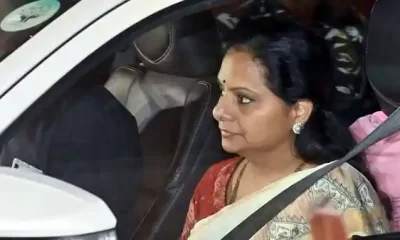
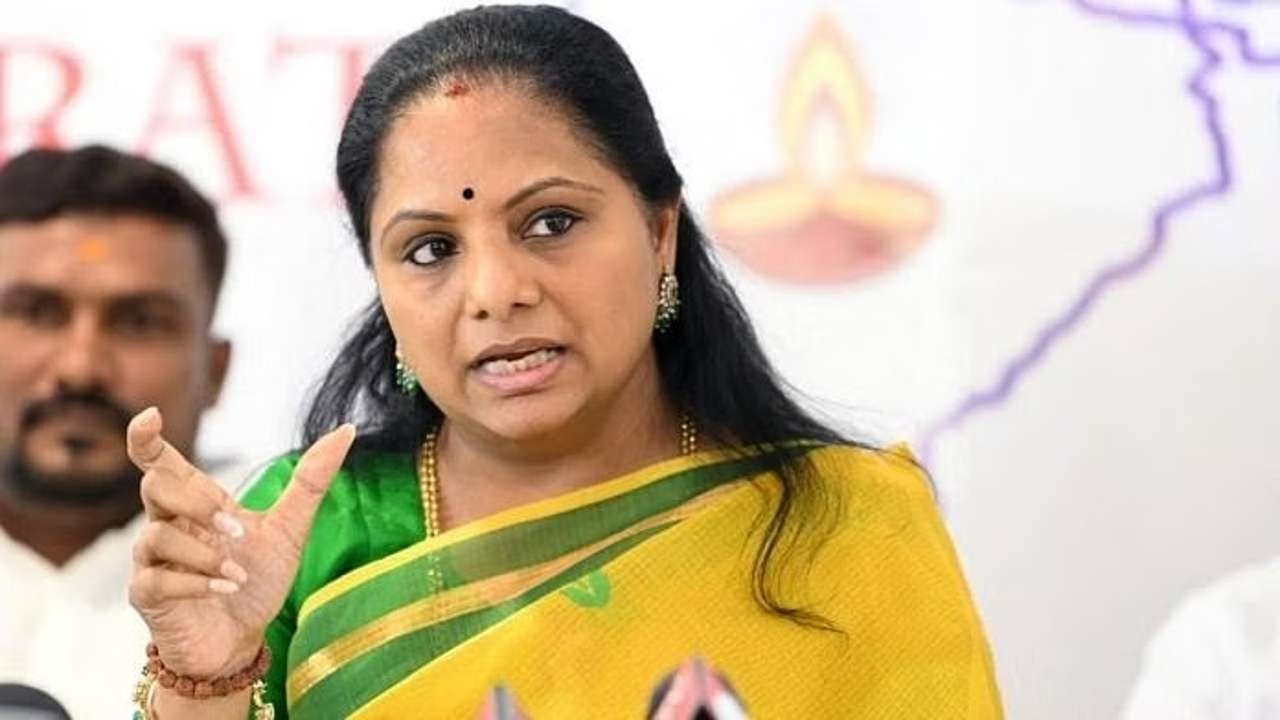
In relation to the excise policy case, Delhi’s Rouse Avenue court on Monday sent BRS leader K Kavitha in judicial custody till April 23. After her three days in police custody was completed, Kavitha, the daughter of former Telangana chief minister K Chandrasekhar Rao, was brought before the court by the CBI.

According to the reports, the CBI informed the court at the hearing that the BRS leader did not need to be subjected to any further custodial questioning.

On March 15, Kavitha was taken into custody by the Enforcement Directorate (ED). She was sent to the CBI custody till March 23 after her arrest. On April 11, the CBI took her into custody and placed her in Tihar jail. The BRS leader had requested temporary relief because her son had an exam, and a Delhi court had previously set its judgment for April 9.

Kavitha was called in for questioning several times prior to her arrest, but she skipped at least two of those summonses. Kavitha was questioned three times in the previous year, and her statements were recorded by the central agency in accordance with the Prevention of Money Laundering Act (PMLA).

The Aam Aadmi Party (AAP) was allegedly paid Rs 100 crore in kickbacks to influence the excise policy in favour of a liquor lobby, according to documents linked to a land deal and WhatsApp conversations that were found on a co-accused Buchi Babu’s phone during Kavitha’s recent three days in CBI custody.

Following AAP leaders Manish Sisodia and Sanjay Singh, the BRS leader was the third popular politician to be taken into custody in connection with the investigation. Kejriwal was the first chief minister in office to be arrested in this matter on March 21.

The Enforcement Directorate claims that Kavitha belonged to the South Group, which gave AAP leaders bribes totaling Rs 100 crore in exchange for nine retail zones under the since-canceled program. The names of other members of the group had also been made public by the investigation agency: Magunta Srinivasulu Reddy, MP for the Yuvajana Sramika Rythu Congress Party (YSCRCP); his son Raghav Magunta; Sarath Reddy, founder of the Aurobindo Group; and Sameer Mahendru, a businessman from Delhi.

India News

Fadnavis, Uddhav Thackeray share Mumbai-Nagpur flight amid Maharashtra political developments

Devendra Fadnavis and Uddhav Thackeray shared a Mumbai-Nagpur flight, drawing attention amid ongoing political developments in Maharashtra.

Published

on

Uddhav Thackeray

Maharashtra Chief Minister Devendra Fadnavis and Shiv Sena (UBT) chief Uddhav Thackeray were seen travelling on the same commercial flight from Mumbai to Nagpur, triggering fresh political discussions in the state.

The two leaders, who have remained political rivals in recent years, reportedly exchanged greetings and briefly interacted during the journey. Reacting to the unexpected encounter, Fadnavis remarked that the meeting of the leaders had become the “biggest news of the day”.

Thackeray was accompanied by his son and MLA Aaditya Thackeray, Rajya Sabha MP Sanjay Raut and other senior leaders of the Shiv Sena (UBT). The flight came at a time when Maharashtra politics has witnessed significant developments, including recent defections from the Thackeray-led party.

The shared journey quickly sparked speculation in political circles. However, leaders from the ruling alliance played down the development, describing it as a routine interaction between political opponents rather than an indication of any new political understanding.

While the brief interaction generated considerable attention, no political discussions or meetings beyond customary greetings were officially reported.

Continue Reading

India News

VHP Chief Alok Kumar calls for jail term for guilty in Ram Temple donation row 

VHP president Alok Kumar has sought strict legal action, including imprisonment, against those found guilty in the alleged Ram Temple donation irregularities case.

Published

on

Ram Mandir

Vishwa Hindu Parishad (VHP) international president Alok Kumar has demanded stringent action against those responsible in the alleged Ram Temple donation irregularities case, saying anyone found guilty should face imprisonment.

Speaking on the controversy surrounding alleged financial irregularities linked to donations made to the Ram Temple in Ayodhya, Mr Kumar asserted that the matter should be investigated thoroughly and impartially.

“The guilty should be jailed,” he said, stressing that no one involved in wrongdoing should be spared, irrespective of their position or status.

Mr Kumar also supported the registration of an FIR and called for a comprehensive probe into the allegations. He said the investigation should be completed quickly so that the truth emerges at the earliest.

Emphasising the need for transparency, the VHP leader said a fast-track trial should be considered if evidence establishes wrongdoing. According to him, swift legal action would help maintain public confidence in institutions associated with the temple.

The remarks come amid an ongoing investigation into alleged irregularities in the handling of donations linked to the Ram Temple. Authorities have already initiated action in the matter, with several accused arrested as the probe continues.

Officials are examining the allegations, and further action is expected based on the findings of the investigation.

Continue Reading

India News

Amit Shah says Centre will amend NDPS Act to tighten crackdown on drug syndicates

Amit Shah said the Centre is relooking the NDPS Act to plug loopholes exploited by narco syndicates and strengthen anti-drug enforcement across India.

Published

on

Union Home Minister Amit Shah on Friday said the Centre is preparing amendments to the Narcotic Drugs and Psychotropic Substances (NDPS) Act to close loopholes allegedly exploited by drug trafficking networks and strengthen India’s anti-narcotics framework.

Addressing the 10th apex-level meeting of the Narco-Coordination Centre (NCORD) in New Delhi, Shah said the government is re-examining the existing law and invited states to submit suggestions for the proposed changes. The amendments are being worked on by the Ministry of Finance to make the legislation more effective in tackling organised drug syndicates.

Centre seeks stronger legal framework against narcotics

Shah stressed the need for a tougher approach towards drug traffickers and peddlers, while advocating a compassionate stance towards victims of addiction. He outlined a three-pronged strategy against drug trafficking — “detect, disrupt and destroy” — and urged all stakeholders to intensify efforts against the narcotics menace.

The Home Minister also asked state governments to share suggestions on strengthening the NDPS Act. Directors General of Police have been asked to forward recommendations to the Ministry of Home Affairs, while Chief Secretaries can submit their inputs to the Department of Revenue under the Ministry of Finance.

Seizures of synthetic drugs rise over past decade

Highlighting the government’s anti-drug campaign, Shah said that between 2004 and 2014, around 26 lakh kilograms of synthetic drugs were seized across the country. In comparison, agencies confiscated approximately 1.18 crore kilograms of synthetic drugs between 2014 and 2026.

He further said the estimated value of drugs seized during 2014-2026 stood at around Rs 1.84 lakh crore, significantly higher than the nearly Rs 40,000 crore worth of narcotics seized during the previous decade. According to Shah, these figures reflect the expanded scale and effectiveness of anti-drug enforcement efforts.

The minister also called for real-time information sharing among states through digital platforms developed by the Narcotics Control Bureau and urged authorities to ensure NCORD meetings deliver measurable outcomes. He unveiled the “Vision Document on Drug Control (2026-2029)”, which aims to provide a roadmap for reducing drug demand, curbing supply and minimising harm caused by substance abuse.

Continue Reading

Trending

© Copyright 2022 APNLIVE.com