English हिन्दी
Connect with us

India News

CBI Spl Director Rakesh Asthana goes to Delhi HC fearing arrest, gets reprieve till Oct 29

Published

on

CBI Spl Director Rakesh Asthana goes to Delhi HC fearing arrest, gets reprieve till Oct 29

Number two in CBI, special director Rakesh Asthana, who approached the Delhi High Court today (Tuesday, October 23) to seek protection against arrest in a corruption case, has been given relief till Monday, October 29, when the case comes up for hearing again.

Asthana is named as accused No. 1 in an FIR filed by CBI last Tuesday, media reports said.

Asthana had approached the high court seeking its direction that no coercive action be taken against him.

Asthana’s petition comes hours after CBI officer Deputy Superintendent of Police Devender Kumar, Asthana’s team member and accused No. 2 in the FIR who was arrested yesterday, asked the high court to cancel the bribery case filed against them.

Devender Kumar was arrested for “falsification of records” in connection with bribery allegations involving its Special Director Rakesh Asthana.

Asthana urged the court that no coercive step be taken against him since the CBI has already arrested DSP Devender Kumar. At this, the court, while observing that it would prefer not to use the term “no coercive steps”, directed that “status quo be maintained with regard to petitioner (Asthana)”.

Justice Najmi Waziri also issued notice to CBI Director Alok Verma, Joint Director A K Sharma and the Department of Personnel and Training on separate petitions by Asthana and Devender Kumar.

The court did not intervene in the arrest of Kumar and sought the CBI’s stand on his plea seeking quashing of the FIR lodged against him. The court will hear the matter next on October 29.

In his petition, Deputy Superintendent of Police Devender Kumar said he was being made “a scapegoat” and the case filed against them was false, frivolous and an afterthought.

Kumar insisted that he was an “upright police officer” with an excellent service record. The officer said he had been investigating the case against meat exporter Moin Akhtar Qureshi and others and was implicated because he had unearthed the truth in this case and was going to arrest “several accused person”.

Kumar, who was earlier the investigating officer in a case involving Moin Qureshi, was arrested on Monday by the CBI on the allegations of forgery in recording the statement of businessman Sathish Sana Babu, who had alleged to have paid bribes to get relief in the case.

Sana Satish Babu who alleged that two Dubai-based brothers – Manoj Prasad and Somesh Prasad – claimed that they were acting on behalf of the CBI special director and allegedly struck a deal for Rs 5 crore to protect him in a case that the agency registered against controversial meat exporter Moin Qureshi. Former CBI director AP Singh is also an accused in the case.

Devender Kumar, who was Investigating Officer in the Moin Qureshi case as part of a Special Investigation Team (SIT) headed by Asthana, was arrested around 2 pm Monday. The CBI had earlier searched Kumar’s office in the CBI building.

According to the FIR, businessman Sana Sathish Babu, a witness in the Moin Qureshi case, allegedly paid bribes to Asthana for getting relief in investigation from the CBI SIT headed by him.

The CBI said Kumar was arrested on the allegation of “falsification of records in an ongoing investigation”, that he had allegedly fabricated Sana’s statement “as an afterthought plan to corroborate the baseless allegations” made by Asthana against the CBI Director to the CVC (Central Vigilance Commissioner)”.

They said the agency was also looking into the alleged role of other members of the special investigation team headed by Asthana.

Asthana, who was booked by the agency on bribery charges in an unprecedented action, had complained against Verma on August 24, 2018.

After Kumar’s plea to the court following his arrest, Asthana moved the court as his ongoing war with Director Alok Verma escalated.

On Tuesday, media reports said, CBI director Alok Verma wrote to the PMO asking for Asthana to be suspended. He also wants Asthana repatriated to his parent Gujarat cadre as he is “unfit” to serve in the CBI. A formal communication to the PMO is significant as it creates direct accountability for the prime minister.

Verma will retire in January and Asthana, is said to be Modi and Amit Shah’s choice to succeed him as director. In fact, even before Verma was appointed, Asthana officiated as CBI director for a few months.

Meanwhile, a Delhi court allowed the CBI to quiz in custody for seven days its Deputy Superintendent of Police Devender Kumar.

Special CBI Judge Santosh Snehi Mann remanded Kumar to the custody of CBI, which had sought ten days of custodial interrogation of the accused official alleging that it has recovered incriminating documents from his office and residence.

The probe agency has claimed that Kumar was part of an extortion racket being run in the garb of the investigation. Kumar’s counsel, however, opposed the submission and moved a bail plea before the court.

CBI has also sought the court’s nod to add some more sections in the present FIR against accused including Kumar. Kumar was arrested yesterday.

India News

P Chidambaram avoids commenting on Trump’s dead economy remark echoed by Rahul Gandhi

Chidambaram stays silent on Trump’s ‘dead economy’ remark echoed by Rahul Gandhi as Congress critiques Union Budget 2026.

Published

on

P Chidambaram

Finance Minister Nirmala Sitharaman on Sunday presented her ninth consecutive union budget, stopping just short of Morarji Desai’s record of ten.

Congress MP P Chidambaram, however, avoided commenting on the ‘India is a dead economy’ statement made by former US President Donald Trump last July, which was later echoed by Rahul Gandhi.

Speaking to reporters after reviewing the budget, Chidambaram said he could not respond as he lacked the full context of Trump’s original remarks.

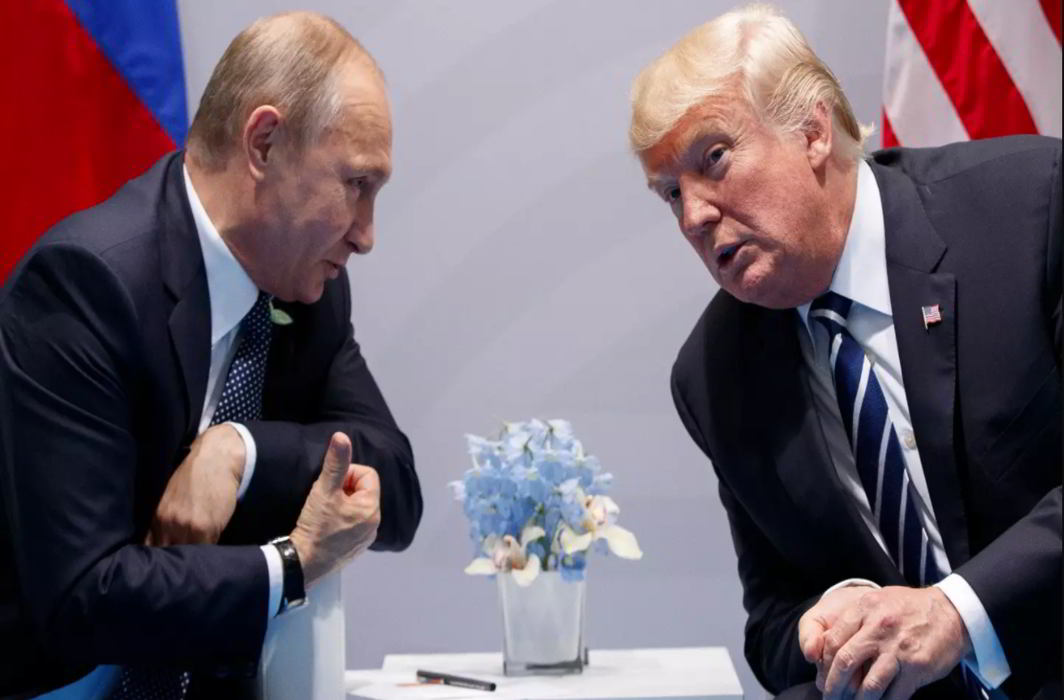
The comment by Trump followed India’s continued purchase of Russian crude oil, which the US had criticized as indirectly funding military action in Ukraine. Trump imposed a 25 per cent penalty tariff on Indian imports and added: “I don’t care what India does with Russia. They can take their dead economies down together, for all I care.”

Rahul Gandhi later supported the statement, saying, “He is right, everybody knows this except the Prime Minister and Finance Minister. I am glad President Trump stated a fact…”

The remark sparked a political debate, with BJP leaders criticizing Gandhi, while some Congress members, including Rajya Sabha MP Rajiv Shukla, called the statement “completely wrong.”

Ahead of the budget, Gandhi had highlighted the impact of US tariffs on small textile businesses, noting on X: “50 per cent US tariffs are badly hurting textile exporters. Job losses, shutdowns… are reality of our ‘dead economy’.”

The debate gained traction following the budget announcement, which did not offer immediate relief to middle-class taxpayers and saw markets react sharply, with the Sensex closing 1,500 points lower on Sunday.

Chidambaram, as usual, led Congress’ critique of the budget, pointing to a decrease in capital expenditure as a percentage of GDP from 3.2 per cent in FY25 to 3.1 per cent, despite the proposal of Rs 12.2 lakh crore for capex. He added, “Revenue receipts short by Rs 78,086 crore… total expenditure short by Rs 1,00,503 crore… revenue expenditure short by Rs 75,168 crore… capex was cut by Rs 1,44,376 crore… not a word was said to explain this…”

Rahul Gandhi echoed the criticism, highlighting issues such as unemployment, farmers’ distress, declining household savings, and low investment. “A budget that refuses course correction and is blind to India’s real crises,” he said on X.

Responding to the criticism, Finance Minister Sitharaman said, “With due respects, I don’t know what course correction he is referring to. The economy and its fundamentals are strong.”

Continue Reading

India News

Earthquake of 4.6 magnitude hits Andaman and Nicobar Islands

A 4.6 magnitude earthquake struck the Nicobar Islands at 10 km depth, highlighting the region’s seismic activity and potential risks from shallow tremors.

Published

on

earthquake-tremors

An earthquake measuring 4.6 on the Richter scale struck the Andaman and Nicobar Islands early Monday at around 3:30 am, the National Center of Seismology (NCS) reported.

According to the NCS, the tremor occurred at a shallow depth of 10 km. The earthquake’s epicenter was located at a latitude of 9.03° North and a longitude of 92.78° East, placing it in the Nicobar Islands region.

In a post on X, the NCS confirmed the details: “EQ of M: 4.6, On: 02/02/2026 03:31:12 IST, Lat: 9.03 N, Long: 92.78 E, Depth: 10 Km, Location: Nicobar Islands.”

The Andaman and Nicobar Islands fall under Seismic Zone V, according to India’s seismic zoning map (1893-1984), making them one of the most earthquake-prone regions in the world. Historically, the islands have experienced several major earthquakes, including the devastating tremor on December 26, 2004, which caused significant land displacement and triggered tsunami waves, resulting in heavy loss of life and property.

Experts note that shallow earthquakes, like the one recorded on Monday, can be more hazardous than deeper ones. Seismic waves from shallow quakes travel a shorter distance to the surface, causing stronger ground shaking and posing higher risks to structures and human safety.

Continue Reading

India News

Parliament Budget Session 2026 set to begin with Lok Sabha debate on President’s address

The Parliament Budget Session 2026 is set to begin with the Lok Sabha scheduled to debate President Droupadi Murmu’s address for 18 hours.

Published

on

Parliament

The Parliament Budget Session 2026 is set to begin on Monday, with the Lok Sabha scheduled to take up discussions on President Droupadi Murmu’s address, a day after Finance Minister Nirmala Sitharaman presented the Union Budget 2026-27 in the House.

The Lok Sabha is scheduled to meet at 11:00 am for a busy day of proceedings. A total of 18 hours has been allocated for the debate on the President’s address, which lays out the government’s policy priorities and broad agenda.

Prime Minister Narendra Modi is slated to reply to the discussion on February 4, while Finance Minister Nirmala Sitharaman is expected to respond on February 11.

As per the session calendar, the Budget Session will comprise 30 sittings spread over 65 days and is scheduled to conclude on April 2. Both the Lok Sabha and the Rajya Sabha will adjourn for a recess on February 13 and reconvene on March 9. During the recess period, Standing Committees are expected to examine the Demands for Grants of various ministries and departments.

In addition to legislative business, Budget documents tabled in Parliament are set to provide a detailed break-up of government revenues and expenditure, outlining how funds are raised and allocated.

The opening of the Budget Session also comes amid discussions on the government’s economic approach, including measures announced in the Union Budget aimed at supporting key sectors and addressing global trade challenges.

Continue Reading

Trending

© Copyright 2022 APNLIVE.com