English हिन्दी
Connect with us

Latest world news

Trump Inauguration 2025: Full list of world leaders attending

While Chinese President Xi Jinping has declined the invitation, he will send Vice President Han Zheng to represent China at the inauguration, emphasizing the intention to “enhance dialogue” with the new U.S. administration. Italian Prime Minister Giorgia Meloni has expressed her hope to attend the event.

Published

on

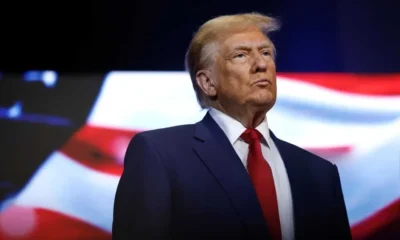
Donald Trump is poised to be sworn in as the 47th President of the United States on January 20, after securing a definitive victory in the elections held on November 5. This inauguration marks a remarkable return for Trump as he embarks on a second term, appearing more formidable and unpredictable than during his first.

The 78-year-old Republican will take the oath of office at the U.S. Capitol in Washington, D.C., amid a grand ceremony, ahead of his return to the White House, which he vacated four years ago under contentious circumstances. The guest list for Trump’s inauguration highlights how the man whose 2016 win surprised many has become integral to the current landscape of American politics. In an unprecedented move, Trump has invited various foreign leaders to participate in the ceremony, a departure from tradition where such leaders typically send diplomats due to security considerations.

India will be represented at the ceremony by External Affairs Minister S. Jaishankar, who is expected to engage with officials from the incoming Trump administration. Japan and Australia will be represented by their Foreign Ministers, Takeshi Iwaya and Penny Wong, respectively. Argentina’s President Javier Milei, known for his allegiance to Trump, has confirmed his attendance, while Hungary’s Prime Minister Viktor Orban is also contemplating participation.

While Chinese President Xi Jinping has declined the invitation, he will send Vice President Han Zheng to represent China at the inauguration, emphasizing the intention to “enhance dialogue” with the new U.S. administration. Italian Prime Minister Giorgia Meloni has expressed her hope to attend the event.
Among the attendees will be hard-right Eurosceptic Nigel Farage, leader of the Reform U.K. party, and French right-wing politician Eric Zemmour. Additionally, Tino Chrupalla, co-leader of the far-right Alternative for Germany (AfD), has confirmed his attendance, reflecting his party’s desire to strengthen ties with the incoming U.S. administration. Notably, no representatives from the current German government are expected, with Germany’s ambassador to the U.S., Andreas Michaelis, filling that role instead. U.K. Prime Minister Keir Starmer will also be absent, opting for representation from the British ambassador.

Neither French President Emmanuel Macron nor European Commission head Ursula von der Leyen will attend the inauguration. Former Brazilian President Jair Bolsonaro received an invitation but was unable to secure a temporary passport restoration from Brazil’s Supreme Court that would allow him to travel.

Outgoing President Joe Biden plans to attend the ceremony, a notable contrast to Trump’s absence during Biden’s own swearing-in in 2020. All living former Presidents are expected to be present, including Bill Clinton, whose attendance has been confirmed. Hillary Clinton will also be present, along with Vice President Kamala Harris, whom Trump defeated in the recent elections. George W. Bush and his wife, Laura, will be attending, while Barack Obama will join them; however, Michelle Obama will not be in attendance.

Several influential tech executives are set to attend Trump’s inauguration, indicating the industry’s efforts to mend relationships with the incoming President. Notable attendees will include Amazon founder Jeff Bezos, Meta Platforms CEO Mark Zuckerberg, and Elon Musk, the CEO of Tesla, who has emerged as a significant supporter and financier of Trump.

OpenAI CEO Sam Altman will also be present at the inauguration, alongside OpenAI President Greg Brockman and Chief Product Officer Kevin Weil. Furthermore, Dara Khosrowshahi, CEO of Uber Technologies, is expected to be involved in some of the inauguration festivities, as Uber plans to partner with Musk’s social platform and The Free Press for an accompanying event.

Additionally, TikTok CEO Shou Zi Chew is anticipated to attend and will likely be given a prominent seat during the inauguration, amid indications that the new administration may take steps to ensure the app’s continued operation in the U.S. Apple CEO Tim Cook and Alphabet CEO Sundar Pichai are also among the prominent tech leaders planning to be part of this significant event.

Latest world news

Putin praises PM Modi, says he has very good ideas on Ukraine war

Russian President Vladimir Putin has praised Prime Minister Narendra Modi for repeatedly raising the need to end the Ukraine war, describing his ideas for a settlement as “very good”.


Published

on

Vladimir Putin

Russian President Vladimir Putin has praised Prime Minister Narendra Modi for his continued efforts to promote an end to the Russia-Ukraine war, saying the Indian leader has “very good ideas” aimed at finding a mutually acceptable solution.

Putin made the remarks while addressing the Valdai Forum of international Russia experts, where he spoke about Modi’s repeated efforts to raise the issue of ending the conflict.

What Putin said about PM Modi

Putin said Modi has continued to raise the question of ending the conflict despite the close and friendly relationship between India and Russia.

According to Putin, the Prime Minister has shown a strong interest in finding a solution and has ideas that could help identify mutually acceptable ways to resolve the conflict.

Putin also described India’s position as neutral while highlighting Modi’s interest in bringing the conflict to an end through peaceful means.

The Russian president expressed gratitude to Modi for his ideas and his desire to see the conflict end as soon as possible.

Modi’s position on the Ukraine war

PM Modi has repeatedly called for dialogue and diplomacy to resolve conflicts, including during his meetings with Putin.

During their September 11 meeting in New Delhi, Modi reiterated that dialogue and diplomacy are the way forward for resolving conflicts.

Modi had also told Putin during their meeting on the sidelines of the Shanghai Cooperation Organisation summit in Bishkek that the situation needed to move from “endless war” towards an end to the war.

India has consistently maintained that conflicts should be addressed through dialogue and peaceful means, with Modi previously describing the present period as not being an era of war.

The Russia-Ukraine conflict began in February 2022 and has continued despite repeated diplomatic efforts to seek a resolution.

Continue Reading

Latest world news

S Jaishankar calls Pakistan a “serial practitioner of terrorism” at UN

S Jaishankar criticised Pakistan at the UN General Assembly, referring to a “serial practitioner of terrorism” and warning against attempts to normalise terrorism.
Published

on

S Jayshankar

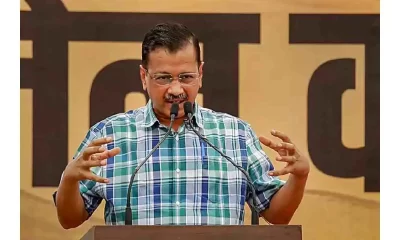
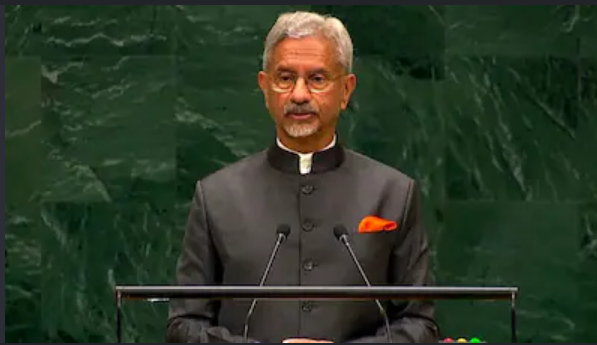
External Affairs Minister S Jaishankar criticised Pakistan during his address to the 81st session of the United Nations General Assembly in New York, saying that a “serial practitioner of terrorism” had misrepresented facts and that arguments were being made to normalise terrorism. 

Jaishankar’s remarks came a day after Pakistan Prime Minister Shehbaz Sharif addressed the UN General Assembly and spoke about the 2025 military confrontation between India and Pakistan.

Jaishankar’s message to Pakistan

Referring to Pakistan without naming it directly in that remark, Jaishankar said a “serial practitioner of terrorism” had misrepresented facts before the UN General Assembly.

He said arguments were being made to normalise terrorism and claim immunity from its consequences, adding that such an approach would not stand. 

Jaishankar reiterated India’s position that the country would exercise its right to defend itself against terrorism.

He also said that friendship and goodwill could not coexist with terrorism and that understandings based on such circumstances would naturally be called into question. 

“It is for the perpetrator of terrorism to mend its ways,” Jaishankar said.

India stresses zero tolerance on terrorism

Jaishankar described terrorism as a persistent threat to peace and called for governments involved in cross-border terrorism to be held accountable.

He also stressed that there should be no dilution in India’s zero-tolerance approach towards terrorism and particularly called for greater attention to its financial aspects.

His remarks came a day after Pakistan Prime Minister Shehbaz Sharif referred to the 2025 India-Pakistan military confrontation during his UN General Assembly address. 

Jaishankar backs two-state solution for Palestine

During his UN address, Jaishankar also spoke about the situation in West Asia and said India was prepared to contribute to efforts addressing food and energy security amid continuing tensions and violence.

On the Palestine issue, he reiterated India’s longstanding support for a two-state solution.

Jaishankar said India was also contributing humanitarian assistance and relief efforts for the Palestinian people.

He also warned about continuing threats and pressures around the world and stressed the need for greater stability, security and predictability.

Continue Reading

Latest world news

Trump rejects Iran’s 7-day peace plan, says deal can come after US polls

US President Donald Trump rejected Iran’s seven-day proposal to end hostilities and indicated that a deal could come after the US midterm elections in November.
Published

on

Donald Trump

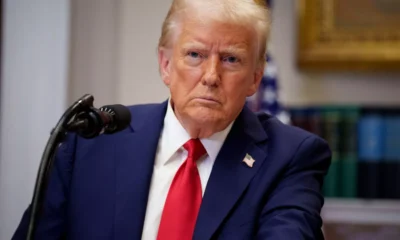
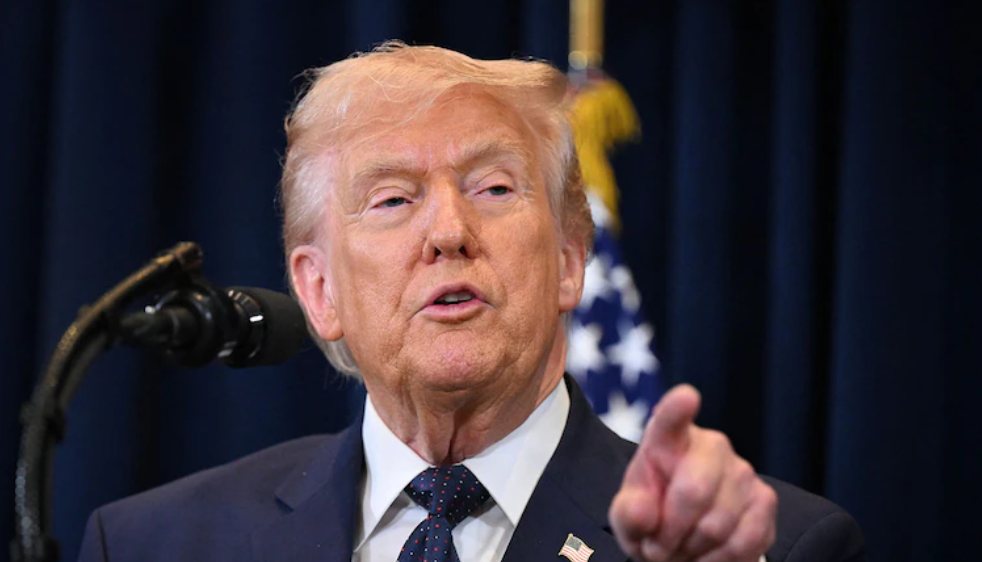
US President Donald Trump has rejected Iran’s latest proposal aimed at bringing an end to the ongoing conflict, while indicating that a possible agreement could come after the US midterm elections in November.

Iran had proposed a seven-day framework under which hostilities could be brought to an end, the Strait of Hormuz could be reopened and negotiations over its nuclear programme could resume.

Iran’s seven-day proposal

Iranian Foreign Minister Abbas Araghchi said Tehran had put forward the proposal through intermediaries. Under the plan, the Strait of Hormuz would be reopened by the end of the seventh day if specified conditions were met, while broader nuclear discussions would restart.

The proposal was based largely on an earlier understanding reached between Washington and Tehran, but Iran sought to implement the latest framework much faster. The earlier arrangement had provided a longer period for negotiations.

The Strait of Hormuz is a strategically important waterway for global energy shipments, making its reopening a key element of any effort to ease the wider conflict.

Trump points to US midterm elections

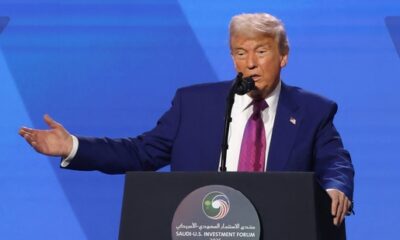
Trump, speaking at the United Nations, showed no indication that he was ready to immediately resume negotiations on the terms proposed by Tehran.

He called for the economic isolation of Iran and said he believed a deal could be reached after the US midterm elections in November. Trump also said Iran was waiting to see how he performed in the midterm elections.

The remarks came as Iranian officials signalled that they remained open to diplomacy and described the UN General Assembly as an opportunity to revive negotiations.

Nuclear talks remain part of Iran proposal

Iran’s latest plan links the easing of hostilities with the resumption of negotiations over its nuclear programme.

The proposal follows the collapse of an earlier US-Iran arrangement. According to reporting on the latest proposal, the new framework is intended to compress the timeline for implementing commitments that had previously been discussed by the two sides.

For now, Trump’s remarks indicate that Washington is not accepting Tehran’s seven-day framework as presented, while Iran continues to put diplomacy and negotiations forward as part of its proposal.

Continue Reading

Trending

© Copyright 2022 APNLIVE.com