English हिन्दी
Connect with us

India News

Hafiz Saeed-directed terror module exposed after Pahalgam attack, Junaid Bhatt neutralised

Lashkar-e-Taiba module behind the recent Kashmir attacks has been busted with the killing of top operative Junaid Bhatt. Massive diplomatic retaliation follows.

Published

on

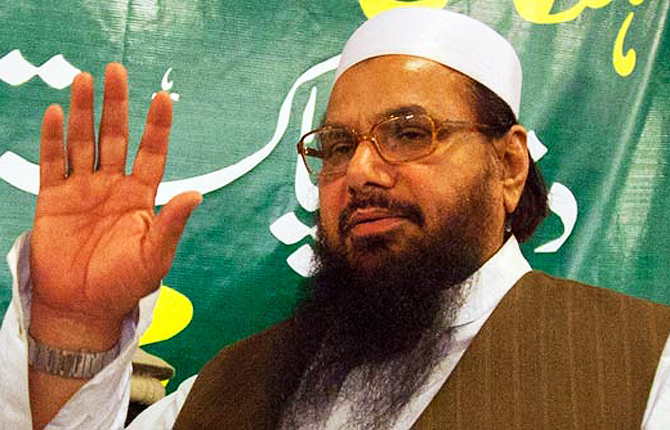
HAFIZ SAEED

A major counter-terror operation in Jammu and Kashmir has led to the elimination of Junaid Ahmed Bhatt, a high-ranking Lashkar-e-Taiba (LeT) terrorist involved in orchestrating a series of deadly attacks including the recent massacre in Sonamarg. Bhatt, classified as an ‘A+ category’ militant and originally from Kulgam, was gunned down by security forces during an encounter in Dachigam in December 2024.

Module operated under Lashkar leadership

Bhatt was a pivotal figure in a Lashkar-e-Taiba module that, according to intelligence reports, functions under the direct command of Lashkar chief Hafiz Saeed and his deputy Saifullah, both believed to be operating from Pakistani soil. The group reportedly receives not only ideological motivation but also strategic support from Pakistan’s military establishment and the Inter-Services Intelligence (ISI).

While the module includes a majority of foreign operatives, several local elements and overground workers from the Kashmir Valley assist the network by providing shelter and logistical support. Following coordinated attacks, the group’s operatives often go underground, using forest cover to evade security operations until fresh instructions arrive from handlers across the border.

Brutality of Pahalgam attack unveiled

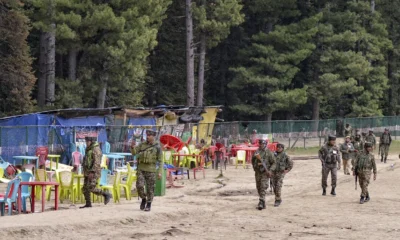
The group’s involvement came into focus after the chilling Pahalgam attack, where terrorists targeted civilians at three different locations in the scenic Baisaran valley. In the gruesome assault, five people were shot dead at a single spot, two were gunned down in an open field, and more were targeted near a fenced enclosure. Survivors recounted that the attackers even engaged them in short conversations before opening fire, pointing to a calculated and cold-blooded execution.

The Jammu and Kashmir Police have released sketches of three suspects in the case. Two of them, identified as Hashim Musa alias Suleman and Ali Bhai alias Talha, are believed to be Pakistani nationals, while the third, Abdul Hussain Thokar, is a local from Anantnag. Authorities have announced a cash reward of ₹20 lakh for credible leads aiding in their arrest. A suspected hideout used by the module has also been uncovered in forested terrain nearby.

High-level security response and diplomatic measures

In response to the escalating threat, India’s top security panel—the Cabinet Committee on Security (CCS)—held an emergency meeting chaired by Prime Minister Narendra Modi. The panel, which included senior figures like Home Minister Amit Shah and National Security Adviser Ajit Doval, rolled out a series of stringent countermeasures.

From May 1, both India and Pakistan will downsize their diplomatic missions, slashing staff numbers from 55 to 30. Military and intelligence personnel from Pakistan stationed at its High Commission in Delhi have been ordered to leave India within a week, while Indian representatives in Islamabad will also be withdrawn.

Further, the SAARC Visa Exemption Scheme for Pakistani nationals has been suspended, and all existing visas under this provision have been revoked. Pakistani citizens residing in India under the scheme have been directed to exit the country by May 1. The Attari-Wagah border crossing has also been closed indefinitely. India has additionally suspended the Indus Waters Treaty of 1960.

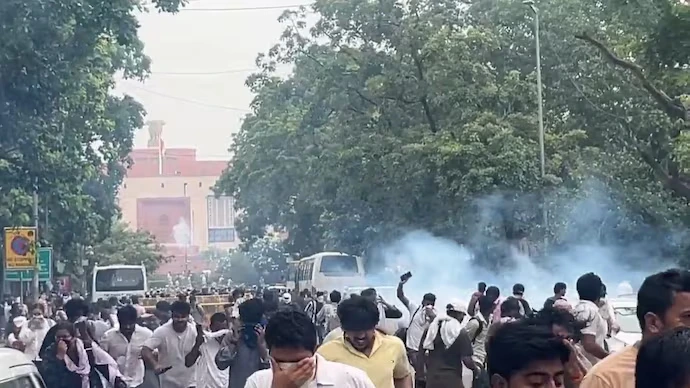
Massive protests were witnessed outside the Pakistan High Commission in Delhi, as demonstrators demanded justice and accountability. Demonstrations have also spread across Jammu and Kashmir and other parts of India, underlining the widespread public outrage against the Pahalgam attack.

India News

Delhi to install 305 mist sprayers across 9 major pollution hotspots

Chief Minister Rekha Gupta announced that 305 mist sprayers will be installed across nine pollution hotspots in Delhi, alongside expert-led planning and coordinated measures to reduce dust and biomass-related pollution.

Published

on

Delhi-NCR air quality

The Delhi government has announced a large-scale deployment of mist sprayer technology to tackle rising air pollution, with Chief Minister Rekha Gupta confirming that 305 mist sprayers will be installed across nine pollution hotspots in the capital.

Mist sprayers to curb dust at critical locations

During an inspection at ITO, Gupta said the mist sprayers already operational at the site are performing effectively. She noted that 35 poles at ITO have been fitted with these machines, which are helping suppress dust—a major contributor to air pollution in Delhi.

According to the Chief Minister, trials conducted in certain NDMC areas have shown promising results, reinforcing confidence in the technology.

High-level committee to guide pollution-control measures

Gupta announced the formation of a high-level expert committee that will advise the government on effective measures to reduce pollution. The panel will include senior officials from various departments as well as environmental specialists, including experts from IITs. Officials stated that the committee will receive special powers to implement pollution-mitigation strategies.

Departments directed to repair roads, add greenery

The Chief Minister said departments including PWD, DSIIDC and DDA have been instructed to fix potholes, repair and carpet roads, plant foliage along dividers and islands, and take other measures to reduce pollution sources.

She urged residents to report potholes on the government portal for quicker action.

Appeal to RWAs to prevent biomass burning

To curb winter pollution, Gupta advised Resident Welfare Associations (RWAs) to distribute electric heaters to security guards to discourage biomass burning, which significantly contributes to seasonal pollution spikes.

Continue Reading

India News

PM Modi welcomes Vladimir Putin with warm hug as Russian President begins India visit

Russian President Vladimir Putin began a high-profile visit to India on Thursday, welcomed by PM Narendra Modi as both nations prepare to discuss defence, energy and trade cooperation.

Published

on

Vladimir Putin rides in Indian PM Narendra Modi's car on India visit

Russian President Vladimir Putin arrived in New Delhi on Thursday evening for a 27-hour visit focused on strengthening defence, energy and trade cooperation. The visit, marked by a warm embrace and a brief car ride shared with Prime Minister Narendra Modi, underscores the continuity of the India-Russia strategic partnership amid shifting global geopolitics.

Putin receives ceremonial welcome and packed schedule ahead

Putin landed in Delhi around 6:35 pm, where PM Modi personally received him at Palam airport. The two leaders shared a hug before leaving together, with the Prime Minister set to host a private dinner in honour of the visiting President — a reciprocal gesture to the hospitality extended during Modi’s Moscow visit last year.

On Friday, Putin will begin his official engagements with a ceremonial welcome at Rashtrapati Bhavan, followed by a visit to Rajghat to pay homage to Mahatma Gandhi. He is also scheduled to attend the India-Russia Annual Summit at Hyderabad House, where both sides will hold a working lunch.

The Russian President will later inaugurate a new India-based channel of Russia’s state broadcaster and attend a state banquet hosted by President Droupadi Murmu, before departing India on Friday night.

Defence, energy and trade to dominate agenda

Officials have indicated that discussions will centre on defence, energy and trade — the three pillars of the bilateral relationship. Agreements are expected across sectors including shipping, healthcare, fertilisers and connectivity.

Ahead of the summit, defence ministers from both countries held extensive talks, covering additional procurement of S-400 air defence systems and delayed military hardware shipments affected by the Ukraine war. The S-400 platform, procured under a USD 5 billion deal, played a major role during Operation Sindoor.

The Kremlin has also hinted that Russia may propose the Su-57 fifth-generation fighter jet, which would put Moscow in direct competition with Western aircraft makers.

Energy ties face renewed pressure

India remains among the largest buyers of discounted Russian crude. However, fresh US sanctions on key Russian oil producers have led to a dip in purchases.

Putin’s visit also comes at a time of strain in India-US ties, with Washington recently imposing steep tariffs on Indian goods — including measures linked directly to India’s continued oil trade with Russia.

Massive security deployment in Delhi

Delhi Police have stationed over 5,000 personnel across central and New Delhi districts, supported by SWAT teams, anti-terror units, snipers, quick-reaction teams, anti-drone systems, HD-CCTV networks and layered surveillance measures for the visit.

Continue Reading

India News

Rahul Gandhi attacks Centre ahead of Vladimir Putin’s India visit

Rahul Gandhi alleged that the government discourages visiting foreign dignitaries from meeting Opposition leaders, calling it a sign of “insecurity,” hours before Russian President Vladimir Putin arrives in Delhi.

Published

on

Rahul Gandhi

As Russian President Vladimir Putin arrives in Delhi today for the India-Russia Annual Summit, Leader of the Opposition Rahul Gandhi has renewed his charge that the Centre discourages visiting foreign leaders from meeting Opposition representatives. He called it a sign of “insecurity” within the government.

Rahul Gandhi alleges break in long-followed tradition

Speaking outside Parliament, Rahul Gandhi said that it has traditionally been the norm for visiting foreign leaders to meet the Leader of the Opposition, a practice he claims continued during the tenures of Atal Bihari Vajpayee and Manmohan Singh.

He alleged that the present government advises foreign dignitaries against such meetings. “When foreign leaders come, the government suggests they should not meet the Leader of the Opposition. This is their policy,” Gandhi said. He added that a meeting with the Opposition offers visiting leaders a broader perspective, as “we too represent India.”

Gandhi further stated that this approach reflects the government’s reluctance to allow engagement between the Opposition and foreign guests.

Former Foreign Secretary counters Gandhi’s remarks

Responding to Gandhi’s allegations, former Foreign Secretary and Rajya Sabha MP Harsh Vardhan Shringla said visiting leaders operate on very tight schedules and there is no protocol mandating a meeting with the Leader of the Opposition. He stressed that such interactions depend entirely on the guest’s time and preference, noting that the required meetings are those with the President and the Prime Minister.

Putin’s schedule packed with bilateral engagements

Russian President Vladimir Putin is set to land in Delhi this evening on Prime Minister Narendra Modi’s invitation. His itinerary includes:

  • A private dinner with PM Modi
  • Visit to Mahatma Gandhi’s memorial at Raj Ghat
  • Engagements at Bharat Mandapam and Hyderabad House
  • A banquet hosted by President Droupadi Murmu

The visit forms part of the 23rd India-Russia Annual Summit.

Continue Reading

Trending

© Copyright 2022 APNLIVE.com