English हिन्दी
Connect with us

India News

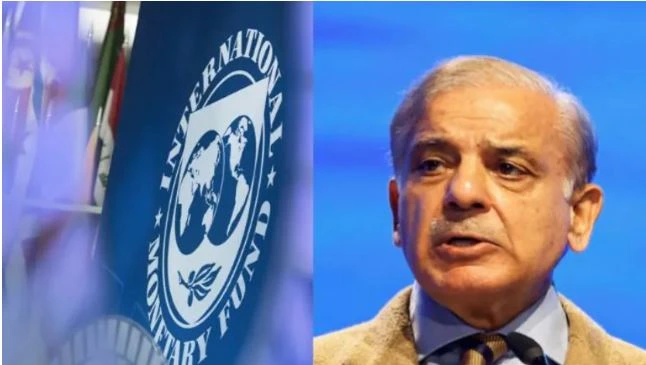
IMF justifies Pakistan bailout amid India’s protest over terror links

The IMF has justified its decision to release $1 billion to Pakistan under a bailout program, stating that Islamabad complied with the required conditions, despite strong objections from India over alleged terror links.

Published

on

Amid mounting criticism from India, the International Monetary Fund (IMF) has defended its recent $1 billion disbursement to Pakistan, asserting that the South Asian nation met all stipulated reform and performance criteria under the existing bailout arrangement. This defense follows India’s strong objection to IMF funding Islamabad despite the ongoing cross-border military hostilities and allegations of state-sponsored terrorism.

India’s objections and IMF’s response

India had urged the IMF to review its bailout package to Pakistan, citing the country’s continued support for cross-border terrorism. Defence Minister Rajnath Singh had remarked that such aid essentially functions as “indirect funding to terror.” The Indian military’s Operation Sindoor—a strike against terror camps in Pakistan and Pakistan-Occupied Kashmir—occurred shortly before the IMF’s recent loan installment to Islamabad.

In a press briefing, Julie Kozack, Director of IMF’s Communications Department, clarified that Pakistan’s compliance with agreed conditions justified the loan release. “Our Board found that Pakistan had indeed met all of the targets. It had made progress on some of the reforms,” she stated, explaining the decision behind the May 9 disbursement.

Details of the bailout

The funding was part of a larger $7 billion Extended Fund Facility (EFF) arrangement agreed upon last year. With this latest disbursement, Pakistan has received $2.1 billion across two tranches. The IMF noted that a staff-level agreement was finalized on March 25, with the Board’s approval following in early May.

Kozack also acknowledged the regional tensions, expressing sympathy for the victims and calling for peaceful dialogue between India and Pakistan.

New conditions tied to the bailout

In a move that may intensify internal challenges for Pakistan, the IMF introduced 11 new requirements for future disbursements. These include:

  • Parliamentary approval of a Rs 17.6 trillion federal budget.
  • Increased surcharges on electricity for debt servicing.
  • Removal of restrictions on imports of used cars over three years old.
  • A long-term strategy for the post-2027 financial regulatory environment.
  • Legislation to make the captive power levy ordinance permanent by end of May.
  • Phase-out plans for incentives tied to Special Technology Zones and industrial parks by 2035.

Additionally, the IMF has reportedly warned Pakistan that continued hostilities with India could jeopardize the program’s fiscal and reform benchmarks.

India News

Women’s quota bill fails in Lok Sabha as it falls short of two-thirds majority

Women’s reservation proposal failed in Lok Sabha after securing 298 votes, below the required two-thirds majority

Published

on

Parliament

Government secures 298 votes in favour, 230 against; proposal does not pass constitutional threshold

The proposed amendment related to women’s reservation failed to pass in the Lok Sabha on Friday after the government could not secure the required two-thirds majority.

The bill received 298 votes in favour and 230 against, falling short of the constitutional threshold needed for passage. As a constitutional amendment, it required the support of at least two-thirds of members present and voting.

Despite securing a simple majority, the government was unable to gather sufficient support to meet this requirement.

Debate continues over two days

The discussion on the bill extended late into Thursday and continued on Friday, with members from both sides participating in the debate on women’s representation in legislative bodies.

Prime Minister Narendra Modi urged members to support the proposal, calling for wider consensus on the issue.

Implications of the outcome

The failure of the bill underscores the challenges in securing broad political agreement on constitutional amendments, especially those related to representation and electoral reforms.

The proposal was aimed at advancing women’s representation in the Lok Sabha and state assemblies, an issue that has remained under discussion for several years.

Continue Reading

India News

Rahul Gandhi faces FIR order as Allahabad High Court acts on dual citizenship plea

High Court allows plea in Rahul Gandhi citizenship case, paving the way for further legal process.

Published

on

Rahul Gandhi

The Lucknow bench of the Allahabad High Court has allowed a petition seeking legal action in connection with allegations related to Congress leader Rahul Gandhi’s citizenship status, marking a fresh development in the case.

The petition was filed by a political worker, who had approached the court seeking directions for registration of a case over claims that Gandhi may have held foreign citizenship. The High Court, while hearing the matter, passed directions for further proceedings in accordance with law.

The development comes after a special MP/MLA court in Lucknow had earlier declined to order registration of an FIR, reportedly observing that it lacked jurisdiction in matters concerning citizenship.

Background

The case is linked to allegations that Rahul Gandhi may have held British citizenship. Under Indian law, dual citizenship is not permitted. However, these claims remain part of the petitioner’s submissions and have not been established by any court.

During earlier hearings, the High Court had sought records and considered material presented by the parties involved.

What happens next

With the High Court allowing the plea, the matter is expected to proceed as per due legal process. This may involve examination by the appropriate authority and further judicial review at subsequent stages.

The case carries both legal and political significance given Rahul Gandhi’s role as Leader of the Opposition in the Lok Sabha.

Continue Reading

India News

Pawan Khera faces fresh setback as Supreme Court refuses relief in passport row case

Congress leader Pawan Khera faces fresh setback as Supreme Court refuses interim relief and directs him to seek bail from Guwahati High Court.

Published

on

Pawan Khera

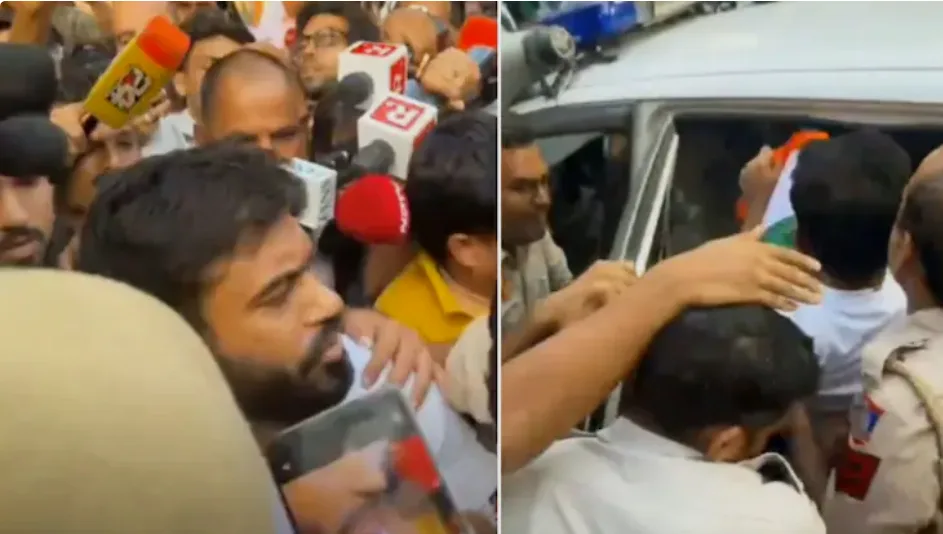
Congress leader Pawan Khera suffered another legal setback on Friday after the Supreme Court of India declined to extend protection in a case linked to his remarks about Himanta Biswa Sarma’s wife.

A bench of the apex court refused to interfere with an earlier order that had stayed the transit anticipatory bail granted to Khera by the Telangana High Court. This decision leaves the Congress leader open to possible arrest by Assam Police in connection with the case.

During the hearing, Khera’s counsel sought interim protection, but the court declined the request and advised him to approach the appropriate court in Assam for relief. The bench clarified that the Guwahati High Court should decide any bail plea independently and on its merits.

“Am I a terrorist?” remark during hearing

While seeking protection, Khera’s legal team expressed concern over the urgency of the situation. In court, his counsel remarked, “Am I a terrorist?” highlighting the plea for temporary relief until a fresh bail application could be filed.

The Supreme Court also raised concerns over the submission of incorrect documents during the proceedings, adding another layer to the legal complications faced by the Congress leader.

Case linked to remarks on CM’s wife

The case stems from a press conference held earlier this month, where Khera made allegations regarding the citizenship status and financial assets of the Assam Chief Minister’s wife, Riniki Bhuyan Sharma.

He had claimed that she possessed multiple passports and owned undisclosed overseas properties. These allegations were strongly denied by the Chief Minister’s family, who termed them fabricated and misleading.

Legal battle intensifies

Earlier, the Telangana High Court had granted Khera temporary transit anticipatory bail, allowing him time to seek relief from a competent court in Assam. However, the Supreme Court stayed that order following a challenge by Assam authorities, escalating the legal battle.

With the latest ruling, Khera is now expected to move the Guwahati High Court for anticipatory bail as the case continues to unfold.

Continue Reading

Trending

© Copyright 2022 APNLIVE.com