English हिन्दी
Connect with us

India News

Vice presidential election notification issued, nomination process begins

The Election Commission has notified the election to fill the vice president’s post vacated by Jagdeep Dhankhar. Nominations are open until August 21, with the vote scheduled for September 9.

Published

on

Rajya Sabha

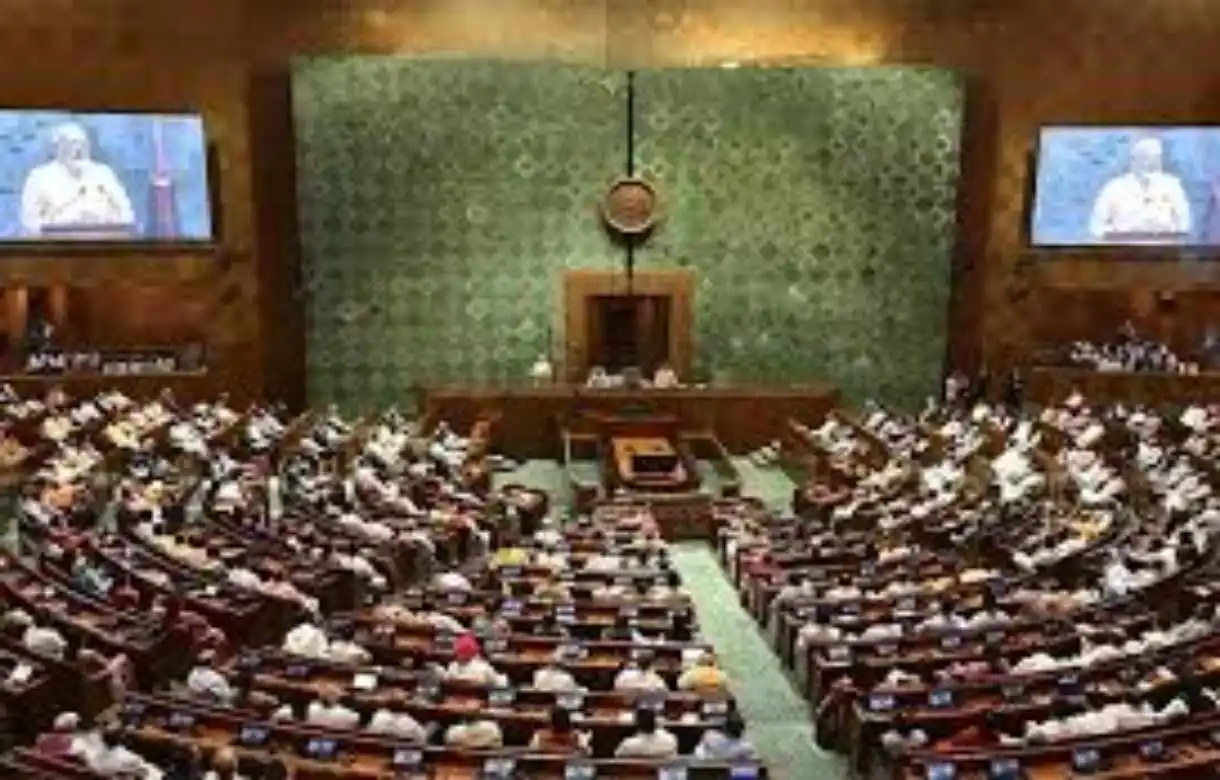
The Election Commission on Thursday officially notified the commencement of the election process for the post of India’s vice president, following the surprise resignation of Jagdeep Dhankhar. The election is scheduled to be held on September 9, with the nomination deadline set for August 21.

According to the notification, scrutiny of nomination papers will take place on August 22, and candidates will have until August 25 to withdraw their nominations.

The post of vice president fell vacant on July 21, after Jagdeep Dhankhar stepped down citing health reasons, nearly two years before the scheduled end of his term in August 2027. As per the Constitution, a newly elected vice president in a mid-term poll is entitled to serve a full five-year term.

Constitutional criteria for candidature

To contest the vice presidential election, a person must:

  • Be a citizen of India
  • Have attained the age of 35 years
  • Be qualified to be elected as a member of the Rajya Sabha
  • Not hold any office of profit under the central or state government or local authority

The vice president is elected by the members of both Houses of Parliament, including the nominated members of the Rajya Sabha, through proportional representation by means of the single transferable vote and secret ballot, as per Article 66(1) of the Constitution.

NDA holds numerical edge

The current effective strength of the two Houses is 786, with 394 votes required to win. The Lok Sabha, with one vacant seat (Basirhat, West Bengal), has 542 members, and the Rajya Sabha has 240 effective members, accounting for five vacancies — four from Jammu and Kashmir and one from Punjab (after AAP’s Sanjeev Arora resigned upon his election to the state assembly).

The ruling NDA, led by the BJP, enjoys a clear numerical advantage, with support from:

  • 293 MPs in the Lok Sabha
  • 129 MPs in the Rajya Sabha (including support from nominated members)

This gives the NDA a projected total of 422 members, comfortably crossing the required majority mark.

The vice president serves as the second highest constitutional authority in India and acts as the ex-officio Chairperson of the Rajya Sabha. He or she continues in office until a successor assumes charge, even beyond the five-year term if required.

India News

Rahul Gandhi faces FIR order as Allahabad High Court acts on dual citizenship plea

High Court allows plea in Rahul Gandhi citizenship case, paving the way for further legal process.

Published

on

Rahul Gandhi

The Lucknow bench of the Allahabad High Court has allowed a petition seeking legal action in connection with allegations related to Congress leader Rahul Gandhi’s citizenship status, marking a fresh development in the case.

The petition was filed by a political worker, who had approached the court seeking directions for registration of a case over claims that Gandhi may have held foreign citizenship. The High Court, while hearing the matter, passed directions for further proceedings in accordance with law.

The development comes after a special MP/MLA court in Lucknow had earlier declined to order registration of an FIR, reportedly observing that it lacked jurisdiction in matters concerning citizenship.

Background

The case is linked to allegations that Rahul Gandhi may have held British citizenship. Under Indian law, dual citizenship is not permitted. However, these claims remain part of the petitioner’s submissions and have not been established by any court.

During earlier hearings, the High Court had sought records and considered material presented by the parties involved.

What happens next

With the High Court allowing the plea, the matter is expected to proceed as per due legal process. This may involve examination by the appropriate authority and further judicial review at subsequent stages.

The case carries both legal and political significance given Rahul Gandhi’s role as Leader of the Opposition in the Lok Sabha.

Continue Reading

India News

Pawan Khera faces fresh setback as Supreme Court refuses relief in passport row case

Congress leader Pawan Khera faces fresh setback as Supreme Court refuses interim relief and directs him to seek bail from Guwahati High Court.

Published

on

Pawan Khera

Congress leader Pawan Khera suffered another legal setback on Friday after the Supreme Court of India declined to extend protection in a case linked to his remarks about Himanta Biswa Sarma’s wife.

A bench of the apex court refused to interfere with an earlier order that had stayed the transit anticipatory bail granted to Khera by the Telangana High Court. This decision leaves the Congress leader open to possible arrest by Assam Police in connection with the case.

During the hearing, Khera’s counsel sought interim protection, but the court declined the request and advised him to approach the appropriate court in Assam for relief. The bench clarified that the Guwahati High Court should decide any bail plea independently and on its merits.

“Am I a terrorist?” remark during hearing

While seeking protection, Khera’s legal team expressed concern over the urgency of the situation. In court, his counsel remarked, “Am I a terrorist?” highlighting the plea for temporary relief until a fresh bail application could be filed.

The Supreme Court also raised concerns over the submission of incorrect documents during the proceedings, adding another layer to the legal complications faced by the Congress leader.

Case linked to remarks on CM’s wife

The case stems from a press conference held earlier this month, where Khera made allegations regarding the citizenship status and financial assets of the Assam Chief Minister’s wife, Riniki Bhuyan Sharma.

He had claimed that she possessed multiple passports and owned undisclosed overseas properties. These allegations were strongly denied by the Chief Minister’s family, who termed them fabricated and misleading.

Legal battle intensifies

Earlier, the Telangana High Court had granted Khera temporary transit anticipatory bail, allowing him time to seek relief from a competent court in Assam. However, the Supreme Court stayed that order following a challenge by Assam authorities, escalating the legal battle.

With the latest ruling, Khera is now expected to move the Guwahati High Court for anticipatory bail as the case continues to unfold.

Continue Reading

India News

Congress suspends 5 Haryana MLAs over cross-voting in Rajya Sabha polls

Congress suspends five Haryana MLAs for cross-voting in Rajya Sabha elections, citing serious indiscipline and anti-party activities.

Published

on

The Congress has suspended five of its MLAs in Haryana for cross-voting during the recent Rajya Sabha elections, taking disciplinary action over what it described as “anti-party activities”.

The move came after the state unit reviewed the conduct of certain legislators during the polls, where some were found to have voted against the party’s authorised candidate.

Five MLAs suspended after disciplinary process

According to party sources, the MLAs were issued show-cause notices seeking an explanation for their actions. After reviewing their responses, the Congress disciplinary committee recommended suspension.

The decision was approved by the party leadership, including Congress president Mallikarjun Kharge, and has been implemented with immediate effect.

Party calls it ‘grave indiscipline’

Haryana Congress chief Udai Bhan said the action was necessary to uphold party discipline, stressing that defying the official party line during elections weakens organisational unity.

He said the party takes such violations seriously and will continue to act against any form of indiscipline.

Leadership backs strict action

Senior Congress leader and Leader of Opposition Bhupinder Singh Hooda supported the decision, saying it was taken after due consideration.

He noted that while Rajya Sabha elections are conducted through an open ballot system, allowing legislators some flexibility, the party retains the authority to initiate internal disciplinary action in cases of deviation.

Background

The action follows cross-voting reported during the recent Rajya Sabha elections in Haryana, which led to internal concerns within the party. The development has highlighted organisational challenges and prompted the leadership to take corrective steps to reinforce discipline.

Continue Reading

Trending

© Copyright 2022 APNLIVE.com